Posted in Kitchen Tips

Meal Prep for Country Cooks

This post was originally posted on my book review blog, Book Reviews by the Reluctant Retiree. Now that I’ve started a separate blog just for cooking, I thought it would be better added here.

Sandy, the Reluctant Retiree

Meal prep is something that many of us leave until the last moment. I’m not talking about taking the meat out of the freezer or refrigerator. I’m talking about chopping up all the vegetables that go in that soup, stew, one-pot meal. I’m talking celery, carrots, peppers, onions. (Onions are the worst in my humble opinion!)

Why not just buy it?

Before you jump up and tell me that you can just buy those items already chopped up, stop and think about it. What is cheaper, buying the already chopped up items and having to take what is available, or doing it yourself and including the items that your family likes? Last time I checked prices in the grocery store, it was cheaper to buy the produce in the produce section or at the produce market than to pay someone else to do all that chopping.

There are tons of books/pins/blogs that detail how to accomplish this. I love to look through these places for ideas. I don’t have a problem with the ideas they present, just the quantities!

It’s just my husband and myself, that’s it! I don’t need to cook a meal for more than 2 unless we are talking about soups. So what’s more convenient for me is ingredients that are prepped in such a way that I can simply measure out how much I need.

I don’t have time!

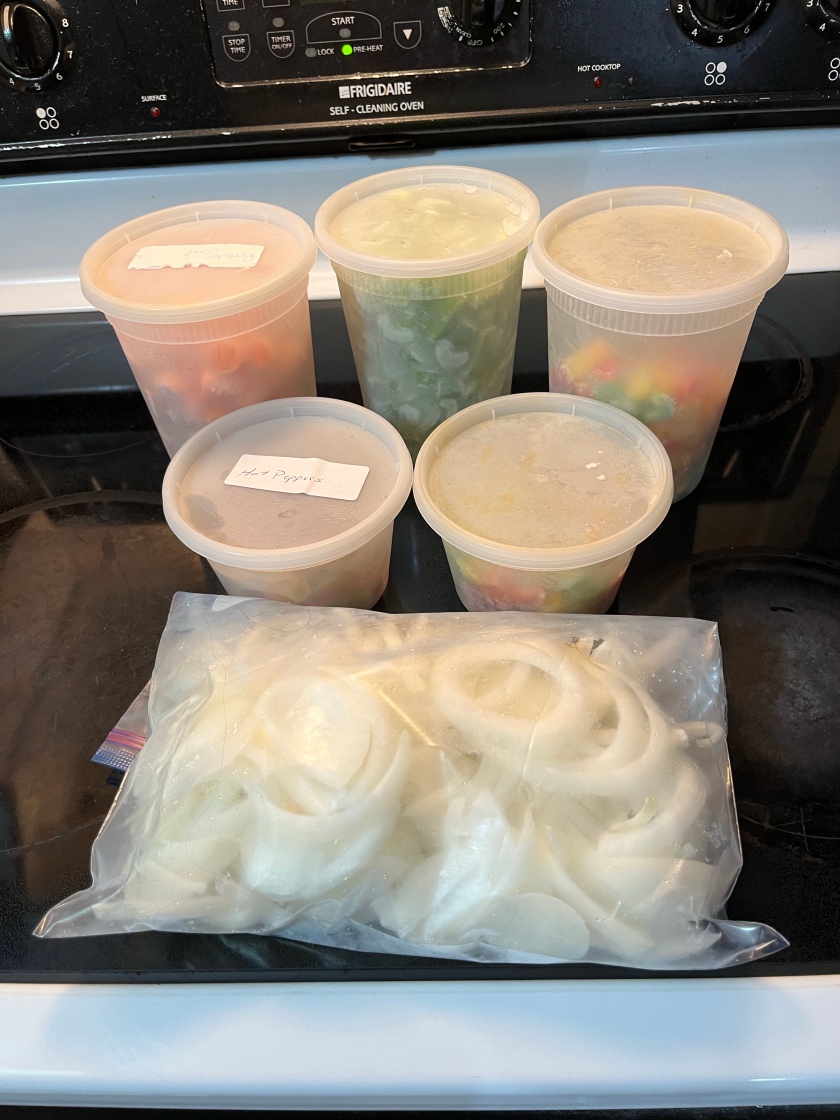
I got this idea the second time I bought a bag of celery stalks and part of them went bad before I could use them all. I grabbed a small cookie tray that would fit in my Side-by-side freezer and lined it with parchment paper. Then I grabbed my celery, cutting board and knife before starting to chop. 5 – 10 minutes later I had the tray filled with chopped celery. I popped it in the freezer and waited. About 2 hours later, I came back, and the celery was frozen enough that I could dump it from there into a freezer container. The pieces remained separated enough that I could easily just get what I needed out. I repeated this until I had all the celery done.

I took one large onion and cut it up using a mandolin slicer. It took maybe 5 minutes to do. This is going into the refrigerator for use. I’ll cut a few more up and freeze them to use later.

This is sliced Starfruit. A friend of mine has a tree in her backyard. She has started freezing the slices and then adding them to drinks instead of ice cubes.

Think about what you want to store the frozen vegetables in. I use a mixture of freezer bags and freezer containers. This makes it easier for me to see what is in the bags. Just remember to date the bags/containers so you know when you froze them.

My recipe calls for a different type of measurement!

Yeah, so do mine. My favorite cooking magazine, Cook’s Illustrated, once tackled this question. According to their tests, a small onion = 1/2 cup of diced onions, a medium onion = 1 cup, and a large onion = 2 cups!

Now, of course, you probably won’t only be dealing with just onions. Which led me to another website, https://www.howmuchisin.com/produce_converters Great website! Having found this, I plan to go back through my favorite recipes and make notes.

Now that I gave you some ideas, go forth and conquer! With all those vegetables already prepared, cooking becomes so much more enjoyable!

Posted in Kitchen Tips

Rethinking My Recipes

What brought this on?

I was doing that dread chore again, cleaning out the freezer and the refrigerator. I was struck by the sheer amount of “mystery leftovers” that I found. We all have them, even if we don’t think about them. However, it got me thinking about the food being wasted and thrown out.

So what seems to be the problem here? None of us start out looking to waste time and money, especially not on food. This puzzled me so much that I decided to take a look at what the answer might be.

Continue reading “Rethinking My Recipes”
Posted in Kitchen Tips

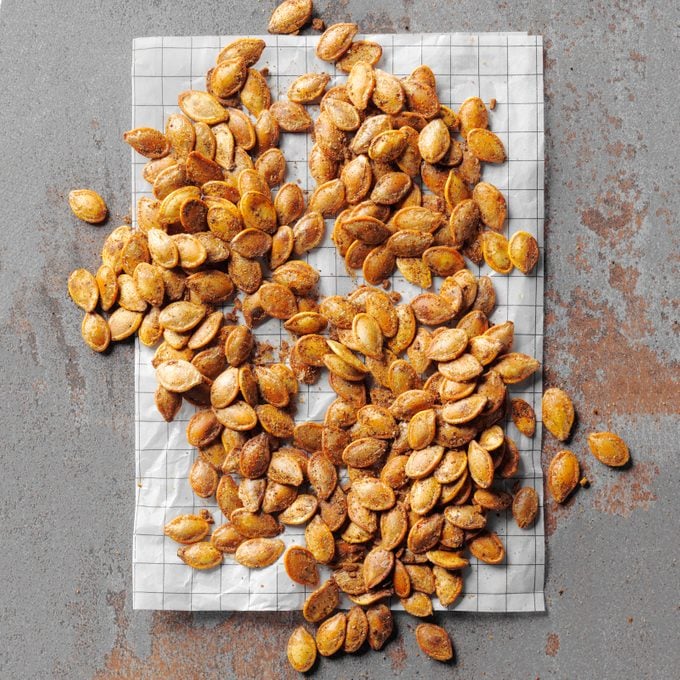
How to Roast Pumpkin Seeds, Step by Step

Confession: For years, I threw away the seeds after carving pumpkins. Roasting them just didn’t seem worth the trouble—why mess with all that stringy, slimy pumpkin flesh?

Then a few years ago, after learning more about food waste and vowing to make the most of every ingredient, I decided not to toss the seeds. Instead, I learned how to roast pumpkin seeds and realized that crispy, baked pumpkin seeds are super easy to make! Their nutty flavor was so addictive, they didn’t even make it to the pantry. My family gobbled them up, risking burned fingers, straight from the sheet tray.

The best part is, pumpkin seeds are good for you. They’re high in protein and fiber, and they’re a good source of minerals like zinc and iron. You can even cook with pumpkin seed oil. So the next time you make jack-o’-lanterns, save the insides and follow our Test Kitchen’s step-by-step guide for how to roast pumpkin seeds.

Taste of Home

Posted in Kitchen Tips

The Only Way to Store Butter, According to Kerrygold

Taking perfectly soft butter and spreading it on a nice carb of choice is one of life’s simple pleasures. Whether it’s for eating or baking, using butter with a higher butterfat content can result in a much more decadent experience. Unlike American butter, European-style butter is churned for longer and possesses between 82 and 90 percent butterfat. This makes it great for applications where the butter flavor is key, such as flaky croissants or fluffy mashed potatoes. 

So once you have your bars of proverbial gold in your possession, what’s the best way to store them? Since these dairy products can be twice as expensive as American-style butter, ensuring freshness is key. Maybe you’ve watched enough Brit Box programming and noticed butter crocks on counters and not in refrigerators. We’ve confirmed that leaving your butter out for four hours at room temperature is okay, but can a higher quality butter live on your counter?

Allrecipes

Posted in Kitchen Tips

This Meat Cooking Myth Could Actually Do More Harm Than Good

How many times have you heard the phrase “Don’t trust everything you see on the internet”? Thousands, I’m sure. But now that we live in a time when almost all of our daily information comes from the internet (and social media especially), it can be harder to separate fact from fiction. 

While there are plenty of chefs creating great, informative cooking content on platforms like TikTok, social media can also be a breeding ground for false information, especially when it comes to food safety. In a recent Reddit thread, users shared the cooking myths they know to immediately distrust when they see them shared on social media, and a common answer was one we know all too well: washing meat. 

“Washing meat is still a surprisingly prevalent bad practice,” wrote user DyotMeetMat.

In reality, no, you should probably not be washing your meat before cooking it. This is commonly known among many home cooks, but if you’ve been fooled by the internet lore, read on to find out why this practice is ill-advised.

Allrecipes

Posted in Kitchen Tips

7 Things You Should Never Do With Aluminum Foil

Aluminum foil has many uses in the kitchen and beyond, from tenting over casseroles to even cleaning grill grates. But it’s not infallible.

There are some aluminum foil uses we don’t recommend, either because they’re not effective or they’re just downright dangerous. We’re not suggesting you toss this versatile kitchen wrap, but do make sure you’re not committing any of these common aluminum foil mistakes.

Allrecipes

Posted in Kitchen Tips

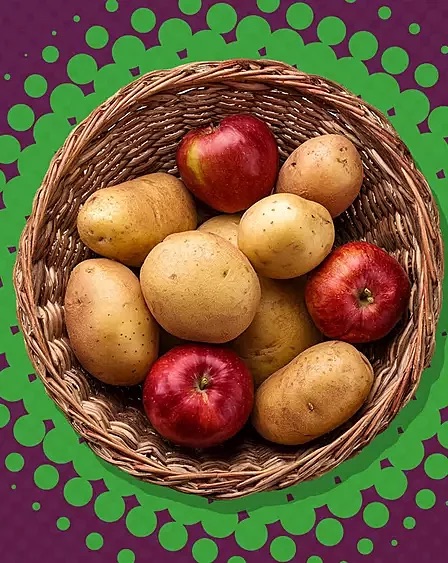
Never Store Your Potatoes Next To This Fall Fruit

There’s nothing worse than seeing fruits and vegetables you bought rot before you get a chance to use them. That’s why it’s important to store them correctly—and, as it turns out, you should be storing two of fall’s most popular ingredients separately. 

What Happens When Apples and Potatoes Are Stored Together? 

Apples and potatoes both emit a gas called ethylene, which can speed up the ripening process and cause your potatoes to sprout. Since they can both absorb gasses and vapors, storing them together sets them both up for failure. 

As a good rule of thumb, try to keep fruits and vegetables that produce ethylene gas away from each other. This includes onions, too, which are as common in the kitchen as salt and are often stored with potatoes.

Allrecipes

Posted in Kitchen Tips

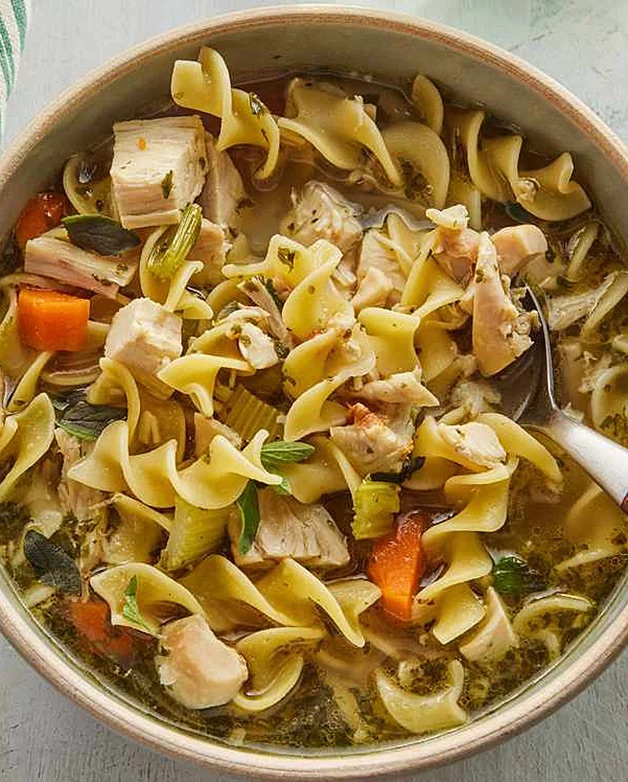
The 1 Ingredient Swap That Makes Every Soup Taste Better

There’s no denying it; it’s officially soup season. From savory stews to buttery bisques and creamy chowders, I want to be eating soup for as many meals as possible from here on out until spring arrives. In my quest to find the best soup recipes, I discovered there are a few secret (and not so secret) ingredients that can help make any recipe taste just *that much* better. But none is easier and more game-changing than a simple ingredient swap in any soup base that makes all the difference in the final product. Here’s why you need to be adding leeks to your next soup.

Allrecipes

Storing Your Plastic Wrap

Clingy is never a cute look, especially when it comes to stubborn, rebellious, unpredictable plastic wrap. I’m embarrassed to admit how many pieces of plastic wrap I have frustratingly crumpled up into a ball and tossed. Whether it was because one end of the plastic wrap clung to the other while unrolling, the plastic didn’t detach evenly from the blade, or one section somehow wrapped itself securely around my hand or forearm, taking the rest of the piece down with it, plastic wrap can be just plain rude.

Continue reading “Storing Your Plastic Wrap”
Posted in Kitchen Tips

My Mother-In-Law Taught Me How to Clean Cast Iron Pans and Her Simple Hack Is Honestly Life-Changing

If you’ve ever Google searched “how to clean XYZ pan,” the internet will instantly flood your results with an overwhelming amount of feedback. It’s enough to make you a skeptic. Which method rings true? Which of these results is a paid product push? Which of these is safe to potentially ingest after cleaning? HOW much is this?! The list goes on. Before you know it, your search has been redirected by the Googlesphere, and you’re suddenly shopping for new pans, wondering how on earth you got here.

Continue reading “My Mother-In-Law Taught Me How to Clean Cast Iron Pans and Her Simple Hack Is Honestly Life-Changing”