Fresh, bright, and vegetal, with a clean, mild flavor and subtle sweetness, cucumbers are extremely versatile and lend themselves well to a wide range of dishes. From raw to cooked, savory to sweet, and beverages dry or spiked, cucumbers go a long way. Their refreshing nature makes them a star in the summer, but a crudité plate any time of year is bound to see some of these seedy wonders, thanks to their consistent availability and dippable goodness.
If you’ve ever grown cucumbers at home, you know that not only are these long, cylindrical fruits one of the easiest things to grow, but they’re also abundant. Home-growing cucumbers will inevitably have them coming out of your ears at some point, so a little brush-up on how to keep them fresh for as long as possible is a solid idea.
How Long Do Cucumbers Last?
In the fridge: 4-6 days (unwrapped), but up to 2 weeks
Room temperature on the counter: up to 7 days (if out of sun)
Easy recipes for satisfying make-ahead salads, dressings, and veggie-packed meals, each 30 minutes or less to prepare, with 10 ingredients or fewer
Eating lunch “al desko” doesn’t have to mean frozen burritos or pricey takeout. Lunchbox Salads shares easy, affordable, substantial, and vibrant salad inspiration for every workday (and for dinner and weekends, too!). These creative recipes use 10 or fewer easy-to-buy ingredients and take no more than 30 minutes to make; those that contain meat can be made vegetarian and always keep the focus on healthy veggie-strong eating. Each recipe yields 2 substantial portions to support energy throughout the afternoon, and everything will keep for up to 2 days in the fridge (with specific packing instructions to avoid soggy leaves at lunchtime). Each chapter focuses on a different hero vegetable (like squash, carrot, red pepper, beet, cabbage, and zucchini); the recipes are easy to customize for different dietary preferences and are suitable for vegetarians and meat-lovers alike.
In 2023, I wrote a blog post about Meal Prep for Country Cooks. A few days later, I found myself wondering what exactly defines a “Country Cook.” The more I thought about it, the clearer it became that there wasn’t a precise definition. Searching online brought up a blog called “The Country Cook” and the well-known “Cook’s Country” from Cook’s Illustrated, but nothing that definitively answered my question.
Two years later, I’ve realized that post remains a favorite. Considering today’s economy, it’s no surprise. So, let me update that working definition—here we go!
A Country Cook is a cook!
Many of the dishes they serve will be made from scratch. While some people might think using processed foods or frozen meals is fine, a ‘country cook’ prefers to know exactly what’s in the food they’re serving. If someone is a picky eater or has special dietary needs, cooking from scratch is the only way to ensure it’s just right. For holiday meals, this approach becomes a true source of pride.
A Country Cook is frugal
Being frugal isn’t about being stingy; it’s about avoiding waste, especially in today’s economy. A frugal cook knows how to stretch every dollar. For example, when I make soup for myself, I portion the leftovers into freezer-safe containers to keep them fresh for later. It often means adjusting recipes to match your needs, so you’re not making more servings than necessary. A recipe for four might be great when family visits, but if you’re usually cooking for one or two, the extras could end up wasted.
A Country Cook is a planner
Most cooks know the importance of making a list before heading to the grocery store—forgetting something is always a risk without one. But honestly, before jotting down that list, take a few minutes to plan your dinner menu! Plenty of software options are available to help with this, and many can even generate your shopping list for you.
A Country Cook is organized
Before tackling your shopping list, make sure to check what’s already in your pantry. The best way to do this is to take a look! A well-organized pantry makes it easier to compare with your list. Don’t trust your memory—I’ve lost count of how many times I thought I was out of something, only to find it at home after shopping. Taking a few extra minutes to double-check can save you money in the long run.
So who is a Country Cook?
It’s everyone who has ever tried their best to feed their family the very best that they can offer!
This post originally appeared on my book review blog, Book Reviews by the Reluctant Retiree in 2023. It was well received as was a few other posts in the same basic vein. Now that I’m a widow and cooking only for myself, I thought what the heck, why not update it? So, I copied it over and started updating it. Some little devil on my shoulder egged me into asking AI to change the tone to “Humorous.” This post is the result of that.
A few years ago, I slapped a post on my other blog about how Meal Prep could help you get dinner on the table faster than you can say “Where did the time go?” It really does, as long as you don’t turn it into a last-minute scramble! Meal prep is a game we often play at the very last second—I’m not just referring to that frantic dash to the freezer for meat. No, I’m talking about hacking away at a mountain of vegetables for that gourmet soup, stew, salad, or one-pot wonder. We’re talking celery, carrots, peppers, and onions—oh, those dreaded onions (seriously, they should come with a warning label for tear production) that make you question your life choices!
Why not just buy it?
Before you leap out of your seat shouting that you can just buy those pre-chopped veggies, hold your horses! Let’s do a little math, shall we? What’s more economical: the mystery bag of chopped veggies you’re stuck with or your own personal chopping factory where you can pick only the produce your family actually likes? Last time I checked, the grocery prices were practically screaming at me—turns out it’s way cheaper to grab the whole fruits and veggies in the produce aisle than to pay a tiny elf to chop them for me!
There are so many books, pins, and blogs out there on this topic that I think I might need an Olympic-sized pool just for swimming through all the ideas! I absolutely enjoy diving into these treasure troves of creativity—it’s just that sometimes, I feel like I need a life vest to float above the overwhelming waves of suggestions!
It’s just little ol’ me now, that’s the scoop! Honestly, cooking for more than two is like hosting a dinner party for an army, unless we’re diving into the glorious realm of soups! So, what tickles my fancy are ingredients that are prepped like they’re auditioning for a cooking show—perfectly measured out so I can toss in just the right amount without breaking a sweat!
I don’t have time!
I had this brilliant lightbulb moment the second time I brought home a bag of celery stalks, only to find that a few of them had taken a turn for the worse before I could actually use them. So, I snatched up a cookie tray that would fit into my side-by-side freezer and lined it with parchment paper—my culinary version of a red carpet! With my cutting board and knife in hand, I unleashed my inner chef and got to chopping. Fast forward 5 to 10 minutes, and voilà! The tray was brimming with chopped celery like a miniature forest. I tossed it in the freezer and did the waiting game for about 2 hours. When I returned, the celery was frozen solid enough that it practically jumped into a freezer container on its own! The pieces were so nicely separated that I could easily snag just what I needed without throwing a tantrum. I kept at it until all the celery was done—like the marathon runner of the veg world! And if you’re dreaming of salads or stir-fries, be sure to stash some of those chopped veggies in an airtight container for the fridge, because, you know, nobody likes soggy salad!
I bravely faced off with a colossal onion and, armed with my trusty mandolin slicer—no, not the musical kind!—I triumphed after a fierce five-minute slicing duel. This heroic vegetable is off to the refrigerator to await its fate. But wait, there’s more! I plan to chop up a few more of its onion buddies and freeze them, because who wouldn’t want a mini onion army ready for battle later?
This is sliced Starfruit – the fancy fruit that thinks it’s too good for the fruit bowl! A friend of mine has a tree in her backyard, and she’s taken to freezing these dazzling slices like they’re potential heirlooms. Now, instead of ice cubes, she’s jazzing up her drinks with star-shaped fruity bursts. Who needs boring ice when you can sip on a piece of tropical flair? Cheers to being the coolest kid on the block!
When it comes to storing frozen vegetables, you might want to think twice before using your old gym socks! I like to mix it up with a fascinating collection of freezer bags and containers—talk about a cool party! This way, I can easily play a game of “What’s in the Bag?” every time I open the freezer. Just make sure to slap a date on those bags and containers; nobody wants to embark on a culinary expedition to the land of the unknown veggies!
My recipe calls for a different type of measurement!
Oh, absolutely! My cooking magazine crush, Cook’s Illustrated, once took a whack at this onion conundrum. They declared that a small onion equals half a cup of diced tears—sorry, I mean onions; a medium onion serves up a full cup of onion goodness; and a large onion? Well, that monstrous thing is a whopping two cups! Who knew chopping onions could turn us into culinary mathematicians?
Now, of course, you probably won’t just be rolling around with onions like they’re the VIPs of your kitchen. That’s what led me to an absolute gem of a website, https://www.howmuchisin.com/produce_converters — I mean, talk about a place where vegetables have their own conversion parties! Having stumbled upon this treasure, I’m plotting my grand return to my favorite recipes, armed with my notepad and a questionable amount of enthusiasm!
Now that I’ve handed you some veggie ammunition, go forth and cook like a culinary superhero!
If you’re a household of one, you know the struggles of cooking for yourself. Most recipes serve four or more people, so unless you take the time to halve or quarter each and every one, you’re left with a mountain of leftovers. That might be fine on day two or three, but eating reheated leftovers all week long gets old.
That’s why we want to help. These seven meal plans celebrate you, the solo cook, and ensure you won’t get bored with dinner (or breakfast or lunch, for that matter) by mid-week.
1. How I Prep a Week of Mediterranean Diet Meals for One
This one-week meal plan celebrates both the Mediterranean diet and the solo cook. It will set you up for a week of breakfasts, lunches, and dinners that are far from boring and totally feel-good, including a salmon skillet with chickpeas and greens, Mediterranean quinoa salad, toasted muesli, and more.
2. How I Prep a Week of Easy Meals for One in Just 2 Hours
This meal plan is out to prove that meal prepping for one doesn’t have to mean cooking a big pot of chili on Sunday and reheating portions all week. You’ll get lasagna roll-ups, baked salmon, rotisserie chicken tacos, and more out of this two-hour session.
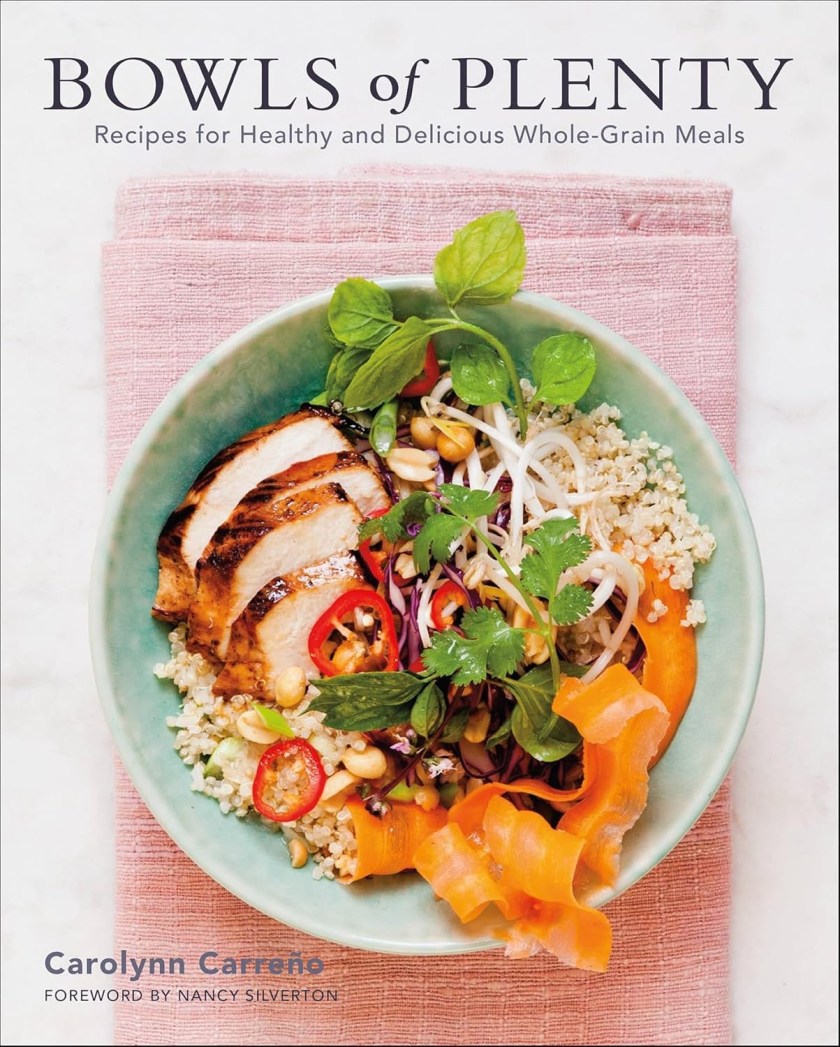
Gorgeous, layered, satisfying bowls have become the next wave of healthy eating. From food blogs to Instagram, farm-to-table bistros to chain restaurants, “the bowl” has become part of our culinary vocabulary. And whole grains are not just for hippies and health nuts anymore! Hearty grains like quinoa, farro, millet, and spelt are replacing flour or corn tortillas, bread, pasta, white rice, and mashed potatoes as the base or vehicle for other, richer, more complex ingredients.
Bowls of Plenty brings grain bowls to the home cook, offering more than 75 recipes for hearty, grain-centric, one-dish meals that layer flavorful veggies and delicious sauces and vinaigrettes, with optional meats and dairy on a foundation of whole-grain staples. A mix sweet and savory breakfast bowls, salad bowls that will put an end to the sad desk lunch, flexible composed main dish bowls that work with all diets, and creative dessert bowls, Bowls of Plenty is a modern handbook for healthy and delicious cooking at home.
Optimize the speed and convenience of your Instant Pot® by prepping jars for dump-and-cook dishes for breakfast, dessert, and everything in between.
The wildly popular Instant Pot has made cooking delicious meals quicker and easier than ever. However, you still need to prepare the food that goes into your Instant Pot. This book shows how to create pre-prepped, mason-jar-filled entrees that make meal time as easy as 1-2-3: dump the jar’s pre-measured contents into your Instant Pot, add water, and pressure cook. It’s easier than microwave mac and cheese but way better tasting and far more healthy.
The Instant Pot Meals in a Jar Cookbook offers a wide selection of meals in a jar, including breakfasts, lunches, dinners and desserts. It details the specific meal prep needed to stock your pantry with mason jars full of all-natural foods that are ready to cook at a moment’s notice. There are also recipes that include combining the shelf-stable meal in a jar with fresh vegetables or meats from your fridge for an even more delicious entree that still requires almost zero meal-time work.
Officially authorized by Instant Pot, this book will help you get the most out of your pressure cooker. With Instant Pot-specific techniques and step-by-step instructions, anyone can make delicious meals in a jar to store or gift.
I’ve always joked that adding bacon to a recipe is just plain cheating. Its mixture of saltiness, smokiness, and flavorful fat can take an ordinary dish from ho-hum to holy moly! (This Brussels sprouts recipe is a good example.) Of course, it’s also delicious on its own, whether for breakfast or as a crunchy snack.
Bacon’s high fat content is what makes it so irresistible, but it’s also the reason it can quickly turn rancid. Spoiled bacon will ruin not only your meal, but possibly your day if you get a case of food poisoning. Here’s how you can tell if your bacon is safe to eat and also how long you should expect it to last.
How to Tell If Bacon Has Gone Bad
Appearance: Fresh bacon should be a vibrant pink with marbled white fat streaks. Any significant color change is a red flag. If you see a noticeable discoloration, like a grayish, greenish, or brownish tint, throw it out immediately. In some cases, you might be able to see mold spots that are either white or black. Don’t be tempted to cut off the visibly molded parts and use the rest. Even if you can’t see mold, it could be lurking there. When in doubt, throw it out.
Texture: A slimy texture or stickiness on the bacon indicates bacteria is present. Slime occurs when bacteria begins to break down the meat. If your bacon is slimy or sticky to the touch, discard immediately.
Smell: While fresh bacon has a subtle meaty smell, bacon that has gone bad will emit a strong, unpleasant odor. A sour or sulfuric smell means that bacteria, yeast, or fungi are growing on the meat, and it needs to be tossed out.
There are a lot of rules when it comes to cleaning your food. So many that it can become impossible to know exactly which ingredients you’re supposed to wash and how you’re supposed to do it correctly. That’s why we’re here to answer the food questions that you may have not thought about until you find yourself peeling an onion and thinking, should I be washing this?
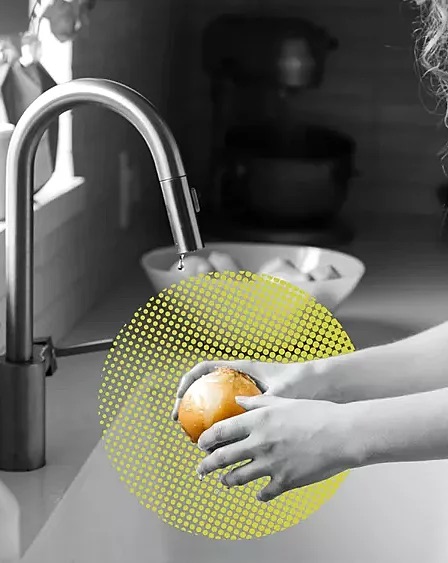
Onions are one of the most used ingredients in the kitchen, due to their versatility and rich flavor. Think soups, stir-fries, pasta, and even hamburgers. No matter if you’re whipping up French onion dip from scratch or garnishing roasted potatoes with onions there’s one thing that we know for sure—you should be washing them before cooking.
Mushrooms are an undoubtedly versatile ingredient. You can sauté them on their own, turn them into a garlic butter masterpiece, throw them into a divine omelet, and virtually use them in any dish that you feel needs a plant-based boost. Store-bought mushrooms range widely in variety, with some of the most popular types being white button, shiitake, and portobello.
If you’re like us, you may have skipped a thorough washing a time or two in favor of a simple rinse. But that’s actually the No. 1 mistake people make when washing mushrooms—because mushrooms grow in dirt, it’s important to wash them as thoroughly as possible before cooking with them.





 Good Food, Good Meat, Good God, Let's Eat!