
A pretty sizable portion of my favorite things are fermented. Sauerkraut on a Hebrew National hot dog, soul-warming miso soup, and that ice cold beer at the end of a long day are all things made possible by that holiest of metabolic processes. And in my mind, there’s no other food that deserves the fermented crown more than kimchi.
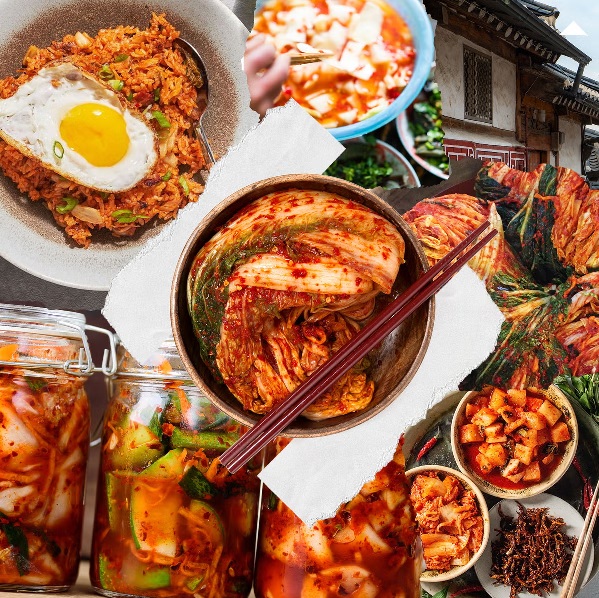
In the states, people tend to think of kimchi solely as the Korean pickled cabbage that has grown exponentially in popularity over the past couple of decades. However, kimchi is much much more than that. To get a full rundown of all things kimchi I spoke to Hyunjoo Albrecht, the founder and head chef behind Sinto Gourmet, the makers of one of our favorite brands of store-bought kimchi.
So what is kimchi?
Kimchi should be thought of more as a method than a singular dish. Hyunjoo describes it succinctly as “a very traditional, fermented vegetable originating in Korea that is fermented with salt as well as other seasonings.” She also told me that it’s the way Korean people have been preserving vegetables for centuries. Traditionally, the salted veg would be placed in earthenware pots and buried to keep cool during summer months and to keep from freezing in the winter. Today kimchi is kept in the fridge. (When kept at room temperature, the fermentation can occur too quickly and it will spoil.)
delish!
Discover more from Good Food, Good Meat, Good God, Let's Eat!
Subscribe to get the latest posts sent to your email.

 Good Food, Good Meat, Good God, Let's Eat!