Posted in Home & Pantry, Kitchen Tips

Freezer Inventory: Know What You Put Back

There’s a moment in every freezer owner’s life when something gets pushed toward the back.

Then something else gets pushed in front of it.

Then another thing.

And eventually, you find yourself staring into the freezer wondering:

“What is that?”

If you’ve ever discovered a container of something frozen so long that you can’t remember making it, you already understand why a freezer inventory can be useful.

But I’m not talking about creating another complicated household management system.

For a small household, a freezer inventory can be as simple as knowing what you have, where it is, and what needs to be used first.

Because putting food back is only half the job.

The other half is using it.

Your Freezer Is Part of Your Pantry

I’ve been thinking about the freezer a little differently this September.

Instead of seeing it as the place where leftovers and extra groceries go, think of it as an extension of your pantry.

Your pantry might contain:

  • Rice
  • Pasta
  • Flour
  • Canned tomatoes
  • Broth
  • Dried beans
  • Spices

Your freezer might contain:

  • Green beans
  • Corn
  • Peppers
  • Cooked chicken
  • Ground turkey
  • Fruit
  • Broth
  • Leftovers

Together, those ingredients give you a lot more possibilities for dinner.

But only if you know they’re there.

Start With What You Already Have

You don’t need to empty the freezer onto the kitchen counter and create a giant project.

Start with a quick inventory.

Open the freezer and make a list.

You might discover:

Vegetables

  • Green beans — 2 packages
  • Corn — 1 package
  • Mixed vegetables — 1 package

Meat

  • Cooked chicken — 2 portions
  • Ground turkey — 1 package

Fruit

  • Blueberries — 1 bag

Prepared Foods

  • Vegetable soup — 2 servings
  • Leftover casserole — 1 serving

That’s enough.

You’ve already learned something useful:

You have food.

Now you can start planning meals around it.

Label Everything

If there’s one freezer habit worth developing, this is probably it.

Label your packages.

The National Center for Home Food Preservation’s guidance on packaging and labeling frozen foods recommends labeling each package with the name of the food, packaging date, amount or number of servings, and the form of the food when that information is useful.

So instead of:

“What’s in this bag?”

you get:

Green Beans — 2 cups — Sept. 2026

Or:

Cooked Chicken — 1½ cups — Sept. 2026

Or:

Vegetable Soup — 2 servings — Sept. 2026

Future-you will appreciate the effort.

Especially at 5:30 on a Tuesday evening.

Date It, Even If You Think You’ll Remember

This is another one of those little jobs that’s easy to skip.

You think you’ll remember when you froze something.

You probably won’t.

And even if you do remember, having the date right there makes freezer management much easier.

The date isn’t necessarily a countdown to when the food suddenly becomes unsafe. Properly frozen food maintained at 0°F or below remains safe indefinitely, although quality can decline over time. The USDA recommends keeping the freezer at 0°F or below for best quality.

Think of the date as a quality and rotation tool.

It tells you what has been waiting the longest.

Use the Oldest Food First

This is where the inventory becomes useful.

The NCHFP recommends a simple first-in, first-out approach: use older frozen foods before newer ones so you enjoy them at their best quality.

You don’t have to arrange your entire freezer like a grocery store.

Just make the older packages easier to see.

When you add a new package of green beans, don’t bury last month’s green beans behind it.

Put the newer package toward the back.

Move the older one forward.

That’s it.

Give Different Foods Different Homes

One of the easiest ways to make a freezer inventory manageable is to give things a general place.

You might have:

One Area for Vegetables

Green beans, corn, peas, mixed vegetables, broccoli, peppers, and other frozen produce.

One Area for Proteins

Chicken, turkey, pork, beef, seafood, and cooked meats.

One Area for Prepared Foods

Soups, casseroles, cooked grains, leftovers, and other ready-to-use foods.

One Area for Fruit

Berries, sliced fruit, smoothie ingredients, or fruit prepared for baking.

You don’t need fancy bins to do this.

If you have them, great.

If you don’t, simply creating a rough mental map of the freezer can make finding things easier.

Meal-Sized Portions Make Inventory Easier

This is one reason I’ve been emphasizing meal-sized portions throughout this week’s freezer conversation.

A large package of frozen vegetables can be useful.

But four clearly labeled two-cup packages can be even more useful if that’s how you actually cook.

The NCHFP specifically recommends packaging frozen foods in quantities that will be used for a single meal.

That means your inventory can become a list of meals waiting to happen:

Green beans — 2 cups

Cooked chicken — 2 cups

Vegetable soup — 2 servings

Corn — 1½ cups

Now your freezer isn’t just a collection of ingredients.

It’s a collection of possibilities.

Keep a Simple Inventory Outside the Freezer

If your freezer is small, you may not need this at all.

But if you’re building a larger freezer stash, a simple list on the freezer door—or in a notebook nearby—can save time.

It could look like this:

FoodAmountDateLocation
Green beans2 cupsSept. 16Vegetable bin
Cooked chicken2 cupsSept. 15Protein bin
Corn1½ cupsSept. 10Vegetable bin
Vegetable soup2 servingsSept. 5Prepared foods
Blueberries3 cupsSept. 2Fruit bin

That’s all you need.

You don’t need a barcode scanner.

You don’t need an app.

You don’t need a complicated spreadsheet.

Unless, of course, you enjoy spreadsheets.

Then by all means, have fun. 😉

Don’t Forget the “Use Soon” List

This is the part I think can make a freezer inventory really helpful.

Instead of simply recording what you have, identify the things you should use next.

Maybe you have:

Use Soon

  • Vegetable soup
  • Older package of green beans
  • Cooked chicken
  • Opened bag of frozen corn

Now you have a built-in meal-planning list.

Instead of asking:

“What should I make for dinner?”

you can ask:

“What needs to be used?”

That’s a much easier question.

Your Freezer Shouldn’t Become a Museum

There’s a difference between preserving food and collecting food.

A freezer full of carefully labeled packages might look wonderfully productive.

But if those packages sit there for two years while you keep buying more food, something has gone wrong.

The purpose of preservation is to extend the usefulness of food—not to create a permanent exhibit of everything you’ve ever frozen.

The NCHFP notes that freezing preserves food by slowing microbial growth and chemical changes, but freezing does not sterilize food. It also recommends using older foods first for best quality.

So use what you put away.

Make the soup.

Cook the green beans.

Use the chicken.

Bake with the berries.

And then replace those ingredients when you have another opportunity to put something back.

Give Yourself a Freezer Reset

Every so often, take ten or fifteen minutes and look through the freezer.

Ask:

  • What do I have?
  • What’s oldest?
  • What’s nearly forgotten?
  • What needs to be used soon?
  • What am I running low on?
  • What do I actually want to preserve more of?

That last question is important.

Your freezer inventory isn’t just a record of what you’ve stored.

It’s information about how you really eat.

If your green beans disappear quickly but the frozen zucchini never gets used, that’s useful information.

Next time you have a choice, put more green beans back.

Maybe don’t bother with as much zucchini.

That’s practical preservation.

A Freezer Inventory Should Make Dinner Easier

That’s the real test.

If keeping an inventory makes your life more complicated, simplify it.

If a handwritten list works, use a handwritten list.

If a dry-erase board on the freezer door works, use that.

If you can remember what’s inside because your freezer is small and well organized, you may not need a list at all.

The system isn’t the important part.

Knowing what you have is.

Because the whole purpose of putting food back is to make future meals easier.

Put It Back. Keep Track. Use It.

That’s our freezer philosophy in three simple steps:

Put it back.

Preserve good food while it’s plentiful.

Keep track.

Label it, date it, and know what you have.

Use it.

Turn those ingredients into actual meals.

That’s how a freezer becomes more than a cold storage box.

It becomes part of your meal plan.

And that’s the goal we’ve been working toward all week:

Today’s harvest. Tomorrow’s dinner.

Not someday.

Not eventually.

Dinner.
Posted in Recipe Roundup

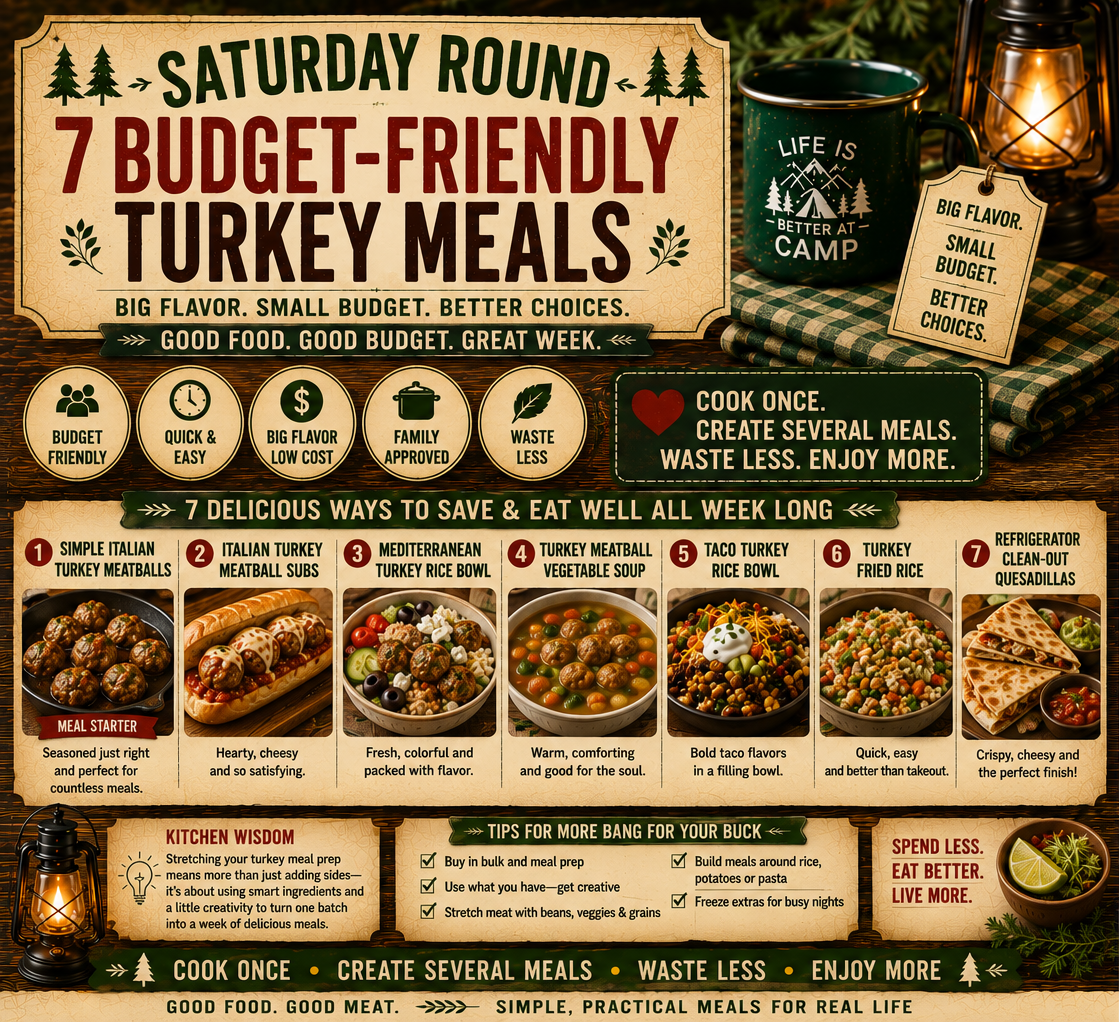
7 Budget-Friendly Turkey Meals

Looking for ways to make one package of ground turkey stretch into several delicious meals?

This week’s Stretch Every Grocery Dollar series showed how a simple batch of homemade Italian turkey meatballs can become a full week of satisfying dinners. Whether you’re cooking for one, feeding a small family, or simply trying to lower your grocery bill, these recipes prove that a little planning can go a long way.

From hearty soups and sandwiches to rice bowls and creative leftover meals, here are seven budget-friendly turkey recipes to inspire your next meal plan.


🍝 1. Simple Italian Turkey Meatballs

The meal prep foundation that starts the week and makes several later meals quick and easy.


🥪 2. Italian Turkey Meatball Subs

A toasted roll, marinara, melted mozzarella, and homemade turkey meatballs make an easy comfort-food favorite.


🥗 3. Mediterranean Turkey Rice Bowl

Fresh vegetables, brown rice, feta, and a creamy lemon herb yogurt sauce transform turkey meatballs into a fresh Mediterranean-inspired meal.


🥣 4. Turkey Meatball Vegetable Soup

A comforting soup filled with vegetables, pasta, and hearty turkey meatballs.


🌮 5. Taco Turkey Rice Bowl

Seasoned turkey meatballs, brown rice, black beans, corn, salsa, and fresh toppings come together in a colorful Build-A-Bowl dinner.


🍳 6. Turkey Fried Rice (Bonus Recipe)

A quick skillet meal that gives leftover turkey meatballs a delicious second life.


🧀 7. Refrigerator Clean-Out Quesadillas (Bonus Recipe)

One of the easiest ways to use leftover turkey, vegetables, cheese, and odds and ends from the refrigerator. Every quesadilla is a little different—and that’s exactly the point!


💡 Related Reading

Before you head to the grocery store, don’t miss:

Five Ways to Stretch Ground Turkey

You’ll find practical tips for meal prepping, freezing, using beans and vegetables to stretch your meat, and making every grocery dollar work a little harder.


Final Thoughts

Budget-friendly cooking isn’t about giving up the foods you love—it’s about making smart use of what you already have.

By starting with one simple batch of turkey meatballs and thinking creatively about leftovers, you can enjoy a full week of flavorful, satisfying meals while reducing food waste and saving money.

That’s exactly what the Stretch Every Grocery Dollar series is all about.

Simple Italian Turkey Meatballs
Thesetender Italian Turkey Meatballs are seasoned with classic herbs and Parmesancheese, then baked until juicy and lightly browned.
Check out this recipe
Italian Turkey Meatball Subs
Oneof the easiest ways to stretch your grocery budget is to transform leftoversinto something that feels completely new.
Check out this recipe
Mediterranean Turkey Rice Bowl
Thiscolorful Mediterranean Turkey Rice Bowl transforms a few of this week'shomemade turkey meatballs into a completely new meal.
Check out this recipe
Turkey Fried Rice
Oneof my favorite ways to stretch leftovers is to turn them into fried rice.
Check out this recipe
Turkey Meatball Vegetable Soup
Halfway through the week is the perfect time for a comforting bowl of homemade soup.
Check out this recipe
Taco Turkey Rice Bowl
Today's Taco Turkey Rice Bowl gives Sunday's Italian turkey meatballs a Southwestern makeover.
Check out this recipe
Refrigerator Clean-Out Quesadillas
Almost any leftover meat, vegetables, cheese, or rice can become a quesadilla.
Check out this recipe
Posted in Kitchen Tips

Five Ways to Stretch Ground Turkey

Introduction

Ground turkey has become one of my favorite budget-friendly proteins. It’s often less expensive than ground beef, works well in countless recipes, and easily takes on the flavors of whatever seasonings you use.

Growing up Pennsylvania Dutch, I learned early that wasting food simply wasn’t an option. You learned to make one ingredient work in several different meals, and that’s exactly what we’ve been doing this week.

If you’re looking for ways to make your grocery budget go further, here are five simple ways to stretch a pound of ground turkey without anyone leaving the table hungry.


1. Make Meal Prep Work for You

Instead of cooking one dinner, cook a larger batch that can become several meals.

This week, one batch of Italian Turkey Meatballs became:

  • Meatball Subs
  • Mediterranean Rice Bowls
  • Vegetable Soup
  • Taco Rice Bowls

One afternoon of cooking provided several completely different dinners.


2. Add Beans

Beans are inexpensive, high in protein, and rich in fiber.

Try mixing:

  • Black beans
  • Pinto beans
  • Cannellini beans
  • Great Northern beans

They’re perfect in:

  • Chili
  • Taco meat
  • Rice bowls
  • Soups
  • Pasta dishes

You can often replace one-third to one-half of the meat without sacrificing flavor.


3. Bulk It Up with Vegetables

Finely chopped vegetables disappear into many recipes while adding nutrition and stretching your meat.

Some favorites include:

  • Mushrooms
  • Zucchini
  • Carrots
  • Bell peppers
  • Onions
  • Spinach

For sauces, soups, casseroles, and meatloaf, they’re almost invisible.


4. Build Meals Around Rice or Potatoes

Instead of serving meat as the star of the plate, let hearty, inexpensive sides do more of the work.

Ideas include:

  • Rice bowls
  • Stuffed baked potatoes
  • Skillet meals
  • Fried rice
  • Soup
  • Pasta

A smaller amount of turkey goes much farther when it’s part of a complete meal.


5. Stock Your Freezer

When you find ground turkey on sale, cook several pounds at once.

Freeze portions as:

  • Meatballs
  • Taco meat
  • Seasoned crumbles
  • Meatloaf mixture
  • Cooked patties

Having cooked turkey ready to go makes weeknight meals much easier and helps you avoid expensive takeout.


💡 Kitchen Wisdom

Don’t overlook frozen vegetables when you’re stretching your grocery budget.

Corn, peas, green beans, broccoli, and mixed vegetables can be used straight from the freezer, allowing you to use only what you need and save the rest for another meal. Fresh vegetables like carrots and butternut squash often hold their texture better in recipes where you want them to stay firm, while frozen vegetables shine in soups, casseroles, and skillet meals.


Final Thoughts

Stretching your grocery dollar isn’t about serving less food—it’s about making smart use of the ingredients you buy.

With a little planning, one package of ground turkey can become several satisfying meals, helping you save both time and money while reducing food waste.

That’s a lesson that’s just as valuable today as it was in my Pennsylvania Dutch childhood kitchen.


Related Recipes from This Week

Posted in Soups & Stews

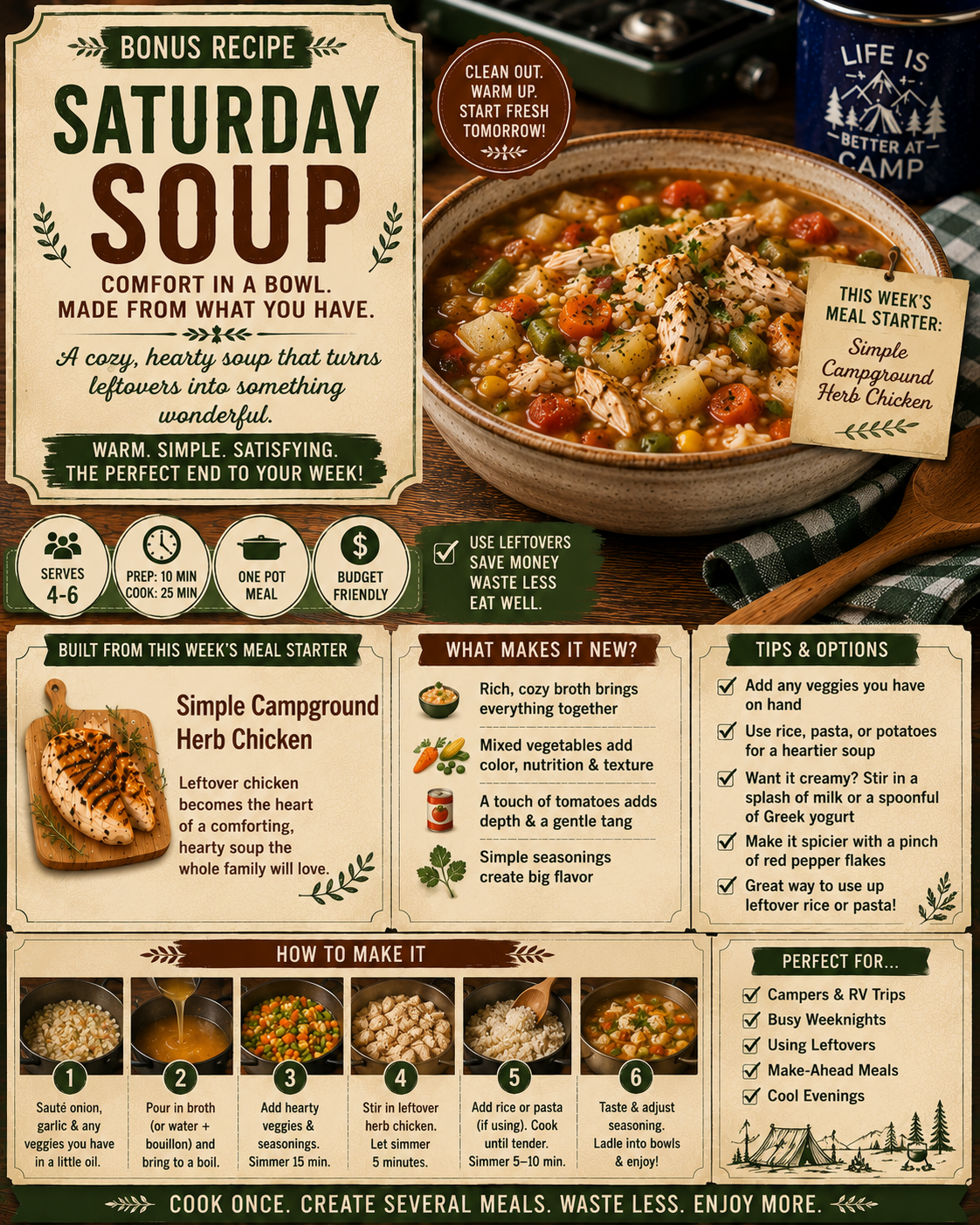
Saturday Soup

By Saturday, the refrigerator often tells the story of the week. There’s a little cooked chicken left, a handful of vegetables, perhaps some rice or potatoes, and just enough odds and ends that aren’t quite enough for another full meal.

That’s where Saturday Soup comes in.

Rather than letting those ingredients go to waste, gather them into one comforting pot of soup. There’s no need to follow this recipe exactly—it’s meant to be flexible. Use what you have, adjust the seasonings to your taste, and enjoy one last hearty meal before restocking your kitchen. Whether you’re breaking camp, preparing for next week’s grocery trip, or simply trying to waste less food, Saturday Soup is a delicious reminder that some of the best meals come from making the most of what you already have.

simplegoodfood's avatarsimplegoodfood

Saturday Soup

Every pot of Saturday Soup will be a little different—that's part of its charm.
Prep Time 15 minutes
Cook Time 30 minutes
Total Time 45 minutes
Servings: 4
Course: Dinner, Lunch, Soup
Cuisine: American
Calories: 275

Ingredients
  

  • 1 tablespoon olive oil
  • 1 small onion diced
  • 2 cloves garlic minced
  • 1½ cups cooked Simple Campground Herb Chicken diced
  • 5 cups low-sodium chicken broth
  • 1 cup diced potatoes or cooked rice
  • 1 cup mixed vegetables carrots, celery, peas, corn, green beans, broccoli, or whatever is left from the week
  • 1 teaspoon dried parsley
  • ½ teaspoon dried thyme
  • ½ teaspoon Italian seasoning
  • Salt and black pepper to taste
Optional additions:
  • A handful of spinach
  • Leftover mushrooms
  • Cooked pasta
  • Barley
  • Corn
  • A squeeze of fresh lemon juice before serving

Method
 

  1. Heat the olive oil in a soup pot over medium heat.
  2. Cook the onion until softened, about 4 minutes.
  3. Add the garlic and cook for another 30 seconds.
  4. Stir in the chicken broth.
  5. Add the chicken, potatoes (or rice), vegetables, parsley, thyme, and Italian seasoning.
  6. Bring the soup to a gentle boil.
  7. Reduce the heat and simmer for about 20 minutes.
  8. Taste and adjust the seasonings as needed.
  9. Stir in spinach or a squeeze of lemon juice just before serving, if desired.

Notes

I can tell you from personal experience, this soup makes a great lunch the next day!
Notes
  • Every pot of Saturday Soup will be a little different—that’s part of its charm.
  • This recipe is perfect for using small amounts of leftover vegetables that might otherwise be discarded.
  • If you have leftover gravy, add a spoonful for extra richness.
  • A little cooked barley or orzo also works beautifully.

Leftover & Meal Prep Tips

Saturday Soup isn’t just a recipe—it’s a habit.

Instead of asking, “What should I throw away?”

Ask yourself,

“What could go into today’s soup?”

Chicken, turkey, pork, beef, vegetables, rice, potatoes, barley, pasta, and beans can all find a home in the soup pot.

It’s one of the easiest ways to reduce food waste while stretching your grocery budget.


Food Storage & Preservation

Cool leftover soup promptly and refrigerate within two hours.

If you’re freezing soup or preserving ingredients by canning, freezing, or dehydrating, always check the latest USDA recommendations for safe food preservation methods.

Posted in Kitchen Tips

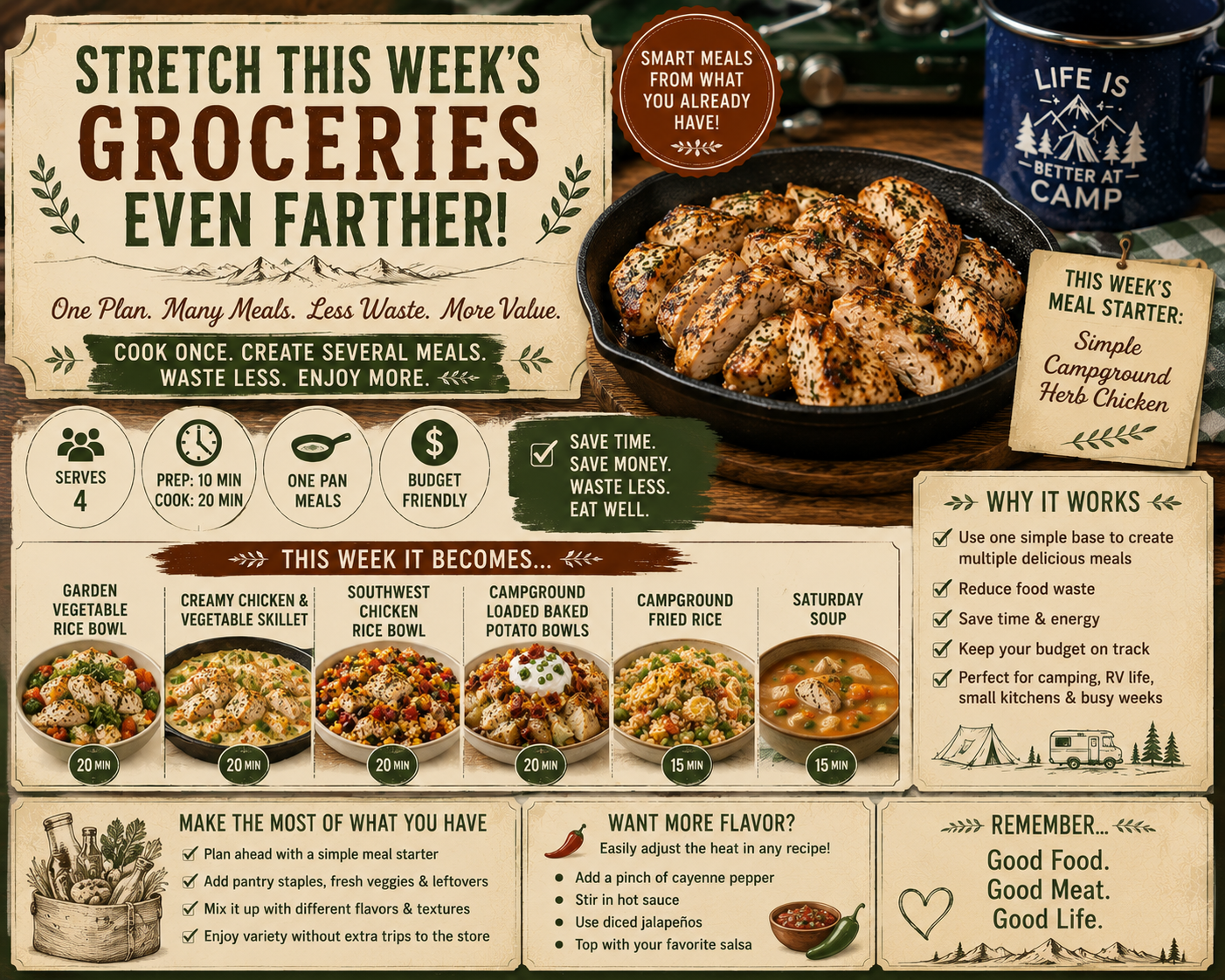
Stretch This Week’s Groceries Even Farther

One of the biggest myths about saving money on groceries is that you have to give up the foods you enjoy. In reality, stretching your grocery budget is less about buying different foods and more about using the food you buy wisely.

This week, we’ve shown how one package of chicken can become several completely different meals. None of those meals felt like eating leftovers because each recipe changed the flavors, the textures, or even the way the food was served.

That same approach works whether you’re cooking at a campground, in an RV, or in your kitchen at home.

Start With a Meal Starter

Instead of thinking about leftovers, think about meal starters.

Cook a larger batch of one versatile ingredient at the beginning of the week, then build different meals from it over the next several days.

Meal starters can include:

  • Cooked chicken
  • Turkey meatballs
  • Taco-seasoned ground beef
  • Pulled pork
  • Brown rice
  • Roasted vegetables
  • Baked potatoes

Preparing these ingredients once saves time and makes weeknight meals much easier.

Change the Base

One simple way to keep meals from becoming repetitive is to change what goes underneath your protein.

This week we used:

  • Rice
  • A creamy skillet sauce
  • Another rice bowl with completely different flavors
  • A baked potato

Next week the same idea might include pasta, tortillas, salads, or soup.

Changing the base changes the entire meal.

Use What You Already Have

Many of the week’s recipes can be adapted using whatever vegetables are already in your refrigerator.

Instead of shopping for one specific ingredient, ask yourself:

  • What needs to be used first?
  • What vegetables are already chopped?
  • What can I combine before it spoils?

Learning to cook this way helps reduce food waste while saving money.

Cook Once, Clean Once

One of the biggest advantages of meal prep is reducing cleanup.

When you’re already cooking chicken, bake a few potatoes.

While vegetables are roasting, cook extra rice.

If the grill is already hot, cook tomorrow’s protein today.

A little extra work now often saves an hour later in the week.

Think Beyond Leftovers

The word “leftovers” sometimes gets a bad reputation.

Instead, think of each cooked ingredient as the beginning of another meal.

Chicken becomes soup.

Rice becomes fried rice.

A baked potato becomes tomorrow’s breakfast hash.

Roasted vegetables become omelets or pasta.

The goal isn’t to eat the same dinner several nights in a row.

The goal is to give each ingredient a new purpose.

Don’t Forget Your Freezer

If you realize you won’t use something within a few days, freeze it before it goes bad.

Cooked chicken, rice, soups, sauces, and many vegetables freeze well, making future meals even easier.

Always label containers with the contents and the date so they’re easy to identify later.

If you’re preserving food by freezing, canning, or dehydrating, always check the latest USDA recommendations for safe food handling and storage.

A Little Planning Goes a Long Way

Stretching your grocery budget isn’t about complicated meal plans or expensive equipment.

It’s about looking at the ingredients you already have and asking one simple question:

“What else can I make with this?”

That one question can help you waste less, save more, and make dinner a little easier every day.

Whether you’re cooking over a campfire, in a tiny RV kitchen, or in your own home, good meals don’t have to be expensive. With a little planning and a little creativity, the groceries you buy today can become delicious meals all week long.

🏕️ This Week’s Camp Menu

✅ Sunday: Simple Campground Herb Chicken
✅ Monday: Garden Vegetable Rice Bowl
✅ Tuesday: Creamy Chicken & Vegetable Skillet
✅ Wednesday: Southwest Chicken Rice Bowl
✅ Thursday: Campground Loaded Baked Potato Bowls
💵 Friday: Stretch This Week’s Groceries Even Farther

Coming Tomorrow:

🍗 Five Easy Ways to Stretch One Package of Chicken — a roundup that brings together the week’s recipes and offers even more ideas readers can try on their own.

Posted in Kitchen Tips

The Ultimate Guide to Pasta Shapes

The grocery store is packed with pasta shapes. Before you reach for a box, learn about what makes each shape different and which recipes work best with your go-to noodle.

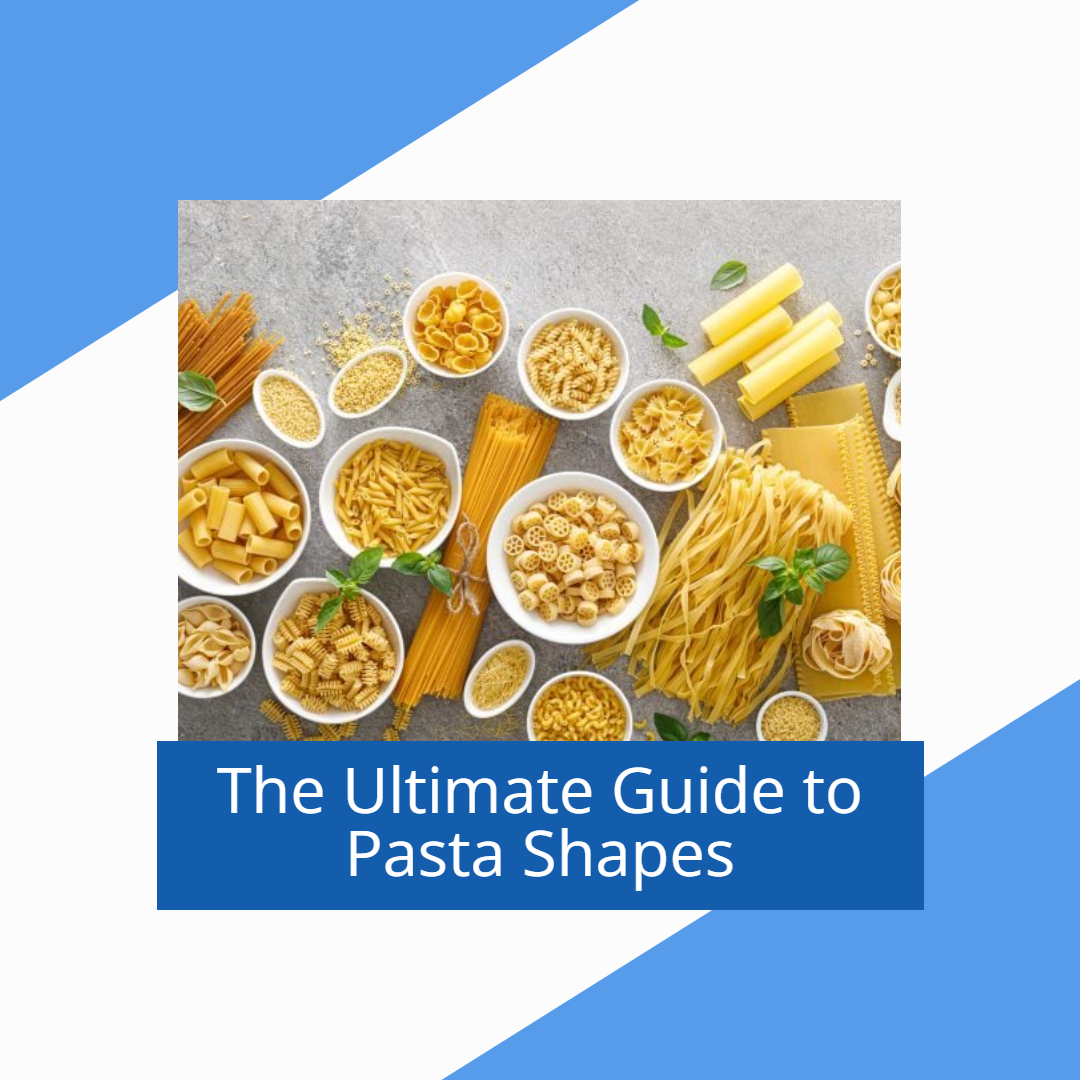
Various kinds of uncooked pasta and noodles, some in white bowls, on stone background, top view
YelenaYemchuk/Getty Images

There’s a reason making pasta is so much fun—there are tons of pasta shapes to choose from! Whatever kind of sauce you’re in the mood for, like pesto, cream, marinara or meat sauce, there’s a noodle shape that suits it perfectly. You can take it one step further and choose between fresh or dry pasta too.

Long, smooth noodles prefer lighter sauces or a simple coating of olive oil and herbs. Thick, ribbon-like noodles or ridged pasta can hold more weight, and they keep the sauce on your noodles instead of at the bottom of the bowl. Tubular pasta is ideal for baked dishes like casseroles. Because the shapes, sizes and thickness varies so much, each type of pasta will have different cook times. Check the directions on your pasta box for perfectly al dente noodles.

If you’re using a pasta maker to shape your homemade pasta dough into noodles, tubes or shells, here’s a whole list of fun shapes to try. One ball of dough can make dozens of different dishes!

Taste of Home