
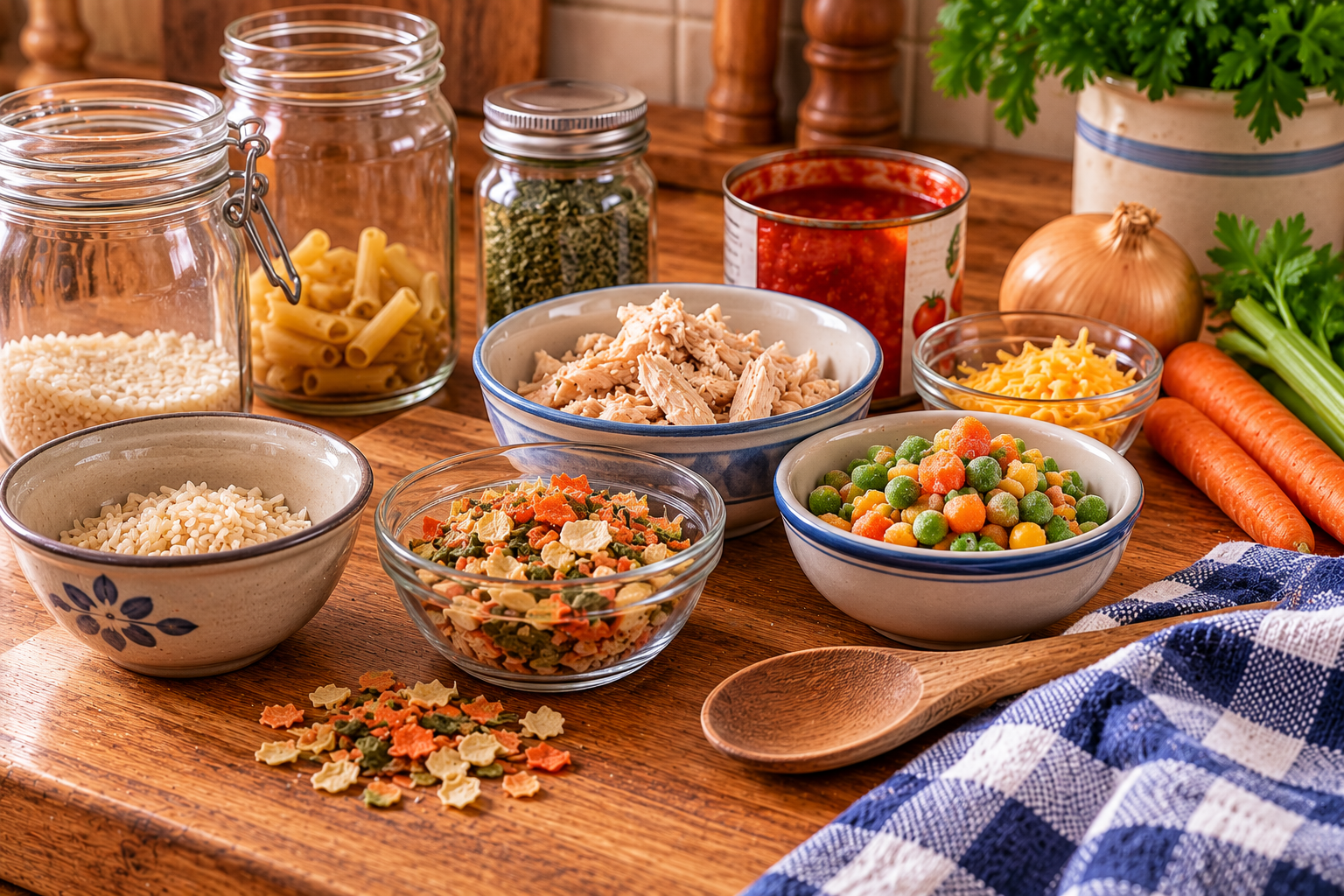
You know those little bits and pieces that accumulate in the kitchen?
There’s a little rice left in one container, a few tablespoons of dehydrated vegetables in another, and just enough pasta in the package to make you wonder whether it’s worth cooking.
The refrigerator has a small amount of leftover chicken, a little shredded cheese, and half a container of something you opened earlier in the week.
Nothing seems like enough to make a meal on its own.
Before you decide you have nothing to cook, take another look.
Those almost-empty packages might be exactly what you need to get dinner started.
Welcome to Day Five of our October Pantry Challenge!
This week, we’ve been learning how to make meals from what we already have. We’ve started with three ingredients, explored flexible skillet meals, and discovered how pantry staples can become a comforting pot of soup.
Today, we’re tackling the odds and ends.
The goal isn’t to throw everything into one pot and hope for the best. It’s to learn how to recognize which small quantities can work together, which ingredients deserve to be saved for another day, and how to make the most of what remains.
Why the Almost-Empty Pantry Deserves Attention
When we think about pantry cooking, we often picture full cans, unopened packages, and neatly arranged jars.
But real kitchens aren’t always that tidy.
We use some of an ingredient for one meal and put the rest away. We open a package of rice, use part of a bag of vegetables, or save a little cooked meat from supper.
Before long, we have a collection of small quantities that are easy to overlook.
Using those ingredients can help you:
- Reduce food waste. Give suitable leftovers and opened packages another purpose.
- Stretch your grocery budget. Use what you’ve already purchased before buying more.
- Simplify meal planning. Small quantities can provide the starting point for an easy supper.
- Make room for new groceries. Using older ingredients helps keep your pantry manageable.
- Discover new combinations. Sometimes a small adjustment turns an unlikely pairing into a meal you enjoy.
You don’t have to use every last bit immediately. The trick is knowing what you have and finding a sensible use for it.
Step One: Gather Your Odds and Ends
Start by looking in three places: the pantry, the refrigerator, and the freezer.
You don’t need to empty every shelf. Just look for ingredients that have already been opened or foods that need to be used soon.
Check the Pantry
Look for:
- Small quantities of rice, pasta, barley, or other grains.
- Partially used packages of crackers or breadcrumbs.
- Small amounts of dehydrated vegetables.
- The last spoonfuls of homemade soup starter mixes.
- Opened containers of seasonings.
- Small quantities of canned ingredients you’ve transferred to suitable storage containers.
Sometimes a small amount of one ingredient is enough to complete a meal built around something else.
A few tablespoons of dehydrated onions, for example, can add flavor to soup, a skillet meal, or a small pot of chili.
And don’t overlook your homemade mixes. If you have just enough soup starter left for one serving, that may be exactly what you need for lunch.
Check the Refrigerator
This is often where you’ll find the ingredients that need the most attention.
Look for:
- Leftover cooked chicken, turkey, beef, or pork.
- Small portions of cooked rice or pasta.
- Half an onion or a little fresh vegetable.
- A suitable portion of shredded cheese.
- Leftover cooked vegetables.
- Opened containers of broth or sauces.
Use perishable ingredients within recommended storage times. If something has been stored improperly or is past the point where it can be used safely, discard it rather than trying to rescue it.
The Pantry Challenge is about reducing waste responsibly.
Check the Freezer
Your freezer may hold the missing ingredient that makes everything come together.
Perhaps you have:
- A small portion of cooked shredded chicken.
- The last handful of frozen vegetables.
- A little ground turkey divided into individual portions.
- Frozen broth.
- A small portion of leftover soup.
You may not have enough of any one ingredient to make a meal by itself, but combining suitable ingredients can give you plenty of options.
Step Two: Sort Ingredients by What They Can Do
Instead of looking at the odds and ends as individual foods, think about their roles in a meal.
This is where pantry cooking becomes easier.
Ingredients That Provide Protein
These might include leftover cooked meat, canned chicken, canned tuna, eggs, or canned beans.
A small quantity of protein can contribute to a larger meal without having to be the main ingredient.
For example, a little cooked chicken can add substance to a vegetable soup or rice skillet.
Ingredients That Add Bulk
Rice, pasta, potatoes, barley, and similar ingredients can help turn a small amount of protein into a satisfying meal.
If you have a little leftover chicken and a cup of cooked rice, you already have the beginning of a chicken and rice skillet.
If you have a small portion of cooked pasta, you might combine it with vegetables and a little tomato sauce.
Ingredients That Add Flavor
These are often the little things that make a meal come together.
Think about:
- Dehydrated onions.
- Garlic.
- Herbs and seasonings.
- Tomato paste or suitable sauces.
- A little shredded cheese.
- Fresh herbs or a squeeze of lemon.
You don’t need a large amount. A small quantity of a flavorful ingredient may be enough.
Ingredients That Add Vegetables
Fresh, frozen, canned, and dehydrated vegetables can all contribute.
A small amount of corn might add sweetness to a turkey skillet. A handful of frozen peas could round out a pasta dish. A little dehydrated carrot and onion might provide the foundation for soup.
Choose vegetables that complement the other ingredients rather than adding everything you find.
Step Three: Build a Meal Around One Useful Ingredient
The easiest way to use odds and ends is to choose one ingredient as your starting point.
Then look for other ingredients that complement it.
Here are five examples.
1. A Little Cooked Chicken
Suppose you have a small portion of cooked chicken left from another meal.
You could combine it with:
- Cooked rice and frozen vegetables for a skillet meal.
- Broth and dehydrated vegetables for soup.
- Pasta and a little tomato sauce for a quick supper.
- A baked potato and vegetables for a simple bowl meal.
- Tortillas and suitable seasonings for a wrap.
You don’t need to use the chicken in the same kind of meal every time.
2. A Small Amount of Cooked Rice
Leftover rice can be useful in several ways.
You might combine it with cooked chicken and vegetables for a skillet supper, add it to soup, or serve it as the base for a bowl meal.
If you have only a little rice, treat it as a supporting ingredient rather than expecting it to provide the entire meal.
Remember to refrigerate cooked rice promptly and reheat it thoroughly when using leftovers.
3. A Few Tablespoons of Dehydrated Vegetables
Those small amounts in your jars can be surprisingly useful.
Combine suitable vegetables with broth and cooked chicken for a small pot of soup.
Add them to a skillet dish when the vegetables suit the other ingredients and have enough time and liquid to rehydrate properly.
You can also combine small quantities of compatible dehydrated vegetables in a jar to create a custom soup starter.
Just make sure the ingredients are properly stored and suitable for the intended cooking method.
4. The Last Bit of Pasta
A small quantity of pasta can still make a useful contribution to supper.
If there’s not enough for a full pasta dish, consider adding it to soup or combining it with cooked vegetables and protein.
You can also keep different pasta shapes separate until you have enough for a suitable dish, provided they’re stored properly and remain in good condition.
Don’t feel that every package has to be used up in one meal.
5. A Little of Several Vegetables
Suppose you have a few green beans, some corn, and a small amount of carrots.
Those ingredients might work well together in soup, a vegetable skillet, or a rice bowl.
If you also have a little cooked chicken or turkey, you can add it to make the meal more substantial.
The important thing is to choose ingredients that complement each other.
Step Four: Know When to Combine and When to Keep Things Separate
Not every leftover ingredient belongs in the same meal.
It’s tempting to put everything into a skillet or soup pot simply because the quantities are small.
But the result may be a dish with too many competing flavors or textures.
Before combining ingredients, ask yourself three questions.
Do the flavors work together?
Chicken, rice, carrots, and green beans make sense together. A little Italian seasoning may bring them together even more effectively.
But an ingredient that belongs in a sweet breakfast dish might not be a good addition to a savory skillet.
Will the ingredients cook properly?
Some ingredients need much longer cooking times than others.
Raw potatoes need time to become tender, while cooked chicken only needs reheating. Canned beans can be added near the end of a soup, while dried beans require a different preparation and cooking plan.
Add ingredients in the order that makes sense for their cooking requirements.
Will the quantity make a useful meal?
Sometimes the amount you have is too small to contribute much to supper.
That’s fine. Save it for another meal, combine it with another ingredient later, or use it as a small finishing touch.
You don’t have to force every last spoonful into today’s dinner.
Step Five: Turn Small Quantities Into a Soup Starter
Soup is one of the best ways to use compatible pantry odds and ends.
If you have small amounts of dehydrated vegetables, broth, and suitable seasonings, you can combine them into a starter for a future meal.
For example, you might measure small amounts of dehydrated carrots, onions, and celery into a jar.
When you’re ready to make soup, add the starter to broth or water and cook until the vegetables are tender. Then add your chosen protein and a suitable hearty ingredient, allowing enough time for everything to cook properly.
If you have a little cooked chicken, rice, or barley, those ingredients can complete the soup.
You can also prepare a small skillet starter by combining compatible seasonings and dehydrated ingredients for a meal you make regularly.
The advantage is that you’re using small quantities deliberately rather than leaving them forgotten in the pantry.
Step Six: Make Your Own Pantry Inventory
If you frequently find yourself with half-used packages, a simple inventory can help.
You don’t need a complicated spreadsheet or a detailed record of every spoonful.
A small notepad or a list on your phone is enough.
Write down ingredients that:
- Need to be used soon.
- Are almost gone.
- Would work well in a meal you’re planning.
- Need replenishing the next time you shop.
For example:
Use soon
- Leftover cooked chicken.
- Half a container of broth.
- Opened frozen vegetables.
Almost empty
- Rice.
- Dehydrated onions.
- Barley.
Possible meals
- Chicken and rice skillet.
- Vegetable and barley soup.
- Small batch of chili.
When it’s time to prepare supper, check the list before deciding you need to buy something else.
You may discover that you already have the ingredients for a meal.
Stretch Every Grocery Dollar
Using small quantities is one way to make your grocery budget work harder.
You don’t have to buy a full package of a new ingredient every time you want to try a recipe.
Instead, look at what you already have and consider whether it can fill the same role.
A small portion of cooked chicken can contribute to soup. A handful of vegetables can round out a skillet meal. A little rice or pasta can make a small amount of protein go further.
You can also make future shopping easier by choosing ingredients that work in several meals.
For example, broth, rice, dehydrated vegetables, and canned chicken can contribute to soup, skillet meals, or simple bowls.
The goal isn’t to make every meal from scraps. It’s to recognize the value of ingredients you’ve already purchased.
Waste Not, Want Not
Before putting away the remaining ingredients, decide what should happen to them.
If a package is almost empty, consider whether you should add it to your shopping list.
If a suitable ingredient can be frozen, divide it into an appropriate portion and label it.
If you have perishable leftovers, store them promptly and follow recommended food-safety guidance.
And if a small amount of an ingredient isn’t enough for a meal, don’t feel obligated to use it immediately. Keep it properly stored and plan a future use if it remains safe to keep.
A little organization can make the next pantry challenge easier.
Cooking for One or Two
The almost-empty pantry is especially familiar to people cooking for one or two.
You may not use an entire can, package, or bunch of vegetables in a single meal. That means you’ll often have small quantities left over.
Rather than thinking of those portions as leftovers that need to be eaten in exactly the same way, think of them as ingredients for another meal.
A little cooked meat can become part of a soup. A small quantity of rice can help complete a skillet dish. A few vegetables can add variety to a bowl meal.
If you regularly find that full packages are too large for your needs, consider portioning ingredients when you first open them.
Freeze suitable portions, store dry ingredients properly, and keep track of what needs to be used soon.
You don’t need to make every meal from scratch or cook a large batch to save money.
Sometimes the smartest meal is the one that uses what you already have.
Kitchen Confidence: You Don’t Have to Use Everything at Once
One of the most useful pantry skills is learning to distinguish between an ingredient that needs to be used soon and one that can wait.
Not every small quantity needs to become part of today’s supper.
You might have enough leftover chicken for a sandwich but not enough for a skillet meal. You might have a small amount of barley that would work better in tomorrow’s soup.
That’s perfectly fine.
The goal is to make thoughtful choices, reduce waste where practical, and prepare meals you actually enjoy eating.
You don’t have to turn every collection of odds and ends into a culinary masterpiece.
You just need to recognize the possibilities.
Your Pantry Challenge for Today
Let’s put those almost-empty packages to work!
- Look through your pantry, refrigerator, and freezer.
- Find three small quantities of ingredients that might work together.
- Choose one ingredient to build around.
- Decide whether a skillet meal, soup, bowl, or another simple dish makes the most sense.
- Save anything that doesn’t fit for another meal.
If you discover a combination you enjoy, write it down so you can make it again.
Tomorrow, we’ll bring the week’s ideas together with 10 Pantry Meals for When You Don’t Want to Go Shopping.
We’ll create a practical list of meal ideas readers can return to whenever they need dinner inspiration without another trip to the grocery store.
Because sometimes the makings of a good meal are already hiding in those almost-empty packages.
Discover more from Simple, Practical Meals for Real Life
Subscribe to get the latest posts sent to your email.
