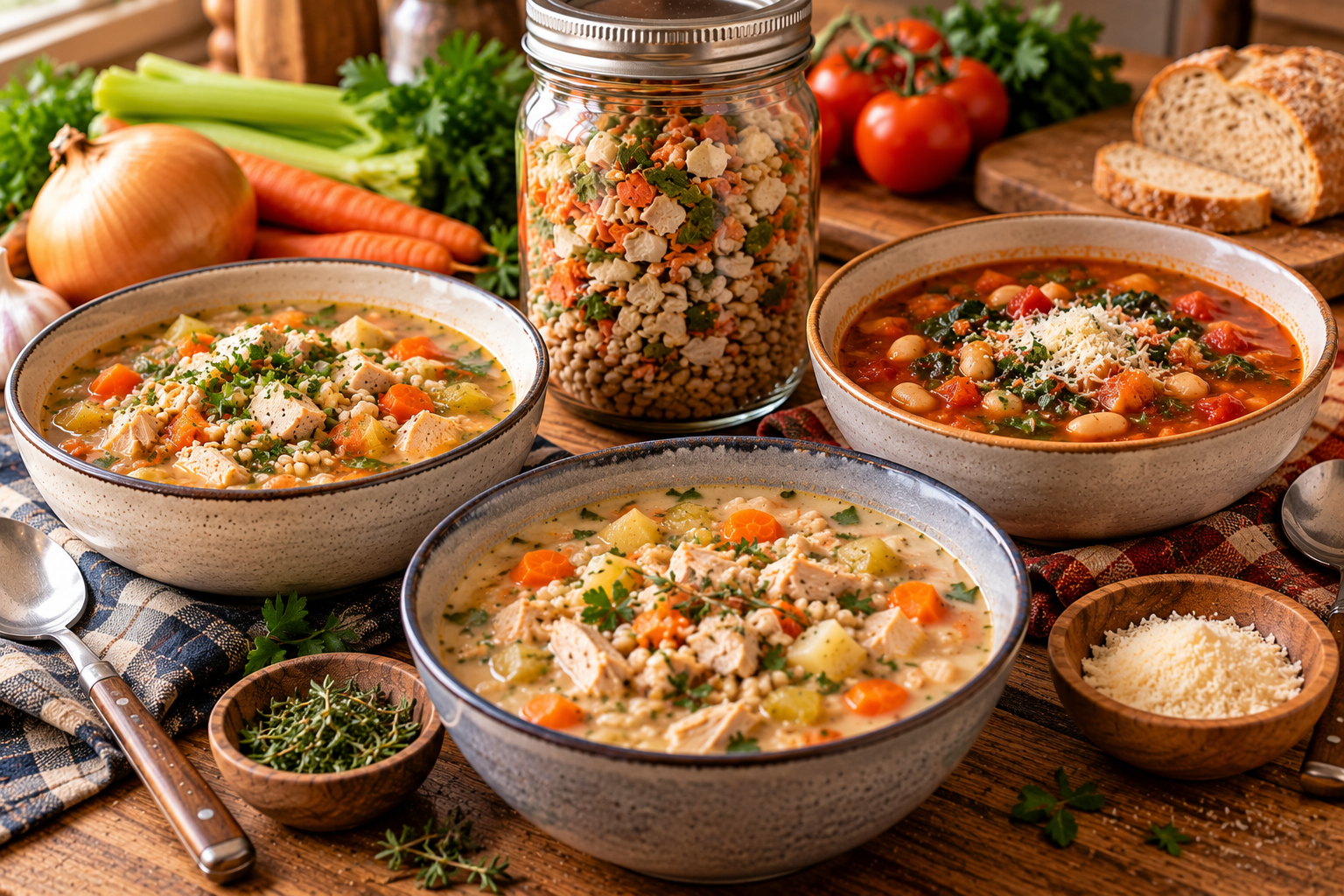
Posted in Home & Pantry

The Pantry Challenge: Make Dinner From What You Have

Have you ever stood in front of an open refrigerator, looked through your pantry, and decided there was absolutely nothing to eat?

I think we’ve all been there!

Maybe you have half a package of pasta, a can of chicken, a few potatoes, some frozen vegetables, and a jar of broth. Nothing seems to go together, and you can’t find a recipe that uses exactly what you have.

Before you head to the grocery store, let’s try something different.

This week, we’re going to challenge ourselves to make dinner with what we already have on hand.

Welcome to the Pantry Challenge!

Throughout October, we’ve explored building a practical pantry, cooking one-pot meals, making soups and chili, and preparing homemade mixes. Now it’s time to put those ideas to work.

You don’t need a perfectly stocked pantry or a kitchen full of expensive ingredients. You need a few useful staples, a willingness to experiment, and a plan for turning those ingredients into a satisfying meal.

And the best part? You might save yourself a trip to the grocery store and a little money along the way.

Why Try a Pantry Challenge?

Pantry cooking isn’t just about using up food. It’s about learning to make the most of what you have.

A pantry challenge can help you:

  • Save money. Use ingredients you’ve already purchased instead of buying more food for a single recipe.
  • Reduce food waste. Give those half-used packages, leftover vegetables, and small amounts of cooked meat another purpose.
  • Simplify dinner. You don’t always need a complicated recipe to put a good meal on the table.
  • Become a more flexible cook. Learn which ingredients work well together and which substitutions make sense.
  • Discover new favorites. Some surprisingly good meals begin with ingredients that weren’t originally intended to go together.

You don’t have to empty your pantry or go an entire week without shopping. The goal is simply to become more comfortable using what you have.

Think of it as a little kitchen creativity exercise!

Step 1: Take Inventory Before You Plan Dinner

Before deciding what to cook, take a few minutes to see what’s available.

You don’t need to empty every cabinet or reorganize the entire kitchen. Just check three places.

Look in the Pantry

Start with the shelf-stable ingredients you use regularly.

Look for:

  • Canned chicken, tuna, salmon, or other proteins you enjoy.
  • Pasta, rice, barley, oats, and other grains.
  • Canned vegetables, tomatoes, and broth.
  • Dried onions, potatoes, and other dehydrated vegetables.
  • Homemade soup starters and meal mixes.
  • Seasonings, herbs, and sauces.
  • Crackers, cornbread mix, or other ingredients that could round out a meal.

Don’t overlook small quantities. A cup of rice or half a package of pasta can still be the beginning of dinner.

Check the Refrigerator

Look for ingredients that should be used soon.

Perhaps you have leftover cooked chicken, half an onion, a little shredded cheese, some cooked rice, or a container of vegetables from another meal.

These ingredients deserve special attention because using them now may prevent them from going to waste.

Don’t Forget the Freezer

Your freezer can provide the missing piece that turns a collection of pantry ingredients into a complete meal.

Check for:

  • Frozen vegetables.
  • Ground turkey or another frozen protein.
  • Cooked shredded chicken.
  • Individual portions of soup or broth.
  • Bread, tortillas, or other items that can complete a meal.

For a small household, frozen ingredients are especially helpful because you can use only what you need.

Kitchen tip: Make a short list of ingredients you’d like to use rather than trying to remember everything you saw. You’ll find it easier to spot combinations when the possibilities are written down.

Step 2: Choose One Ingredient to Build Around

You don’t need to start with an entire recipe. Start with one ingredient.

This is your anchor ingredient: the food that will determine the direction of your meal.

It might be a protein, a vegetable, or a starch.

Here are a few possibilities.

If You Have…Consider Making…
Canned chickenChicken and rice skillet, chicken soup, or a chicken casserole
Canned tunaTuna pasta, a tuna melt, or a simple tuna and vegetable bowl
Ground turkeyA skillet meal, turkey and rice bowl, or a small batch of chili
Cooked chickenChicken soup, chicken and noodles, or a quick skillet supper
PotatoesA potato and vegetable skillet, potato soup, or a small shepherd’s pie
PastaA one-pot pasta meal, pasta soup, or a simple pasta and vegetable dish
RiceA rice bowl, chicken and rice, or a vegetable and rice skillet
Canned tomatoesTomato-based soup, a small pot of chili, or a tomato and pasta skillet

These are starting points, not rules.

If you don’t have the ingredients for the first idea that comes to mind, look for another combination.

And remember, your anchor ingredient doesn’t always have to be meat. A satisfying supper can begin with potatoes, rice, pasta, or vegetables.

Step 3: Build the Meal Around What You Have

Once you’ve chosen your starting ingredient, look for two or three things that will complement it.

A simple meal often needs only a few basic components.

A protein + a starch or vegetable + flavor = a good starting point for dinner.

You can add broth, sauce, seasonings, or another vegetable if the meal needs them.

For example, suppose you find these ingredients:

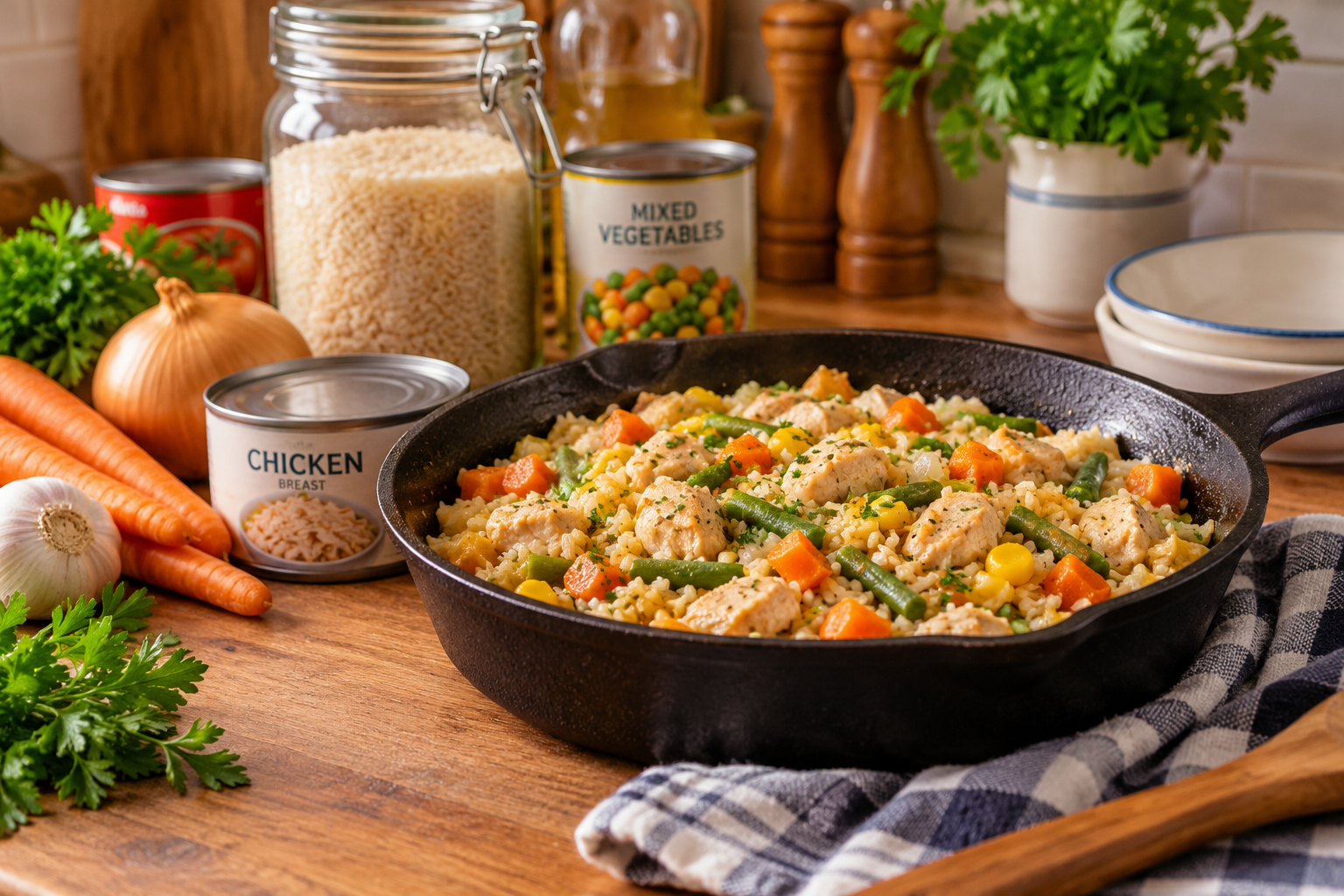
  • One can of chicken.
  • One cup of cooked rice.
  • Half a cup of frozen mixed vegetables.

You already have the makings of a chicken and rice skillet.

Warm the vegetables in a skillet with a little oil or broth. Stir in the chicken and cooked rice, then season with garlic, onion, parsley, or whatever flavors you enjoy. Add a splash of broth if the mixture seems dry.

Heat everything thoroughly, taste, and adjust the seasonings.

That’s dinner!

You could add a little shredded cheese if you have some, but you don’t need to run to the store because you don’t have it.

The meal is complete enough without it.

Think About Flavor, Too

Sometimes the difference between a collection of ingredients and a meal you actually want to eat is a little flavor.

Look through your seasonings, sauces, and other pantry staples.

For example:

  • Garlic, onion, and parsley work well in many chicken and vegetable dishes.
  • Italian seasoning can bring together tomatoes, pasta, and vegetables.
  • Chili powder and cumin can turn ground turkey, tomatoes, and rice into a Tex-Mex-inspired skillet.
  • Thyme and sage can add a familiar, comforting flavor to chicken soup.
  • A little vinegar or lemon juice can brighten a dish that tastes flat.

You don’t need every seasoning listed in a recipe. Use what you have and what you enjoy.

If you don’t like a particular flavor, leave it out. Your pantry should reflect your tastes, not somebody else’s idea of what belongs in a recipe.

Step 4: Choose a Cooking Method That Fits the Ingredients

Once you know what you’re working with, decide how to cook it.

You don’t have to use the same method every time.

Make It a Skillet Meal

A skillet is ideal for cooked proteins, vegetables, rice, pasta, and small quantities of other ingredients.

It’s particularly useful when you’re cooking for one or two because you can make a modest portion without dirtying several pots and pans.

Start with ingredients that need the most cooking, then add cooked ingredients near the end so they don’t become overcooked.

For more ideas, look for our upcoming post, Pantry Challenge: The Skillet Meal.

Turn It Into Soup

Soup is one of the most forgiving ways to combine pantry ingredients.

Broth, cooked meat, vegetables, rice, pasta, or barley can become a satisfying meal with very little fuss.

Start with enough liquid for the amount of food you’re using. Add ingredients according to their cooking times, and taste as you go.

If the soup is too thin, you may be able to add a little more rice, pasta, or potato. If it’s too thick, add broth or water.

For more guidance, see our upcoming post, Pantry Challenge: The Soup Pot.

Use Your Dutch Oven

A Dutch oven works well for stews, braised dishes, chili, and other meals that benefit from longer cooking.

It’s a good choice when you’re starting with raw ingredients that need time to become tender.

However, if your ingredients are already cooked, a skillet or saucepan may be quicker and more practical.

Choose the cooking method that suits the ingredients rather than making the ingredients fit a particular pot.

Keep It Simple

Not every pantry meal needs to be a recipe.

A baked potato topped with leftover chili, a bowl of rice with vegetables and chicken, or a grilled sandwich with a cup of soup can make a perfectly good supper.

Sometimes the best solution is the simplest one.

Step 5: Learn to Substitute Without Starting Over

One of the biggest obstacles to pantry cooking is the belief that every ingredient in a recipe is essential.

Some ingredients are important for food safety, texture, or the way a recipe works. Others are there to provide flavor or variety.

Learning the difference makes pantry cooking much easier.

Here are a few practical substitutions to consider.

If You Don’t Have…You Might Use…
RicePasta, barley, or another grain that suits the dish
Fresh onionDried or dehydrated onion
Fresh vegetablesFrozen or canned vegetables
Chicken brothWater with suitable seasonings, or another broth you have
Ground beefGround turkey, if it suits the recipe
Cooked chickenAnother cooked protein that complements the other ingredients
A particular seasoning blendIndividual herbs and spices you already enjoy

These substitutions depend on the dish, so use your judgment. Pasta, rice, and barley don’t all cook in the same amount of time, for example.

You may need to adjust the liquid and cooking time when you change ingredients.

A useful rule: Substitute with something that performs a similar job in the recipe, not simply something that happens to be available.

And don’t be afraid to leave out an optional ingredient entirely.

Step 6: Make the Most of Small Quantities

Small households often have a different pantry challenge from larger families.

We may have just a little of several ingredients, but not enough of any one thing to make a full meal.

The answer is to combine those small quantities thoughtfully.

A few tablespoons of vegetables can add color and flavor to a soup. A small amount of cooked chicken can stretch into a rice bowl. Leftover roasted vegetables can become part of a skillet meal or an omelet.

Here are a few more ideas:

  • Add a small amount of cooked meat to a vegetable soup rather than making meat the main component.
  • Combine leftover rice with vegetables and an egg, if you have one.
  • Use a little pasta to stretch a soup.
  • Turn leftover chili into a baked potato topping.
  • Combine small amounts of different vegetables in a skillet.
  • Use a little shredded cheese as a finishing touch rather than making it the main ingredient.

The point isn’t to make every ingredient disappear at once. It’s to use the right ingredients together so that you have a meal you’ll enjoy.

For more ideas, we’ll be exploring this subject in Pantry Challenge: The “Almost Empty” Pantry later this week.

Step 7: Know When a Pantry Meal Is Complete

It’s easy to get carried away trying to use every ingredient you have.

But a good meal doesn’t need to contain everything in the refrigerator.

If you have chicken, rice, and vegetables, you don’t need to add beans, pasta, tomatoes, and three kinds of cheese simply because they’re available.

Choose ingredients that work together.

Think about the texture, flavor, and balance of the finished meal. If it already tastes good and provides a satisfying supper, stop there.

You can save the remaining ingredients for another day.

A Quick Food Safety Reminder

Pantry cooking still requires good food safety practices.

Check expiration and quality information on packaged foods, inspect cans for damage, and follow safe storage and reheating practices for leftovers.

Refrigerate perishable ingredients promptly, and don’t rely on smell or appearance alone to determine whether food is safe.

Most importantly, don’t try to rescue food that has been stored unsafely. The Pantry Challenge is about reducing waste responsibly, not taking chances with food safety.

Your Pantry Challenge: Try One Meal This Week

Now it’s your turn!

You don’t have to plan an entire week of pantry meals. Start with just one supper.

Here’s your assignment:

1. Choose three ingredients you already have.

Look in your pantry, refrigerator, or freezer. Pick three ingredients that might work together.

2. Decide what kind of meal they could become.

Would a skillet work? Could you make soup? Would a baked potato, rice bowl, or simple pasta dish be a better choice?

3. Identify what else you need.

You may already have everything. If not, see whether a reasonable substitution will work.

4. Cook a meal that suits your household.

Keep the quantity manageable, especially if you’re cooking for one or two.

5. Make a note of what worked.

If you discover a combination you enjoy, write it down. You may have found a new regular supper.

Don’t worry if your first attempt isn’t spectacular. The goal is to practice thinking creatively about the ingredients you have.

The more often you do it, the easier it becomes.

Stretch Every Grocery Dollar

A well-stocked pantry isn’t necessarily a pantry filled with dozens of products.

It’s a pantry that supports the way you actually cook.

For some households, that means canned chicken, rice, pasta, broth, and frozen vegetables. For others, it might mean beans, potatoes, oats, canned fish, and homemade soup mixes.

Build your pantry around foods you enjoy, meals you prepare regularly, and ingredients you can use in more than one way.

When you shop, think about how each item will fit into your existing supplies.

Can it become part of several different meals? Can you use a small quantity without opening a package you’ll struggle to finish? Will it store well until you need it?

Those questions can help you make more thoughtful purchases and avoid buying ingredients that eventually go unused.

And remember: you don’t have to stock everything at once. Add useful items gradually as your budget allows.

Waste Not, Want Not

Before you put away the ingredients you didn’t use, take another look at what remains.

Is there a half can of vegetables that should be refrigerated in a suitable covered container? A little cooked rice that could become tomorrow’s lunch? A package of meat that needs to be divided into smaller portions?

Handle leftovers safely and make a plan to use them.

If you opened a package for the challenge, consider whether you can freeze the remaining portion or incorporate it into another meal.

A little planning now can make the next pantry challenge even easier.

Cooking for One or Two

Pantry cooking is particularly helpful when you’re preparing meals for a small household.

You can choose ingredients from several food groups without having to cook a large quantity of each one.

Here are three ways to make the challenge work for you:

Start small. Use a single serving of protein or a modest amount of vegetables rather than opening several packages at once.

Use what you can measure. If you have half a cup of cooked rice or a small handful of frozen vegetables, start there. Build the meal around those amounts.

Plan for one useful leftover. If you make enough soup for two meals, decide when you’ll eat the second portion. Refrigerate or freeze it appropriately rather than leaving it forgotten at the back of the refrigerator.

You can also make a pantry challenge easier by keeping a running list of ingredients you want to use soon.

That list becomes your starting point whenever you need a quick supper.

Kitchen Confidence: You Don’t Need a Recipe for Everything

Recipes are wonderful tools. They teach techniques, introduce new combinations, and help us reproduce dishes we enjoy.

But cooking doesn’t always have to begin with a recipe.

Once you understand how proteins, starches, vegetables, liquids, and seasonings work together, you can start making decisions based on what’s available.

You may discover that you prefer more vegetables in your skillet meals, less salt in your soup, or a different seasoning blend from the one a recipe recommends.

That’s part of learning to cook confidently.

The goal isn’t to stop using recipes. It’s to understand them well enough that you can adapt when your pantry doesn’t contain every ingredient on the list.

What’s Next in the Pantry Challenge?

Throughout the rest of this week, we’ll put these ideas into practice.

We’ll start with three ingredients, explore flexible skillet meals and soup combinations, and learn how to use those almost-empty packages that accumulate in every pantry.

On Friday, we’ll bring everything together with 10 Pantry Meals for When You Don’t Want to Go Shopping.

Then, on Saturday, we’ll revisit October’s Pantry to Table series and gather the month’s lessons and recipes into one convenient resource.

By the end of the week, I hope you’ll feel more comfortable looking at the food you have and seeing possibilities rather than problems.

Because dinner doesn’t have to start with a shopping list.

Sometimes, it starts with opening the pantry door.

Now it’s your turn: What three ingredients would you use to make dinner tonight?
Posted in Recipe Roundup

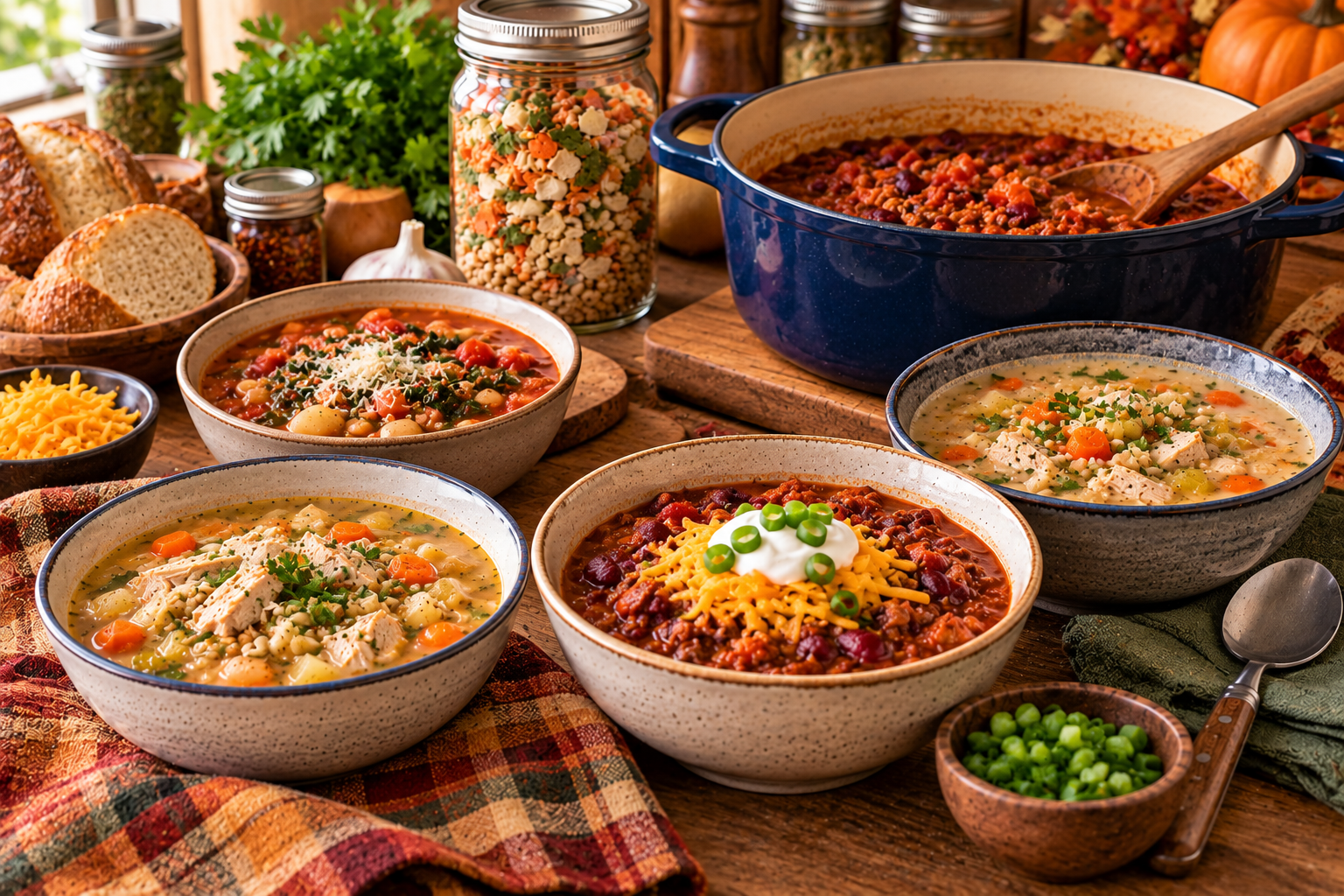
Weekend Suppers: Soup, Chili & Comfort Food

October has officially reached the part of the season where a pot of something warm on the stove feels like a very good idea.

This week in Pantry to Table, we’ve been talking about soup, chili, homemade mixes, and one of my favorite small-household cooking skills:

Learning how to make one set of ingredients do more than one job.

Because a useful pantry isn’t just a place where food waits.

It’s where dinner begins.

A Week of Cozy Pantry Cooking

We’ve spent this week building on one simple idea: a well-stocked pantry should give you options.

Not a pantry full of specialty ingredients.

Not shelves packed with foods you never actually use.

Just practical ingredients that can work together in more than one way.

This Week’s Pantry to Table Posts

Pantry Chili for Two
There’ssomething about a pot of chili that makes a cool October evening feel just alittle cozier.
Check out this recipe
Building a Better Pantry Soup
Read the Article!
Homemade Soup Starter Mix
Read the Article!
Turkey & Barley Comfort Soup
No complicated recipe. No enormous batch. Just good food from ingredients you already have.
Check out this recipe
Three Ways to Change One Soup Starter
Read the Article!
Pantry Chili Variations: One Basic Recipe, Several Suppers
Read the Article!

This Weekend, Keep It Simple

You don’t have to make everything we’ve talked about this week.

Pick one idea.

Maybe it’s a pot of chili.

Maybe it’s soup made from whatever you already have.

Maybe it’s making a few jars of homemade soup starter so future-you has an easier dinner waiting.

Or maybe you simply look through the pantry and find a way to use something that’s been sitting there for a while.

That’s enough.

A Simple Weekend Supper Plan

If you want to put this week’s ideas together, here’s one easy approach.

Start With What You Have

Take a look through the refrigerator, freezer, and pantry.

What needs to be used?

What do you already have?

What could become soup or chili?

You may have more ingredients than you realize.

Make a Small Batch

If chili sounds good, make a small batch rather than automatically reaching for the biggest pot you own.

Two servings can be plenty.

And if there is a second serving left, that’s not necessarily a repeat dinner waiting in the refrigerator.

It can become something else.

Keep a Starter Ready

A homemade soup starter mix can do the same thing for another night.

Instead of measuring several dehydrated vegetables and seasonings every time you want soup, you’ve already done the work.

The jar is waiting.

All you need to add is the broth, protein, and whatever finishing ingredients sound good.

Pantry to Table: The Bigger Idea

We’ve talked a lot this month about having a well-stocked pantry.

But I don’t think a good pantry is measured by how many cans and jars you can fit on a shelf.

A good pantry is measured by what it can help you do.

Can you make dinner when you don’t feel like going to the grocery store?

Can you use leftover turkey instead of letting it go to waste?

Can you turn a handful of dehydrated vegetables into soup?

Can you stretch a small amount of meat with beans, grains, potatoes, or vegetables?

Can you make two different meals from the same basic ingredients?

Those are the things that make a pantry genuinely useful.

For Smaller Households, Flexibility Matters

Cooking for one or two changes the way you think about food.

A family-size recipe isn’t always practical.

A large package isn’t always economical if half of it ends up spoiled.

And leftovers aren’t necessarily helpful if they mean eating the same thing five nights in a row.

Small-batch cooking and flexible ingredients solve some of those problems.

Instead of asking:

“How can I make a big meal cheaply?”

try asking:

“How can I make the ingredients I have work harder?”

That might mean a small pot of chili.

A jar of homemade soup starter.

A freezer container of cooked turkey.

Or simply knowing that tomorrow’s leftovers can become something different.

Weekend Supper

There’s nothing wrong with making dinner from a recipe.

I love recipes.

But there’s also a certain satisfaction in opening the pantry, looking at what you have, and realizing you don’t need a recipe at all.

You have enough.

You know what goes together.

You know how to turn it into dinner.

And on a cool October evening, that can be a pretty wonderful thing.

Good meals really do begin before you start cooking.

Posted in Soups & Stews

Pantry Chili Variations: One Basic Recipe, Several Suppers

Earlier this week, we made Pantry Chili for Two.

It was a deliberately small batch: enough for two generous bowls without leaving a small household staring at a refrigerator full of chili for the next four days.

But here’s where small-batch cooking gets even more useful.

You don’t have to eat that chili the same way twice.

A good basic chili is more than one dinner. It’s a building block.

With a few simple additions, you can turn the same basic chili into tacos, a baked potato topping, a rice bowl, or even a quick skillet meal.

That’s the kind of flexibility we’re looking for with Pantry to Table.

Start With One Basic Chili

Our basic Pantry Chili for Two is made with:

  • Ground turkey
  • Onion
  • Diced tomatoes
  • Kidney beans
  • Tomato paste
  • Chili powder
  • Cumin
  • Paprika
  • Oregano
  • Garlic
  • Broth

It’s hearty enough to stand on its own.

But before you decide that leftover chili means another bowl exactly like the first one, look at what else you have in the pantry.

That’s where the fun begins.

1. Chili Baked Potato

A baked potato turns a modest amount of leftover chili into a completely different meal.

You’ll Need

  • 1 medium baked potato
  • About 1 cup leftover chili
  • 2 tablespoons shredded cheese
  • 1 tablespoon Greek yogurt, optional
  • Green onion or other fresh topping, optional

How to Make It

Bake or microwave the potato until tender.

Split it open and fluff the center with a fork.

Warm the chili and spoon it over the potato.

Top with shredded cheese and a small spoonful of Greek yogurt if desired.

Add green onion or another fresh topping if you have it.

Why It Works

The potato adds bulk without requiring more meat.

The chili provides protein and flavor.

And suddenly, the leftovers don’t look like leftovers.

They look like dinner.


2. Quick Chili Rice Bowl

Rice is another excellent way to stretch a small amount of chili.

You’ll Need

  • ¾–1 cup cooked rice
  • ¾–1 cup leftover chili
  • A handful of corn or other vegetables
  • Shredded cheese, optional
  • Greek yogurt, optional
  • Green onion, optional

How to Make It

Warm the rice and chili separately or together.

Place the rice in a bowl and spoon the hot chili over it.

Add corn or another vegetable.

Finish with cheese, Greek yogurt, or green onion if desired.

Change the Flavor

Want to move this in a different direction?

Add:

  • A little cumin
  • Fresh lime juice
  • Chopped cilantro
  • Avocado

You don’t need all four.

Even one fresh ingredient can make the bowl feel completely different.


3. Chili Quesadilla

This is a particularly good option when you have only a small amount of chili left.

You’ll Need

  • 1 medium flour or whole-wheat tortilla
  • ½–¾ cup chili, drained slightly if very wet
  • ¼ cup shredded cheese
  • Optional diced green onion

How to Make It

Spread the chili over half of the tortilla.

Sprinkle with cheese.

Fold the tortilla in half.

Cook in a dry skillet over medium heat until the tortilla is crisp and the cheese has melted.

Carefully flip and cook the other side.

Cut into wedges and serve.

A Small-Household Trick

If the chili is very liquid, don’t try to squeeze every drop into the tortilla.

Use a slotted spoon to scoop out the thicker chili.

Save the extra sauce.

It can go over the quesadilla or become part of another meal.

That’s not waste.

That’s ingredient management.


4. Chili Mac Skillet

If you have a little more chili left, pasta can turn it into another completely different supper.

You’ll Need

  • 1 cup cooked pasta
  • 1 cup leftover chili
  • ¼ cup shredded cheese
  • A splash of broth or water, if needed

How to Make It

Place the chili in a skillet over medium-low heat.

Add the cooked pasta and stir gently.

If the mixture seems dry, add a splash of broth or water.

Once everything is hot, sprinkle the cheese over the top.

Cover briefly and let the cheese melt.

Optional Addition

A handful of frozen corn works particularly well here.

You can also add chopped spinach if you have some that needs to be used.


One Chili, Four Suppers

Here’s what happened:

Starting WithAddResult
Basic chiliBaked potato + cheeseChili baked potato
Basic chiliRice + vegetablesChili rice bowl
Basic chiliTortilla + cheeseChili quesadilla
Basic chiliPasta + cheeseChili mac skillet

The chili didn’t change very much.

The supporting ingredients did.

And that’s the pantry lesson.

Kitchen Confidence: Think in Components

When you’re looking at leftovers, don’t ask only:

“What can I do with leftover chili?”

Ask:

“What component could I add to change the meal?”

A potato changes it.

Rice changes it.

A tortilla changes it.

Pasta changes it.

A different topping changes it.

You don’t necessarily need a completely different recipe.

Sometimes you just need a different vehicle.

That’s a useful way to think about leftovers.

You Don’t Have to Make All Four

This isn’t a challenge to see how many meals you can squeeze out of one pot of chili.

If you love chili the way it is, eat it that way.

If you have enough for only one leftover serving, choose the version that sounds good.

And if there isn’t enough left for another meal, that’s okay too.

Stretching food doesn’t mean forcing leftovers into another meal just to avoid waste.

It means recognizing opportunities when they naturally occur.

Stretch Every Grocery Dollar

This is where small-batch cooking can be surprisingly economical.

You don’t necessarily need to buy extra ingredients specifically for leftovers.

A baked potato might already be in the pantry.

Rice may already be cooked.

A tortilla package may already be open.

A little pasta may be sitting in the cupboard.

Cheese may already be in the refrigerator.

The chili becomes the protein-rich component that brings those inexpensive staples together.

That’s a much better way to think about stretching a grocery budget than simply trying to make every meal as cheap as possible.

Use what you already bought.

Waste Not, Want Not

Pay attention to those little leftovers.

Half an onion.

A handful of cooked rice.

Two tortillas.

A small amount of shredded cheese.

A lonely baked potato.

None of these necessarily deserves to become food waste.

They are ingredients waiting for another job.

That’s one reason I like keeping a flexible pantry.

The more useful building blocks you have, the easier it becomes to combine small amounts of food into something worthwhile.

Cooking for One or Two

This is where the original small-batch chili really earns its keep.

For one person, a batch of chili doesn’t have to mean five identical meals.

You might have:

Night 1: Chili in a bowl

Night 2: Chili baked potato

Night 3: Chili quesadilla

And because each meal has a different base, it doesn’t feel like you’re simply reheating the same dinner again and again.

For two people, you can even let each person choose a different variation.

One bowl of chili.

Two completely different dinners.

That’s flexibility.

Meal Prep Note

If you’re intentionally planning to use chili in several ways, store the chili separately from the rice, pasta, or potatoes.

That way, you can decide what you want when you’re ready to eat.

Chili can also be frozen in single-serving portions.

If you’re freezing it for future meals, label the container with the date and amount.

A note such as:

1 cup chili — 10/23

is a lot more helpful than:

CHILI

Especially when you discover six mysterious containers in the freezer three months later.

Storage & Freezing

Store leftover chili in a covered container in the refrigerator and use within 3–4 days.

For longer storage, freeze individual portions.

When reheating, add a splash of water or broth if the chili has thickened.

For quesadillas and other skillet meals, warm the chili thoroughly before assembling the meal.

The Bigger Pantry Lesson

We’ve spent much of this week talking about soup and chili.

But the real subject isn’t soup.

It isn’t chili.

It’s flexibility.

A useful pantry gives you options.

You don’t need every ingredient for every possible recipe.

You need enough versatile ingredients that you can change direction when you need to.

That’s especially important for smaller households.

When you’re cooking for one or two, you can’t always use a whole package or recipe ingredient in exactly the way it was originally intended.

So learn to think in components.

Chili can become a bowl.

Chili can become a topping.

Chili can become a filling.

Chili can become part of a skillet meal.

The pantry isn’t telling you what dinner has to be.

It’s giving you the pieces to decide.

And that’s really the heart of Pantry to Table:

Good meals begin before you start cooking.

Posted in Kitchen Tips

Three Ways to Change One Soup Starter

Yesterday, we turned a jar of homemade soup starter into Turkey & Barley Comfort Soup.

Today, we’re going to do something even more useful.

We’re going to take that same soup starter and turn it into three completely different meals.

Because that’s the secret to a practical pantry:

You don’t need a pantry full of recipes. You need ingredients that can work in more than one recipe.

A good soup starter gives you the vegetables, grain, and basic seasonings.

What you add to it determines what kind of soup ends up in the bowl.

And for a household of one or two, that kind of flexibility can make a big difference.

Start With the Same Soup Starter

Our Homemade Soup Starter Mix contains dehydrated:

  • Carrots
  • Celery
  • Onion
  • Potatoes

Along with:

  • Pearl barley
  • Parsley
  • Thyme
  • Garlic
  • Onion powder
  • Black pepper
  • Salt

The basic cooking method stays the same.

Add one portion of the starter to about 4 cups of broth, bring it to a simmer, and cook until the barley and vegetables are tender.

Then comes the fun part.

Change the protein. Change the vegetables. Change the seasoning. Change the finish.

And you’ve changed the soup.


1. Turkey & Barley Comfort Soup

Let’s start with the version we made yesterday.

It’s the classic combination:

Turkey + barley + root vegetables + herbs

Add

  • 1 to 1½ cups cooked turkey
  • Chicken or turkey broth
  • Fresh parsley
  • A squeeze of lemon

Optional

Add a handful of frozen peas during the last few minutes.

Why It Works

Turkey and barley are a natural match.

The barley makes the soup hearty, while the turkey adds protein without requiring a large amount of meat.

The lemon at the end gives the whole bowl a little lift.

This is the version to make when you’re craving a traditional, cozy bowl of soup.


2. Chicken, Vegetable & Lemon Soup

Now let’s change the personality of the same starter.

Instead of turkey, use chicken and brighten everything up.

Add

  • 1 to 1½ cups cooked chicken
  • Chicken broth
  • ½ cup frozen peas
  • A handful of fresh spinach
  • 1–2 teaspoons lemon juice
  • Fresh parsley

Optional

If you have leftover cooked carrots, green beans, or corn, add them too.

The Difference

The basic starter hasn’t changed.

But the addition of chicken, green vegetables, and lemon makes this version feel much lighter and brighter.

And this is a perfect example of why you don’t have to follow a recipe rigidly.

Maybe you don’t have turkey.

That’s fine.

Use chicken.

Maybe you have leftover vegetables that need a home.

Add them.

The soup adapts.


3. White Bean & Tomato Barley Soup

Now let’s take the same starter in an entirely different direction.

Skip the meat and add beans and tomatoes.

Add

  • 1 can (15 ounces) white beans, drained and rinsed
  • 1 cup diced tomatoes, canned or leftover
  • Vegetable or chicken broth
  • ½ teaspoon Italian seasoning
  • 1 tablespoon grated Parmesan, optional
  • Fresh parsley, optional

How to Make It

Start the soup starter in the broth as usual.

When the vegetables and barley are nearly tender, add the beans and tomatoes.

Simmer until everything is hot and the flavors have come together.

Taste before adding additional salt because canned beans and tomatoes can vary considerably in sodium.

Finish with Parmesan and parsley if desired.

The Difference

Suddenly we’re no longer talking about turkey soup.

We’re talking about a hearty bean-and-tomato soup with Italian-inspired flavors.

Same starter.

Completely different supper.


The Formula Behind the Three Soups

Here’s what changed:

SoupProteinFlavor DirectionFinish
Turkey & BarleyTurkeyClassic herbLemon + parsley
Chicken & VegetableChickenBright & freshLemon + greens
White Bean & TomatoWhite beansTomato & ItalianParmesan + parsley

The starter stayed essentially the same.

That’s the point.

You aren’t building three different pantry systems.

You’re building one useful base that can become several meals.

Kitchen Confidence: Think in Swaps

Once you understand the formula, you can start making substitutions without worrying that you’re somehow “ruining” the recipe.

Protein swaps

Turkey → Chicken → Beans → Lentils → Pork

Vegetable swaps

Peas → Green beans → Corn → Spinach → Cabbage

Grain swaps

Barley → Rice → Small pasta

Flavor swaps

Thyme & parsley → Italian herbs → Cumin & oregano

The combinations are practically endless.

But you don’t need endless combinations.

You only need enough variety to keep your pantry meals interesting.

What If You Don’t Have the Exact Ingredient?

This is where pantry cooking gets easier.

No fresh parsley?

Use dried.

No turkey?

Use chicken.

No chicken?

Use beans.

No peas?

Use frozen green beans.

No fresh spinach?

Skip it.

No lemon?

Try a tiny splash of vinegar in a savory soup.

No barley?

Use rice or small pasta, keeping in mind that the cooking method and timing may change.

The important thing is understanding what an ingredient contributes.

Once you know that, substitutions become much easier.

Stretch Every Grocery Dollar

This is one of the reasons I like homemade pantry mixes so much.

You’re not buying a different boxed soup mix for every flavor you want.

Instead, you keep a flexible base on hand and use the ingredients you already have to change it.

A can of white beans can become soup.

Leftover chicken can become soup.

A small amount of frozen vegetables can become soup.

That half can of tomatoes left from another recipe can become soup.

You’re getting more meals from the same groceries.

And that’s a much more useful kind of pantry stocking than simply buying more food.

Waste Not, Want Not

Soup is one of the easiest places to use small quantities of leftovers.

That doesn’t mean dumping everything into the pot.

Flavor matters.

But if you have a little cooked vegetable, a small amount of leftover meat, or part of a can of beans or tomatoes, soup is worth considering.

The trick is to ask:

Will this ingredient work with the flavor direction I’m creating?

If yes, use it.

If no, save it for something else.

“Use everything” shouldn’t mean “throw everything together.”

Cooking for One or Two

This concept is especially useful for small households.

You don’t have to make three different soups.

Make one starter mix.

Then change the additions.

For example:

Monday: Turkey soup

Wednesday: Chicken soup

Friday: Bean and tomato soup

You get variety without buying a completely different set of ingredients for each meal.

And if you live alone, you can make one or two servings at a time instead of cooking a large pot.

Meal Prep Note

If you want to make several versions during the same week, keep your starter mix dry and prepare only the amount of soup you need.

That way, you can make one flavor today and a different flavor later.

This is particularly helpful when you’re cooking for one.

There’s no reason the entire household has to eat the same soup three nights in a row simply because you made a large pot.

Storage & Freezing

Once prepared, store leftover soup in a covered container in the refrigerator and use within 3–4 days.

Individual portions can also be frozen.

If you know you’re going to freeze the soup, consider keeping delicate finishing ingredients such as fresh herbs, lemon juice, cheese, or yogurt until you’re ready to serve.

Add those after reheating for the freshest flavor.

The Bigger Lesson

This is what I really want you to take away from this week’s soup project:

A pantry doesn’t have to be a collection of finished meals.

It can be a collection of building blocks.

The soup starter gives you one building block.

Your freezer gives you another.

The canned goods on your shelf give you more.

Your refrigerator leftovers give you another.

And your knowledge of how those ingredients work together is what turns them into dinner.

That’s a much more flexible way to cook.

And once you start thinking this way, you’ll find yourself looking at your pantry a little differently.

Instead of seeing:

“I don’t have the ingredients for a recipe.”

You may start seeing:

“I have the ingredients to make something.”

And honestly, that’s a pretty useful cooking skill to have.

Posted in Soups & Stews

Turkey & Barley Comfort Soup

Yesterday, we made a jar of Homemade Soup Starter Mix from dehydrated vegetables, barley, and a handful of pantry seasonings.

Today, we’re putting that jar to work.

This Turkey & Barley Comfort Soup is exactly the kind of meal a practical pantry is supposed to make possible. The vegetables and barley are already measured and waiting. Add broth, some cooked turkey, and a little time on the stove, and you’ve got a hearty bowl of homemade soup.

No complicated recipe. No enormous batch.

Just good food from ingredients you already have.

Why You’ll Love This Recipe

  • It starts with your homemade soup starter mix.
  • It makes two generous servings. Perfect for a small household.
  • It’s a great use for leftover turkey.
  • Dehydrated vegetables make pantry storage practical.
  • Barley adds heartiness and texture without requiring a lot of meat.
  • It’s flexible enough to adapt to what you have.
  • The leftovers reheat beautifully.

And perhaps best of all, this recipe demonstrates the whole point of pantry cooking:

A little preparation ahead of time can make an ordinary weeknight meal much easier.

Recipe Information

Servings: 2
Serving Size: About 2 cups soup
Prep Time: 5 minutes
Cook Time: 40–50 minutes
Total Time: About 50–55 minutes
Meal Category: Soups, Stews & Chili; Meal Prep
Main Protein: Turkey
Estimated Calories: About 400 calories per serving, depending on the turkey and broth used

simplegoodfood's avatarsimplegoodfood

Turkey & Barley Comfort Soup

No complicated recipe. No enormous batch. Just good food from ingredients you already have.
Prep Time 5 minutes
Cook Time 50 minutes
Total Time 55 minutes
Servings: 2
Course: Dinner, Lunch
Cuisine: American
Calories: 400

Ingredients
  

  • 1 portion Homemade Soup Starter Mix
  • 4 cups chicken or turkey broth
  • 1 to 1½ cups cooked turkey chopped or shredded
  • 1 teaspoon olive oil optional
  • 1 tablespoon fresh parsley chopped, or 1 teaspoon dried parsley
  • 1 teaspoon lemon juice optional
  • Salt and black pepper to taste
Optional Additions
Depending on what you have available:
  • ½ cup frozen peas
  • ½ cup frozen corn
  • A handful of fresh spinach
  • ½ cup chopped fresh cabbage
  • Extra cooked vegetables
  • A small amount of leftover gravy

Method
 

Combine the starter and broth.
  1. Place the Homemade Soup Starter Mix in a medium saucepan.
  2. Pour in the broth and stir well.
  3. Bring the mixture to a boil over medium-high heat.
Reduce the heat.
  1. Once the soup reaches a boil, reduce the heat to maintain a gentle simmer.
  2. Cover the pot partially with a lid and cook for about 30 minutes, stirring occasionally.
  3. The barley and dehydrated vegetables need time to absorb the liquid and become tender.
Add the turkey.
  1. Once the vegetables and barley are beginning to soften, stir in the cooked turkey.
  2. Continue simmering for another 10–15 minutes, or until the barley and vegetables are completely tender.
  3. If the soup becomes thicker than you like, add additional broth or water.
Add optional vegetables.
  1. If you’re using frozen peas, corn, or spinach, stir them in during the last few minutes of cooking.
  2. You want them heated through without cooking them into oblivion.
Taste and finish.
  1. Taste the soup.
  2. Add salt and black pepper as needed.
  3. Stir in the parsley.
  4. If the soup tastes a little flat, add a teaspoon of lemon juice.
  5. You don’t need much. The goal isn’t to make the soup taste lemony. A little acidity simply helps brighten the other flavors.
Serve.
  1. Ladle the soup into two bowls.
  2. Add a little fresh parsley on top if you have it.
  3. Then settle in with a spoon and enjoy the fact that yesterday’s pantry project is now dinner.

Kitchen Confidence

Let the soup tell you what it needs.

Soup doesn’t always need more seasoning.

Sometimes it needs more liquid.

As barley cooks, it absorbs broth and causes the soup to thicken. Dehydrated vegetables do the same thing as they rehydrate.

If your soup is becoming more like stew than soup, simply add more broth.

On the other hand, if it seems thin, let it simmer uncovered for a few additional minutes.

You don’t have to hit an exact consistency at a particular minute.

You’re cooking dinner, not conducting a laboratory experiment.

What if the barley isn’t tender?

Give it more time.

Different brands and types of barley can cook at slightly different rates, and the size of your dehydrated vegetables will affect cooking time too.

If the liquid level gets low before the barley is tender, add more broth or water.

Using Leftover Turkey

This is an especially good recipe after a holiday meal or any time you’ve cooked more turkey than you need.

Don’t worry if the turkey isn’t all white meat.

A mixture of white and dark meat works beautifully in soup.

You can also freeze leftover cooked turkey in small portions specifically for meals like this.

That gives you another useful pantry-to-table shortcut:

Cook once → portion → freeze → turn it into soup later.

No Turkey? No Problem.

The starter mix is deliberately flexible.

You can substitute:

  • Cooked chicken
  • Canned chicken
  • Leftover pork
  • White beans
  • Chickpeas
  • Lentils

If you’re using beans instead of meat, you may want to add a little extra seasoning or a splash of tomato for more flavor.

The basic soup doesn’t have to change.

Only the protein does.

Stretch Every Grocery Dollar

Barley is doing a lot of work in this soup.

It’s inexpensive, stores well, and gives the soup a satisfying chewiness that makes a modest amount of turkey feel like a complete meal.

The dehydrated vegetables help stretch it further.

Instead of needing a large quantity of fresh vegetables in the refrigerator, you’re using a measured amount from your pantry.

And the broth carries the flavors throughout the whole pot.

This is what economical cooking can look like when it’s done well:

A little meat + useful pantry staples + vegetables + broth = a satisfying meal.

Waste Not, Want Not

Don’t overlook the little bits of turkey.

If you’re carving a turkey and end up with small pieces that aren’t particularly attractive for sandwiches, save them for soup.

The same goes for leftover vegetables.

A spoonful of cooked carrots or peas can disappear into a pot of soup without anyone caring that it wasn’t enough to serve as a side dish.

Soup is forgiving.

That’s one reason it’s such a valuable small-household cooking tool.

Cooking for One or Two

This recipe makes two generous servings.

If you’re cooking for one, you have two choices:

Make the whole recipe and save half.

Or:

Divide the starter mix in half and make one serving.

For a single serving, use approximately:

  • ½ portion soup starter
  • 2 cups broth
  • ½–¾ cup cooked turkey

The cooking time may be somewhat shorter, so start checking the barley and vegetables earlier.

Meal Prep Note

This is an excellent make-ahead lunch or dinner.

If you’re preparing the soup specifically for leftovers, remember that the barley will continue absorbing liquid as the soup cools.

You may want to store a little extra broth separately.

When reheating, add a splash of broth or water to loosen the soup back to your preferred consistency.

For an especially convenient freezer meal, portion the cooled soup into individual containers.

Then future-you only has to reheat it.

Future-you will appreciate that.

Storage & Freezing

Refrigerator: Store cooled soup in a covered container and use within 3–4 days.

Freezer: Freeze individual portions for up to about 3 months for best quality.

Leave a little room in the container for expansion when freezing.

Thaw overnight in the refrigerator when possible, then reheat thoroughly.

If the soup has thickened considerably, add broth or water while reheating.

A Little Jar Can Become a Lot

There’s something satisfying about this particular pantry project.

Yesterday, you had a jar of dried vegetables and barley.

Today, you have two bowls of turkey soup.

That’s the part of food preservation and pantry building that sometimes gets overlooked.

We’re not preserving food simply because we can.

We’re preserving ingredients so they can make future meals easier.

A jar of dehydrated vegetables sitting on a shelf is useful.

A jar that can become dinner on a cold Wednesday evening?

Even better.

And tomorrow, we’ll take the same idea one step further with Three Ways to Change One Soup Starter—because once you have a flexible pantry base, there’s no reason it has to taste exactly the same every time.

Posted in Jar Mixes (Meal Starters)

Homemade Soup Starter Mix

One of the best things about having a pantry stocked with dehydrated vegetables is realizing that those little jars aren’t just ingredients waiting for a recipe.

They can become the recipe starter.

A handful of dehydrated vegetables, a little barley or rice, some herbs and seasonings, and a jar of shelf-stable ingredients can turn into the beginning of a homemade pot of soup whenever you need it.

That’s the idea behind this Homemade Soup Starter Mix.

It isn’t meant to be a complete instant soup. Instead, it’s a flexible little pantry helper that gives you a head start.

Add broth. Add protein. Let everything simmer and rehydrate.

Dinner gets a whole lot easier.

Why Make a Homemade Soup Starter?

There are plenty of packaged soup mixes at the grocery store. So why make your own?

Because homemade lets you decide exactly what goes into it.

You can:

  • Use vegetables you already dehydrated.
  • Adjust the quantities for a small household.
  • Leave out ingredients your family doesn’t like.
  • Control the seasoning.
  • Use the grains or starches you already keep.
  • Make individual or two-serving portions.
  • Use up small quantities of dehydrated vegetables.
  • Build several different soups from the same basic starter.

And perhaps most importantly, you know what’s in the jar.

This isn’t about creating another complicated food-prep project.

It’s about making the pantry you already have more useful.

The Basic Soup Starter Formula

Think of your jar as four basic components:

Vegetables + Grain/Starch + Seasoning + Optional Dried Flavor Ingredients

That’s it.

The protein and broth can be added later.

For this version, we’re using dehydrated vegetables, pearl barley, onion, garlic, and simple herbs.

The result is a versatile starter that works particularly well with turkey or chicken.

Homemade Soup Starter Mix

Makes

4 small starter portions

Each portion makes approximately 2 servings of soup, depending on the amount of broth and protein added.

Ingredients

For the complete dry mix:

  • ½ cup dehydrated diced carrots
  • ½ cup dehydrated diced celery
  • ½ cup dehydrated diced onion
  • ½ cup dehydrated diced potatoes
  • 1 cup pearl barley
  • 2 teaspoons dried parsley
  • 1 teaspoon dried thyme
  • 1 teaspoon garlic powder
  • 1 teaspoon onion powder
  • ½ teaspoon black pepper
  • ½ teaspoon salt

To Package

You’ll also need:

  • Four pint-size mason jars or other airtight containers
  • Labels

A pint jar gives you plenty of room to combine the ingredients without having to cram everything inside.

Making the Mix

1. Make sure the vegetables are thoroughly dry.

This is the most important step.

Dehydrated vegetables intended for storage should be completely dry and properly cooled before being packed.

They should not feel soft or damp.

If you’re unsure whether a batch is sufficiently dry, give it more drying time rather than taking chances with storage.

2. Combine the dry ingredients.

In a large bowl, combine the dehydrated carrots, celery, onion, and potatoes.

Add the barley, parsley, thyme, garlic powder, onion powder, black pepper, and salt.

Stir thoroughly so the seasonings are distributed throughout the mixture.

3. Divide into four portions.

Measure approximately 1½ cups of the dry mixture into each jar.

Don’t worry if the portions aren’t perfectly identical. The mix is flexible.

4. Label the jars.

At minimum, write:

Homemade Soup Starter Mix

Use 1 jar for approximately 2 servings

Date prepared

If you’re keeping several mixes in your pantry, it’s also helpful to note the main ingredients.

How to Use the Soup Starter

When you’re ready to make soup, empty one jar into a saucepan.

Add:

  • 4 cups chicken or turkey broth
  • 1 to 1½ cups cooked turkey or chicken, chopped or shredded

Bring the mixture to a boil, then reduce the heat and simmer gently until the barley and vegetables are tender.

Because dehydrated vegetables vary in size and dryness, cooking time can vary.

Start checking around 35 minutes, but allow additional time if the barley or vegetables aren’t tender yet.

Add additional broth or water as needed.

Taste and adjust the seasoning before serving.

A Note About the Potatoes

Dehydrated potatoes can take a little longer to rehydrate than some other vegetables.

Cutting them into small, uniform pieces before dehydrating helps them cook more evenly.

If your dehydrated potato pieces are larger, give them extra cooking time.

What Goes Into the Soup Later?

This is intentionally a starter, not a finished meal.

That’s what makes it useful.

You can add:

Protein

  • Cooked turkey
  • Cooked chicken
  • Canned chicken
  • Cooked pork
  • Beans
  • Lentils

Extra Vegetables

  • Frozen peas
  • Frozen green beans
  • Corn
  • Spinach
  • Fresh cabbage
  • Fresh zucchini

Finishing Ingredients

  • Lemon juice
  • Fresh parsley
  • Greek yogurt
  • Parmesan
  • Shredded cheese
  • A splash of vinegar

The same jar can become several different soups depending on what you add.

Kitchen Confidence: Don’t Make the Mix Too Complicated

It’s tempting when making homemade mixes to keep adding ingredients.

A little of this.

A little of that.

Another spice.

Another dried vegetable.

Before you know it, you’ve created a jar that only works for one specific recipe.

That’s not what we’re trying to do here.

The most useful pantry mixes are flexible.

Think of this as a blank canvas rather than a finished recipe.

The jar gives you the vegetables, grain, and basic seasoning.

You decide what dinner becomes.

Stretch Every Grocery Dollar

This kind of mix can also help you make better use of food you’ve already preserved.

Dehydrated vegetables take up very little storage space, which makes them especially useful when refrigerator and freezer space are limited.

Instead of keeping a large bag of fresh vegetables in the refrigerator and hoping you’ll use them before they spoil, you can preserve some of them for later.

And once they’re dehydrated, they become incredibly convenient.

A tablespoon or two of dried onion can be exactly what a small recipe needs.

A handful of dried carrots can become part of a soup.

Those little quantities add up.

Waste Not, Want Not

This is also a good project for using the smaller quantities left over from different dehydrating batches.

You don’t need to dedicate an entire batch of vegetables to soup mix.

Have a little dehydrated carrot left?

Add it.

A small jar of dried onion?

Use it.

Some dehydrated celery that isn’t enough for another storage jar?

Into the soup mix it goes.

This is one of the places where dehydrating really shines for a small household.

Small quantities don’t have to become waste.

They can become ingredients.

Cooking for One or Two

The recipe makes four starter portions, but you can easily scale it down.

For a household of one, make smaller jars containing enough mix for one serving.

You can also prepare the four portions and simply use half of a jar when you need one bowl of soup.

The important thing is to keep the dry ingredients in a clean, dry, airtight container.

Meal Prep Note

These starter jars are a great way to make future meal prep easier.

You can prepare several jars at once and keep them ready in the pantry.

Then on a busy evening, you aren’t measuring five different dried vegetables and three different seasonings.

The measuring is already done.

You simply grab a jar and start cooking.

That is exactly what a good pantry convenience food should do.

Storage

For best storage, make sure every dehydrated ingredient is completely dry before assembling the mix.

Store the finished mix in a clean, dry, airtight container in a cool, dark pantry.

Label each jar with the date and ingredients.

Because this mix contains multiple homemade dehydrated ingredients, I recommend treating the storage life according to the ingredient with the shortest reliable storage life rather than assuming the entire mix will last indefinitely.

If you notice moisture, condensation, off odors, mold, or any other sign of spoilage, discard the mix.

When in doubt, throw it out.

Important Preservation Note

This homemade soup mix is a dry pantry mix, not a pressure-canned or shelf-stable canned meal.

Do not put the assembled soup mix into a canning jar and process it as though it were a tested canning recipe.

For food-preservation guidance, follow tested recommendations from reliable preservation authorities and use your dehydrated ingredients according to established dehydration and storage practices.

Three Ways to Use One Starter

The real beauty of this mix is what happens after the jar is opened.

Turkey & Barley Comfort Soup

Add turkey, chicken or turkey broth, and finish with parsley and a squeeze of lemon.

That’s the version we’ll be making tomorrow.

Chicken & Vegetable Soup

Use chicken instead of turkey and add a handful of frozen peas near the end.

The same starter suddenly has a completely different personality.

Vegetable & Bean Soup

Skip the meat and add a can of drained white beans or another bean you enjoy.

Add a little tomato if you want a richer, tomato-based soup.

One starter.

Three very different dinners.

And that’s before we start changing the seasonings.

The Bigger Pantry Idea

A pantry full of ingredients is useful.

A pantry full of ready-to-combine ingredients is even more useful.

That’s the difference between simply storing food and actually building a working pantry.

The goal isn’t to have shelves that look impressive.

The goal is to be able to open the pantry on a Wednesday night, look around, and think:

“I can make dinner from this.”

A few jars of homemade soup starter can help make that possible.

Tomorrow, we’ll put one of these jars to work with Turkey & Barley Comfort Soup—a good example of how a little advance preparation can turn dehydrated pantry ingredients into a genuinely comforting meal.