Posted in Home & Pantry

Pantry to Table: October in Review

A good meal doesn’t always begin with a shopping list.

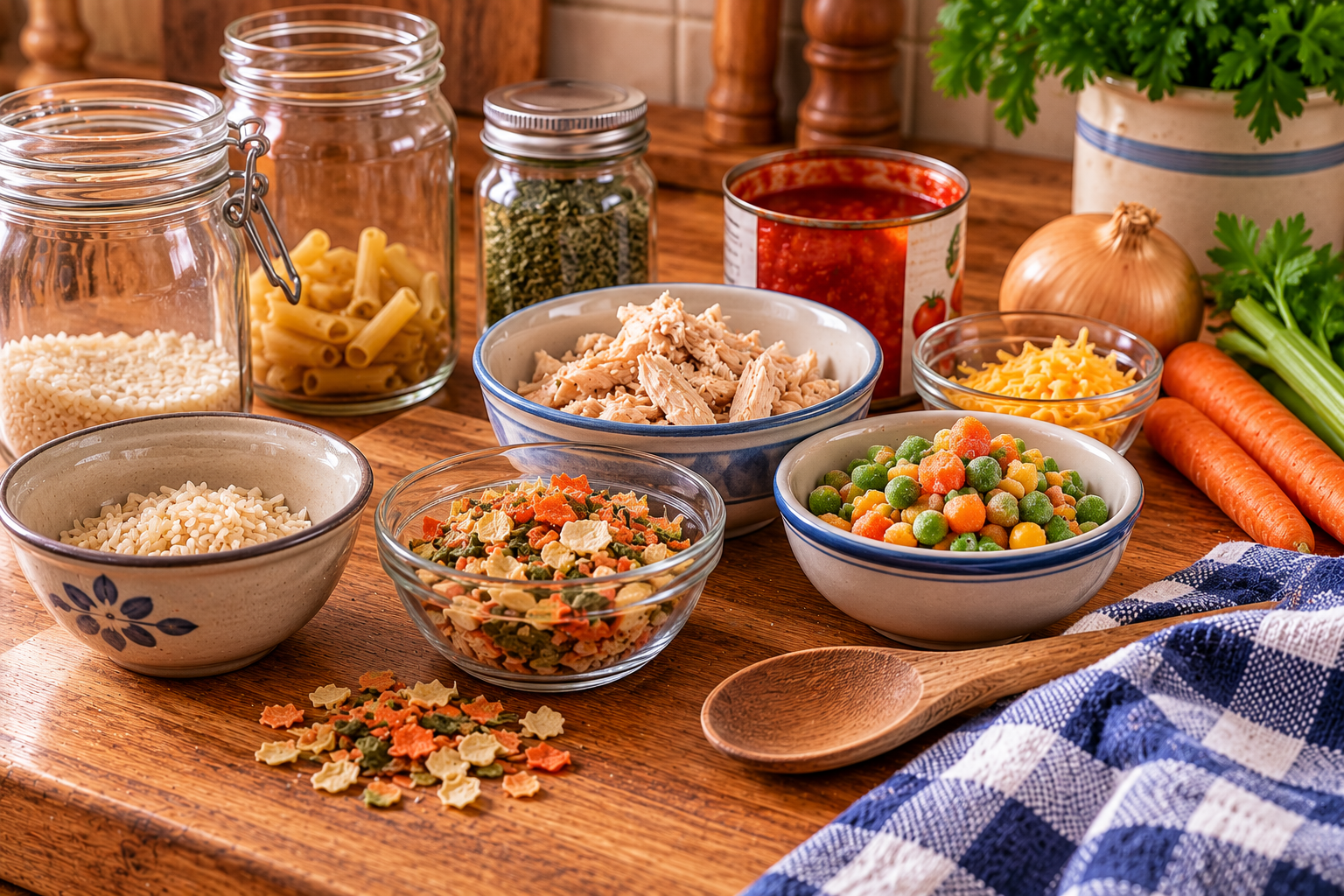
Sometimes it begins with a can of chicken on the pantry shelf, a jar of dehydrated vegetables, a few potatoes, or a small portion of leftover meat waiting in the refrigerator.

The trick is learning how to turn those ingredients into something you’ll enjoy eating.

Throughout October, we’ve explored that idea with our Pantry to Table series. We’ve looked at building a practical pantry, making one-pot meals, preparing soups and chili, creating homemade mixes, and using ingredients we already have.

We’ve also explored a challenge that every home cook faces from time to time: making dinner without another trip to the grocery store.

Now it’s time to bring everything together.

Whether you’re cooking for one, preparing meals for two, trying to stretch your grocery budget, or simply looking for ways to make everyday cooking easier, I hope this month’s ideas have given you a few new tools for your kitchen.

Let’s review what we’ve learned and create a resource you can return to whenever you need a little dinner inspiration.

What We Learned This Month

The biggest lesson from Pantry to Table is simple:

A well-stocked pantry isn’t just about what you own. It’s about knowing what you can make with it.

You don’t need dozens of specialty ingredients or a cabinet full of products you’ve never used.

You need a collection of foods that suit your tastes, fit your budget, and work together in meals you actually enjoy.

Here are some of the principles we’ve explored throughout October.

1. Build Your Pantry Around the Way You Cook

A useful pantry reflects your household, not somebody else’s ideal shopping list.

If you regularly make soups, keep ingredients that help you prepare the kinds of soup you enjoy. If you prefer skillet meals, stock a few versatile proteins, vegetables, starches, and seasonings.

Your pantry might include canned chicken, tuna, or salmon; rice; pasta; potatoes; broth; canned vegetables; and homemade dehydrated ingredients.

Another household might use more beans, lentils, or other staples.

Neither pantry needs to look exactly like the other.

Start with foods you enjoy and gradually add ingredients that can contribute to several different meals.

2. Look for Ingredients That Serve More Than One Purpose

Some of the most useful pantry staples are the ingredients that can go in several directions.

Rice can become a side dish, a skillet meal, a soup ingredient, or the base of a bowl meal.

Canned chicken can contribute to soup, pasta, a rice skillet, or a sandwich.

Canned tomatoes can become pasta sauce, part of a chili, or the foundation of a vegetable soup.

Broth can help bring together a skillet meal, a pot of soup, or a Dutch oven dish.

When you choose ingredients with several uses, you have more options without needing to buy something new for every recipe.

3. Learn to Cook With Formulas, Not Just Recipes

Recipes are useful, but a basic formula can help you when you don’t have every ingredient listed.

For example, a skillet meal might combine protein, vegetables, starch, and seasonings.

A soup might begin with liquid, vegetables, protein, a hearty ingredient, and flavorings.

A Dutch oven meal might combine suitable ingredients that benefit from longer cooking.

Once you understand the formula, you can make sensible substitutions and adjust the quantities to suit your household.

Of course, cooking times and ingredient requirements still matter. Rice, pasta, barley, potatoes, and dried legumes don’t all cook alike.

The goal is flexibility, not guessing.

4. Small Quantities Still Have Value

A little leftover chicken, a handful of frozen vegetables, or the last bit of rice in a jar can contribute to another meal.

You don’t have to use every leftover ingredient immediately, and you don’t need to combine foods that don’t belong together.

Instead, look at the small quantities available and decide which ones can work together.

Sometimes the best meal begins with something you might otherwise have overlooked.

5. Make Your Pantry Work for Your Budget

You don’t have to build a complete pantry overnight.

Add useful staples gradually as your budget allows.

Choose ingredients that store well, that you enjoy eating, and that can contribute to more than one meal.

Consider how much you realistically use, particularly when cooking for one or two.

A pantry filled with foods you actually cook is more useful than one filled with ingredients that seemed like a good idea at the store but never make it into dinner.

What Belongs in a Practical Pantry?

There’s no single perfect pantry. Yours should reflect the meals you prepare, the storage space you have, and the ingredients you can comfortably afford.

However, several groups of ingredients are worth considering.

Shelf-Stable Proteins

Protein is often the starting point for a meal, but you don’t have to rely entirely on fresh or frozen meat.

Depending on your preferences, useful options include:

  • Canned chicken.
  • Canned tuna.
  • Canned salmon.
  • Other canned fish you enjoy.
  • Canned beans.
  • Lentils.
  • Shelf-stable protein drinks, if they fit your needs and budget.

Ground turkey, cooked shredded chicken, and other proteins can also be portioned and frozen when you have the freezer space.

You don’t need every option on this list. Choose the proteins you enjoy and the ones that work with your regular meals.

Grains and Starches

Rice, pasta, barley, oats, and potatoes can provide the foundation for many different meals.

They work in soups, skillets, casseroles, bowls, and simple side dishes.

Keep the quantities you can realistically use, and store dry ingredients according to their package directions.

Vegetables

Your pantry can include several forms of vegetables.

Canned vegetables are convenient and ready to use in many dishes.

Frozen vegetables allow you to use smaller portions while keeping the remainder frozen.

Dehydrated vegetables are useful for soups, certain skillet meals, and homemade meal starters.

Fresh vegetables can add flavor, texture, and variety when they’re available.

Single-serving vegetable cups can also be practical when you want a small amount without opening a larger container.

You don’t have to choose just one form. Each has advantages, and the right combination depends on how you cook.

Broth, Tomatoes, and Other Cooking Essentials

A few basic liquids and flavoring ingredients can help bring pantry meals together.

Consider keeping:

  • Chicken or vegetable broth.
  • Canned tomatoes.
  • Tomato sauce.
  • Suitable cooking oils.
  • Vinegar.
  • Garlic and onion.
  • Herbs and seasonings you enjoy.

You don’t need a large collection of sauces and specialty seasonings.

Start with the flavors you use regularly and add others when you find a practical use for them.

Homemade Mixes: More Convenience From Your Pantry

Homemade mixes can make everyday cooking easier, especially when you prepare small batches.

Instead of buying a large package of a convenience product, you can measure a suitable quantity of dry ingredients and store it until you need it.

Depending on your cooking habits, homemade mixes might include:

  • Pancake or waffle mix.
  • Cornbread mix.
  • Cookie mix.
  • Quick bread mix.
  • Soup starter mixes.
  • Seasoning blends.

Small mason jars can be convenient for storing dry mixes in quantities appropriate for one or two people.

Label each jar with the contents, preparation instructions, and any additional ingredients required.

For mixes containing ingredients that need particular storage conditions, follow appropriate food-storage guidance. Don’t assume every homemade dry mix can be stored indefinitely at room temperature.

The goal is to make cooking easier without creating more work or unnecessary expense.

Soup and Chili Starters

Soup and chili are especially useful pantry meals because you can prepare them in many different ways.

A soup starter might contain dehydrated vegetables and suitable seasonings. When you’re ready to cook, add the liquid, protein, and hearty ingredients the soup requires.

Canned beans are convenient for quick chili and soup because they’re already cooked.

Dried beans are useful, too, but they’re better suited to recipes that allow enough preparation and cooking time. Lentils can be a quicker option, depending on the variety.

If you keep dehydrated vegetables, you can also use your preferred Mini-Crock method for suitable small-batch soups. Start with the ingredients and liquid, allow enough time for them to cook properly, and add fresh ingredients at the appropriate points.

A little planning can make a homemade soup starter a welcome convenience on a busy day.

Dutch Oven Meals: Let the Pot Do the Work

Dutch oven cooking is another useful part of a practical pantry routine.

A Dutch oven can handle stews, chili, braised dishes, and other meals that benefit from longer cooking.

You can combine suitable proteins, vegetables, broth, seasonings, and hearty ingredients to create a satisfying one-pot meal.

The method is particularly helpful when you want the ingredients to cook together and develop flavor.

However, not every meal needs a Dutch oven. A skillet or saucepan may be quicker for cooked ingredients that only need to be combined and heated.

Choose the cooking method that suits the meal, the ingredients, and the time you have available.

Skillet Meals: A Quick Way to Use What You Have

A skillet is one of the most versatile tools for pantry cooking.

With a suitable protein, a vegetable, a starch, and some seasonings, you can build many different meals.

Cook ingredients in the order that makes sense for their cooking requirements. Raw proteins and firm vegetables generally need more cooking than cooked meat or canned vegetables.

Then bring everything together with appropriate seasonings and a little liquid if needed.

For a small household, skillet meals are especially practical because you can make a modest portion without preparing a large casserole or pot of soup.

And when you have leftover cooked ingredients, a skillet can often turn them into a different meal with very little fuss.

The Pantry Challenge: Put It All Together

The final week of October has been about using everything we’ve learned.

Rather than starting with a recipe and shopping for every ingredient, we began with the food already available.

That simple change can make everyday cooking easier.

Start With Three Ingredients

Choose three ingredients that might work together.

Perhaps you have canned chicken, rice, and vegetables. Maybe you have ground turkey, potatoes, and corn.

Think about what meal those ingredients could become, then add only the seasonings, liquid, and other ingredients needed to make it work.

Try a Skillet Meal

A skillet can turn a few compatible ingredients into supper.

Choose a protein, a vegetable, and a starch. Add seasonings that complement them and cook everything according to its requirements.

You don’t need a rigid recipe to get started.

Make a Pot of Soup

Soup is a good way to combine suitable pantry staples.

Start with liquid, vegetables, a protein or other hearty ingredient, and seasonings.

Add rice, barley, pasta, potatoes, lentils, or canned beans when appropriate, allowing enough time for the ingredients to cook properly.

Look at the Almost-Empty Packages

Before opening a new package, see whether you have a small quantity of an ingredient that could contribute to the meal.

A little cooked chicken, a few tablespoons of vegetables, or a small amount of rice may be just what you need.

But don’t force ingredients together simply because they’re available. Save anything that doesn’t fit for another day.

Keep a List of Meals You Enjoy

When you discover a good combination, write it down.

You don’t need a complicated meal-planning system. A simple list of dependable pantry meals can be enough to help you decide what to cook when you’re tired, busy, or trying to avoid another grocery trip.

The Pantry to Table October Reading List

Throughout October, we’ve explored different ways to make a practical pantry work for everyday cooking.

Here are the posts from this month’s series.

As you prepare this post in WordPress, link each title below to its published article. The titles are arranged in the order of the October series.

Building a Better Pantry

Start with the basics and learn how to stock your pantry around the way you actually cook.

  • What Makes a Well-Stocked Pantry?
  • Freezing for a Small Household
  • The Pantry Gets Bigger
  • Putting Things Back

The Dutch Oven and One-Pot Pantry Meals

Explore practical one-pot cooking and ways to make everyday ingredients go further.

  • Dutch Oven Beef Stew
  • The Pantry-to-Pot Formula: Building a One-Pot Meal
  • Dutch Oven Chicken & Rice
  • Pantry Beans: More Than a Side Dish
  • Dutch Oven Cornbread for Two
  • How to Stretch a Dutch Oven Meal Into Two Suppers
  • Weekend Suppers: Dutch Oven Favorites

Soup, Chili, and Homemade Mixes

Discover flexible soups, homemade starters, and practical ways to build flavor from pantry ingredients.

  • Pantry Chili for Two
  • Building a Better Pantry Soup
  • Homemade Soup Starter Mix
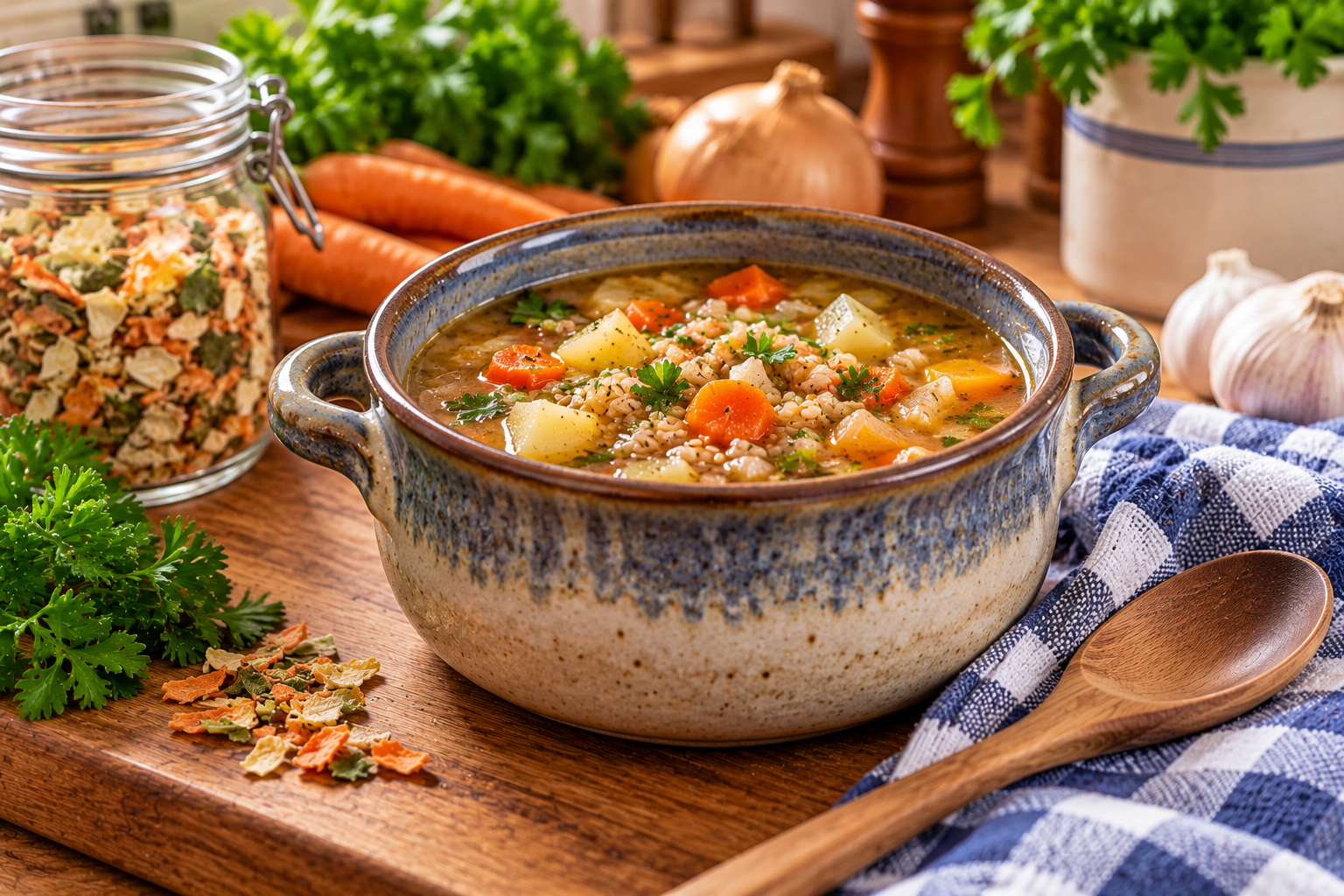
  • Turkey & Barley Comfort Soup
  • Three Ways to Change One Soup Starter
  • Pantry Chili Variations: One Basic Recipe, Several Suppers
  • Weekend Suppers: Soup Roundup

The Pantry Challenge

Put the month’s lessons into practice and learn how to build meals from ingredients you already have.

  • The Pantry Challenge: Make Dinner From What You Have
  • The Pantry Challenge: Start With Three Ingredients
  • Pantry Challenge: The Skillet Meal
  • Pantry Challenge: The Soup Pot
  • Pantry Challenge: The “Almost Empty” Pantry
  • 10 Pantry Meals for When You Don’t Want to Go Shopping

These posts work together as a resource for building a more flexible approach to everyday cooking.

If you’re new to the series, start with the pantry basics. If you’re already comfortable with your pantry, jump straight into the Pantry Challenge and see what you can make with the ingredients you have.

Stretch Every Grocery Dollar

A practical pantry can help you make more thoughtful grocery purchases.

Before buying an ingredient, consider whether you’ll use it in several meals, whether it stores well, and whether the quantity makes sense for your household.

You don’t need to stock every ingredient mentioned in this series.

Choose the ones that suit your tastes, your cooking habits, and your budget.

If you regularly prepare soups, keep the ingredients that make those meals easier. If you prefer skillet meals, concentrate on versatile proteins, vegetables, starches, and seasonings.

Build your pantry gradually rather than feeling that you must buy everything at once.

And remember that the goal isn’t to avoid grocery shopping forever. It’s to make better use of the food you already have and shop with a little more purpose.

Waste Not, Want Not

A practical pantry also requires a little attention.

Keep track of opened packages, store ingredients appropriately, and use perishable foods within recommended storage times.

When you bring home groceries, consider whether older ingredients should be used first.

If you have suitable leftovers, decide whether they’ll become another meal or be frozen for later.

And if you discover an ingredient you no longer use, reconsider whether it belongs in your regular pantry.

The best pantry is one that supports your cooking rather than becoming a collection of forgotten packages.

Cooking for One or Two

Everything we’ve explored this month can be adapted for a small household.

You don’t need to cook a large batch of every meal or buy full packages of ingredients you’ll struggle to finish.

Instead, think about portions, storage, and versatility.

Divide suitable proteins into smaller portions. Keep frozen vegetables available for quick meals. Store dry ingredients properly, and make homemade mixes in quantities that suit your needs.

When you cook, decide whether you want one serving or enough for a second meal.

If you make extra soup or chili, plan when you’ll eat the remainder or freeze it appropriately.

Small-household cooking isn’t about making every meal tiny. It’s about preparing quantities that make sense for your life and avoiding unnecessary waste.

Kitchen Confidence: Your Pantry Is a Tool

The most important lesson from October isn’t that you need more ingredients.

It’s that you can learn to use the ingredients you already have more effectively.

You can make a skillet meal without following a recipe exactly. You can turn suitable leftovers into soup. You can prepare homemade mixes that make cooking easier. And you can look at an almost-empty package and recognize that it still has value.

That confidence grows with practice.

Start with familiar ingredients, choose combinations you enjoy, and keep notes when you discover something that works.

Over time, you’ll build your own collection of dependable meals that suit your household.

And the next time you open the pantry and wonder what to make for dinner, you’ll have more possibilities to consider.

What’s Next?

October has been all about making the pantry work harder.

We’ve explored the ingredients worth keeping, the cooking methods that make them useful, and the flexibility that comes from learning to cook with what you have.

As we move into November, we’ll continue building on those practical skills while turning our attention to the changing season and the comforting meals that suit cooler days.

For now, take a look at your pantry and choose one meal you can make with what you already own.

You don’t need to reorganize the entire kitchen or prepare a week’s worth of meals.

Just start with one.

Because good meals begin before you start cooking.

Posted in Home & Pantry

10 Pantry Meals for When You Don’t Want to Go Shopping

Have you ever reached dinnertime and realized you really don’t want to go to the grocery store?

Maybe the weather isn’t cooperating. Perhaps you’re trying to stretch your grocery budget a little further. Or maybe you’ve simply had a busy day and would rather stay home than make another trip out.

Whatever the reason, you don’t necessarily need to shop to make a good supper.

If you’ve been following our October Pantry to Table series, you’ve already learned how to build a better pantry, prepare simple one-pot meals, make soup from dehydrated ingredients, and turn small quantities of food into something useful.

Now it’s time to put those ideas together.

Today, we’re looking at 10 pantry meals you can make with ingredients you may already have at home.

These aren’t strict recipes with long ingredient lists. They’re flexible starting points you can adapt to your pantry, your tastes, and the number of people you’re feeding.

You might have canned chicken instead of leftover chicken, frozen vegetables instead of fresh, or rice instead of pasta.

That’s perfectly fine.

The goal is to make dinner with what you have rather than buying ingredients for a recipe you may never make again.

Before You Start: Take a Quick Kitchen Inventory

Before deciding what to cook, spend a few minutes checking three places.

The pantry: Look for canned proteins, vegetables, tomatoes, broth, rice, pasta, barley, potatoes, and seasonings.

The refrigerator: Check for leftover cooked meat, vegetables, cheese, sauces, and other ingredients that need to be used soon.

The freezer: Look for frozen vegetables, individually portioned proteins, cooked chicken, and frozen broth.

You don’t need to use everything you find. You’re simply looking for a few ingredients that work well together.

If you discover that you’re missing one ingredient, consider whether a sensible substitution will work.

And remember: pantry cooking doesn’t mean ignoring food safety. Use perishable ingredients within recommended storage times, and discard anything that has been stored improperly or is no longer safe to eat.

Now let’s look at dinner!

1. Chicken and Rice Skillet

What you need:

  • Cooked chicken or canned chicken.
  • Cooked rice.
  • Fresh, frozen, or canned vegetables.

How to make it:

Warm the vegetables in a skillet with a little oil or broth. Stir in the chicken and cooked rice, then season with garlic, onion, parsley, or another flavor you enjoy.

Add a little broth if the mixture seems dry.

Heat everything thoroughly and serve.

Make it your own: Use corn, peas, green beans, carrots, or mixed vegetables. If you don’t have rice, cooked pasta or potatoes may work instead.

For one or two: Start with modest portions of chicken, rice, and vegetables. You can always add more if needed.

2. Turkey and Potato Skillet

What you need:

  • Ground turkey.
  • Potatoes.
  • Corn or another suitable vegetable.

How to make it:

Cook the ground turkey thoroughly in a skillet.

Add diced potatoes. If they’re raw, cut them into small pieces and allow enough time for them to become tender. A little water and a lid can help them cook without burning.

Stir in the corn or another vegetable and season with garlic, onion, and herbs.

If you have leftover cooked potatoes, this meal comes together more quickly.

Make it your own: Substitute another suitable ground meat or use cooked leftover meat. You can also change the vegetables to suit what you have.

3. Pantry Tomato and Pasta Skillet

What you need:

  • Pasta.
  • Canned tomatoes or tomato sauce.
  • A protein or vegetable to round out the meal.

How to make it:

Cook the pasta according to its package directions.

Meanwhile, warm the tomatoes or sauce with suitable seasonings. Add cooked chicken, ground turkey cooked thoroughly, canned tuna, or vegetables that complement the sauce.

Stir in the drained pasta and heat everything through.

Make it your own: Italian seasoning, garlic, basil, or parsley can help bring the flavors together. Add a little shredded cheese if you have some.

You don’t need every ingredient to make a satisfying pasta supper.

4. Chicken and Vegetable Soup

What you need:

  • Chicken broth or another suitable liquid.
  • Cooked chicken.
  • Fresh, frozen, canned, or dehydrated vegetables.

How to make it:

Combine the broth and vegetables in a saucepan or suitable slow cooker.

Cook until the vegetables are tender, allowing enough time for any dehydrated ingredients to rehydrate properly.

Add cooked chicken at an appropriate point so it heats thoroughly.

If you have cooked rice, barley, or pasta, add a little to make the soup more substantial.

Make it your own: Change the seasonings, vegetables, or hearty ingredients to suit your pantry.

This is a particularly useful meal when you have a small amount of cooked chicken that needs a new purpose.

5. Pantry Chili

What you need:

  • Ground turkey or another suitable protein.
  • Canned tomatoes.
  • Canned beans.

How to make it:

Cook the ground turkey thoroughly in a saucepan or Dutch oven.

Add the tomatoes, canned beans, and seasonings such as chili powder, cumin, and garlic.

Simmer until the flavors come together, adding a little water or broth if needed.

If you’re using cooked leftover meat, add it at an appropriate point and heat it thoroughly.

Make it your own: Use the beans and seasonings you enjoy. If you don’t care for a particular type of bean or tomato preparation, choose a different combination.

Canned beans make this a convenient pantry meal because they’re already cooked. Dried beans require separate preparation and a longer cooking plan.

6. Loaded Baked Potato

What you need:

  • One or two potatoes.
  • A topping such as cooked chicken, leftover chili, or beans.
  • An optional finishing ingredient, such as cheese or plain Greek yogurt.

How to make it:

Cook the potatoes using a method that suits your kitchen and the time you have available.

Once tender, split them open and add your chosen topping.

Leftover chili, cooked vegetables, or a little shredded chicken can turn a plain potato into a satisfying supper.

Make it your own: Use whatever topping you enjoy. You don’t need sour cream, bacon, and cheese all at once to make a good loaded potato.

For one: A single large potato with a suitable topping can make a simple meal without creating a pile of leftovers.

7. Tuna and Pea Pasta

What you need:

  • Pasta.
  • Canned tuna.
  • Frozen or canned peas.

How to make it:

Cook the pasta according to the package directions.

Add the peas near the end of cooking if appropriate, or heat them separately.

Drain the pasta and combine it with the drained tuna and peas. Add a little broth, olive oil, or a suitable sauce to bring everything together.

Season with herbs, garlic, or a little lemon juice if you have it.

Make it your own: If you don’t have peas, use another vegetable that complements the tuna. You can also change the pasta shape according to what’s left in the package.

This is a straightforward way to make use of canned fish without needing a special recipe.

8. Rice Bowl With Whatever You Have

What you need:

  • Cooked rice.
  • A protein.
  • One or more vegetables.

How to make it:

Place the warm rice in a bowl.

Add cooked chicken, ground turkey, canned beans, or another suitable protein, along with your chosen vegetables.

Finish with a sauce, herbs, or seasonings that complement the ingredients.

Make it your own: Try a simple chicken and vegetable bowl one day and a turkey and corn bowl another time.

If you have salsa, a suitable dressing, or another sauce you enjoy, a small amount can add flavor.

A rice bowl is also a good way to use small quantities of several ingredients without having to cook a large batch of each one.

9. Turkey and Barley Soup

What you need:

  • Cooked turkey.
  • Barley.
  • Dehydrated or fresh vegetables.
  • Broth or water.

How to make it:

Combine the broth and vegetables in a saucepan or Dutch oven.

Add barley according to its package directions, allowing enough liquid and cooking time for it to become tender.

Stir in the cooked turkey at an appropriate point so it heats thoroughly.

Season with onion, thyme, parsley, or other herbs you enjoy.

Make it your own: Substitute cooked chicken for turkey, or use another suitable grain if you don’t have barley.

If you have only a small amount of cooked meat, this is a useful way to make it contribute to a hearty meal.

10. Pantry Breakfast-for-Supper

What you need:

  • Eggs, if available.
  • Potatoes, toast, or another suitable starch.
  • Vegetables or another ingredient to round out the meal.

How to make it:

Prepare scrambled eggs or an omelet with suitable vegetables.

Serve with a cooked potato, toast, or another starch you have available.

If you don’t have eggs, consider a different simple supper, such as oatmeal with appropriate toppings or a sandwich made from ingredients on hand.

Make it your own: Use leftover vegetables in an omelet, serve a baked potato alongside your eggs, or keep the meal as simple as you like.

Breakfast doesn’t have to stay on the breakfast menu!

How to Make These Meals Work for Your Pantry

You may have noticed that several of these meals use the same basic ingredients.

That’s intentional.

Rice can become a side dish, a skillet meal, or the foundation of a bowl. Canned chicken can contribute to soup, pasta, or a rice skillet. Canned tomatoes can become pasta sauce or chili.

When your pantry contains ingredients that serve several purposes, you can make different meals without buying a completely new set of groceries for each one.

Here are a few simple principles to keep in mind.

Start With What Needs to Be Used

If you have leftover cooked chicken or an opened container of vegetables that needs attention, consider using that ingredient first.

Build the meal around it rather than opening a new package unnecessarily.

Keep the Quantities Small

When you’re cooking for one or two, you don’t need to make a large batch of every dish.

Measure out what you need and save the remaining ingredients appropriately.

If you do make extra soup or chili, decide whether you’ll eat the remaining portion soon or freeze it for another day.

Change the Flavor, Not Just the Ingredients

The same basic ingredients can produce different meals when you change the seasonings or preparation method.

Garlic and herbs might suit one skillet, while chili powder and cumin might be better for another.

A different sauce or a small finishing ingredient can also help make familiar foods feel less repetitive.

Don’t Force a Bad Combination

Not every ingredient belongs in every meal.

If something doesn’t complement the other foods you have, save it for another day.

Pantry cooking is about using ingredients thoughtfully, not combining everything simply because it’s available.

Stretch Every Grocery Dollar

The best pantry meals are often built around ingredients you can use in several ways.

Rice, pasta, potatoes, broth, canned tomatoes, canned proteins, and frozen vegetables are useful examples.

You don’t have to buy every item at once. Build your pantry gradually, concentrating on the foods you enjoy and the meals you actually prepare.

When you shop, consider whether an ingredient will work in more than one dish.

A can of chicken might contribute to soup one day and a skillet meal another day. A package of ground turkey can be divided into smaller portions for several meals. A bag of frozen vegetables can provide a little variety whenever you need it.

That kind of flexibility helps you make better use of your grocery budget.

Waste Not, Want Not

Before putting away the ingredients you didn’t use, make a plan for the remaining portions.

Refrigerate perishable leftovers promptly in suitable containers and follow recommended storage times.

Freeze suitable portions when appropriate, label them, and keep track of what you have available.

If an ingredient is almost gone, consider whether it belongs on your shopping list.

And remember that reducing food waste doesn’t mean you must use every last bit of every package. Food safety comes first, and some ingredients are better saved for another meal.

Cooking for One or Two

If you’re cooking for a small household, pantry meals can make dinner much simpler.

You can use a single portion of protein, a modest amount of vegetables, and a small serving of rice or pasta without preparing a meal for six people.

Here are three habits worth developing:

Keep versatile ingredients on hand. Choose staples that work in several kinds of meals.

Portion ingredients when practical. Freeze meat in amounts that suit your household, and store opened dry ingredients properly.

Keep a list of easy combinations. When you find a pantry meal you enjoy, write it down. You’ll have an idea ready the next time you don’t want to shop.

You don’t need an elaborate meal plan to cook well. Sometimes a short list of dependable meals is all you need.

Kitchen Confidence: Dinner Doesn’t Have to Start at the Grocery Store

It’s easy to believe that a good meal begins with a recipe and a shopping list.

But once you become familiar with your pantry, you’ll start recognizing the possibilities in the ingredients you already own.

You’ll see that a can of chicken can become soup, a skillet meal, or a rice bowl. You’ll recognize that potatoes can become a main dish with a suitable topping. You’ll discover that a few vegetables and some broth can be the beginning of a comforting soup.

You can still enjoy trying new recipes and buying ingredients for special meals.

The difference is that you won’t feel quite so stuck when you haven’t been shopping.

And that is what the Pantry Challenge is all about.

Your Pantry Challenge for Today

Choose one of the ten meals and see whether you can make it using ingredients you already have.

  1. Check your pantry, refrigerator, and freezer.
  2. Choose a meal that suits the ingredients available.
  3. Make sensible substitutions where necessary.
  4. Prepare a quantity that suits your household.
  5. Write down any combination you particularly enjoy.

You don’t have to make all ten meals this week. Even one successful pantry supper is a useful step toward becoming a more confident, flexible cook.

Tomorrow, we’ll bring October’s Pantry to Table series to a close with a practical resource that connects the month’s ideas and recipes in one place.

Because a well-stocked pantry isn’t just about having food on the shelves.

It’s about knowing what you can do with it.

Posted in Recipe Roundup

Dessert Recipes for Every Sweet Tooth

Sometimes a little something sweet is the perfect ending to a meal. Whether you’re craving an old-fashioned favorite, looking for an easy everyday treat, or planning something special for family and friends, there’s a dessert for just about every occasion.

At Good Food Good Meat, I believe good food doesn’t have to be complicated or expensive. Desserts are no exception! A simple cobbler, a batch of cookies, or a homemade treat made with pantry staples can be just as satisfying as something elaborate.

This collection brings together dessert recipes in one convenient place. Browse the list to find something new to try, rediscover a familiar favorite, or choose a sweet treat to share. Whether you’re cooking for one, two, or a crowd, there’s plenty of inspiration to explore.

I hope you find something here that inspires your next sweet treat. After all, sometimes the simplest recipes become our favorites!

Happy cooking, and enjoy something sweet!

Frozen S’mores
Check out this recipe
51 Easy No-Bake Desserts
Check out this recipe
60 Tropical Desserts That’ll Brighten Up Your Day
Check out this recipe
49 of Our Best Fall Desserts
Check out this recipe
35 Delicious Recipes with Vanilla Pudding That We Love
Check out this recipe
25 Festive Fall Dessert Bars
Check out this recipe
Chocolate Pumpkin Tart
Check out this recipe
45 Pumpkin Dessert Recipes
Check out this recipe
32 Pecan Dessert Recipes That Go Beyond the Pie
Check out this recipe
30 Easy Thanksgiving Desserts Everyone Will Enjoy
Check out this recipe
45 Apple Desserts for a Cozy Fall Season
Check out this recipe
Fried Sweet Potato Pies
Check out this recipe
Posted in Home & Pantry

Pantry Challenge: The “Almost Empty” Pantry

You know those little bits and pieces that accumulate in the kitchen?

There’s a little rice left in one container, a few tablespoons of dehydrated vegetables in another, and just enough pasta in the package to make you wonder whether it’s worth cooking.

The refrigerator has a small amount of leftover chicken, a little shredded cheese, and half a container of something you opened earlier in the week.

Nothing seems like enough to make a meal on its own.

Before you decide you have nothing to cook, take another look.

Those almost-empty packages might be exactly what you need to get dinner started.

Welcome to Day Five of our October Pantry Challenge!

This week, we’ve been learning how to make meals from what we already have. We’ve started with three ingredients, explored flexible skillet meals, and discovered how pantry staples can become a comforting pot of soup.

Today, we’re tackling the odds and ends.

The goal isn’t to throw everything into one pot and hope for the best. It’s to learn how to recognize which small quantities can work together, which ingredients deserve to be saved for another day, and how to make the most of what remains.

Why the Almost-Empty Pantry Deserves Attention

When we think about pantry cooking, we often picture full cans, unopened packages, and neatly arranged jars.

But real kitchens aren’t always that tidy.

We use some of an ingredient for one meal and put the rest away. We open a package of rice, use part of a bag of vegetables, or save a little cooked meat from supper.

Before long, we have a collection of small quantities that are easy to overlook.

Using those ingredients can help you:

  • Reduce food waste. Give suitable leftovers and opened packages another purpose.
  • Stretch your grocery budget. Use what you’ve already purchased before buying more.
  • Simplify meal planning. Small quantities can provide the starting point for an easy supper.
  • Make room for new groceries. Using older ingredients helps keep your pantry manageable.
  • Discover new combinations. Sometimes a small adjustment turns an unlikely pairing into a meal you enjoy.

You don’t have to use every last bit immediately. The trick is knowing what you have and finding a sensible use for it.

Step One: Gather Your Odds and Ends

Start by looking in three places: the pantry, the refrigerator, and the freezer.

You don’t need to empty every shelf. Just look for ingredients that have already been opened or foods that need to be used soon.

Check the Pantry

Look for:

  • Small quantities of rice, pasta, barley, or other grains.
  • Partially used packages of crackers or breadcrumbs.
  • Small amounts of dehydrated vegetables.
  • The last spoonfuls of homemade soup starter mixes.
  • Opened containers of seasonings.
  • Small quantities of canned ingredients you’ve transferred to suitable storage containers.

Sometimes a small amount of one ingredient is enough to complete a meal built around something else.

A few tablespoons of dehydrated onions, for example, can add flavor to soup, a skillet meal, or a small pot of chili.

And don’t overlook your homemade mixes. If you have just enough soup starter left for one serving, that may be exactly what you need for lunch.

Check the Refrigerator

This is often where you’ll find the ingredients that need the most attention.

Look for:

  • Leftover cooked chicken, turkey, beef, or pork.
  • Small portions of cooked rice or pasta.
  • Half an onion or a little fresh vegetable.
  • A suitable portion of shredded cheese.
  • Leftover cooked vegetables.
  • Opened containers of broth or sauces.

Use perishable ingredients within recommended storage times. If something has been stored improperly or is past the point where it can be used safely, discard it rather than trying to rescue it.

The Pantry Challenge is about reducing waste responsibly.

Check the Freezer

Your freezer may hold the missing ingredient that makes everything come together.

Perhaps you have:

  • A small portion of cooked shredded chicken.
  • The last handful of frozen vegetables.
  • A little ground turkey divided into individual portions.
  • Frozen broth.
  • A small portion of leftover soup.

You may not have enough of any one ingredient to make a meal by itself, but combining suitable ingredients can give you plenty of options.

Step Two: Sort Ingredients by What They Can Do

Instead of looking at the odds and ends as individual foods, think about their roles in a meal.

This is where pantry cooking becomes easier.

Ingredients That Provide Protein

These might include leftover cooked meat, canned chicken, canned tuna, eggs, or canned beans.

A small quantity of protein can contribute to a larger meal without having to be the main ingredient.

For example, a little cooked chicken can add substance to a vegetable soup or rice skillet.

Ingredients That Add Bulk

Rice, pasta, potatoes, barley, and similar ingredients can help turn a small amount of protein into a satisfying meal.

If you have a little leftover chicken and a cup of cooked rice, you already have the beginning of a chicken and rice skillet.

If you have a small portion of cooked pasta, you might combine it with vegetables and a little tomato sauce.

Ingredients That Add Flavor

These are often the little things that make a meal come together.

Think about:

  • Dehydrated onions.
  • Garlic.
  • Herbs and seasonings.
  • Tomato paste or suitable sauces.
  • A little shredded cheese.
  • Fresh herbs or a squeeze of lemon.

You don’t need a large amount. A small quantity of a flavorful ingredient may be enough.

Ingredients That Add Vegetables

Fresh, frozen, canned, and dehydrated vegetables can all contribute.

A small amount of corn might add sweetness to a turkey skillet. A handful of frozen peas could round out a pasta dish. A little dehydrated carrot and onion might provide the foundation for soup.

Choose vegetables that complement the other ingredients rather than adding everything you find.

Step Three: Build a Meal Around One Useful Ingredient

The easiest way to use odds and ends is to choose one ingredient as your starting point.

Then look for other ingredients that complement it.

Here are five examples.

1. A Little Cooked Chicken

Suppose you have a small portion of cooked chicken left from another meal.

You could combine it with:

  • Cooked rice and frozen vegetables for a skillet meal.
  • Broth and dehydrated vegetables for soup.
  • Pasta and a little tomato sauce for a quick supper.
  • A baked potato and vegetables for a simple bowl meal.
  • Tortillas and suitable seasonings for a wrap.

You don’t need to use the chicken in the same kind of meal every time.

2. A Small Amount of Cooked Rice

Leftover rice can be useful in several ways.

You might combine it with cooked chicken and vegetables for a skillet supper, add it to soup, or serve it as the base for a bowl meal.

If you have only a little rice, treat it as a supporting ingredient rather than expecting it to provide the entire meal.

Remember to refrigerate cooked rice promptly and reheat it thoroughly when using leftovers.

3. A Few Tablespoons of Dehydrated Vegetables

Those small amounts in your jars can be surprisingly useful.

Combine suitable vegetables with broth and cooked chicken for a small pot of soup.

Add them to a skillet dish when the vegetables suit the other ingredients and have enough time and liquid to rehydrate properly.

You can also combine small quantities of compatible dehydrated vegetables in a jar to create a custom soup starter.

Just make sure the ingredients are properly stored and suitable for the intended cooking method.

4. The Last Bit of Pasta

A small quantity of pasta can still make a useful contribution to supper.

If there’s not enough for a full pasta dish, consider adding it to soup or combining it with cooked vegetables and protein.

You can also keep different pasta shapes separate until you have enough for a suitable dish, provided they’re stored properly and remain in good condition.

Don’t feel that every package has to be used up in one meal.

5. A Little of Several Vegetables

Suppose you have a few green beans, some corn, and a small amount of carrots.

Those ingredients might work well together in soup, a vegetable skillet, or a rice bowl.

If you also have a little cooked chicken or turkey, you can add it to make the meal more substantial.

The important thing is to choose ingredients that complement each other.

Step Four: Know When to Combine and When to Keep Things Separate

Not every leftover ingredient belongs in the same meal.

It’s tempting to put everything into a skillet or soup pot simply because the quantities are small.

But the result may be a dish with too many competing flavors or textures.

Before combining ingredients, ask yourself three questions.

Do the flavors work together?

Chicken, rice, carrots, and green beans make sense together. A little Italian seasoning may bring them together even more effectively.

But an ingredient that belongs in a sweet breakfast dish might not be a good addition to a savory skillet.

Will the ingredients cook properly?

Some ingredients need much longer cooking times than others.

Raw potatoes need time to become tender, while cooked chicken only needs reheating. Canned beans can be added near the end of a soup, while dried beans require a different preparation and cooking plan.

Add ingredients in the order that makes sense for their cooking requirements.

Will the quantity make a useful meal?

Sometimes the amount you have is too small to contribute much to supper.

That’s fine. Save it for another meal, combine it with another ingredient later, or use it as a small finishing touch.

You don’t have to force every last spoonful into today’s dinner.

Step Five: Turn Small Quantities Into a Soup Starter

Soup is one of the best ways to use compatible pantry odds and ends.

If you have small amounts of dehydrated vegetables, broth, and suitable seasonings, you can combine them into a starter for a future meal.

For example, you might measure small amounts of dehydrated carrots, onions, and celery into a jar.

When you’re ready to make soup, add the starter to broth or water and cook until the vegetables are tender. Then add your chosen protein and a suitable hearty ingredient, allowing enough time for everything to cook properly.

If you have a little cooked chicken, rice, or barley, those ingredients can complete the soup.

You can also prepare a small skillet starter by combining compatible seasonings and dehydrated ingredients for a meal you make regularly.

The advantage is that you’re using small quantities deliberately rather than leaving them forgotten in the pantry.

Step Six: Make Your Own Pantry Inventory

If you frequently find yourself with half-used packages, a simple inventory can help.

You don’t need a complicated spreadsheet or a detailed record of every spoonful.

A small notepad or a list on your phone is enough.

Write down ingredients that:

  • Need to be used soon.
  • Are almost gone.
  • Would work well in a meal you’re planning.
  • Need replenishing the next time you shop.

For example:

Use soon

  • Leftover cooked chicken.
  • Half a container of broth.
  • Opened frozen vegetables.

Almost empty

  • Rice.
  • Dehydrated onions.
  • Barley.

Possible meals

  • Chicken and rice skillet.
  • Vegetable and barley soup.
  • Small batch of chili.

When it’s time to prepare supper, check the list before deciding you need to buy something else.

You may discover that you already have the ingredients for a meal.

Stretch Every Grocery Dollar

Using small quantities is one way to make your grocery budget work harder.

You don’t have to buy a full package of a new ingredient every time you want to try a recipe.

Instead, look at what you already have and consider whether it can fill the same role.

A small portion of cooked chicken can contribute to soup. A handful of vegetables can round out a skillet meal. A little rice or pasta can make a small amount of protein go further.

You can also make future shopping easier by choosing ingredients that work in several meals.

For example, broth, rice, dehydrated vegetables, and canned chicken can contribute to soup, skillet meals, or simple bowls.

The goal isn’t to make every meal from scraps. It’s to recognize the value of ingredients you’ve already purchased.

Waste Not, Want Not

Before putting away the remaining ingredients, decide what should happen to them.

If a package is almost empty, consider whether you should add it to your shopping list.

If a suitable ingredient can be frozen, divide it into an appropriate portion and label it.

If you have perishable leftovers, store them promptly and follow recommended food-safety guidance.

And if a small amount of an ingredient isn’t enough for a meal, don’t feel obligated to use it immediately. Keep it properly stored and plan a future use if it remains safe to keep.

A little organization can make the next pantry challenge easier.

Cooking for One or Two

The almost-empty pantry is especially familiar to people cooking for one or two.

You may not use an entire can, package, or bunch of vegetables in a single meal. That means you’ll often have small quantities left over.

Rather than thinking of those portions as leftovers that need to be eaten in exactly the same way, think of them as ingredients for another meal.

A little cooked meat can become part of a soup. A small quantity of rice can help complete a skillet dish. A few vegetables can add variety to a bowl meal.

If you regularly find that full packages are too large for your needs, consider portioning ingredients when you first open them.

Freeze suitable portions, store dry ingredients properly, and keep track of what needs to be used soon.

You don’t need to make every meal from scratch or cook a large batch to save money.

Sometimes the smartest meal is the one that uses what you already have.

Kitchen Confidence: You Don’t Have to Use Everything at Once

One of the most useful pantry skills is learning to distinguish between an ingredient that needs to be used soon and one that can wait.

Not every small quantity needs to become part of today’s supper.

You might have enough leftover chicken for a sandwich but not enough for a skillet meal. You might have a small amount of barley that would work better in tomorrow’s soup.

That’s perfectly fine.

The goal is to make thoughtful choices, reduce waste where practical, and prepare meals you actually enjoy eating.

You don’t have to turn every collection of odds and ends into a culinary masterpiece.

You just need to recognize the possibilities.

Your Pantry Challenge for Today

Let’s put those almost-empty packages to work!

  1. Look through your pantry, refrigerator, and freezer.
  2. Find three small quantities of ingredients that might work together.
  3. Choose one ingredient to build around.
  4. Decide whether a skillet meal, soup, bowl, or another simple dish makes the most sense.
  5. Save anything that doesn’t fit for another meal.

If you discover a combination you enjoy, write it down so you can make it again.

Tomorrow, we’ll bring the week’s ideas together with 10 Pantry Meals for When You Don’t Want to Go Shopping.

We’ll create a practical list of meal ideas readers can return to whenever they need dinner inspiration without another trip to the grocery store.

Because sometimes the makings of a good meal are already hiding in those almost-empty packages.

Posted in Home & Pantry

Pantry Challenge: The Soup Pot

There’s something comforting about a pot of homemade soup, especially when you can make it with ingredients you already have in the pantry.

A can of chicken, a handful of dehydrated vegetables, some broth, and a little rice or barley can be the beginning of a satisfying supper. Add a few seasonings, let the ingredients cook until tender, and you’ve turned pantry staples into something warm and nourishing.

Soup is also one of the most flexible meals you can make.

You don’t need a complicated recipe or every ingredient on a shopping list. Once you understand the basic formula, you can change the protein, vegetables, starch, and seasonings to suit your pantry.

Welcome to Day Four of our October Pantry Challenge!

We’ve spent the past few days learning to make dinner from what we have, build meals around three ingredients, and turn available ingredients into skillet suppers. Today, we’re moving to another useful kitchen tool: the soup pot.

And don’t worry. You don’t necessarily need a big stockpot or an entire afternoon to make a good pot of soup.

Why Soup Is Perfect for the Pantry Challenge

Soup is one of the easiest ways to bring a collection of pantry ingredients together.

A small amount of cooked chicken can add protein to vegetable soup. A handful of dehydrated vegetables can provide flavor and texture. Leftover rice or barley can make a light broth more substantial.

You can also make soup in quantities that suit your household instead of preparing a large batch that leaves you wondering what to do with all the leftovers.

Here are a few reasons to keep pantry soup in your cooking rotation:

  • It’s flexible. Change the ingredients according to what you have available.
  • It’s budget-friendly. Small amounts of protein and vegetables can contribute to a satisfying meal.
  • It’s practical for small households. Prepare a modest batch instead of filling a large stockpot.
  • It helps reduce waste. Suitable leftover ingredients can become part of another meal.
  • It works with shelf-stable ingredients. Canned proteins, broth, rice, barley, and dehydrated vegetables are useful starting points.
  • It can fit your schedule. Make a quick soup for lunch or let a longer-cooking soup simmer while you go about your day.

You can even prepare a simple soup starter ahead of time by measuring dehydrated vegetables and suitable seasonings into a small jar.

When you’re ready for soup, add your liquid and the other ingredients the meal requires.

It’s a practical way to make your pantry work for you.

The Basic Pantry Soup Formula

Think of soup as a combination of five components:

Liquid + vegetables + protein + a hearty ingredient + seasonings

You don’t have to use all five every time. They’re simply a guide to help you build a satisfying pot of soup.

1. Start With Liquid

Your liquid helps determine the character of the finished soup.

Depending on what you’re making, you might use:

  • Chicken broth.
  • Vegetable broth.
  • Beef broth.
  • Water with appropriate seasonings.
  • Canned tomato liquid combined with broth or water.

For a small batch, begin with a modest amount of liquid. You can always add more if the soup becomes too thick.

Remember that rice, pasta, barley, and dehydrated vegetables absorb liquid as they cook. Allow for that when deciding how much to use.

If you’re using a concentrated broth or bouillon, follow the package directions and taste before adding extra salt.

2. Choose Your Vegetables

This is where your pantry can really help.

You might use:

  • Dehydrated onions.
  • Dehydrated carrots.
  • Dehydrated potatoes.
  • Dehydrated celery.
  • Canned tomatoes.
  • Canned green beans.
  • Frozen peas or corn.
  • Fresh carrots, celery, or onions.

Use one vegetable or several, depending on what you have.

Dehydrated vegetables are particularly convenient because you can store them in small jars and measure out only what you need.

They also make it possible to prepare a pot of soup without having to purchase fresh vegetables every time you want to make it.

Fresh and frozen vegetables have their place, too. You can combine them with dehydrated ingredients or use whichever option suits the meal you’re making.

3. Add Protein

Your soup doesn’t have to contain a large quantity of meat to be satisfying.

Consider:

  • Canned chicken.
  • Cooked shredded chicken.
  • Leftover cooked beef or pork.
  • Ground turkey cooked thoroughly before adding.
  • Canned beans.
  • Lentils.

Canned chicken is particularly convenient because it’s already cooked. Add it at an appropriate point in the cooking process so it heats thoroughly without becoming unnecessarily dry.

If you’re using raw meat, make sure it reaches the appropriate safe internal temperature before serving.

Canned beans are another handy pantry staple. They’re already cooked, so you can add them toward the end of cooking and allow them to heat through.

Lentils are also worth keeping on hand. Depending on the variety, they can cook relatively quickly and add substance to a pot of soup.

Dried beans are useful, too, but they need a different approach. I generally save them for a bean soup that I plan to cook for several hours rather than trying to fit them into a quick lunch.

We’ll come back to that distinction in a moment.

4. Choose a Hearty Ingredient

A little starch or another substantial ingredient can turn a light broth into a more filling meal.

Consider:

  • Rice.
  • Barley.
  • Pasta.
  • Potatoes.
  • Sweet potatoes.
  • Canned beans.
  • Lentils.

Each ingredient has its own cooking requirements.

Rice, pasta, and barley need different amounts of liquid and different cooking times. Potatoes need enough time to become tender, while canned beans are already cooked and can be added near the end.

Lentils can be a good choice for a relatively quick soup. Their cooking times vary by variety, so check the package directions and cook them until tender.

Dried beans generally require much longer cooking and appropriate preparation. They’re better suited to a soup that has been planned around their cooking time.

The trick is to choose ingredients that fit the time you have available.

If you’re making a quick soup, cooked rice, leftover potatoes, or canned beans may be more convenient than an ingredient that needs a long cooking time.

If you have the day available and want a pot of dried-bean soup, plan for that instead.

Both approaches have a place in a practical kitchen.

5. Finish With Seasonings

Seasonings help bring the ingredients together.

Try combinations such as:

For chicken soup: Onion, garlic, parsley, and thyme.

For tomato soup: Italian seasoning, garlic, and basil.

For beef and barley soup: Onion and thyme.

For vegetable soup: Garlic, parsley, and your favorite herbs.

You don’t need a special soup seasoning packet. Start with what you have, add a little at a time, and taste the broth.

Remember that commercial broth and canned ingredients may already contain salt.

And if you dislike a particular seasoning, leave it out. Your pantry should reflect your tastes, not somebody else’s idea of what belongs in a recipe.

My Mini-Crock Method for Dehydrated Ingredients

If you keep dehydrated vegetables in your pantry, here’s a practical way to put them to work.

I’ve found that when I’m using dehydrated ingredients, popping them into my Mini-Crock on HIGH for about an hour cooks them perfectly for me.

I simply add the dehydrated ingredients and liquid, then add any fresh ingredients at the appropriate times along the way.

And if I get distracted making lunch or decide to do something else before eating, that’s fine, too. I’m not trying to beat a clock!

The hour is my starting point, not a deadline.

How I Approach a Small Pot of Pantry Soup

Step 1: Choose your dehydrated vegetables.

Start with the vegetables that will form the foundation of your soup.

Dehydrated onions, carrots, celery, and potatoes are useful choices, depending on the meal you’re making.

Step 2: Add the liquid.

Pour in enough broth or water to rehydrate the vegetables and create the amount of soup you want.

Remember that dehydrated vegetables absorb liquid. Check the mixture as it cooks and add more if necessary.

Step 3: Add your seasonings.

Garlic, parsley, thyme, and other suitable seasonings can begin building flavor while the vegetables cook.

If you’re using commercial broth, taste before adding extra salt.

Step 4: Let the Mini-Crock do its work.

For the dehydrated vegetables I’ve been using successfully, my usual approach is to cook them on HIGH for about an hour.

Different ingredients and quantities can require different cooking times, so check that everything is properly cooked and tender before serving.

Some ingredients, including raw meat and dried legumes, need particular attention to their cooking requirements. Don’t assume that an hour in the Mini-Crock is sufficient for every ingredient.

Step 5: Add fresh ingredients at the appropriate time.

Fresh vegetables that need more cooking time can go in earlier. Tender vegetables, canned beans, and cooked meat can be added later, according to what the soup requires.

For example, canned beans don’t need the same cooking time as dried beans. Since they’re already cooked, they generally need only enough time to heat through.

If you’re adding lentils, allow enough time for them to cook fully.

Step 6: Check the soup before serving.

Make sure the vegetables are tender, the ingredients are properly cooked, and the soup is hot throughout.

Adjust the liquid and seasonings to suit your preferences.

The advantage of this method is its simplicity. Once you’ve chosen ingredients that work well together, the Mini-Crock can handle much of the cooking while you get on with your day.

Just remember that slow-cooker cooking times vary with the appliance, the quantity of food, and the ingredients you’re using.

Three Pantry Soup Combinations to Try

Let’s put the formula into practice.

These are flexible starting points rather than rigid recipes. Adjust the quantities to suit your appetite and the ingredients you have available.

1. Chicken and Dehydrated Vegetable Soup

Start with:

  • Cooked chicken.
  • Dehydrated vegetables.
  • Chicken broth.

Add seasonings such as garlic, parsley, and thyme.

Cook the dehydrated vegetables in the broth until tender. Add the cooked chicken at an appropriate point so it heats thoroughly.

If you have cooked rice or barley, add a small amount to make the soup more substantial.

This is a good way to use homemade dehydrated vegetables and a small portion of cooked chicken.

You don’t need a large quantity of chicken. The vegetables and broth help make the most of what you have.

2. Tomato, Vegetable, and Lentil Soup

Start with:

  • Canned tomatoes.
  • Lentils.
  • Dehydrated, fresh, or frozen vegetables.

Add broth or water, along with garlic, onion, and herbs you enjoy.

Check the directions for your lentils and allow them to cook until tender. Add fresh vegetables according to how much cooking time they need.

This combination can make a hearty soup without requiring meat.

If you prefer a quicker preparation, canned lentils can also be convenient when available. Since they’re already cooked, add them near the end and heat them through.

3. Turkey and Barley Soup

Start with:

  • Cooked turkey.
  • Cooked barley.
  • Dehydrated vegetables.

Add broth, onion, thyme, and parsley.

Cook the dehydrated vegetables until tender, then stir in the cooked turkey and barley. Continue heating until everything is hot throughout.

If your barley isn’t cooked yet, prepare it according to its package directions or allow sufficient time for it to cook in the soup.

This combination is especially useful when you have a small amount of leftover turkey and want to turn it into another meal.

You can also substitute cooked chicken or another suitable protein.

What About Dried Beans?

Dried beans deserve a little extra consideration when you’re planning pantry soup.

They’re inexpensive, versatile, and excellent for making a hearty pot of soup. But they generally need much longer cooking than canned beans.

I like to save dried beans for a soup that I plan to cook for several hours.

That gives me time to prepare the beans properly and let the soup cook until everything is tender.

For a quick pantry soup, canned beans are usually the more convenient choice. They’re already cooked, so you can add them near the end rather than planning the entire cooking time around dried beans.

A few practical guidelines:

  • Canned beans: Convenient for quick soups. Drain and rinse if appropriate for the recipe, then heat through.
  • Dried lentils: Often suitable for relatively quick soups, depending on the variety. Follow the package directions and cook until tender.
  • Dried beans: Better for soups planned around their longer preparation and cooking requirements.

Always follow appropriate preparation and cooking instructions for dried legumes. Don’t rely on a short slow-cooker cycle to make every type of dried bean safe and tender.

There’s no need to avoid dried beans. Simply choose the right kind of soup for the amount of time you have.

What If Your Soup Is Too Thin or Too Thick?

One of the nice things about soup is that you can often adjust the consistency as you go.

If It’s Too Thin

Consider adding a small amount of cooked rice, pasta, barley, or potatoes.

These ingredients can make the soup more substantial without requiring a completely different recipe.

You can also allow a suitable soup to simmer uncovered for a little while to reduce excess liquid, provided the ingredients can tolerate the additional cooking.

If It’s Too Thick

Add a little broth or water.

Stir, allow the mixture to heat, and check the consistency again.

Remember that some ingredients continue absorbing liquid as the soup stands, so a soup that looks just right in the pot may become thicker after cooling.

If It Needs More Flavor

Taste the broth before adding more seasoning.

It might need a little garlic, onion, herbs, or another suitable flavoring.

If you’ve added too much salt, adding more salt won’t help. Depending on the soup, additional unsalted liquid or other ingredients may help bring the flavor back into balance.

Stretch Every Grocery Dollar

Soup is a practical way to make smaller quantities of ingredients go further.

A little cooked chicken can contribute to several servings of vegetable soup. A small amount of barley can make broth and vegetables more substantial. Dehydrated vegetables can provide flavor and variety without requiring you to buy fresh produce every time you make soup.

Canned beans and lentils are useful pantry staples, too. They provide convenient options when you want a hearty soup without planning around the longer cooking time of dried beans.

Think about the ingredients you use regularly and keep a few dependable options available.

You don’t need a pantry full of specialty products. A few vegetables, suitable proteins, broth, grains, and seasonings can provide the foundation for many different soups.

And because you can change the combinations, you don’t have to eat the same soup every time you open the pantry.

Waste Not, Want Not

Before putting away your ingredients, think about how you can use the remaining portions.

If you’ve opened a can of chicken or vegetables, refrigerate unused portions promptly in a suitable covered container and follow recommended storage times.

If you have leftover soup, refrigerate it promptly in shallow containers. Use refrigerated leftovers within recommended food-safety time limits, or freeze suitable portions for later.

Small containers are particularly useful when cooking for one or two. You can save an individual portion without having to thaw a large batch later.

Don’t forget to check your dehydrated ingredients periodically. Keep them properly stored and discard anything that shows signs of moisture, mold, or spoilage.

The goal is to make the most of your pantry while keeping the food you prepare safe to eat.

Cooking for One or Two

You don’t need a large soup pot to make a satisfying supper.

A small saucepan or Mini-Crock can be useful for preparing a modest batch, depending on the capacity of your appliance and the amount of soup you’re making.

Start with the amount of broth that suits your planned portion, then add the vegetables, protein, and hearty ingredients.

If you’re preparing two servings, consider whether you’ll eat the second portion soon or freeze it for another day.

You can also prepare a dry soup starter by measuring suitable dehydrated vegetables and seasonings into a small jar. When you’re ready to cook, add the liquid and any fresh or refrigerated ingredients the soup requires.

Keep in mind that dry ingredients with special preparation or longer cooking requirements may not be appropriate for every quick soup starter.

Kitchen Confidence: Soup Is a Formula, Not a Fixed List

Once you understand the basic components of soup, you can begin making decisions based on what’s available.

You might start with chicken and rice one day, then use barley and vegetables another time. You can change the seasonings, substitute suitable ingredients, or make a thicker soup when you want something more substantial.

You don’t need to follow a recipe word for word to make a good everyday soup.

You do, however, need to understand the ingredients you’re using, how much liquid they require, and how long they need to cook.

That knowledge allows you to be flexible without sacrificing the quality or safety of your meal.

And remember that not every soup needs to be prepared the same way. A quick lunch soup and a pot of dried-bean soup that simmers for several hours have different purposes, and both deserve a place in your cooking routine.

Your Pantry Challenge for Today

It’s time to put the soup pot to work!

  1. Choose a liquid, a vegetable, and a protein or hearty ingredient.
  2. Look for a few seasonings that complement your choices.
  3. Decide which ingredients need the most cooking time.
  4. Prepare a small pot of soup using what you have.
  5. Make a note of the combination if you enjoy it.

If you have dehydrated vegetables, consider whether your Mini-Crock method would suit the ingredients you’ve chosen.

If you have canned beans, think about using them in a quick soup. Save dried beans for a recipe that allows enough time for them to cook properly.

The goal is to become more comfortable turning pantry staples into a satisfying meal without needing a long shopping list.

Tomorrow, we’ll tackle another familiar kitchen situation in Pantry Challenge: The “Almost Empty” Pantry.

We’ll look at how to make good use of those small quantities that remain after you’ve used most of a package or jar.

Because sometimes a handful of this and a little of that are all you need to get dinner started.

Posted in Home & Pantry

Pantry Challenge: The Skillet Meal

There’s something wonderfully practical about a skillet supper.

You gather a few ingredients, pull out one pan, and turn what you have into a meal without dirtying half the kitchen. For a small household, that’s a pretty good deal!

A skillet meal is also one of the easiest ways to put the Pantry Challenge into practice. You don’t need a special recipe, a long list of ingredients, or a trip to the grocery store.

You need a skillet, a few ingredients that work well together, and a basic understanding of how to bring them together.

Today, we’re going to build a flexible skillet meal from the pantry, refrigerator, and freezer.

Why Skillet Meals Work So Well for Pantry Cooking

Skillet meals are adaptable. They can accommodate cooked chicken, ground turkey, leftover vegetables, rice, pasta, potatoes, and many other ingredients.

They’re especially useful when you’re cooking for one or two because you can prepare a modest portion without making a large casserole or filling a big soup pot.

Here are a few reasons to keep skillet meals in your cooking rotation:

  • One-pan convenience: Many combinations can be prepared in a single skillet.
  • Flexible ingredients: You can change the protein, vegetables, starch, and seasonings to suit what you have.
  • Easy portion control: It’s simple to make one or two servings.
  • Budget-friendly cooking: Small amounts of leftover ingredients can become part of a satisfying meal.
  • Less waste: A skillet is a handy place to use vegetables or cooked proteins that need attention.

You can make a skillet supper from scratch, or you can use ingredients that are already cooked and simply need to be combined and heated.

The trick is knowing which ingredients need the most cooking and which should be added near the end.

The Basic Pantry Skillet Formula

Think of a skillet meal as a combination of four components:

Protein + vegetable + starch + flavor

You don’t necessarily need all four, but they’re a useful starting point.

1. Choose Your Protein

Start with what you have available.

Possibilities include:

  • Ground turkey.
  • Cooked shredded chicken.
  • Canned chicken.
  • Canned tuna, when appropriate for the dish.
  • Leftover cooked pork or beef.
  • Eggs, if they suit the meal.
  • Beans or lentils.

You don’t have to make meat the largest component of the meal. A modest amount of protein combined with vegetables and a starch can go a long way.

If you’re using raw ground turkey or another raw meat, cook it thoroughly before adding ingredients that only need reheating.

2. Add a Vegetable

Fresh, frozen, canned, and dehydrated vegetables can all have a place in a skillet meal.

Look for ingredients such as:

  • Onions.
  • Bell peppers.
  • Carrots.
  • Green beans.
  • Corn.
  • Peas.
  • Spinach.
  • Broccoli.
  • Mushrooms.

Use whatever complements the other ingredients.

Frozen vegetables are especially convenient because you can take out the amount you need and return the rest to the freezer.

Canned vegetables work well, too. Drain them when appropriate and add them late enough that they don’t become overly soft.

Dehydrated vegetables can be useful in certain skillet dishes, but they may need soaking or additional liquid and cooking time. Follow the preparation requirements for the particular vegetable.

3. Pick a Starch

A starch can turn a skillet full of protein and vegetables into a more substantial meal.

Consider:

  • Cooked rice.
  • Cooked pasta.
  • Cooked potatoes.
  • Small pieces of cooked sweet potato.
  • Barley that’s already been cooked.
  • Corn.

You can also use uncooked ingredients in some skillet recipes, but they require enough liquid and cooking time to become tender.

For a quick pantry skillet, cooked rice, leftover potatoes, and cooked pasta are especially convenient.

Kitchen tip: If you’re using leftover rice or pasta, keep it refrigerated until needed and reheat it thoroughly. Don’t leave cooked starches sitting at room temperature for extended periods.

4. Bring Everything Together With Flavor

A few seasonings can help the ingredients taste as though they belong together.

Try:

  • Garlic and onion.
  • Italian seasoning.
  • Thyme and parsley.
  • Paprika.
  • Chili powder and cumin.
  • A little broth.
  • A small amount of tomato sauce.
  • A spoonful of salsa.

Choose flavors that complement the protein and vegetables you’ve selected.

You don’t need to use every seasoning in the cabinet. Two or three appropriate flavors are often enough.

How to Build Your Skillet Meal

Now let’s put the formula to work.

Step 1: Gather Your Ingredients

Before turning on the stove, decide what you’re making.

For example, you might have:

  • 4 ounces of cooked chicken.
  • 1 cup of frozen mixed vegetables.
  • 1 cup of cooked rice.

Those ingredients could become a simple chicken and rice skillet.

Or perhaps you have:

  • 4 ounces of ground turkey.
  • 1 small potato.
  • 1/2 cup of corn.

That combination could become a turkey and potato skillet.

The amounts are examples, not requirements. Adjust them to suit your appetite and the ingredients you have.

Step 2: Prepare the Ingredients

Cut vegetables into reasonably uniform pieces so they cook evenly.

If you’re using raw meat, keep it separate from ready-to-eat foods during preparation and wash your hands and utensils appropriately.

If your starch is already cooked, measure out the amount you’ll need.

If you’re using canned ingredients, open and drain them as appropriate.

A few minutes of preparation makes the cooking process much easier.

Step 3: Start With the Ingredients That Need the Most Cooking

Heat a little oil in your skillet over medium heat.

Add ingredients such as raw ground turkey or firm vegetables first, allowing them to cook appropriately before adding more delicate ingredients.

If you’re using raw ground turkey, break it into small pieces and cook it thoroughly. Ground turkey should reach an internal temperature of 165°F.

Raw potatoes may need to be cooked separately or cut into small pieces and given sufficient time to become tender. A little water and a lid can help them cook through without burning.

Step 4: Add the Vegetables and Starch

Once the ingredients that require the most cooking are ready, add the remaining vegetables and your cooked rice, pasta, or potatoes.

Stir everything together.

If the skillet looks dry, add a small amount of broth or water. Start with a tablespoon or two and add more if needed.

You want enough moisture to help the ingredients come together, not so much that your skillet turns into soup.

Step 5: Season and Finish

Add your chosen seasonings and taste the mixture.

Does it need more garlic? A little parsley? A splash of broth?

Make small adjustments until the flavors come together.

If you’re adding cooked chicken or another cooked protein, make sure it heats thoroughly before serving.

Then take the skillet off the heat and serve.

That’s the basic process!

Three Pantry Skillet Ideas to Try

Here are three combinations to help you get started. Each one is flexible enough to accommodate what you already have.

Chicken, Rice, and Vegetable Skillet

Starting ingredients:

  • Cooked chicken.
  • Cooked rice.
  • Frozen mixed vegetables.

How to make it:

Warm the vegetables in a skillet with a little oil or broth. Stir in the cooked chicken and rice. Add garlic, onion, parsley, or another seasoning you enjoy.

Add a splash of broth if the mixture seems dry. Heat thoroughly and serve.

If you have leftover carrots, green beans, or corn, you can use those instead of the mixed vegetables.

Turkey and Potato Skillet

Starting ingredients:

  • Ground turkey.
  • Potatoes.
  • Corn or another vegetable.

How to make it:

Brown the ground turkey thoroughly in a skillet. Remove excess liquid if necessary.

Add small pieces of potato. If they’re raw, give them enough time to cook until tender, adding a little water and covering the skillet when helpful.

Stir in the corn near the end, along with seasonings such as garlic, onion, and parsley.

If you already have cooked potatoes, the meal will come together more quickly.

Tomato and Pasta Skillet

Starting ingredients:

  • Cooked pasta.
  • Canned tomatoes.
  • Cooked chicken or another suitable protein.

How to make it:

Warm the tomatoes in a skillet with your preferred seasonings. Stir in the cooked chicken and pasta, adding a little water or broth if needed.

Heat until everything is thoroughly hot.

If you have spinach, mushrooms, or another vegetable, add a small amount. If you don’t, keep the meal simple.

You can change the protein or seasonings to suit your pantry.

What If Your Ingredients Don’t Seem to Match?

Sometimes you’ll have three ingredients that don’t immediately suggest a meal.

Before giving up, ask yourself a few questions.

Would a different starch help?

Perhaps the rice doesn’t seem right for your ingredients, but pasta or potatoes would work.

Could you change the cooking method?

Ingredients that don’t work well in a dry skillet might be better suited to a saucier dish.

Would a seasoning bring the flavors together?

A little Italian seasoning, garlic, or another suitable flavor might be all you need.

Could you leave one ingredient out?

Not every ingredient needs to go into the same meal. Save the one that doesn’t fit for another day.

And if the combination still doesn’t appeal to you, choose something else. The Pantry Challenge should make dinner easier, not turn it into an unpleasant experiment.

Stretch Every Grocery Dollar

Skillet meals are a useful way to stretch ingredients without making every supper taste the same.

A package of ground turkey can be divided into small portions and used for several meals.

Cooked chicken can become part of a rice skillet one evening and a soup on another day.

A small amount of leftover pasta can be combined with vegetables and tomato sauce rather than discarded.

When you shop, consider buying ingredients that can work in several kinds of meals. Rice, potatoes, frozen vegetables, and broth can be used in countless combinations.

You don’t need a different set of groceries for every recipe.

Waste Not, Want Not

Before putting away the ingredients you didn’t use, think about how you’ll use them next.

If you’ve opened a can of vegetables or tomatoes, refrigerate the unused portion promptly in a suitable covered container and follow recommended storage times.

If you have leftover cooked meat, rice, or pasta, refrigerate it promptly in shallow containers and use it within recommended food-safety time limits.

You can also portion suitable leftovers for the freezer.

A little planning helps prevent ingredients from being forgotten and gives you a head start on another meal.

Cooking for One or Two

A skillet is particularly useful when you’re preparing a small supper.

You don’t need to fill the pan. Choose quantities that make sense for your appetite and the ingredients you have.

For one person, a modest amount of protein, a serving of vegetables, and a small portion of rice or potatoes may be enough.

For two, increase the quantities as needed.

If you’re unsure how much to use, start with smaller amounts. It’s easier to add another spoonful of rice or vegetables than to figure out what to do with a large pan of leftovers.

And remember that a skillet meal doesn’t have to contain meat. Eggs, beans, or a combination of vegetables and starches can also form the basis of a satisfying supper.

Kitchen Confidence: Learn the Order of Operations

The most important skillet skill isn’t memorizing a recipe. It’s learning the order in which ingredients should be added.

Raw proteins and firm vegetables generally need more cooking time than cooked meat, canned vegetables, or cooked starches.

Delicate ingredients added too early may become mushy, while ingredients that need more cooking can remain underdone if added too late.

As you become familiar with your ingredients, you’ll get better at recognizing what needs to go into the skillet first and what can wait until the end.

That’s what makes a flexible skillet formula so useful: you can apply the same basic technique to many different combinations.

Your Pantry Challenge for Today

It’s time to put the skillet to work!

  1. Find one protein, one vegetable, and one starch in your pantry, refrigerator, or freezer.
  2. Decide which ingredient needs the most cooking.
  3. Choose seasonings that complement your ingredients.
  4. Prepare a small skillet meal using what you have.
  5. Write down the combination if you discover something you enjoy.

Don’t worry about making a perfect dish. The goal is to become more comfortable turning available ingredients into supper.

Tomorrow, we’ll take the Pantry Challenge to the soup pot and explore another flexible way to make dinner from what you have.

Because sometimes all you need is a skillet, a few ingredients, and a little kitchen confidence.