
When my husband and I were stationed together on the island of Guam, we came across a pepper known only as a “boonie pepper.” It was so hot that 1/2 of a pepper in a big pot of chili was enough to light even the most dedicated Texan on fire. I often wish it was available more widely. The heat rating on ranks right on up there with a Carolina Reaper.
There are thousands of different types of peppers, so how do you choose the right one? To make it even more confusing, one pepper variety may have one name when it’s fresh and another when it’s dried. For example, that fresh poblano in your queso fundido is the same pepper as the dried ancho in your chicken mole.
As for heat, you certainly can’t substitute a Scotch Bonnet for an Anaheim and expect the same results!
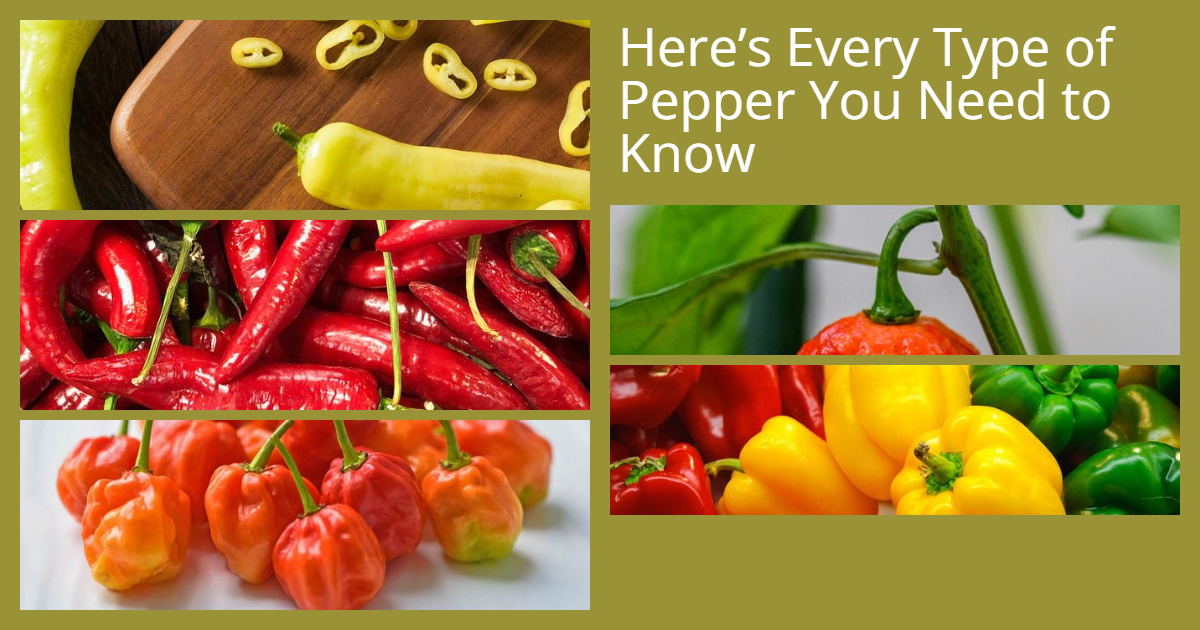
This guide to need-to-know pepper varieties will help you navigate grocery stores and farmers markets so you’ll pick just the right pepper for your dish—whether you’re looking for mild, medium or flaming hot.

What Is a Scoville Heat Unit?
The most important distinction between peppers is heat. That sensation of heat when eating peppers is due to the chemical capsaicin—the more capsaicin, the hotter the pepper. The heat level (spiciness) of food is measured according to the Scoville Heat Unit scale (based on a method devised by Wilbur Scoville back in 1912). On the scale, peppers have a huge swing—sweet bell peppers rate a zero, while the hottest varieties can score over 1,500,000 Scoville units.
Zero to 4,000 is considered mild; 4,000 to 15,000 is medium; 15,000 to 50,000 is hot; much past 50,000 and you may need the fire hose. It might be worth a taste test of different peppers to determine where your heat tolerance lies on the Scoville scale, and then stick to pepper varieties in a range you know you can handle.
Taste of Home
Discover more from Good Food, Good Meat, Good God, Let's Eat!
Subscribe to get the latest posts sent to your email.
