

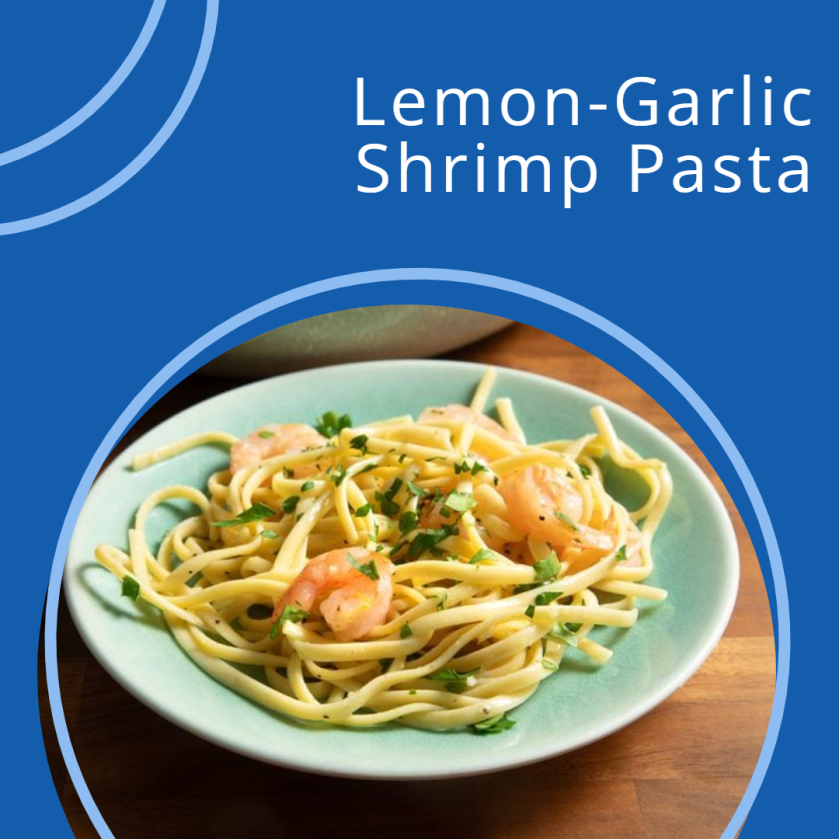
The fresh citrus in lemon-garlic shrimp pasta makes this quick, simple meal bright and light. It balances the briny taste of the shrimp and mellows the bite of the garlic, all in just a few minutes on the stovetop. Since cooking the shellfish is so straightforward, this is one of our favorite easy shrimp recipes.
For the deepest flavor, you’ll use lemon in three forms: fresh zest, pure juice and dried peel in lemon-pepper seasoning. This shrimp linguine recipe stands out from heavily sauced pasta dishes and takes so little effort to make, it deserves a regular slot in your weeknight dinner rotation.
Ingredients for Lemon-Garlic Shrimp Pasta

- Linguine: This thin, slightly flat, straight pasta is a good choice for a light sauce. The noodles likely originated in an Italian coastal region, so you’ll often find them served with seafood. If you don’t have linguine, try other pasta shapes, such as long strands like capellini (aka angel hair) or fettuccine.
- Olive oil and butter: Cooking shrimp in both olive oil and butter balances the fat and flavor of the dish. Our Test Kitchen’s picks for best olive oil brands and best butter will serve you well in this recipe.
- Shrimp: The shellfish cooks so quickly in this shrimp linguine recipe that you’ll want to throw raw large or jumbo shrimp in the pan. Unless you can get your hands on live crustaceans, buy frozen shell-on shrimp and clean the shrimp yourself for the best texture. Among all the types of shrimp available, you’ll most likely find bags of white or pink shrimp in your grocery store’s frozen food aisle. Shrimp pasta recipes are easiest to eat if you remove the entire shell, including from the tail.
- Garlic: This dish is all about the garlic. If you’re concerned that the flavor will be too sharp, mince the garlic first and put it in the lemon juice. The lemon’s acidity mellows the garlic’s alliinase, the enzyme that gives it a harsh taste. Learn how to peel garlic without getting sticky, stinky fingers.
- Lemon: Lemon is key in this recipe, so it’s worth splurging on a whole fresh lemon rather than reaching for bottled juice. The juice spreads into a bright base layer, and the zest gives little concentrated bursts of citrus notes. One lemon should give you enough zest for this recipe, plus extra juice to squeeze over the dish at the end.
- Seasoning: Lemon pepper is typically created by mashing granulated lemon zest with cracked black peppercorns to blend their flavors. Lemon-pepper seasoning mixes in other ingredients, such as salt, onion, garlic and perhaps even herbs and ground spices. It often has a bold taste.
Taste of Home
Discover more from Good Food, Good Meat, Good God, Let's Eat!
Subscribe to get the latest posts sent to your email.

 Good Food, Good Meat, Good God, Let's Eat!