Posted in Kitchen Tips

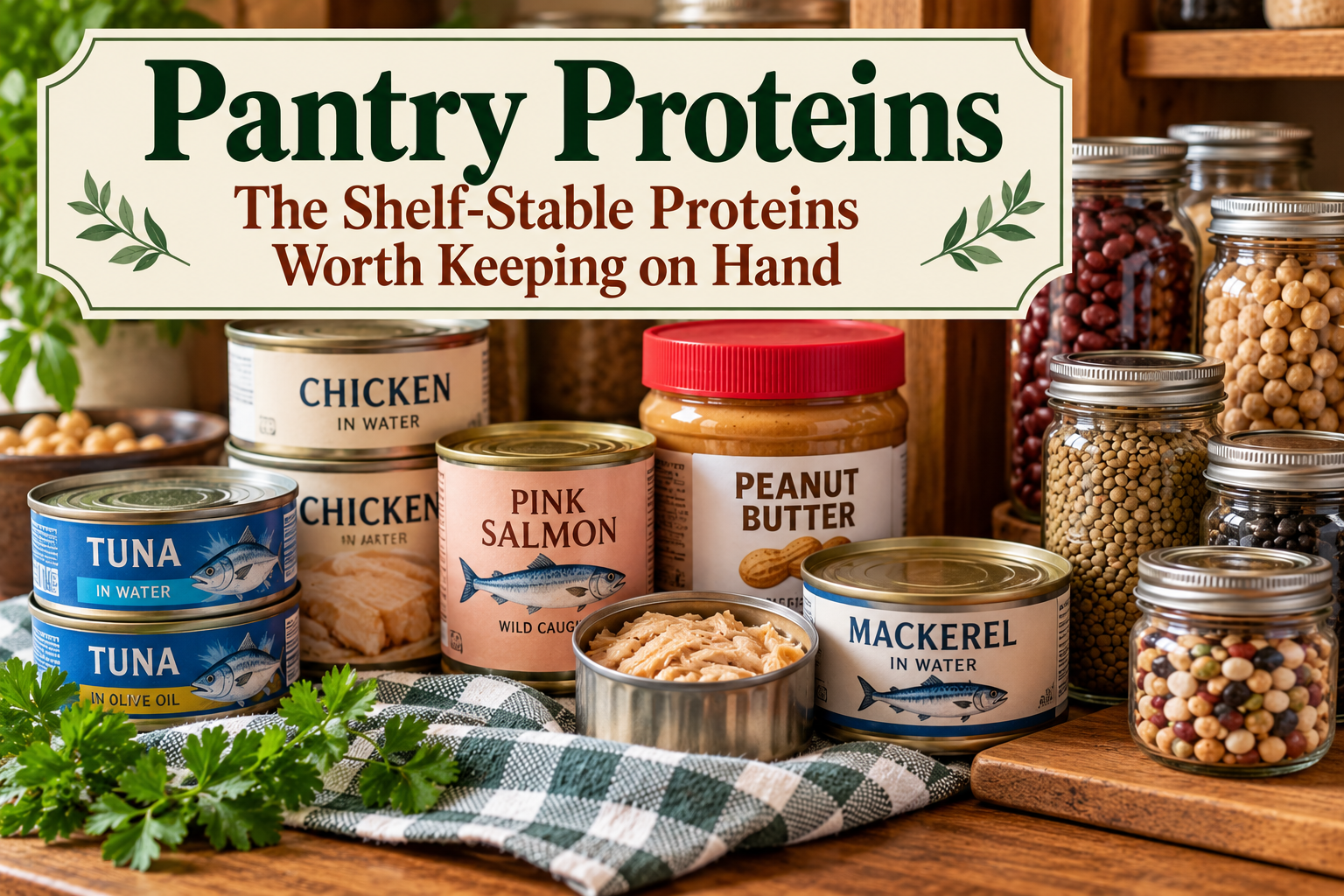
Pantry Proteins: The Shelf-Stable Proteins Worth Keeping on Hand

When you’re cooking for one or two people, having a few dependable proteins in the pantry can make a surprisingly big difference.

Not every dinner needs to begin with thawing meat. Sometimes dinner begins with opening a can.

And there’s nothing wrong with that.

A practical pantry can include several shelf-stable proteins that can become quick lunches, skillet meals, casseroles, soups, salads, sandwiches, and bowls. The trick is choosing proteins that fit the way you actually cook.

Canned Chicken

Canned chicken is one of the most versatile proteins for a small pantry.

It can become:

  • Chicken salad
  • Chicken and rice
  • Chicken soup
  • A skillet meal
  • A casserole
  • A wrap or sandwich
  • A quick chicken bowl

It’s particularly handy when you want chicken without cooking a larger package of fresh meat.

And because you’re using only what you need, it can be a useful option for one or two people.

Sunday’s Chicken Meal Starter showed one way to use it. But that same can of chicken can go in several different directions depending on what else you have available.

Tuna

Tuna may be one of the most useful small-household pantry proteins because it requires very little preparation.

A can can become:

  • Tuna salad
  • A tuna melt
  • Tuna pasta salad
  • Tuna and noodles
  • A rice bowl
  • A casserole
  • A quick sandwich

It also works beautifully with leftovers.

A little cooked pasta, some leftover vegetables, and a spoonful of dressing can turn into lunch without requiring another trip to the store.

And because tuna is available in different can and pouch sizes, you can choose an amount that makes sense for your household.

Canned Salmon

Canned salmon is another useful option if you enjoy it.

It can be used for salmon cakes, salmon salad, patties, pasta, or grain bowls.

It’s also a good example of why pantry planning should begin with foods you actually want to eat. A food doesn’t become useful simply because it appears on somebody else’s pantry checklist.

Mackerel and Other Canned Fish

Mackerel and other canned fish can provide additional variety for sandwiches, salads, bowls, and pasta dishes.

If you enjoy canned fish, having two or three varieties available can keep pantry meals from becoming repetitive without requiring a large collection of different products.

Beans Count, Too

Beans are an important pantry protein and one of the easiest ways to build a meal from inexpensive shelf-stable ingredients.

Canned beans are convenient because they’re already cooked. They can become:

  • Soup
  • Chili
  • Bean salad
  • Burritos or wraps
  • Rice bowls
  • Skillet meals
  • Side dishes

Dried beans can be economical as well if you already cook with them.

And beans pair particularly well with the other pantry staples we’re talking about this week: rice, canned tomatoes, vegetables, broth, and seasonings.

Peanut Butter Is a Pantry Protein, Too

Sometimes we overlook foods because we don’t think of them as “meal ingredients.”

Peanut butter is a good example.

It can be breakfast, lunch, a snack, an addition to oatmeal, a sandwich filling, or an ingredient in sauces and dressings.

For a small pantry, that kind of versatility matters.

Shelf-Stable Protein Products

There are also newer shelf-stable protein products on grocery shelves, including ready-to-eat options.

These can be useful for lunches, travel, camping, or those days when cooking simply isn’t happening.

But before adding one to the pantry, look at the serving size, ingredients, price, and how likely you are to actually eat it.

Convenience is useful when it solves a real problem.

Think in Meals, Not Cans

Here’s where pantry planning becomes much more useful.

Instead of asking:

“How many cans of chicken should I have?”

ask:

“What meals can I make with the chicken I have?”

For example:

Chicken + Rice + Vegetables

  • Chicken and rice skillet
  • Chicken soup
  • Chicken bowl
  • Chicken casserole

Tuna + Pasta

  • Tuna pasta salad
  • Tuna casserole
  • Tuna noodle skillet
  • Cold pasta bowl

Beans + Tomatoes

  • Bean soup
  • Chili
  • Bean and rice bowl
  • Skillet beans

Now you’re not just stocking cans.

You’re stocking meal possibilities.

Build a Small Protein Rotation

You don’t need ten different proteins.

A useful rotation might be:

Chicken — soups, casseroles, bowls, skillet meals

Tuna — lunches, salads, sandwiches, pasta

Beans — soups, chili, bowls, and meatless meals

One additional favorite — perhaps salmon, mackerel, or another protein you regularly enjoy

That can provide plenty of variety without taking over the pantry.

Package Size Matters

This is particularly important for one- and two-person households.

A large container isn’t automatically the better value. If you only need a small amount, a smaller package may make more sense—especially for foods that need refrigeration once opened.

Before buying the largest size, ask:

“How quickly will I actually use this?”

The answer matters more than the price per ounce.

Let Pantry Proteins Help With Leftovers

Shelf-stable proteins are also excellent for giving leftovers a second life.

A small amount of leftover rice plus canned chicken can become dinner.

Leftover pasta plus tuna can become lunch.

A baked potato plus beans can become a meal.

A few leftover vegetables can disappear into soup.

This is where a pantry becomes more than emergency food.

It becomes a way to connect the pieces of your kitchen.

The Three-Meal Test

Before adding a new protein to your pantry, think of at least three things you’d genuinely eat.

For canned chicken:

  1. Chicken salad
  2. Chicken soup
  3. Chicken and rice skillet

For tuna:

  1. Tuna salad
  2. Tuna melt
  3. Tuna pasta

For beans:

  1. Bean soup
  2. Bean and rice bowl
  3. Chili

If you can come up with several meals without having to invent something just to use the ingredient, you’ve probably found a useful pantry staple.

Plan for the Rest of the Can

One advantage of shelf-stable foods is that you can choose package sizes that fit your household. But once a can is opened, have an idea for the remainder.

If you don’t need the whole can for dinner, make tomorrow’s lunch part of the plan.

That’s where pantry planning and meal planning meet. You don’t have to know exactly what you’ll eat every night. You just need to avoid letting opened ingredients become forgotten leftovers.

A Simple Protein Shelf

A practical small-household protein shelf might contain:

  • Canned chicken
  • Tuna
  • One or two varieties of canned fish you enjoy
  • Canned beans
  • Dried beans, if you use them
  • Peanut butter or another nut butter
  • A few shelf-stable protein products you genuinely enjoy

That’s enough.

It gives you options when fresh meat isn’t available, when you don’t feel like cooking a larger piece of meat, or when you need to put together lunch for one.

And it leaves room for the foods that will actually get eaten.

Put the Pantry to Work

The best way to find out whether your pantry proteins are useful is to cook with them.

Make the tuna salad.

Open the chicken.

Cook the beans.

Try the salmon recipe.

Then notice what happens.

What disappeared quickly?

What sat on the shelf?

What would you buy again?

Those answers will tell you more about your pantry than any generic checklist.

That’s the practical side of Pantry to Table: choosing a handful of useful ingredients and turning them into meals you genuinely want to eat.
Because the best pantry protein is the one that actually becomes dinner.


Posted in Chicken Meals, Kitchen Tips

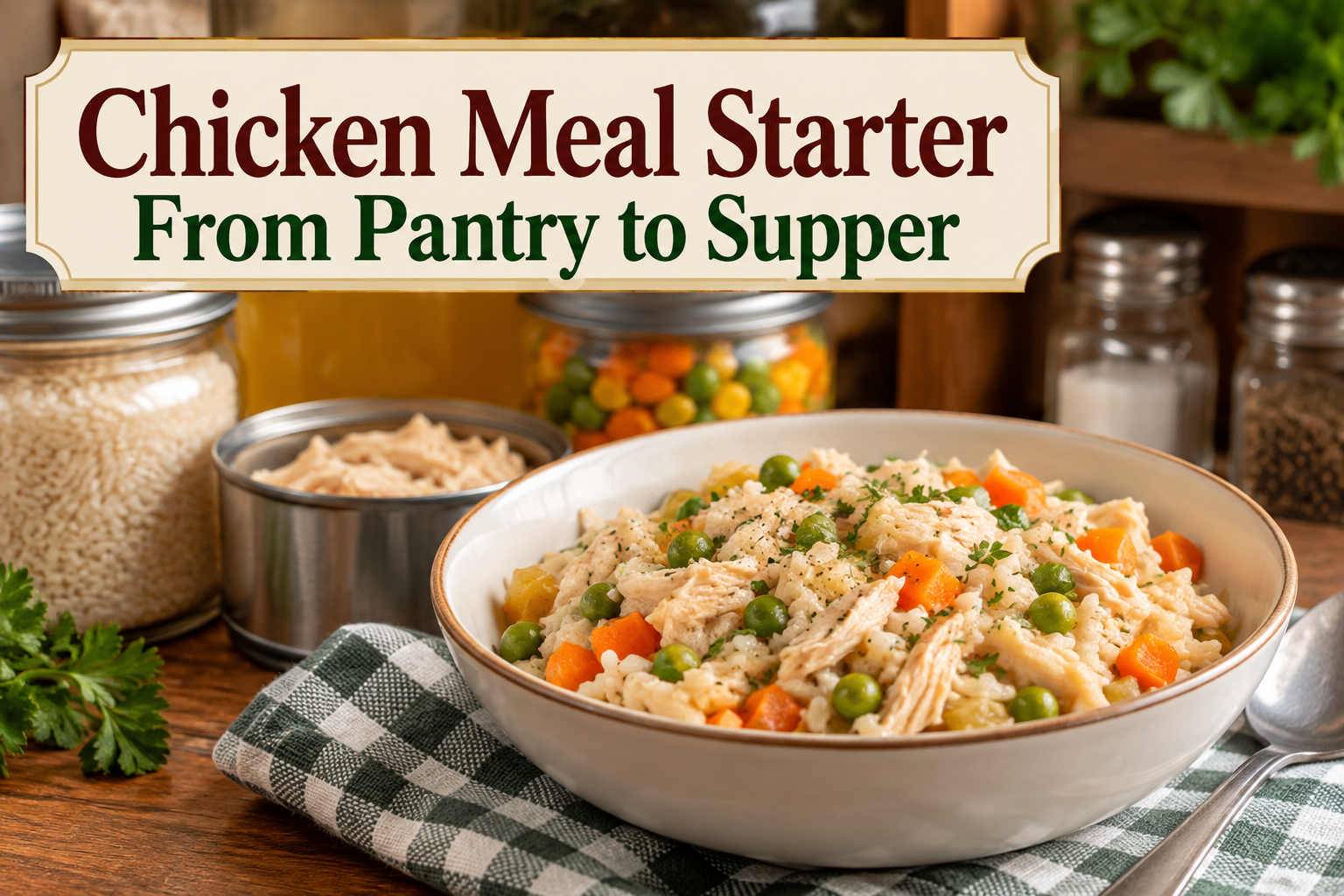
Chicken Meal Starter: From Pantry to Supper

Good meals don’t always begin with a trip to the grocery store. Sometimes they begin with a few things waiting in the pantry.

That’s the idea behind Pantry to Table.

For the next few weeks, we’re going to look at the pantry a little differently—not as a place where we stash food “just in case,” but as part of the everyday kitchen. A well-stocked pantry can make dinner easier, stretch the grocery budget, and save the day when the weather is lousy, the grocery trip didn’t happen, or you simply don’t feel like starting from scratch.

And one of the easiest places to start is with chicken.

This simple Chicken Meal Starter uses ingredients that are practical to keep on hand and can become the beginning of several different meals. You don’t need a freezer full of chicken or a refrigerator full of fresh vegetables. A few shelf-stable ingredients can get dinner moving.

Why You’ll Love This Meal Starter

  • It starts with inexpensive, easy-to-store ingredients.
  • Canned chicken does the heavy lifting.
  • It makes a small amount, appropriate for one or two people.
  • The basic mixture can be turned into several different meals.
  • It gives pantry ingredients a purpose instead of letting them sit forgotten on the shelf.
  • It’s an easy way to stretch a grocery dollar without making dinner feel like “budget food.”

Most importantly, you don’t have to buy a bunch of specialty ingredients to build a pantry.

Start with foods you actually eat.

Recipe Information

Servings: 2
Serving Size: About 1½ cups prepared meal
Prep Time: 10 minutes
Cook Time: 15 minutes
Total Time: 25 minutes
Meal Category: Skillet Meals
Main Protein: Chicken
Estimated Calories: About 350 per serving, depending on the chicken and vegetables used

simplegoodfood's avatarsimplegoodfood

Chicken Meal Starter

Good meals don't always begin with a trip to the grocery store. Sometimes they begin with a few things waiting in the pantry.
Prep Time 10 minutes
Cook Time 15 minutes
Total Time 25 minutes
Servings: 2
Course: Dinner, Lunch
Cuisine: American
Calories: 350

Ingredients
  

  • 1 can 10–12 ounces canned chicken, drained
  • 1 cup canned or dehydrated mixed vegetables
  • 1 cup cooked rice
  • 1 cup chicken broth
  • ½ teaspoon onion powder
  • ¼ teaspoon garlic powder
  • ½ teaspoon dried parsley
  • ¼ teaspoon salt or to taste
  • ¼ teaspoon black pepper or to taste
  • 1 teaspoon butter or cooking oil
Optional additions
  • A spoonful of leftover gravy
  • A little shredded cheese
  • Dehydrated onions
  • A small amount of canned corn
  • A sprinkle of dried herbs
  • A tablespoon or two of cream soup for a creamy version

Method
 

Start the vegetables
  1. Heat the butter or oil in a small skillet over medium heat.
Add the canned or rehydrated vegetables and cook for 2–3 minutes.
  1. If you’re using dehydrated vegetables, rehydrate them first or allow them to simmer with the broth long enough to soften.
Add the chicken
  1. Add the drained canned chicken and gently break it apart with a spoon.
  2. Stir in the onion powder, garlic powder, parsley, salt, and pepper.
  3. Cook for another 2–3 minutes.
Bring it together
  1. Pour in the chicken broth and stir.
  2. Add the cooked rice and bring the mixture to a gentle simmer.
  3. Cook for 5–7 minutes, stirring occasionally, until everything is hot and the flavors have had a chance to come together.
  4. If the mixture becomes too thick, add another splash of broth.
Taste and finish
  1. Taste before adding more salt or seasoning.
  2. Serve hot.

Notes

Kitchen Confidence

This is less about following a recipe perfectly and more about learning how pantry ingredients work together.
Chicken + broth + vegetables + a starch = the beginning of dinner.
Rice is used here, but the same basic idea can work with pasta, potatoes, barley, or another grain you already keep on hand.
That’s the beauty of a practical pantry.
You don’t need twelve versions of the same ingredient. You need a handful of ingredients that can work together in different ways.

From One Starter to Several Meals

This basic chicken mixture is deliberately simple because it can go in several directions.

Make Chicken & Rice Soup

Add extra chicken broth and another handful of vegetables. Simmer until everything is hot.

For a soup serving, aim for about 1½ cups per person.

Make a Creamy Chicken Skillet

Stir in a small amount of cream soup or a spoonful of Greek yogurt after removing the skillet from the heat.

Serve over rice, toast, or potatoes.

Make Chicken & Vegetable Casserole

Transfer the mixture to a small baking dish, top with a little shredded cheese or breadcrumbs, and heat until bubbly.

Turn It Into a Bowl

Spoon the chicken mixture over rice and add whatever vegetables, sauce, or toppings you have available.

A pantry meal doesn’t have to look exactly the same every time.

Stretch Every Grocery Dollar

One of the reasons I like canned chicken for pantry cooking is that it gives you a usable protein without requiring freezer space.

And here’s an important pantry rule:

Don’t buy food simply because someone says you should have it in your pantry.

If you don’t eat salmon, don’t buy canned salmon.

If mackerel isn’t something you’ll actually use, it doesn’t belong on your shelf.

The same goes for beans, vegetables, grains, sauces, and everything else.

A useful pantry is built around your meals and your tastes.

That may mean canned chicken for one household and tuna or salmon for another. There’s no prize for having the biggest pantry.

The goal is having ingredients that help you get dinner on the table.

Waste Not, Want Not

If you open a larger can of vegetables than you need, save the leftovers for tomorrow’s soup, skillet meal, omelet, or casserole.

The same goes for broth.

Freeze leftover broth in small portions if you have freezer space, or use it within a few days.

And don’t overlook small amounts of cooked rice. A little leftover rice can become tomorrow’s skillet meal instead of going into the trash.

Cooking for One or Two

This recipe makes two modest servings, which is exactly what I want from a pantry meal.

If you’re cooking for one, enjoy half today and save the other half for another meal.

If you’re cooking for two, you’ve got dinner without ending up with a refrigerator full of leftovers.

That’s one of the biggest differences between pantry cooking for real life and traditional batch cooking.

You don’t always need to make a giant pot.

Sometimes you just need enough dinner for tonight.

Meal Prep Note

You can assemble the dry seasonings and dehydrated vegetables in a small labeled container or jar ahead of time.

When it’s time to make dinner, add the chicken, broth, and rice.

That gives you a simple pantry meal starter that’s ready to turn into dinner with very little fuss.

Just remember to label homemade mixes with the ingredients and date.

Storage & Freezing

Refrigerate leftovers promptly in a covered container and use within 3–4 days.

If freezing, cool the finished meal before packaging.

Rice can change texture somewhat after freezing, but the mixture works well when reheated with a splash of broth.

For the best texture, reheat gently and add a little broth as needed.

The Bigger Pantry-to-Table Idea

This little chicken meal isn’t meant to be the answer to every dinner.

It’s meant to demonstrate something more useful:

A pantry doesn’t have to be huge to be helpful.

A few cans of protein.
Some vegetables.
Rice or another grain.
Broth.
A few seasonings.

Those simple ingredients can become soup, skillet meals, casseroles, bowls, and quick lunches.

That’s what we’re going to explore throughout October.

Not filling shelves for the sake of filling shelves.

Not buying ingredients because they’re trendy.

Not storing food you’ll never eat.

Just good food, practical ingredients, and a pantry that earns its keep.

Welcome to Pantry to Table.

Good meals begin before you start cooking.


Pinterest Caption

Pantry to Table starts with a simple Chicken Meal Starter! Canned chicken, vegetables, rice, broth, and a few seasonings become an easy meal for one or two—with plenty of ways to turn the same pantry basics into soup, skillet meals, casseroles, and bowls. Practical pantry cooking for real life!