
Posted in Monthly Introductions

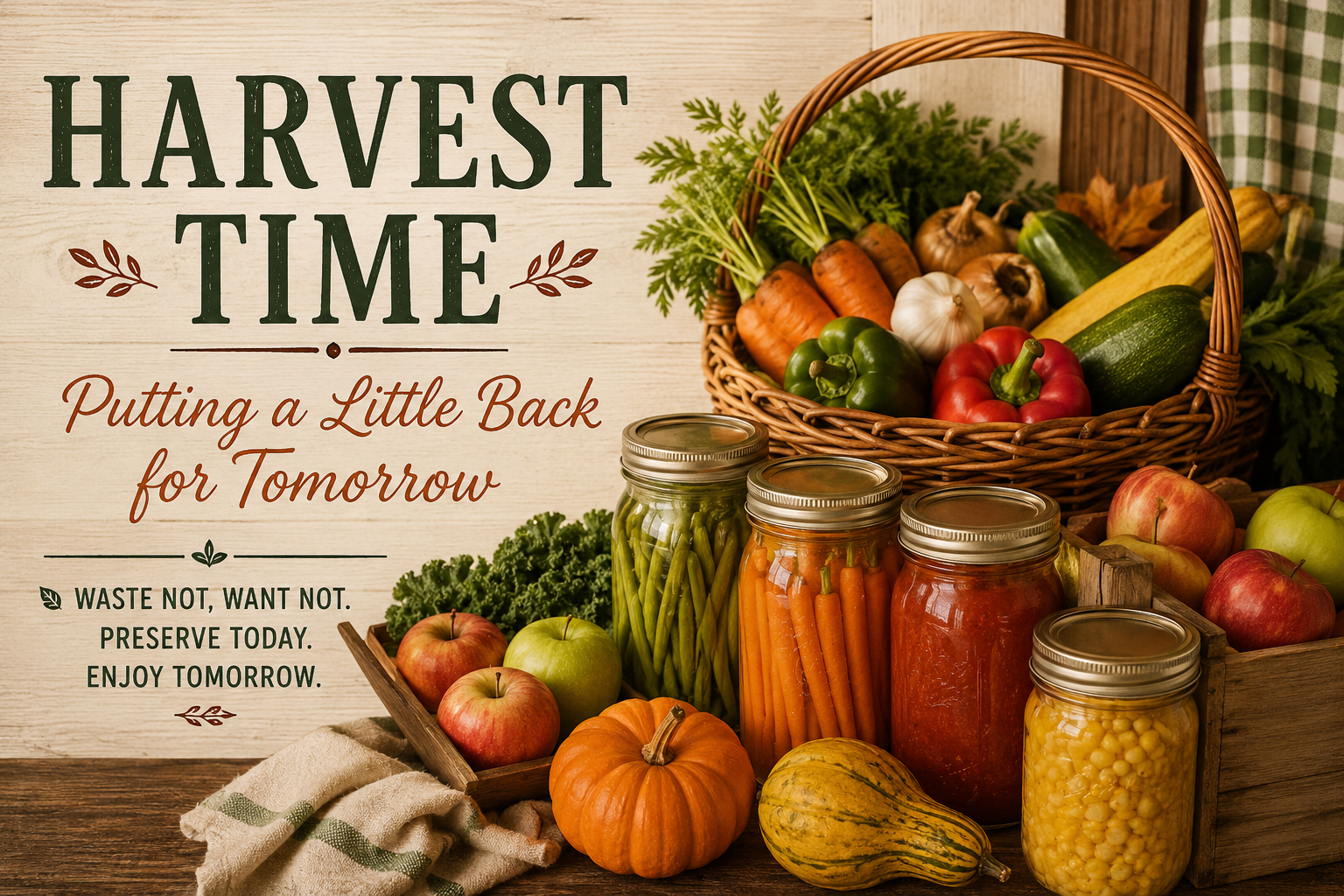
Harvest Time: Putting a Little Back for Tomorrow

There is something special about September.

The gardens are still giving us tomatoes, peppers, green beans, zucchini, and corn. Apples are beginning to show up at roadside stands. Farmers markets are overflowing with the last big harvests of summer while the first signs of autumn are starting to appear.

When I was growing up, this was the time of year when people started thinking about putting a little something back.

Saturday mornings might mean a trip to the farmers market. A roadside stand might have a bushel of peaches or tomatoes for a good price. A neighbor might have more green beans or zucchini than their family could possibly eat.

And then came the family canning days.

There would be jars lined up on the counter, vegetables being prepared, pots simmering, and shelves slowly filling with food that had been gathered while it was plentiful.

It wasn’t about filling every shelf to overflowing.

It was about being practical.

Put a little back while it’s available.

That idea still makes sense today, even if our kitchens—and our lives—look very different.

Maybe you don’t have a garden.

Maybe your harvest comes from a farmers market, a roadside stand, a grocery-store sale, or a surprisingly good deal at Costco.

Maybe putting food back means freezing a few portions instead of canning dozens of jars. Maybe it means dehydrating vegetables, making a soup starter, or simply buying extra of something you know you’ll use later.

The method isn’t really the point.

The principle is.

When something is plentiful and affordable, we can make today’s abundance work a little harder for us tomorrow.

And that’s what September will be about here at Good Food Good Meat.

We’ll talk about preserving the season, stretching a grocery bargain, using what we already have, and building a practical pantry one small step at a time.

We’ll also keep things sensible. Safe food preservation matters, so when we’re talking about canning, we’ll point you toward tested recipes and guidance from the USDA and National Center for Home Food Preservation rather than asking you to guess at a method.

Because putting food back shouldn’t feel overwhelming.

It doesn’t have to mean buying a pressure canner and spending an entire weekend filling jars.

Sometimes it can be as simple as freezing those extra peppers before they go bad.

Or drying a few carrots.

Or making one extra batch of soup.

Or putting one useful jar on the pantry shelf.

🫙 One Thing at a Time

That’s why we’re adding a new September feature: Pantry Builder.

Each week, we’ll choose one practical thing to put back.

Not twenty things.

Just one.

By the end of the month, you may not have a perfectly stocked pantry—and that’s not the goal.

You’ll simply have a few more useful things waiting for you when you need them.

Because there’s something comforting about knowing that tomorrow’s dinner doesn’t always have to start with tomorrow’s grocery trip.

September is a reminder that abundance is temporary.

But with a little planning, some of today’s abundance can become tomorrow’s comfort.

So let’s enjoy the harvest while it’s here—and put a little back for later. 🌾

Today’s plenty can become tomorrow’s peace of mind.
Posted in Monthly Introductions

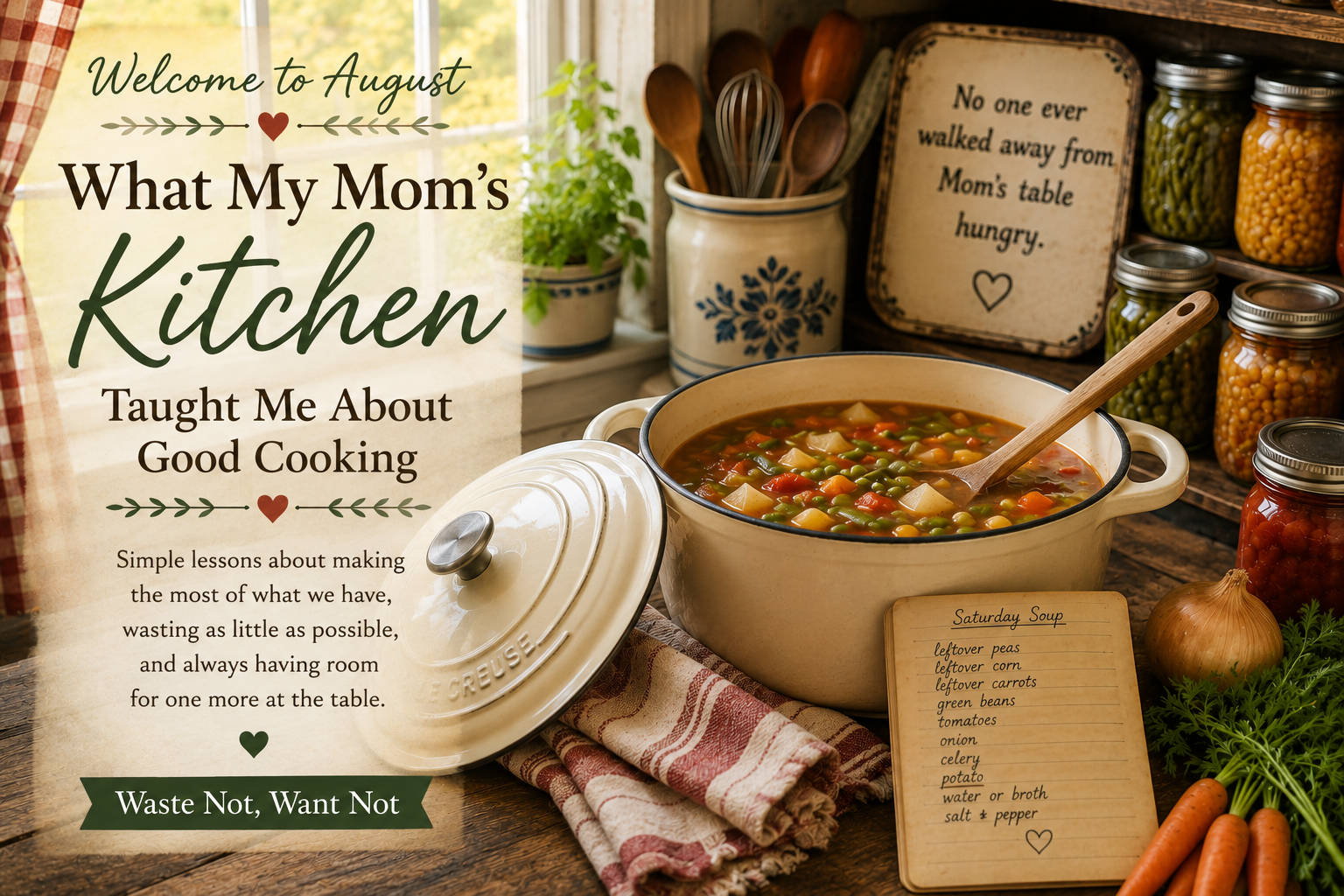
Welcome to August: What My Mom’s Kitchen Taught Me About Good Cooking

If you had asked me years ago what some of my most treasured childhood memories would be, I probably wouldn’t have said they happened in the kitchen.

But looking back now, that’s exactly where they were.

Growing up in Pennsylvania, we weren’t wealthy, but we always had enough. My parents believed in making the most of what they had, and one of the greatest lessons I ever learned came from watching my mom prepare everyday meals.

There was always a container in the freezer waiting for leftover vegetables. Every night after supper, if there were a spoonful of peas, a few carrots, some corn, or green beans left, they didn’t go into the trash. They went into that container.

By Saturday, the container was full.

Mom would pour everything into a soup pot, add broth, tomatoes, whatever else was on hand, and before long we had a hearty vegetable soup for supper. No recipe. No fancy ingredients. Just good food made from what we already had.

We didn’t call it meal prep.

We didn’t call it reducing food waste.

We didn’t call it sustainability.

It was simply the way we lived.

I also remember Saturdays spent in the kitchen canning vegetables from my Aunt Edna’s garden. Tomatoes, green beans, and whatever produce was in season filled the counters. Some came from the garden, while other vegetables came from local farmers’ markets and roadside stands. We worked together, filled jar after jar, and listened for the satisfying “pop” of lids sealing.

Those jars represented much more than food.

They meant winter meals.

They meant stretching the grocery budget.

They meant being prepared for busy days.

They meant there was always something to put on the table.

One lesson from my mom has stayed with me all these years.

No one ever walked away from her table hungry if she could help it.

If unexpected company arrived around supper time, she didn’t panic. She simply opened another jar of vegetables, added another side dish, and somehow there was always enough for one more person.

Looking back, I realize those pantry shelves weren’t just filled with food.

They were filled with hospitality.

As I planned this month’s recipes, I found myself thinking about those lessons more and more.

Today’s grocery prices encourage us to make every purchase count. Many of us are cooking for one or two instead of large families. Others are feeding grandchildren, camping, traveling in an RV, or simply trying to prepare meals without wasting food or money.

The principles haven’t changed.

Cook what you have.

Waste as little as possible.

Buy wisely.

Save a little for tomorrow.

Welcome others when you can.

Throughout August, we’ll be exploring simple, practical meals that help stretch the grocery budget without sacrificing good food. You’ll find recipes that build on leftovers, budget-friendly rice bowls, meal prep ideas that become several different dinners, and little tips for making your ingredients work harder for you.

My hope is that these recipes do more than fill your stomach.

I hope they make your kitchen a little less stressful, your grocery budget go a little farther, and your table a place where there’s always room for one more.

Welcome to August.

Let’s make the most of what we have—one simple, practical meal at a time.