Posted in Soups & Stews

Building a Better Pantry Soup

There are nights when you have plenty of food in the pantry but absolutely no idea what to make for dinner.

You have a can of tomatoes. Maybe some broth. A little leftover chicken. A bag of rice or barley. A few vegetables tucked away in the refrigerator.

Nothing looks like a recipe.

But put the pieces together in the right order, and suddenly you have soup.

That’s one of the best things about keeping a practical pantry: you don’t always need a recipe to make dinner. You need a formula.

For October’s Pantry to Table series, we’re looking at the ingredients and habits that make everyday cooking easier. And learning how to build a good soup from what you already have may be one of the most useful skills in the whole pantry.

Why Build Soup From a Formula?

A recipe tells you exactly what to buy and exactly what to do.

A formula gives you room to work with what you already have.

That’s particularly useful when you’re cooking for one or two people. You may have half an onion, one lonely carrot, some leftover turkey, and a little cooked rice—but not enough of any one ingredient to make the recipe you found online.

Soup doesn’t care.

That’s its superpower.

You can combine small amounts of ingredients, adjust the proportions, and end up with a completely different soup every time.

The Basic Pantry Soup Formula

Think of your soup as a series of building blocks:

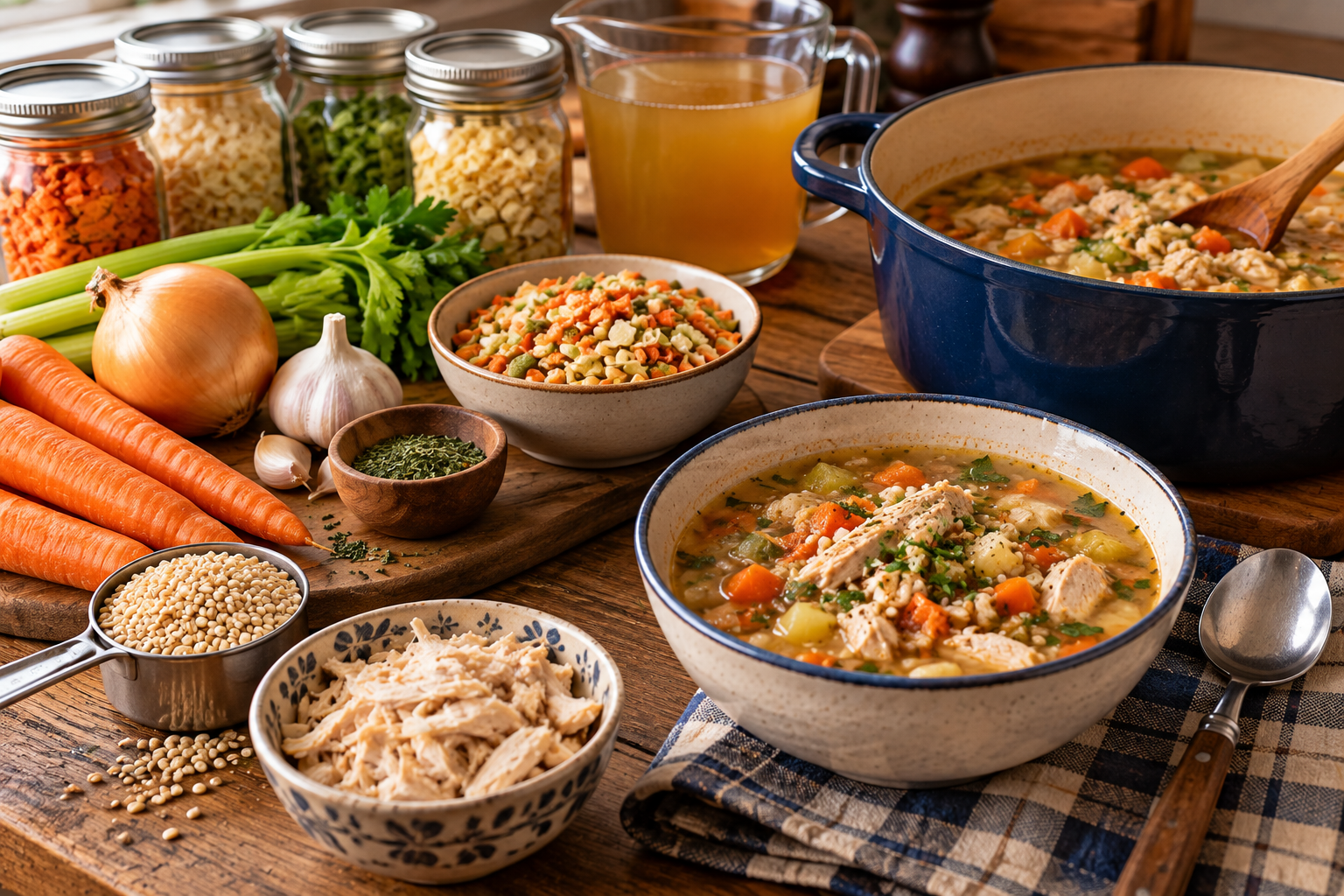
Broth + Protein + Vegetables + Starch or Grain + Seasoning + Finish

You don’t necessarily need every component every time, but this gives you a place to start.

1. Start With the Liquid

The broth forms the foundation of the soup.

Good pantry choices include:

  • Chicken broth
  • Turkey broth
  • Vegetable broth
  • Beef broth
  • Homemade stock
  • Bouillon or soup base mixed with water

You can also use water when your other ingredients provide plenty of flavor.

For a small household, shelf-stable broth in smaller containers can be particularly convenient. If you open a larger container, freeze the unused portion in meal-sized amounts rather than letting it sit in the refrigerator waiting for another recipe.

2. Add a Protein

Protein turns a bowl of soup from a side dish into a meal.

And it doesn’t have to mean cooking meat specifically for the soup.

Good pantry and leftover options include:

  • Canned chicken
  • Canned tuna, for appropriate soups
  • Canned salmon
  • Canned mackerel
  • Cooked turkey
  • Leftover chicken
  • Ground beef
  • Ground turkey
  • Cooked pork
  • Eggs
  • Beans
  • Lentils

This is one reason canned proteins can be so useful in a small household. You don’t have to wait until you have enough leftover meat to make soup.

And you don’t have to buy an ingredient just because a recipe says you need it.

3. Add Vegetables

This is where your pantry, freezer, refrigerator, and preservation projects can all work together.

Use whatever makes sense:

Fresh vegetables

  • Carrots
  • Celery
  • Onion
  • Bell pepper
  • Cabbage
  • Zucchini

Frozen vegetables

  • Peas
  • Corn
  • Green beans
  • Mixed vegetables
  • Spinach

Canned vegetables

  • Tomatoes
  • Green beans
  • Corn
  • Carrots

Dehydrated vegetables

  • Onion
  • Carrots
  • Celery
  • Potatoes
  • Other vegetables you’ve preserved

And don’t underestimate a small amount.

Half a carrot doesn’t look like much on the cutting board. In a bowl of soup, it matters.

4. Choose a Starch or Grain

This is another way to make a small amount of protein and vegetables feel like a complete meal.

Try:

  • Rice
  • Barley
  • Pasta
  • Potatoes
  • Sweet potatoes
  • Quinoa
  • Corn
  • Beans

You don’t always need a starch. A vegetable-heavy soup can stand on its own.

But when you’re trying to make soup satisfying enough for dinner, adding a grain, potato, or pasta can make a big difference.

One Small-Household Tip

Don’t automatically cook a large quantity of rice or pasta just because you’re making soup.

For small-batch cooking, adding a modest amount directly to the soup can be easier.

Just remember that grains and pasta continue absorbing liquid as the soup sits. If you’re planning leftovers, you may want to cook them separately and add them to individual portions.

5. Season It

This is where the same basic ingredients can become completely different soups.

For a classic chicken soup, think:

Garlic + thyme + parsley + black pepper

For a tomato-based soup:

Basil + oregano + garlic

For a Mexican-inspired soup:

Cumin + chili powder + oregano

For a cozy barley soup:

Thyme + garlic + onion + black pepper

For a curry-style vegetable soup:

Curry powder + garlic + ginger

You don’t need a cabinet full of specialty spices.

A handful of basic seasonings can take you a surprisingly long way.

6. Finish the Soup

This is the step people sometimes skip.

The soup may be perfectly good without a finishing touch, but something fresh or flavorful added at the end can wake everything up.

Try:

  • A squeeze of lemon
  • A splash of vinegar
  • Fresh parsley
  • Green onion
  • A spoonful of Greek yogurt
  • A little shredded cheese
  • Fresh herbs
  • A drizzle of olive oil

You don’t need much.

Sometimes half a teaspoon of lemon juice is enough to make a pot of soup taste brighter.

A Simple Way to Think About It

When standing in front of the pantry wondering what to make, ask yourself six questions:

1. What liquid do I have?
Broth, stock, or water?

2. What protein do I have?
Chicken, turkey, canned fish, beans, lentils, or something leftover?

3. What vegetables need to be used?
Fresh, frozen, canned, or dehydrated?

4. What will make it filling?
Rice, barley, pasta, potatoes, or another grain?

5. What flavor direction sounds good?
Herb and garlic? Tomato and Italian? Chili and cumin? Something creamy?

6. What can I add at the end?
Lemon, herbs, cheese, yogurt, or another fresh finish?

Once you’ve answered those questions, you’re halfway to dinner.

A Few Combinations to Get You Started

Here are some examples using the same basic formula.

Chicken + Rice Soup

Broth: Chicken
Protein: Chicken
Vegetables: Carrot, celery, onion
Starch: Rice
Seasoning: Thyme, parsley, garlic
Finish: Lemon

Turkey + Barley Soup

Broth: Turkey or chicken
Protein: Turkey
Vegetables: Carrot, celery, onion
Grain: Barley
Seasoning: Thyme, garlic, black pepper
Finish: Fresh parsley

Tomato + White Bean Soup

Liquid: Diced tomatoes + broth
Protein: White beans
Vegetables: Onion, carrot, spinach
Starch: Optional small pasta
Seasoning: Basil, oregano, garlic
Finish: Parmesan

Beef + Vegetable Soup

Broth: Beef
Protein: Ground beef or leftover beef
Vegetables: Carrot, celery, green beans
Starch: Potato
Seasoning: Garlic, thyme, black pepper
Finish: Fresh parsley

Notice something?

None of these combinations requires a special shopping trip.

They’re built from categories of ingredients, not one exact shopping list.

What If You Don’t Have Everything?

That’s where the formula becomes useful.

No celery?

Skip it.

No fresh onion?

Use dehydrated onion.

No carrots?

Use frozen mixed vegetables.

No chicken?

Use turkey.

No barley?

Use rice.

No fresh herbs?

Use dried.

No broth?

Use water and a good soup base.

The goal isn’t to recreate someone else’s recipe perfectly.

The goal is to make your ingredients work together.

Kitchen Confidence: Learn to Taste as You Go

Soup is forgiving, but seasoning can be tricky.

Start conservatively.

You can always add more salt, herbs, or spices. It’s much harder to fix a soup that’s become overwhelmingly salty or spicy.

Taste after the ingredients have had time to simmer together.

Then ask:

Does it need more salt?

Does it need more seasoning?

Does it need acidity?

That last question is particularly useful.

If the soup tastes flat even though you’ve seasoned it, a small splash of lemon juice or vinegar may be what it’s missing.

It doesn’t necessarily make the soup taste sour. It can simply make the other flavors more noticeable.

Stretch Every Grocery Dollar

Soup is one of the best ways to stretch ingredients without making the meal feel stretched.

A small amount of meat can flavor several servings when combined with vegetables, beans, grains, or potatoes.

That leftover roasted chicken breast that isn’t enough for another dinner?

Soup.

The two tablespoons of barley left in the jar?

Soup.

The handful of frozen vegetables at the bottom of the bag?

Soup.

The last cup of broth?

You guessed it.

Soup is where the little bits get a second chance.

Waste Not, Want Not

Keep a small container or freezer bag for suitable vegetable scraps and leftover cooked vegetables.

Things like carrot ends, celery leaves, onion pieces, and small amounts of cooked vegetables can sometimes be useful in homemade stock or future soups.

Just use common sense about what belongs in it. You don’t want strongly flavored, spoiled, or heavily seasoned leftovers ending up in your soup.

And label freezer containers.

That little frozen container that looks like broth today can become a mystery six weeks from now.

A date and a quick description are worth the extra few seconds.

Cooking for One or Two

The beauty of soup is that you don’t need a six-quart stockpot.

For two servings, start with roughly:

3 cups liquid + 1 cup protein/beans + 1½–2 cups vegetables + ½ cup cooked grain or pasta

Adjust from there.

Remember that some ingredients absorb a surprising amount of liquid.

Barley, rice, pasta, and dehydrated vegetables all need liquid to rehydrate and cook.

If your soup is becoming too thick, add more broth.

If it’s too thin, let it simmer uncovered for a little while longer.

There isn’t a magic number that makes soup “right.”

Right is the consistency you enjoy eating.

Meal Prep Note

If you’re intentionally making soup for leftovers, consider keeping certain ingredients separate.

Rice, pasta, and barley can continue absorbing broth after cooking.

For the best texture, store the cooked grain separately when practical and add it when reheating.

This is particularly helpful when you’re making soup for one or two people and expect it to last several meals.

Storage & Freezing

Cool leftover soup promptly and refrigerate in covered containers.

For best quality, use refrigerated soup within 3–4 days.

Many soups freeze beautifully. Broth-based soups containing meat and vegetables are particularly freezer-friendly.

Cream-based soups and soups containing potatoes can change texture after freezing, although they can still be perfectly usable.

For a small household, freeze soup in single-serving portions whenever possible.

That turns your freezer into a collection of future lunches and dinners instead of one enormous container of frozen soup.

The Pantry Is the Starting Point

A well-stocked pantry doesn’t mean you always have exactly what a recipe calls for.

It means you have enough building blocks to make something good.

That’s an important distinction.

Instead of asking:

“What recipe can I make with these ingredients?”

try asking:

“What kind of meal can these ingredients become?”

That’s the real skill behind pantry cooking.

And once you learn the formula, soup becomes one of the easiest answers.

Tomorrow, we’ll take that idea one step further by making a Homemade Soup Starter Mix using dehydrated and shelf-stable ingredients—something you can keep ready for the nights when you want soup without starting at the beginning.

Posted in Seafood Meals

Pantry Tuna & Tomato Pasta for Two

There are nights when dinner needs to come from the pantry.

Not because something has gone wrong. Not because we’re eating “emergency food.”

Sometimes you simply don’t have much fresh food on hand, the weather isn’t cooperating, or you don’t feel like making a grocery run for one ingredient.

That’s when a practical pantry earns its keep.

This Pantry Tuna & Tomato Pasta combines canned tuna, pasta, tomatoes, and a few simple seasonings into a satisfying meal for two. It’s inexpensive, doesn’t require much refrigerator space, and comes together in about half an hour.

And if you’re cooking for one, the leftovers make an easy lunch.

Why You’ll Love This Recipe

  • Uses inexpensive pantry staples
  • Makes just two servings
  • Doesn’t require fresh vegetables
  • Uses canned tuna as the main protein
  • Requires very little refrigerator space
  • Can be adjusted with whatever pantry ingredients you have
  • Works well as a quick lunch or dinner
  • Gives a basic can of tuna a little more personality than a sandwich
simplegoodfood's avatarsimplegoodfood

Pantry Tuna & Tomato Pasta

There are nights when dinner needs to come from the pantry.
Prep Time 5 minutes
Cook Time 20 minutes
Total Time 25 minutes
Servings: 2
Course: Dinner, Lunch, Main Course
Cuisine: American
Calories: 450

Ingredients
  

Ingredients
  • 4 ounces dry pasta
  • 1 can 5 ounces tuna, drained
  • 1 cup canned diced tomatoes with juices
  • ½ cup chicken or vegetable broth
  • 1 tablespoon olive oil
  • ½ teaspoon dried minced onion or onion powder
  • ¼ teaspoon garlic powder
  • ½ teaspoon dried parsley
  • ¼ teaspoon Italian seasoning
  • ⅛ teaspoon black pepper
  • Salt to taste
  • 1 tablespoon grated Parmesan cheese optional
Optional additions
  • Use what you already have.
  • A tablespoon or two of canned peas
  • A few dehydrated vegetables rehydrated
  • Red pepper flakes if you enjoy them
  • A spoonful of tomato paste
  • A small amount of shredded mozzarella
  • A handful of canned white beans

Method
 

Cook the pasta
  1. Bring a pot of lightly salted water to a boil.
  2. Cook the pasta according to the package directions until just tender.
  3. Before draining, reserve about ½ cup of the pasta water.
  4. Drain the pasta and set it aside.
Build the sauce
  1. While the pasta cooks, heat the olive oil in a small skillet over medium heat.
  2. Add the onion, garlic powder, parsley, and Italian seasoning.
  3. Stir for about 30 seconds.
  4. Add the diced tomatoes and broth.
  5. Bring to a gentle simmer and cook for about 5 minutes.
Add the tuna
  1. Drain the tuna and gently break it into pieces.
  2. Add it to the tomato mixture and stir.
  3. Don’t overwork it—you want some recognizable pieces of tuna rather than turning everything into a paste.
  4. Simmer for another 2–3 minutes.
Bring everything together
  1. Add the cooked pasta to the skillet.
  2. Toss gently until the pasta is coated with the sauce.
  3. If it seems too thick, add a little of the reserved pasta water.
  4. Taste and adjust the seasoning.
Finish
  1. Divide between two bowls.
  2. Sprinkle with Parmesan if desired.
  3. Serve hot.

Notes

Kitchen Confidence

This is one of those recipes where the exact ingredients aren’t nearly as important as the basic formula.
Pasta + protein + tomato + seasoning = dinner.
If you don’t have diced tomatoes, tomato sauce will work.
If you don’t have Italian seasoning, use parsley and garlic powder.
If you have a little leftover vegetable, add it.
If you have a different shape of pasta, use it.
The pantry doesn’t have to be perfectly stocked for this meal to work.

Stretch Every Grocery Dollar

The tuna is doing double duty here: it’s the protein and the ingredient that makes a very inexpensive pasta dish into a complete meal.

Using four ounces of dry pasta for two servings also keeps the meal from becoming a giant pot of leftovers.

That’s one of the advantages of cooking for a small household.

You can make exactly what you need.

And if you’re cooking for one, you can prepare both servings and have tomorrow’s lunch ready at the same time.

Waste Not, Want Not

Don’t throw away that last bit of pasta water.

A splash can loosen the sauce and help it cling to the pasta.

And if you have half a can of tomatoes left from another recipe, freeze it in a small container if appropriate for your storage setup, or plan another pantry meal around it.

This is also a good recipe for using small amounts of dehydrated vegetables.

A tablespoon of dehydrated onion or a few dried vegetables can disappear into the sauce without requiring another shopping trip.

Cooking for One or Two

This recipe makes two modest servings.

For one person, enjoy one serving for dinner and refrigerate the second for lunch.

If you prefer to make only one serving, simply halve the ingredients.

The recipe is forgiving enough that you don’t need to worry about getting every measurement perfectly exact.

Meal Prep Note

This is a good “cook once, eat twice” meal.

If you’re cooking for yourself, make both servings.

Store the second portion in a covered container and refrigerate promptly.

When reheating, add a small splash of water or broth before warming. The pasta will absorb some of the sauce as it sits.

Storage & Freezing

Refrigerate leftovers promptly and use within 3–4 days.

Reheat gently in the microwave or in a skillet with a splash of water or broth.

Because cooked pasta can change texture after freezing, refrigeration is preferable for this particular recipe.

A Pantry Meal Doesn’t Have to Feel Like One

This is really the point of the recipe.

Canned tuna is a pantry ingredient.

Canned tomatoes are a pantry ingredient.

Pasta is a pantry ingredient.

But put them together with a little seasoning and some cooking time, and you’ve got dinner.

That’s what we’re after with Pantry to Table.

Not food that tastes like you’re making do.

Food that makes good use of what you already have.

And sometimes, that’s the smartest kind of cooking.


Posted in Chicken Meals, Kitchen Tips

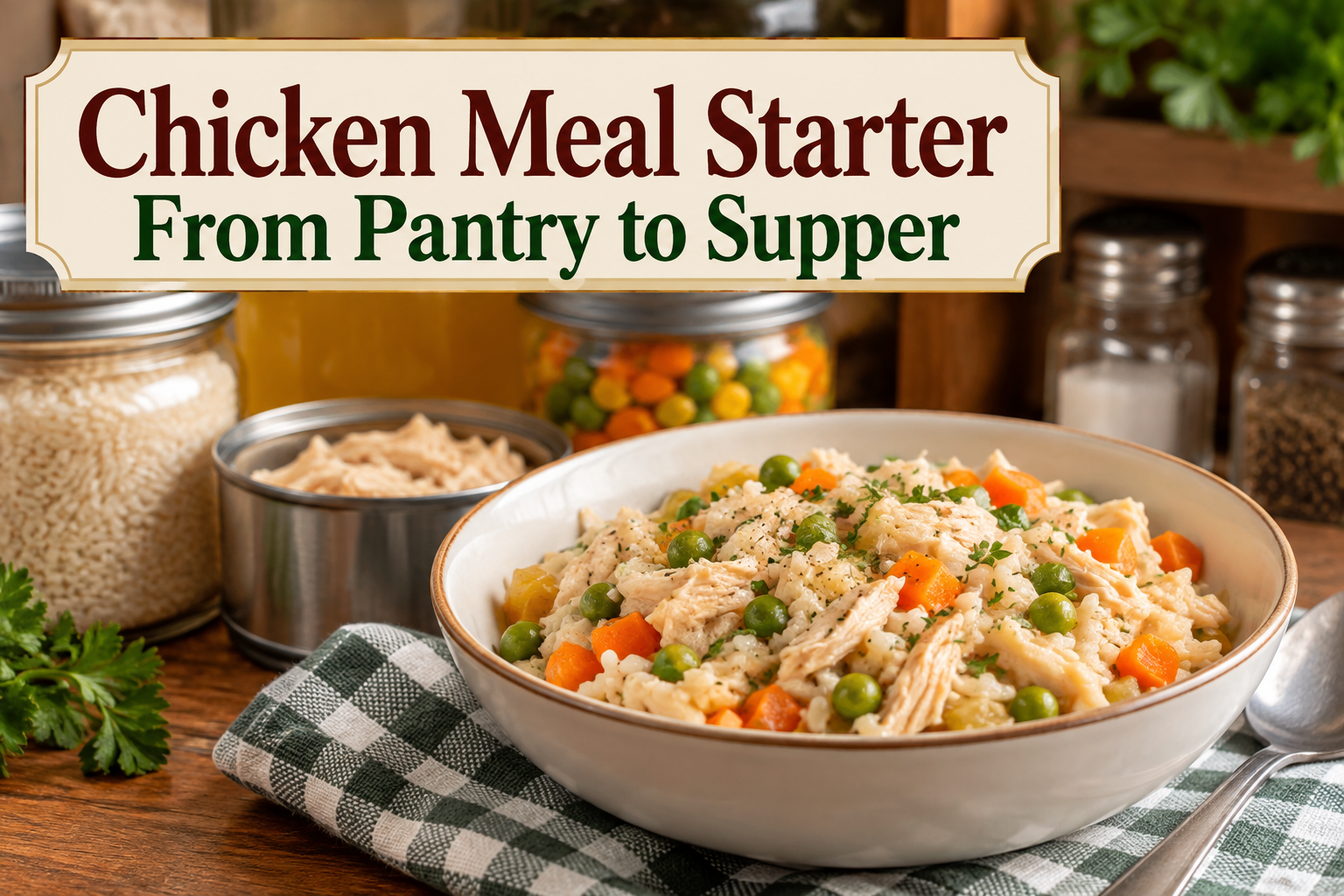
Chicken Meal Starter: From Pantry to Supper

Good meals don’t always begin with a trip to the grocery store. Sometimes they begin with a few things waiting in the pantry.

That’s the idea behind Pantry to Table.

For the next few weeks, we’re going to look at the pantry a little differently—not as a place where we stash food “just in case,” but as part of the everyday kitchen. A well-stocked pantry can make dinner easier, stretch the grocery budget, and save the day when the weather is lousy, the grocery trip didn’t happen, or you simply don’t feel like starting from scratch.

And one of the easiest places to start is with chicken.

This simple Chicken Meal Starter uses ingredients that are practical to keep on hand and can become the beginning of several different meals. You don’t need a freezer full of chicken or a refrigerator full of fresh vegetables. A few shelf-stable ingredients can get dinner moving.

Why You’ll Love This Meal Starter

  • It starts with inexpensive, easy-to-store ingredients.
  • Canned chicken does the heavy lifting.
  • It makes a small amount, appropriate for one or two people.
  • The basic mixture can be turned into several different meals.
  • It gives pantry ingredients a purpose instead of letting them sit forgotten on the shelf.
  • It’s an easy way to stretch a grocery dollar without making dinner feel like “budget food.”

Most importantly, you don’t have to buy a bunch of specialty ingredients to build a pantry.

Start with foods you actually eat.

Recipe Information

Servings: 2
Serving Size: About 1½ cups prepared meal
Prep Time: 10 minutes
Cook Time: 15 minutes
Total Time: 25 minutes
Meal Category: Skillet Meals
Main Protein: Chicken
Estimated Calories: About 350 per serving, depending on the chicken and vegetables used

simplegoodfood's avatarsimplegoodfood

Chicken Meal Starter

Good meals don't always begin with a trip to the grocery store. Sometimes they begin with a few things waiting in the pantry.
Prep Time 10 minutes
Cook Time 15 minutes
Total Time 25 minutes
Servings: 2
Course: Dinner, Lunch
Cuisine: American
Calories: 350

Ingredients
  

  • 1 can 10–12 ounces canned chicken, drained
  • 1 cup canned or dehydrated mixed vegetables
  • 1 cup cooked rice
  • 1 cup chicken broth
  • ½ teaspoon onion powder
  • ¼ teaspoon garlic powder
  • ½ teaspoon dried parsley
  • ¼ teaspoon salt or to taste
  • ¼ teaspoon black pepper or to taste
  • 1 teaspoon butter or cooking oil
Optional additions
  • A spoonful of leftover gravy
  • A little shredded cheese
  • Dehydrated onions
  • A small amount of canned corn
  • A sprinkle of dried herbs
  • A tablespoon or two of cream soup for a creamy version

Method
 

Start the vegetables
  1. Heat the butter or oil in a small skillet over medium heat.
Add the canned or rehydrated vegetables and cook for 2–3 minutes.
  1. If you’re using dehydrated vegetables, rehydrate them first or allow them to simmer with the broth long enough to soften.
Add the chicken
  1. Add the drained canned chicken and gently break it apart with a spoon.
  2. Stir in the onion powder, garlic powder, parsley, salt, and pepper.
  3. Cook for another 2–3 minutes.
Bring it together
  1. Pour in the chicken broth and stir.
  2. Add the cooked rice and bring the mixture to a gentle simmer.
  3. Cook for 5–7 minutes, stirring occasionally, until everything is hot and the flavors have had a chance to come together.
  4. If the mixture becomes too thick, add another splash of broth.
Taste and finish
  1. Taste before adding more salt or seasoning.
  2. Serve hot.

Notes

Kitchen Confidence

This is less about following a recipe perfectly and more about learning how pantry ingredients work together.
Chicken + broth + vegetables + a starch = the beginning of dinner.
Rice is used here, but the same basic idea can work with pasta, potatoes, barley, or another grain you already keep on hand.
That’s the beauty of a practical pantry.
You don’t need twelve versions of the same ingredient. You need a handful of ingredients that can work together in different ways.

From One Starter to Several Meals

This basic chicken mixture is deliberately simple because it can go in several directions.

Make Chicken & Rice Soup

Add extra chicken broth and another handful of vegetables. Simmer until everything is hot.

For a soup serving, aim for about 1½ cups per person.

Make a Creamy Chicken Skillet

Stir in a small amount of cream soup or a spoonful of Greek yogurt after removing the skillet from the heat.

Serve over rice, toast, or potatoes.

Make Chicken & Vegetable Casserole

Transfer the mixture to a small baking dish, top with a little shredded cheese or breadcrumbs, and heat until bubbly.

Turn It Into a Bowl

Spoon the chicken mixture over rice and add whatever vegetables, sauce, or toppings you have available.

A pantry meal doesn’t have to look exactly the same every time.

Stretch Every Grocery Dollar

One of the reasons I like canned chicken for pantry cooking is that it gives you a usable protein without requiring freezer space.

And here’s an important pantry rule:

Don’t buy food simply because someone says you should have it in your pantry.

If you don’t eat salmon, don’t buy canned salmon.

If mackerel isn’t something you’ll actually use, it doesn’t belong on your shelf.

The same goes for beans, vegetables, grains, sauces, and everything else.

A useful pantry is built around your meals and your tastes.

That may mean canned chicken for one household and tuna or salmon for another. There’s no prize for having the biggest pantry.

The goal is having ingredients that help you get dinner on the table.

Waste Not, Want Not

If you open a larger can of vegetables than you need, save the leftovers for tomorrow’s soup, skillet meal, omelet, or casserole.

The same goes for broth.

Freeze leftover broth in small portions if you have freezer space, or use it within a few days.

And don’t overlook small amounts of cooked rice. A little leftover rice can become tomorrow’s skillet meal instead of going into the trash.

Cooking for One or Two

This recipe makes two modest servings, which is exactly what I want from a pantry meal.

If you’re cooking for one, enjoy half today and save the other half for another meal.

If you’re cooking for two, you’ve got dinner without ending up with a refrigerator full of leftovers.

That’s one of the biggest differences between pantry cooking for real life and traditional batch cooking.

You don’t always need to make a giant pot.

Sometimes you just need enough dinner for tonight.

Meal Prep Note

You can assemble the dry seasonings and dehydrated vegetables in a small labeled container or jar ahead of time.

When it’s time to make dinner, add the chicken, broth, and rice.

That gives you a simple pantry meal starter that’s ready to turn into dinner with very little fuss.

Just remember to label homemade mixes with the ingredients and date.

Storage & Freezing

Refrigerate leftovers promptly in a covered container and use within 3–4 days.

If freezing, cool the finished meal before packaging.

Rice can change texture somewhat after freezing, but the mixture works well when reheated with a splash of broth.

For the best texture, reheat gently and add a little broth as needed.

The Bigger Pantry-to-Table Idea

This little chicken meal isn’t meant to be the answer to every dinner.

It’s meant to demonstrate something more useful:

A pantry doesn’t have to be huge to be helpful.

A few cans of protein.
Some vegetables.
Rice or another grain.
Broth.
A few seasonings.

Those simple ingredients can become soup, skillet meals, casseroles, bowls, and quick lunches.

That’s what we’re going to explore throughout October.

Not filling shelves for the sake of filling shelves.

Not buying ingredients because they’re trendy.

Not storing food you’ll never eat.

Just good food, practical ingredients, and a pantry that earns its keep.

Welcome to Pantry to Table.

Good meals begin before you start cooking.


Pinterest Caption

Pantry to Table starts with a simple Chicken Meal Starter! Canned chicken, vegetables, rice, broth, and a few seasonings become an easy meal for one or two—with plenty of ways to turn the same pantry basics into soup, skillet meals, casseroles, and bowls. Practical pantry cooking for real life!

Posted in Monthly Introductions

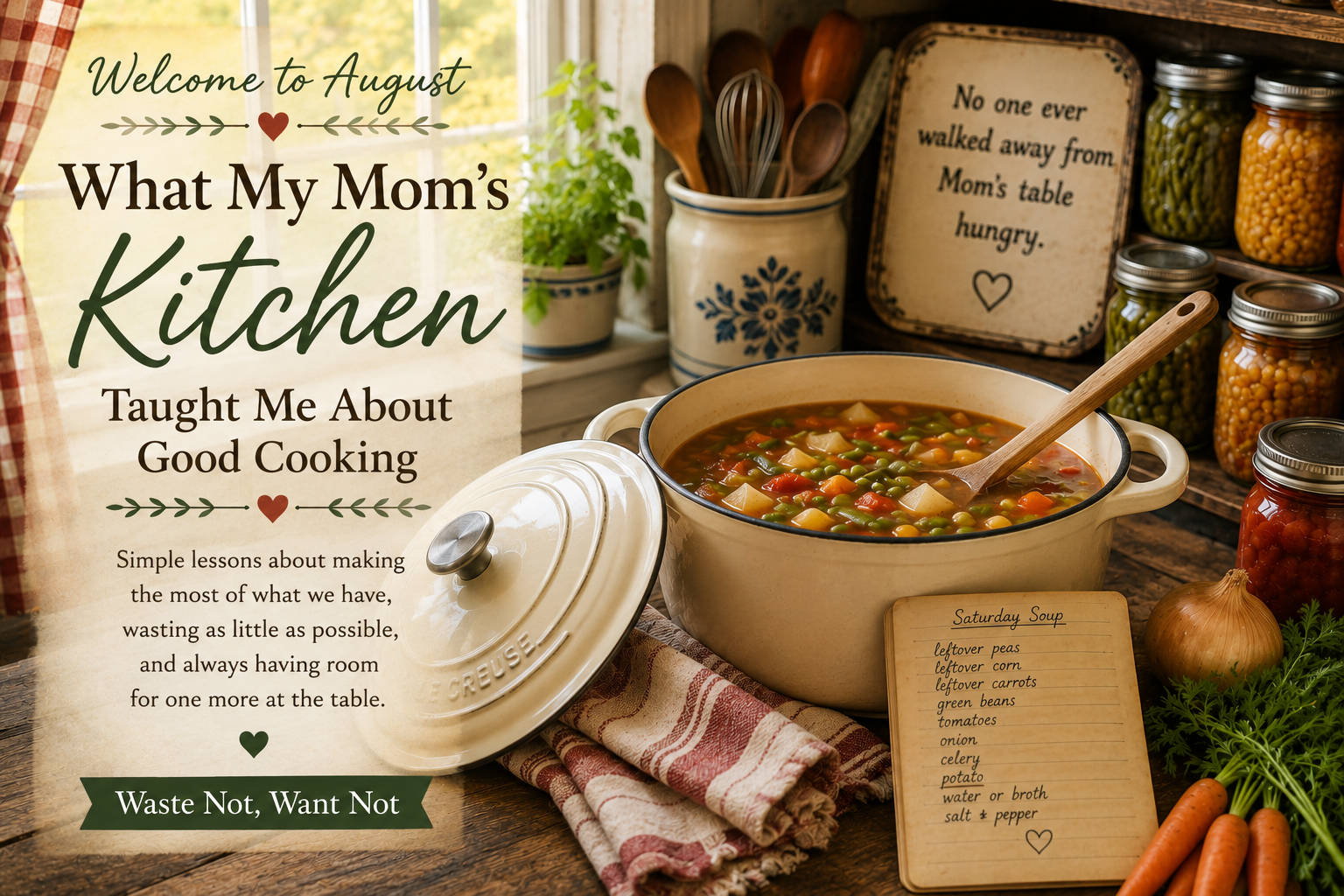
Welcome to August: What My Mom’s Kitchen Taught Me About Good Cooking

If you had asked me years ago what some of my most treasured childhood memories would be, I probably wouldn’t have said they happened in the kitchen.

But looking back now, that’s exactly where they were.

Growing up in Pennsylvania, we weren’t wealthy, but we always had enough. My parents believed in making the most of what they had, and one of the greatest lessons I ever learned came from watching my mom prepare everyday meals.

There was always a container in the freezer waiting for leftover vegetables. Every night after supper, if there were a spoonful of peas, a few carrots, some corn, or green beans left, they didn’t go into the trash. They went into that container.

By Saturday, the container was full.

Mom would pour everything into a soup pot, add broth, tomatoes, whatever else was on hand, and before long we had a hearty vegetable soup for supper. No recipe. No fancy ingredients. Just good food made from what we already had.

We didn’t call it meal prep.

We didn’t call it reducing food waste.

We didn’t call it sustainability.

It was simply the way we lived.

I also remember Saturdays spent in the kitchen canning vegetables from my Aunt Edna’s garden. Tomatoes, green beans, and whatever produce was in season filled the counters. Some came from the garden, while other vegetables came from local farmers’ markets and roadside stands. We worked together, filled jar after jar, and listened for the satisfying “pop” of lids sealing.

Those jars represented much more than food.

They meant winter meals.

They meant stretching the grocery budget.

They meant being prepared for busy days.

They meant there was always something to put on the table.

One lesson from my mom has stayed with me all these years.

No one ever walked away from her table hungry if she could help it.

If unexpected company arrived around supper time, she didn’t panic. She simply opened another jar of vegetables, added another side dish, and somehow there was always enough for one more person.

Looking back, I realize those pantry shelves weren’t just filled with food.

They were filled with hospitality.

As I planned this month’s recipes, I found myself thinking about those lessons more and more.

Today’s grocery prices encourage us to make every purchase count. Many of us are cooking for one or two instead of large families. Others are feeding grandchildren, camping, traveling in an RV, or simply trying to prepare meals without wasting food or money.

The principles haven’t changed.

Cook what you have.

Waste as little as possible.

Buy wisely.

Save a little for tomorrow.

Welcome others when you can.

Throughout August, we’ll be exploring simple, practical meals that help stretch the grocery budget without sacrificing good food. You’ll find recipes that build on leftovers, budget-friendly rice bowls, meal prep ideas that become several different dinners, and little tips for making your ingredients work harder for you.

My hope is that these recipes do more than fill your stomach.

I hope they make your kitchen a little less stressful, your grocery budget go a little farther, and your table a place where there’s always room for one more.

Welcome to August.

Let’s make the most of what we have—one simple, practical meal at a time.