This week we started something new here at Good Food Good Meat.
It’s called Pantry to Table, and the idea is pretty simple:
A pantry should help you cook the food you want to eat.
Not fill your shelves just for the sake of filling them.
Not buy ingredients because somebody else’s pantry checklist says you need them.
And not stock up on food that eventually gets pushed to the back of the cupboard and forgotten.
For one or two people, a practical pantry can look very different from the pantry designed for a large family.
This week, we started figuring out what that can look like.
Sunday: Start With a Meal
We began the week with Chicken Meal Starter: From Pantry to Supper.
The idea was simple: canned chicken, vegetables, rice, broth, and seasonings can become dinner without requiring a freezer full of meat or a refrigerator full of fresh ingredients.
And more importantly, that one basic combination could become several different meals.
Chicken and rice.
Soup.
A creamy skillet.
A casserole.
A bowl.
That’s an important pantry lesson:
Think about what an ingredient can become—not just what it is.
Monday: Build the Pantry Around Your Life
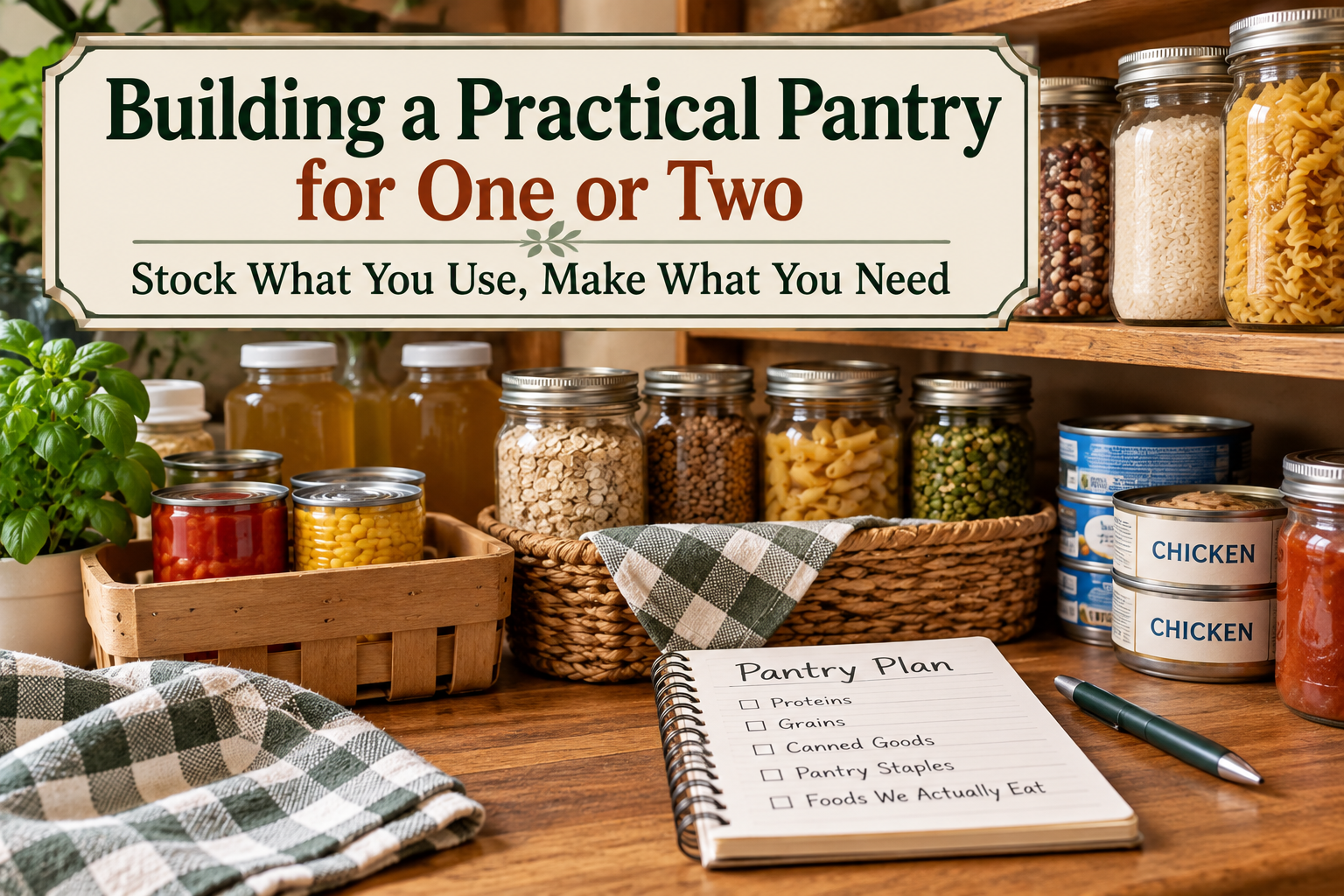
Monday’s article, Building a Practical Pantry for One or Two, took that idea a step further.
We talked about choosing pantry staples based on the foods you actually eat.
We also looked at homemade convenience mixes and the excellent resources available from Cooperative Extension programs.
If you missed it, the article includes links to resources from:
- University of Maine Cooperative Extension
- University of Alaska Fairbanks Cooperative Extension
- Oregon State University Extension
- UC Agriculture and Natural Resources
- University of Minnesota Extension
Those are worth bookmarking if you’re interested in building your own pantry mixes, dehydrating foods, or simply learning more about practical food storage.
Tuesday: Put Protein on the Shelf
Tuesday was all about Pantry Proteins.
Canned chicken.
Tuna.
Salmon.
Mackerel.
Beans.
Peanut butter.
Shelf-stable protein products.
The point wasn’t that everyone needs all of these.
Quite the opposite.
The useful pantry is the one stocked with proteins you will actually turn into meals.
A can of tuna that becomes lunch is more useful than six cans of something you bought because it was supposed to be a “pantry essential.”
Wednesday: Make Dinner From the Shelf
Wednesday put that idea into practice with Pantry Tuna & Tomato Pasta for Two.
Pasta.
Tuna.
Canned tomatoes.
Broth.
A few seasonings.
Nothing fancy.
But that’s exactly what I like about pantry cooking.
You don’t need unusual ingredients to make a satisfying meal.
Sometimes you just need a few ordinary ingredients that know how to work together.
Thursday: Make Your Own Convenience Food
Thursday brought us to one of my favorite ideas of the week:
Homemade Chicken & Vegetable Soup Mix.
Instead of buying a commercial soup mix, you can combine your own dehydrated chicken, vegetables, potatoes, and seasonings in a small jar.
Add broth.
Simmer.
Dinner.
And because we’re talking about one or two people, the recipe makes just two servings.
That’s an important part of the Pantry to Table philosophy.
Convenience doesn’t have to mean buying a giant package.
You can make your own convenience foods in quantities that fit your household.
Friday: Find Your Pantry Workhorses
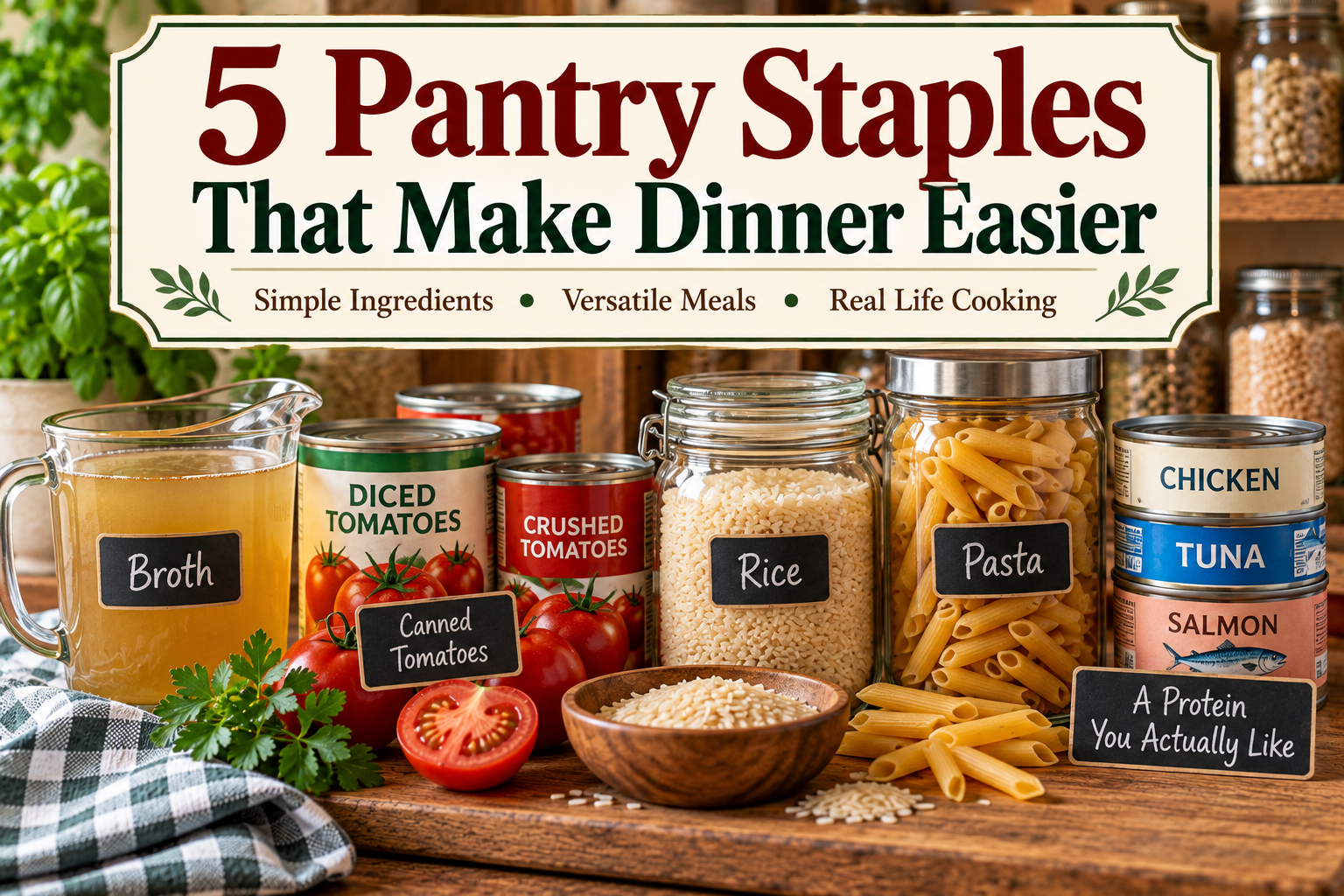
By Friday, we narrowed the idea down to five pantry categories that can do a lot of work:
Broth
Canned tomatoes
Rice
Pasta
A protein you actually like
Those aren’t meant to be the five things everyone must have.
They’re examples of ingredients that can appear in many different meals.
And that’s what makes a pantry staple useful.
What I Hope You Take Away From This Week
If there’s one thing I’d like you to take away from this first week, it’s this:
Stop thinking about the pantry as a storage space.
Think of it as a meal-building system.
A can of tomatoes isn’t dinner.
A bag of rice isn’t dinner.
A can of chicken isn’t dinner.
But put the right things together, and suddenly you have dinner.
That’s the difference between simply having food in the house and having a pantry that works for you.
A Little Pantry Homework
Before you go shopping this week, take five minutes and look at what you already have.
Pick five ingredients.
For each one, ask:
What could I make with this?
Then ask:
What else would I need?
And finally:
Would I actually eat those meals?
You may discover that your pantry is more useful than you thought.
You may also discover that you’ve been storing things you don’t really use.
Both are useful information.
Don’t Forget the Refrigerator and Freezer
A pantry doesn’t exist by itself.
It’s part of the whole kitchen.
For some people, fresh vegetables will make up a large part of their meals.
For others, refrigerator space is limited.
Some households can keep several bags of frozen vegetables available.
Others simply don’t have the freezer room.
That’s why Pantry to Table isn’t going to be about one perfect way to stock a kitchen.
It’s going to be about finding practical solutions for different kinds of kitchens.
Because cooking for one or two often means making different choices than cooking for a family.
And That’s Where We’re Going Next
We’ve spent this first week looking at the basic building blocks:
Protein.
Vegetables.
Grains.
Pasta.
Broth.
Tomatoes.
Homemade mixes.
Now we can start putting those pieces together in more ways.
We’ll look at ways to make pantry cooking more flexible, how to use preserved and dehydrated foods, how to avoid buying more than you can use, and how to turn simple shelf-stable ingredients into meals that don’t feel like an afterthought.
Because that’s the whole point.
The pantry isn’t the destination.
Dinner is.
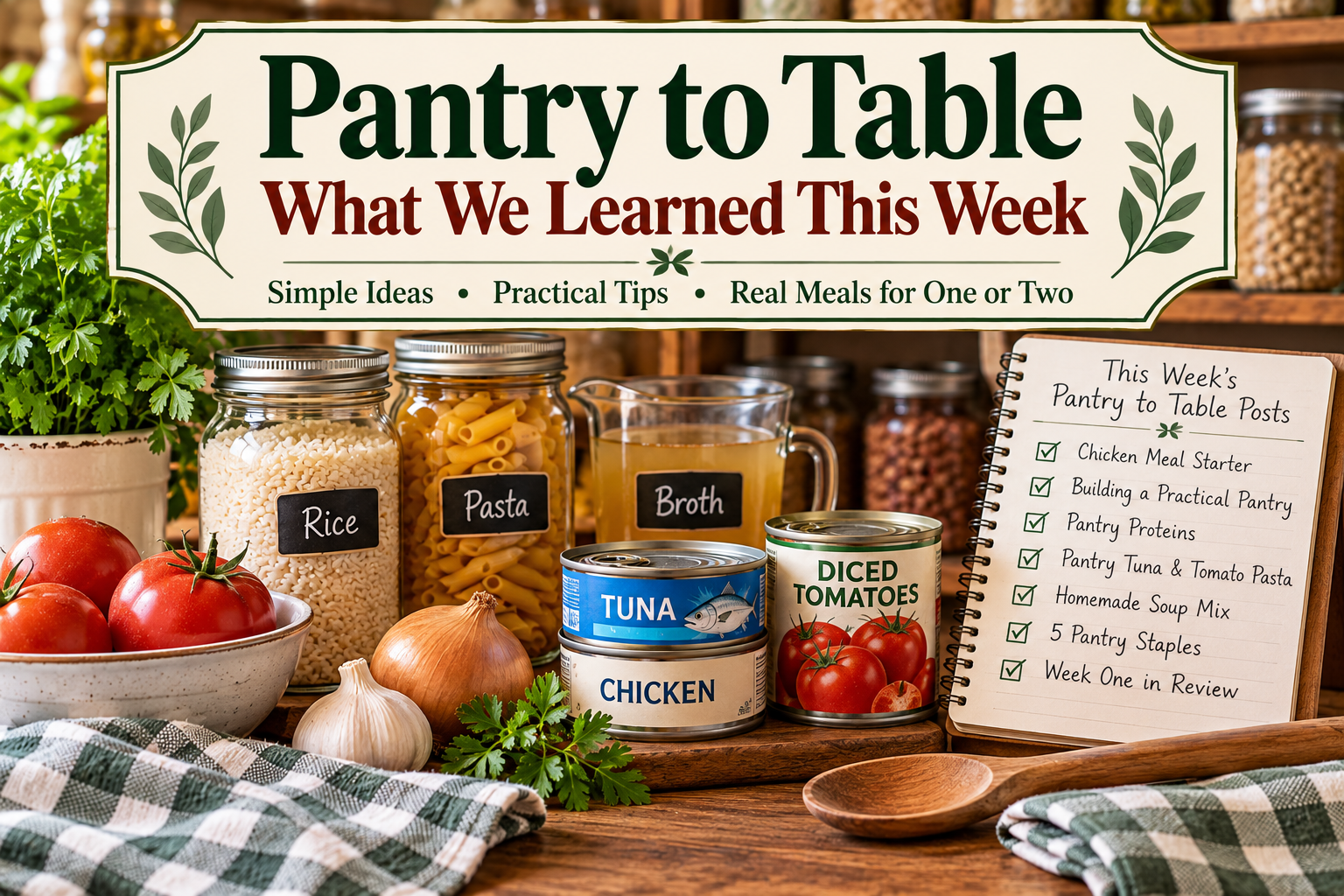
This Week’s Pantry to Table Posts


Come back next week as Pantry to Table continues.