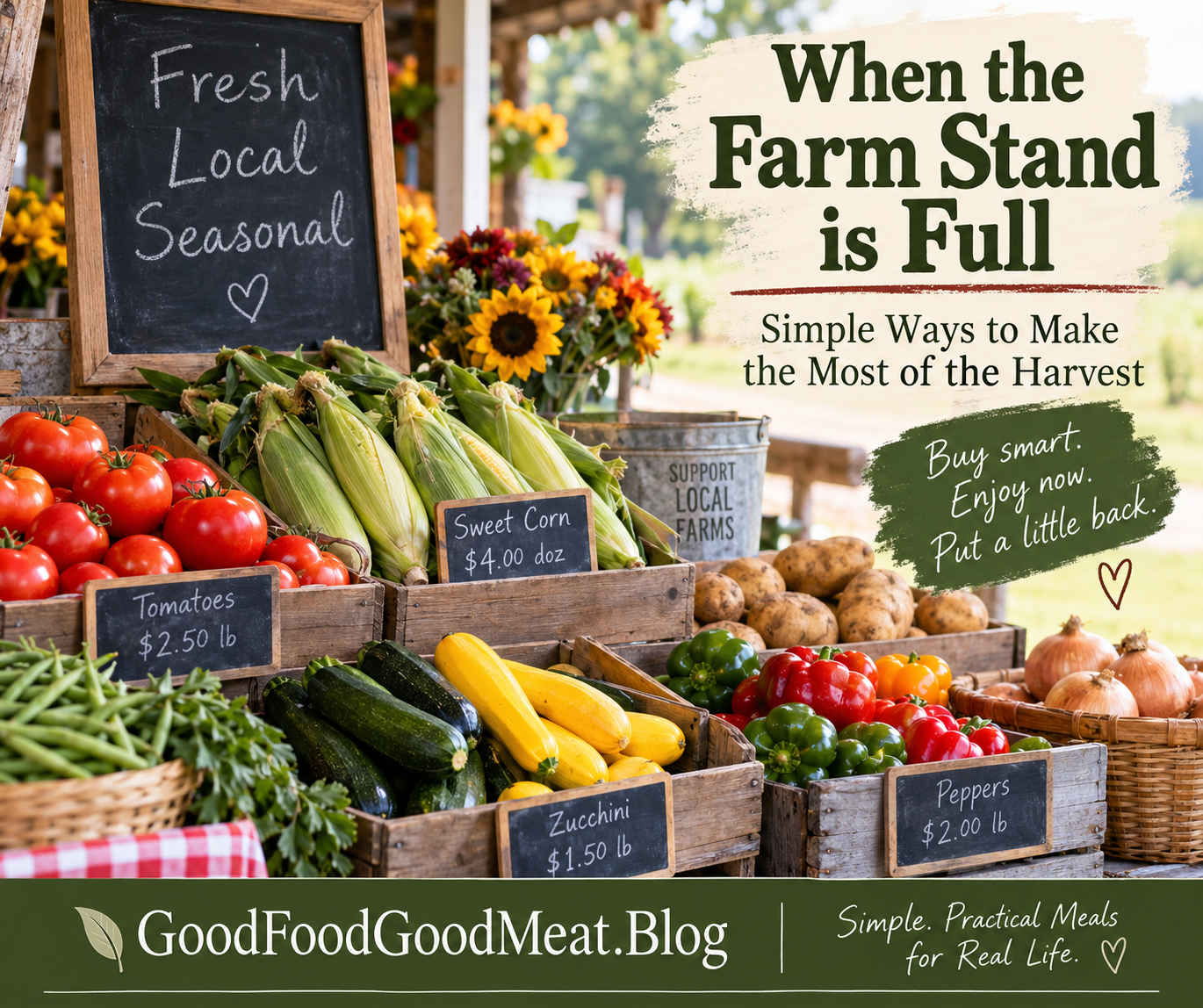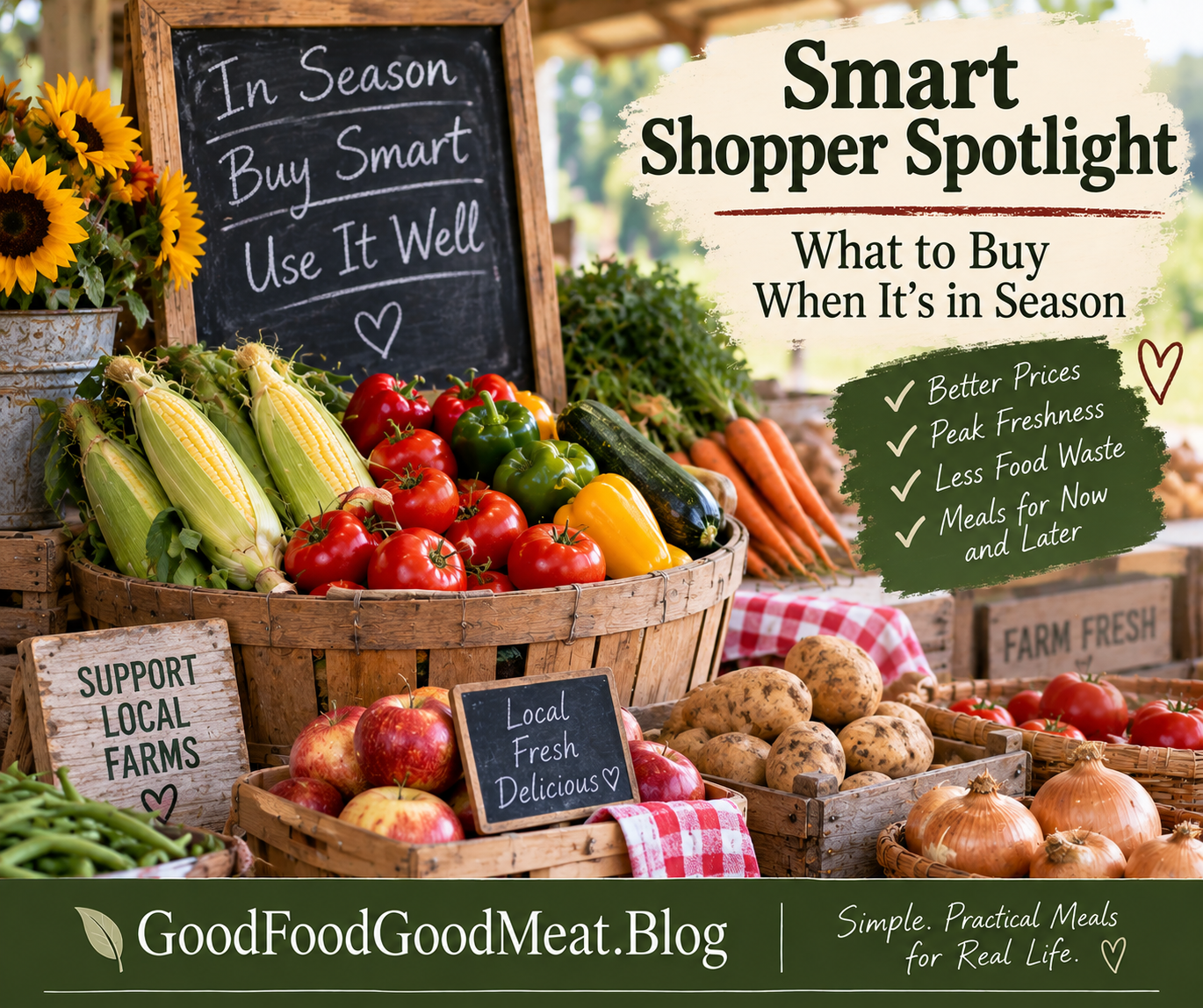
September can be one of the best months for grocery shopping.
The summer harvest is still rolling in, fall crops are beginning to appear, and farm stands and farmers markets can be overflowing with fresh produce. When there’s plenty of something available, that’s often a good time to buy it.
But “in season” isn’t just about buying whatever happens to look good.
For a smart shopper, it’s about finding the sweet spot between quality, price, quantity, and what you can actually use.
Why Seasonal Shopping Can Save Money
When a crop is abundant, there is generally more of it available. That can mean better prices, particularly when you’re buying directly from a farm stand or farmers market.
It also means you can often buy produce at its freshest.
That’s a win—but only if you actually use it.
A bargain isn’t a bargain if half of it ends up in the trash.
That’s why seasonal shopping works especially well when you pair it with a little meal planning and, when appropriate, preservation.
Buy what is plentiful. Plan how you’ll use it. Preserve what makes sense.
That’s the basic strategy.
What to Look for in September
What’s actually in season varies by where you live, so your local farm stand is always the best guide.
But September is commonly a great time to look for things like:
- 🌽 Sweet corn
- 🍅 Tomatoes
- 🫑 Peppers
- 🥒 Zucchini and summer squash
- 🥔 Potatoes
- 🧅 Onions
- 🥕 Carrots
- 🫘 Green beans
- 🍎 Apples
- 🍐 Pears
- 🎃 Early fall squash
You don’t need to buy all of them.
In fact, please don’t.
Choose the things that fit the meals you already enjoy.
Buy Extra When the Price Is Right
Here’s where seasonal shopping gets particularly interesting.
Suppose you normally buy four ears of corn for dinner. The farm stand has beautiful corn at a particularly good price, and you know your family—or in my case, your future self—will enjoy corn later in the year.
That’s when buying extra might make sense.
Enjoy some fresh.
Put some away.
Now you’re not just shopping for tonight’s dinner. You’re shopping for a future dinner, too.
The same thinking can apply to other produce that is suitable for safe preservation.
But there’s an important distinction:
Don’t preserve something simply because it’s cheap. Preserve it because you have a plan for using it.
The Three-Question Test
Before buying a large quantity of anything, ask yourself three questions:
1. Will I use it?
This is the most important question.
Think about the meals you actually eat—not the meals you imagine you might make someday.
If you love corn, buying extra corn makes sense.
If you’re not particularly fond of zucchini, a crate of zucchini isn’t suddenly going to become a good purchase because it’s inexpensive.
2. Do I have room for it?
Fresh produce takes up space.
So does frozen produce.
So do jars, dehydrated foods, and everything else you put away.
Check your refrigerator, freezer, pantry, and storage space before buying enough produce to stock a small grocery store.
3. Do I have time to deal with it?
This one is easy to overlook.
Buying ten pounds of tomatoes sounds like a wonderful idea until you realize that ten pounds of tomatoes now need your attention.
Preserving food takes time.
Freezing may require blanching and cooling. Dehydrating takes time. Canning requires preparation and careful attention to tested processing instructions.
Know what you’re getting yourself into before you bring it home.
Fresh Doesn’t Mean You Have to Eat It All Today
One of the great advantages of seasonal shopping is that some foods can have a life beyond the week you bought them.
That’s where putting a little back comes in.
You might freeze some sweet corn while it’s plentiful.
You might dehydrate vegetables for future meals.
You might preserve certain high-acid foods using a tested canning method.
Or you might simply buy enough fresh produce to get you through the next week without another grocery-store trip.
Preservation doesn’t have to mean filling every available shelf.
Sometimes putting a little back really does mean a little.
A Smart Shopper’s Harvest Basket
If I were heading to the farm stand this week, I’d think about my basket in three categories:
For tonight:
Something that can become dinner right away.
For this week:
Produce that can work its way into several meals.
For later:
A small amount of something that’s worth preserving because it’s plentiful, affordable, and something I’ll actually use.
That approach keeps the shopping trip from becoming overwhelming.
It also helps prevent the classic “I bought too much because everything looked so good” problem.
And yes, September farm stands make that problem particularly easy to have. 😉
Don’t Forget to Check What You Already Have
Before you leave for the market, take a quick inventory at home.
What’s already in the refrigerator?
What’s in the freezer?
What needs to be used?
What pantry staples can turn a few fresh vegetables into a complete meal?
This is where seasonal shopping and the Waste Not, Want Not mindset work beautifully together.
You don’t have to start every meal from scratch.
Sometimes the smartest purchase is the one that completes something you already have.
Buy at the Peak. Use It Well.
Seasonal shopping isn’t about chasing the lowest possible price or buying the largest possible quantity.
It’s about recognizing when something is plentiful and making that abundance work for you.
Buy what you love.
Buy what you’ll use.
Buy enough to make the price worthwhile—but not so much that you’re creating work or waste.
And when something is especially good and plentiful?
Enjoy some now. Put a little back for later.
That’s smart shopping at harvest time.
A September Reminder
As we talk about freezing, dehydrating, and canning throughout this month, remember that safe food preservation depends on the food and the preservation method.
For canning in particular, use current, tested recipes and processing recommendations from a reliable source such as the USDA rather than relying on an old family recipe or guessing at processing times.
The goal isn’t simply to save food.
It’s to save it safely—so today’s harvest really can become tomorrow’s meal.