
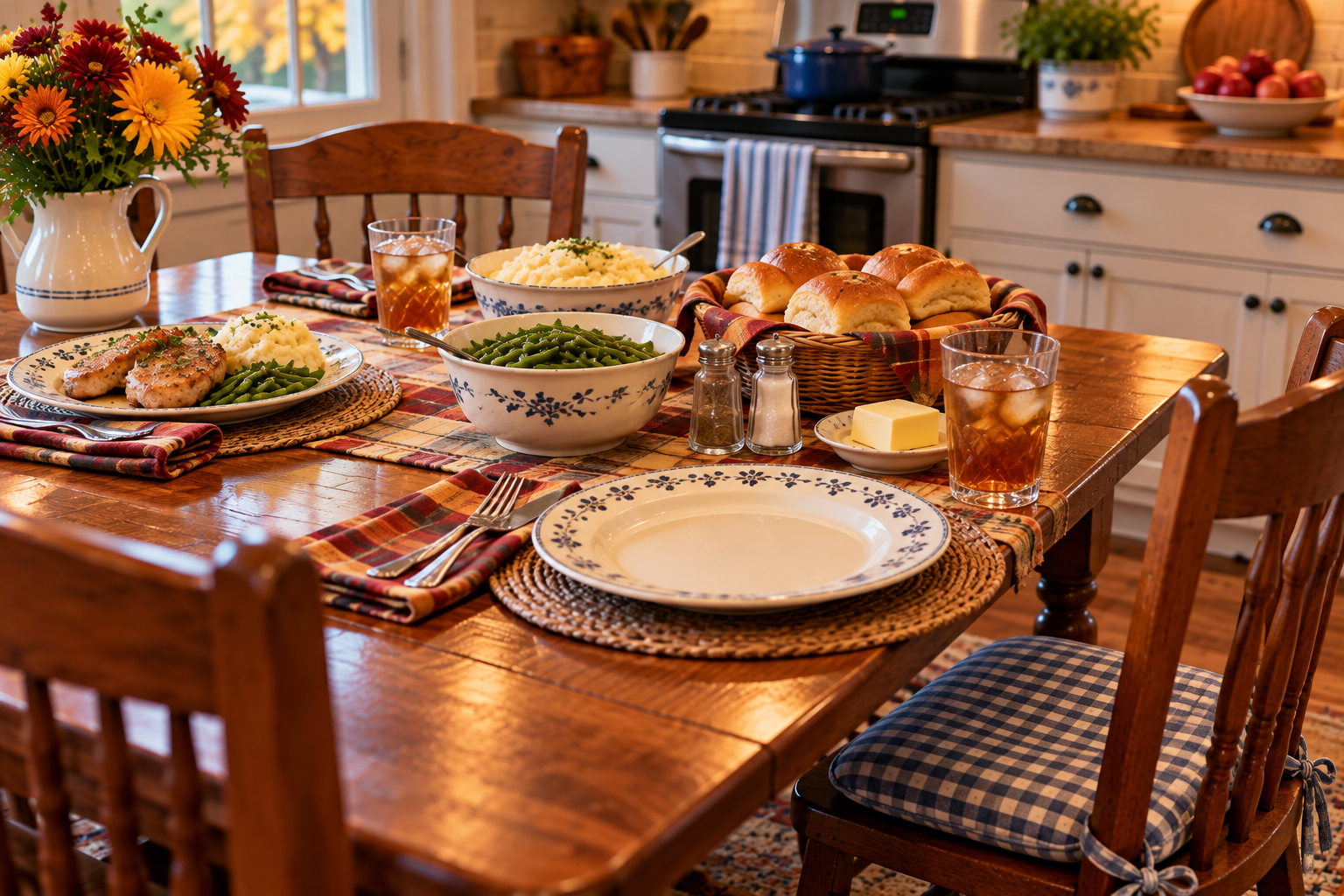
Have you ever planned supper for two, only to discover that someone else will be joining you?
Maybe a family member calls to say they’ll be stopping by around dinnertime. Perhaps a friend stays longer than expected, and suddenly it’s time to think about supper. Or maybe you’ve invited someone over without realizing just how hungry everyone would be!
If you’re cooking for one or two, an unexpected guest can leave you wondering how to make the meal stretch.
The good news is that you don’t always need another main dish or a completely different menu. Sometimes, a few simple additions are all it takes.
That’s the idea behind our new feature, There’s Always Enough. We’ll look at practical ways to stretch meals, make good use of pantry staples, and share what we have without spending a lot of extra money.
You don’t have to plan for every possibility. You just need a few ideas that work when the occasion arises.
Start With the Meal You Already Planned
Before you start pulling ingredients out of the pantry, take a look at what’s already cooking.
Suppose you’ve planned meatloaf, mashed potatoes, and green beans for two. Now you discover that your daughter or a friend will be joining you.
You don’t necessarily need to make another meatloaf.
Instead, consider what you can add to the meal.
- Make a little more of the mashed potatoes if you have enough potatoes on hand.
- Open another can of green beans or prepare another vegetable.
- Put bread and butter on the table.
- Add pickles or another familiar accompaniment.
- Serve fruit for dessert if you have some available.
Any one of these additions might help, and a combination of two or three could be enough to make the meal work.
The point is to supplement what you’re already preparing rather than start over.
Of course, the right solution depends on what you’re serving and how much food you have. If the main dish is already divided into two individual portions, you’ll need to consider whether there’s enough protein for everyone. A side dish can stretch a meal, but it can’t always replace a missing main course.
That’s where a few flexible ingredients can make a difference.
Give Your Side Dishes a Little More Attention
When we think about feeding another person, it’s easy to focus on the main dish. But side dishes can be the simplest way to add more food to the table.
Think about the meals you prepare regularly.
If you serve pork chops, what usually accompanies them? Potatoes? Rice? A vegetable?
If you make chicken, do you usually serve a salad, green beans, or another side?
These familiar foods are excellent candidates for stretching a meal.
Here are a few examples.
Potatoes: If you have another potato or two, you might prepare additional mashed potatoes, boil a few potatoes for the table, or make a small skillet of home fries.
Rice: A little extra rice can supplement a meal of chicken, pork, or fish. If you have cooked rice already available, you may be able to use it in a quick side dish.
Vegetables: An additional vegetable can help round out a meal. Frozen vegetables, canned vegetables, and home-preserved vegetables are all useful options.
Salad: A simple green salad or a small bowl of coleslaw can add variety without requiring another main dish.
Bread: Sliced bread and butter, biscuits, or a few rolls can help make a meal more substantial.
You don’t need to serve all these things at once. Choose whatever fits the meal and what you already have available.
And remember that familiar food is often the easiest food to serve. You don’t have to experiment with a new recipe when you’re already making supper.
Open a Jar or Can
One of the easiest ways to stretch a meal is to use something you’ve already preserved or stored.
If you keep canned vegetables in your pantry, you may be able to add another vegetable to the meal with very little preparation.
Have a jar of home-canned green beans? Warm them up.
Have canned corn? Drain it, heat it, and add a little butter if you like.
Have a jar of pickled beets? Put them in a serving dish and pass them around.
These are all ways to add something to the table without beginning another recipe from scratch.
The same principle applies to pantry staples. A can of chicken might help you prepare a little chicken salad for sandwiches. Tuna could become a simple side of tuna salad or part of a quick lunch if supper is already taken care of. Pasta and a jar of sauce might provide a backup meal when the original plan simply won’t stretch far enough.
The trick is to use what makes sense for your particular situation.
You don’t need to open a can just because you have one. But knowing what’s available can help you solve a problem quickly.
Note: Once you open a can or jar, refrigerate unused portions promptly in a suitable container and follow safe storage guidance for the food.
Keep a Few Flexible Ingredients Available
You don’t need a large pantry to make this approach work. A few foods that you use regularly can provide plenty of flexibility.
Consider keeping some of these on hand:
- Potatoes
- Rice or pasta
- Canned vegetables
- Frozen vegetables
- Canned chicken or tuna
- Bread or rolls that can be frozen
- Fruit for a simple dessert
- A few favorite condiments or pickled vegetables
Choose foods that fit your usual meals and your budget.
If you rarely eat rice, there’s little reason to stock several large bags of it just in case someone visits. If your household enjoys potatoes, keeping a few extra on hand may be more useful.
The same goes for canned vegetables. Stock the varieties you actually like rather than buying whatever happens to be on sale.
A pantry should work for the people who use it.
What If There’s Not Enough of the Main Dish?
Sometimes a meal simply won’t stretch.
If you’ve prepared two pork chops and someone else is joining you, an extra vegetable won’t solve the whole problem. You’ll need to decide whether you have another protein available or whether a different meal makes more sense.
This is where having a few backup options can be helpful.
Perhaps you have eggs in the refrigerator, canned chicken in the pantry, or a small portion of cooked meat in the freezer.
You might turn the meal into something different, such as a skillet supper, a simple sandwich meal, or a quick pasta dish.
You could also serve the original meal to the people it was planned for and prepare something separate for the additional guest, depending on the circumstances.
There’s no single right answer.
The important thing is to recognize the difference between stretching a meal and trying to make too little food do too much.
Hospitality shouldn’t leave anyone hungry, including the person who prepared the meal.
Don’t Forget Dessert
Dessert can be another easy way to make an ordinary meal feel a little more generous.
You don’t need to bake a cake just because someone is joining you for supper.
A bowl of canned fruit, a few cookies, Jell-O with fruit, or a slice of quick bread can finish a meal nicely.
If you keep small portions of homemade desserts in the freezer, this is also a good time to use them.
And if you don’t have dessert available, that’s perfectly fine, too.
The meal itself is what matters.
Plan for Flexibility, Not for Every Emergency
You might be wondering whether you need to change the way you shop or cook to make room for an occasional guest.
Not necessarily.
If you’re cooking for one or two, continue preparing the quantities that work for your household. You don’t need to make extra food every night or buy groceries for visitors who may never arrive.
Instead, think about small ways to build flexibility into your normal routine.
When you buy potatoes, consider whether having one or two extra would be useful. When you stock canned vegetables, choose a few varieties that work well with your favorite meals. When you bake bread or quick bread, freeze a little if you know you won’t use it all right away.
These small decisions can give you more options without creating unnecessary waste.
And if company doesn’t come? You still have ingredients you can use in your regular meals.
That’s a win either way.
There’s Always Enough to Share Something
I remember how my mom approached meals when relatives visited. She didn’t automatically change what she was cooking. She added to the meal when necessary, using things that were already available.
Sometimes that meant another vegetable. Sometimes it meant bread and butter, pickles, or another familiar starch. When a larger group came to visit, she might prepare a bigger dish that could feed everyone.
It wasn’t a complicated system. It was simply a practical way to manage a household and welcome people.
That’s the spirit behind There’s Always Enough.
We’re not suggesting that every household should keep a full pantry or that every meal can be stretched indefinitely. We’re looking for simple, sensible ways to share what we have.
Sometimes that means adding another side dish. Sometimes it means opening a jar of vegetables. And sometimes it means recognizing that the original meal won’t stretch and choosing another option.
All of those are perfectly reasonable solutions.
You don’t need a feast to welcome someone. You need a plan, a little flexibility, and a willingness to share what you can.
So the next time someone joins you for supper, take a look at what’s already on the stove before you start worrying about what else to cook.
You may have more options than you think.
Discover more from Simple, Practical Meals for Real Life
Subscribe to get the latest posts sent to your email.
