Posted in Kitchen Tips

Three Ways to Change One Soup Starter

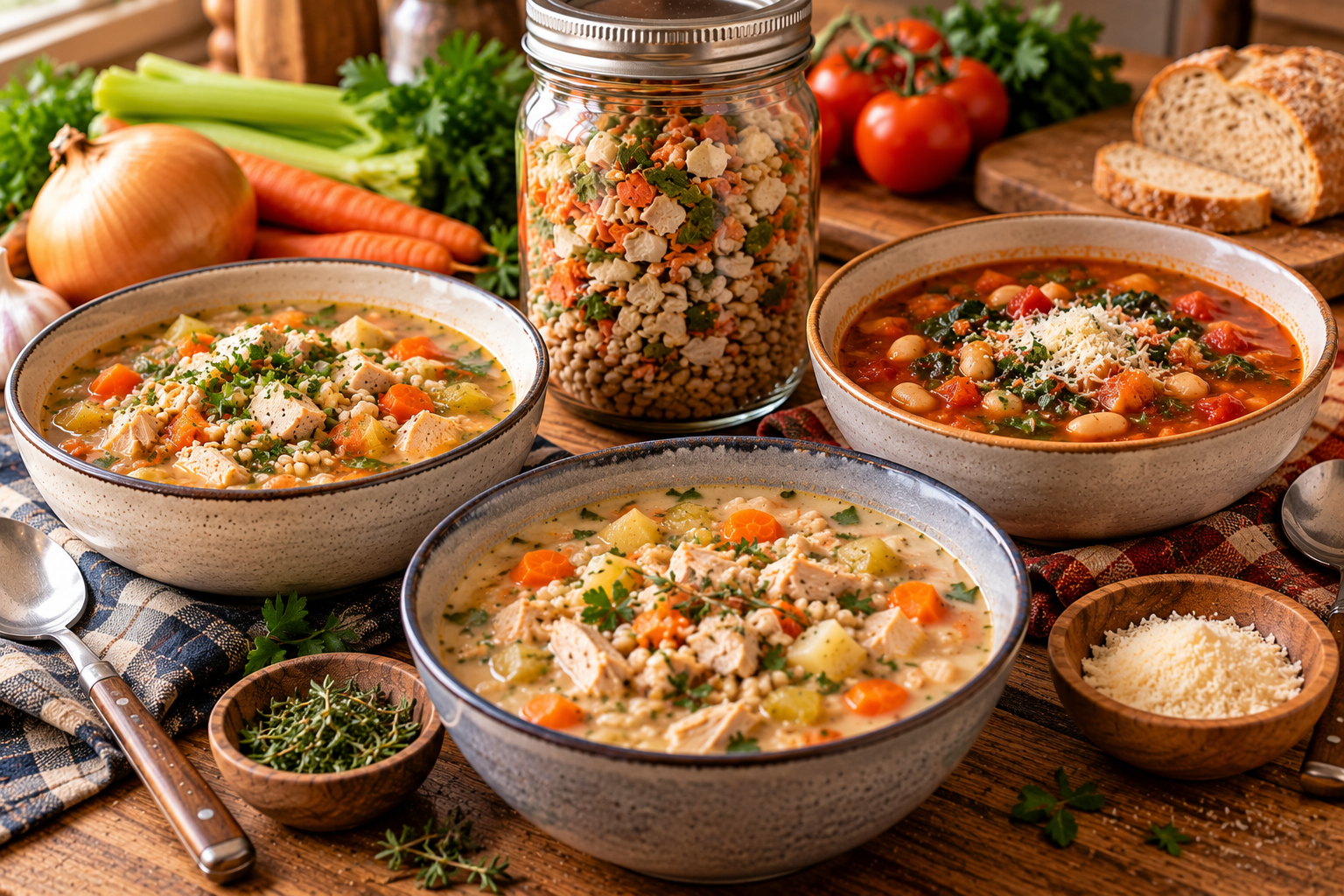
Yesterday, we turned a jar of homemade soup starter into Turkey & Barley Comfort Soup.

Today, we’re going to do something even more useful.

We’re going to take that same soup starter and turn it into three completely different meals.

Because that’s the secret to a practical pantry:

You don’t need a pantry full of recipes. You need ingredients that can work in more than one recipe.

A good soup starter gives you the vegetables, grain, and basic seasonings.

What you add to it determines what kind of soup ends up in the bowl.

And for a household of one or two, that kind of flexibility can make a big difference.

Start With the Same Soup Starter

Our Homemade Soup Starter Mix contains dehydrated:

  • Carrots
  • Celery
  • Onion
  • Potatoes

Along with:

  • Pearl barley
  • Parsley
  • Thyme
  • Garlic
  • Onion powder
  • Black pepper
  • Salt

The basic cooking method stays the same.

Add one portion of the starter to about 4 cups of broth, bring it to a simmer, and cook until the barley and vegetables are tender.

Then comes the fun part.

Change the protein. Change the vegetables. Change the seasoning. Change the finish.

And you’ve changed the soup.


1. Turkey & Barley Comfort Soup

Let’s start with the version we made yesterday.

It’s the classic combination:

Turkey + barley + root vegetables + herbs

Add

  • 1 to 1½ cups cooked turkey
  • Chicken or turkey broth
  • Fresh parsley
  • A squeeze of lemon

Optional

Add a handful of frozen peas during the last few minutes.

Why It Works

Turkey and barley are a natural match.

The barley makes the soup hearty, while the turkey adds protein without requiring a large amount of meat.

The lemon at the end gives the whole bowl a little lift.

This is the version to make when you’re craving a traditional, cozy bowl of soup.


2. Chicken, Vegetable & Lemon Soup

Now let’s change the personality of the same starter.

Instead of turkey, use chicken and brighten everything up.

Add

  • 1 to 1½ cups cooked chicken
  • Chicken broth
  • ½ cup frozen peas
  • A handful of fresh spinach
  • 1–2 teaspoons lemon juice
  • Fresh parsley

Optional

If you have leftover cooked carrots, green beans, or corn, add them too.

The Difference

The basic starter hasn’t changed.

But the addition of chicken, green vegetables, and lemon makes this version feel much lighter and brighter.

And this is a perfect example of why you don’t have to follow a recipe rigidly.

Maybe you don’t have turkey.

That’s fine.

Use chicken.

Maybe you have leftover vegetables that need a home.

Add them.

The soup adapts.


3. White Bean & Tomato Barley Soup

Now let’s take the same starter in an entirely different direction.

Skip the meat and add beans and tomatoes.

Add

  • 1 can (15 ounces) white beans, drained and rinsed
  • 1 cup diced tomatoes, canned or leftover
  • Vegetable or chicken broth
  • ½ teaspoon Italian seasoning
  • 1 tablespoon grated Parmesan, optional
  • Fresh parsley, optional

How to Make It

Start the soup starter in the broth as usual.

When the vegetables and barley are nearly tender, add the beans and tomatoes.

Simmer until everything is hot and the flavors have come together.

Taste before adding additional salt because canned beans and tomatoes can vary considerably in sodium.

Finish with Parmesan and parsley if desired.

The Difference

Suddenly we’re no longer talking about turkey soup.

We’re talking about a hearty bean-and-tomato soup with Italian-inspired flavors.

Same starter.

Completely different supper.


The Formula Behind the Three Soups

Here’s what changed:

SoupProteinFlavor DirectionFinish
Turkey & BarleyTurkeyClassic herbLemon + parsley
Chicken & VegetableChickenBright & freshLemon + greens
White Bean & TomatoWhite beansTomato & ItalianParmesan + parsley

The starter stayed essentially the same.

That’s the point.

You aren’t building three different pantry systems.

You’re building one useful base that can become several meals.

Kitchen Confidence: Think in Swaps

Once you understand the formula, you can start making substitutions without worrying that you’re somehow “ruining” the recipe.

Protein swaps

Turkey → Chicken → Beans → Lentils → Pork

Vegetable swaps

Peas → Green beans → Corn → Spinach → Cabbage

Grain swaps

Barley → Rice → Small pasta

Flavor swaps

Thyme & parsley → Italian herbs → Cumin & oregano

The combinations are practically endless.

But you don’t need endless combinations.

You only need enough variety to keep your pantry meals interesting.

What If You Don’t Have the Exact Ingredient?

This is where pantry cooking gets easier.

No fresh parsley?

Use dried.

No turkey?

Use chicken.

No chicken?

Use beans.

No peas?

Use frozen green beans.

No fresh spinach?

Skip it.

No lemon?

Try a tiny splash of vinegar in a savory soup.

No barley?

Use rice or small pasta, keeping in mind that the cooking method and timing may change.

The important thing is understanding what an ingredient contributes.

Once you know that, substitutions become much easier.

Stretch Every Grocery Dollar

This is one of the reasons I like homemade pantry mixes so much.

You’re not buying a different boxed soup mix for every flavor you want.

Instead, you keep a flexible base on hand and use the ingredients you already have to change it.

A can of white beans can become soup.

Leftover chicken can become soup.

A small amount of frozen vegetables can become soup.

That half can of tomatoes left from another recipe can become soup.

You’re getting more meals from the same groceries.

And that’s a much more useful kind of pantry stocking than simply buying more food.

Waste Not, Want Not

Soup is one of the easiest places to use small quantities of leftovers.

That doesn’t mean dumping everything into the pot.

Flavor matters.

But if you have a little cooked vegetable, a small amount of leftover meat, or part of a can of beans or tomatoes, soup is worth considering.

The trick is to ask:

Will this ingredient work with the flavor direction I’m creating?

If yes, use it.

If no, save it for something else.

“Use everything” shouldn’t mean “throw everything together.”

Cooking for One or Two

This concept is especially useful for small households.

You don’t have to make three different soups.

Make one starter mix.

Then change the additions.

For example:

Monday: Turkey soup

Wednesday: Chicken soup

Friday: Bean and tomato soup

You get variety without buying a completely different set of ingredients for each meal.

And if you live alone, you can make one or two servings at a time instead of cooking a large pot.

Meal Prep Note

If you want to make several versions during the same week, keep your starter mix dry and prepare only the amount of soup you need.

That way, you can make one flavor today and a different flavor later.

This is particularly helpful when you’re cooking for one.

There’s no reason the entire household has to eat the same soup three nights in a row simply because you made a large pot.

Storage & Freezing

Once prepared, store leftover soup in a covered container in the refrigerator and use within 3–4 days.

Individual portions can also be frozen.

If you know you’re going to freeze the soup, consider keeping delicate finishing ingredients such as fresh herbs, lemon juice, cheese, or yogurt until you’re ready to serve.

Add those after reheating for the freshest flavor.

The Bigger Lesson

This is what I really want you to take away from this week’s soup project:

A pantry doesn’t have to be a collection of finished meals.

It can be a collection of building blocks.

The soup starter gives you one building block.

Your freezer gives you another.

The canned goods on your shelf give you more.

Your refrigerator leftovers give you another.

And your knowledge of how those ingredients work together is what turns them into dinner.

That’s a much more flexible way to cook.

And once you start thinking this way, you’ll find yourself looking at your pantry a little differently.

Instead of seeing:

“I don’t have the ingredients for a recipe.”

You may start seeing:

“I have the ingredients to make something.”

And honestly, that’s a pretty useful cooking skill to have.

Posted in Soups & Stews

Turkey & Barley Comfort Soup

Yesterday, we made a jar of Homemade Soup Starter Mix from dehydrated vegetables, barley, and a handful of pantry seasonings.

Today, we’re putting that jar to work.

This Turkey & Barley Comfort Soup is exactly the kind of meal a practical pantry is supposed to make possible. The vegetables and barley are already measured and waiting. Add broth, some cooked turkey, and a little time on the stove, and you’ve got a hearty bowl of homemade soup.

No complicated recipe. No enormous batch.

Just good food from ingredients you already have.

Why You’ll Love This Recipe

  • It starts with your homemade soup starter mix.
  • It makes two generous servings. Perfect for a small household.
  • It’s a great use for leftover turkey.
  • Dehydrated vegetables make pantry storage practical.
  • Barley adds heartiness and texture without requiring a lot of meat.
  • It’s flexible enough to adapt to what you have.
  • The leftovers reheat beautifully.

And perhaps best of all, this recipe demonstrates the whole point of pantry cooking:

A little preparation ahead of time can make an ordinary weeknight meal much easier.

Recipe Information

Servings: 2
Serving Size: About 2 cups soup
Prep Time: 5 minutes
Cook Time: 40–50 minutes
Total Time: About 50–55 minutes
Meal Category: Soups, Stews & Chili; Meal Prep
Main Protein: Turkey
Estimated Calories: About 400 calories per serving, depending on the turkey and broth used

simplegoodfood's avatarsimplegoodfood

Turkey & Barley Comfort Soup

No complicated recipe. No enormous batch. Just good food from ingredients you already have.
Prep Time 5 minutes
Cook Time 50 minutes
Total Time 55 minutes
Servings: 2
Course: Dinner, Lunch
Cuisine: American
Calories: 400

Ingredients
  

  • 1 portion Homemade Soup Starter Mix
  • 4 cups chicken or turkey broth
  • 1 to 1½ cups cooked turkey chopped or shredded
  • 1 teaspoon olive oil optional
  • 1 tablespoon fresh parsley chopped, or 1 teaspoon dried parsley
  • 1 teaspoon lemon juice optional
  • Salt and black pepper to taste
Optional Additions
Depending on what you have available:
  • ½ cup frozen peas
  • ½ cup frozen corn
  • A handful of fresh spinach
  • ½ cup chopped fresh cabbage
  • Extra cooked vegetables
  • A small amount of leftover gravy

Method
 

Combine the starter and broth.
  1. Place the Homemade Soup Starter Mix in a medium saucepan.
  2. Pour in the broth and stir well.
  3. Bring the mixture to a boil over medium-high heat.
Reduce the heat.
  1. Once the soup reaches a boil, reduce the heat to maintain a gentle simmer.
  2. Cover the pot partially with a lid and cook for about 30 minutes, stirring occasionally.
  3. The barley and dehydrated vegetables need time to absorb the liquid and become tender.
Add the turkey.
  1. Once the vegetables and barley are beginning to soften, stir in the cooked turkey.
  2. Continue simmering for another 10–15 minutes, or until the barley and vegetables are completely tender.
  3. If the soup becomes thicker than you like, add additional broth or water.
Add optional vegetables.
  1. If you’re using frozen peas, corn, or spinach, stir them in during the last few minutes of cooking.
  2. You want them heated through without cooking them into oblivion.
Taste and finish.
  1. Taste the soup.
  2. Add salt and black pepper as needed.
  3. Stir in the parsley.
  4. If the soup tastes a little flat, add a teaspoon of lemon juice.
  5. You don’t need much. The goal isn’t to make the soup taste lemony. A little acidity simply helps brighten the other flavors.
Serve.
  1. Ladle the soup into two bowls.
  2. Add a little fresh parsley on top if you have it.
  3. Then settle in with a spoon and enjoy the fact that yesterday’s pantry project is now dinner.

Kitchen Confidence

Let the soup tell you what it needs.

Soup doesn’t always need more seasoning.

Sometimes it needs more liquid.

As barley cooks, it absorbs broth and causes the soup to thicken. Dehydrated vegetables do the same thing as they rehydrate.

If your soup is becoming more like stew than soup, simply add more broth.

On the other hand, if it seems thin, let it simmer uncovered for a few additional minutes.

You don’t have to hit an exact consistency at a particular minute.

You’re cooking dinner, not conducting a laboratory experiment.

What if the barley isn’t tender?

Give it more time.

Different brands and types of barley can cook at slightly different rates, and the size of your dehydrated vegetables will affect cooking time too.

If the liquid level gets low before the barley is tender, add more broth or water.

Using Leftover Turkey

This is an especially good recipe after a holiday meal or any time you’ve cooked more turkey than you need.

Don’t worry if the turkey isn’t all white meat.

A mixture of white and dark meat works beautifully in soup.

You can also freeze leftover cooked turkey in small portions specifically for meals like this.

That gives you another useful pantry-to-table shortcut:

Cook once → portion → freeze → turn it into soup later.

No Turkey? No Problem.

The starter mix is deliberately flexible.

You can substitute:

  • Cooked chicken
  • Canned chicken
  • Leftover pork
  • White beans
  • Chickpeas
  • Lentils

If you’re using beans instead of meat, you may want to add a little extra seasoning or a splash of tomato for more flavor.

The basic soup doesn’t have to change.

Only the protein does.

Stretch Every Grocery Dollar

Barley is doing a lot of work in this soup.

It’s inexpensive, stores well, and gives the soup a satisfying chewiness that makes a modest amount of turkey feel like a complete meal.

The dehydrated vegetables help stretch it further.

Instead of needing a large quantity of fresh vegetables in the refrigerator, you’re using a measured amount from your pantry.

And the broth carries the flavors throughout the whole pot.

This is what economical cooking can look like when it’s done well:

A little meat + useful pantry staples + vegetables + broth = a satisfying meal.

Waste Not, Want Not

Don’t overlook the little bits of turkey.

If you’re carving a turkey and end up with small pieces that aren’t particularly attractive for sandwiches, save them for soup.

The same goes for leftover vegetables.

A spoonful of cooked carrots or peas can disappear into a pot of soup without anyone caring that it wasn’t enough to serve as a side dish.

Soup is forgiving.

That’s one reason it’s such a valuable small-household cooking tool.

Cooking for One or Two

This recipe makes two generous servings.

If you’re cooking for one, you have two choices:

Make the whole recipe and save half.

Or:

Divide the starter mix in half and make one serving.

For a single serving, use approximately:

  • ½ portion soup starter
  • 2 cups broth
  • ½–¾ cup cooked turkey

The cooking time may be somewhat shorter, so start checking the barley and vegetables earlier.

Meal Prep Note

This is an excellent make-ahead lunch or dinner.

If you’re preparing the soup specifically for leftovers, remember that the barley will continue absorbing liquid as the soup cools.

You may want to store a little extra broth separately.

When reheating, add a splash of broth or water to loosen the soup back to your preferred consistency.

For an especially convenient freezer meal, portion the cooled soup into individual containers.

Then future-you only has to reheat it.

Future-you will appreciate that.

Storage & Freezing

Refrigerator: Store cooled soup in a covered container and use within 3–4 days.

Freezer: Freeze individual portions for up to about 3 months for best quality.

Leave a little room in the container for expansion when freezing.

Thaw overnight in the refrigerator when possible, then reheat thoroughly.

If the soup has thickened considerably, add broth or water while reheating.

A Little Jar Can Become a Lot

There’s something satisfying about this particular pantry project.

Yesterday, you had a jar of dried vegetables and barley.

Today, you have two bowls of turkey soup.

That’s the part of food preservation and pantry building that sometimes gets overlooked.

We’re not preserving food simply because we can.

We’re preserving ingredients so they can make future meals easier.

A jar of dehydrated vegetables sitting on a shelf is useful.

A jar that can become dinner on a cold Wednesday evening?

Even better.

And tomorrow, we’ll take the same idea one step further with Three Ways to Change One Soup Starter—because once you have a flexible pantry base, there’s no reason it has to taste exactly the same every time.

Posted in Curated Recipe Lists

Our Top 50 Halloween Recipes

From mummy-inspired breakfast muffins and jack-o-lantern-themed macaroni and cheese cups to sweet spiderweb treats and cauldrons of party-perfect punch, these are the Halloween food ideas Food Network fans love most.

Easy Halloween Recipes for Parties, Meals and More

Planning a day full of frightfully delicious fun? You’re in the right place. We’ve got all the Halloween food ideas you need! Looking for a creepy-cute breakfast to serve your kids in the morning? How about some family-friendly drink and party-worthy appetizers to snack on before trick-or-treating? Need a horribly delicious dessert to round out your Halloween dinner menu? From ghost crostini and spiderweb-covered hot cocoa bombs to mummified hot dogs and vampire cupcakes, these halloween foods are sure to scare up everyone’s appetite. Best of all, none of these recipes are too tricky to make, chocolate-covered strawberries included. Sure, they require a bit of planning and know-how but with this recipe, you’ll find that they come together pretty easily. And, they’re one of the many Halloween foods that you can whip up a bit in advance; just be sure you don’t keep them in the refrigerator for longer than an hour. If you do, the moisture in the refrigerator can cause the candy eyes to run.

#Food Network

Eight carved orange bell peppers with faces, filled with a mixture, arranged on a dark plate against a textured background.
Posted in Cookbooks

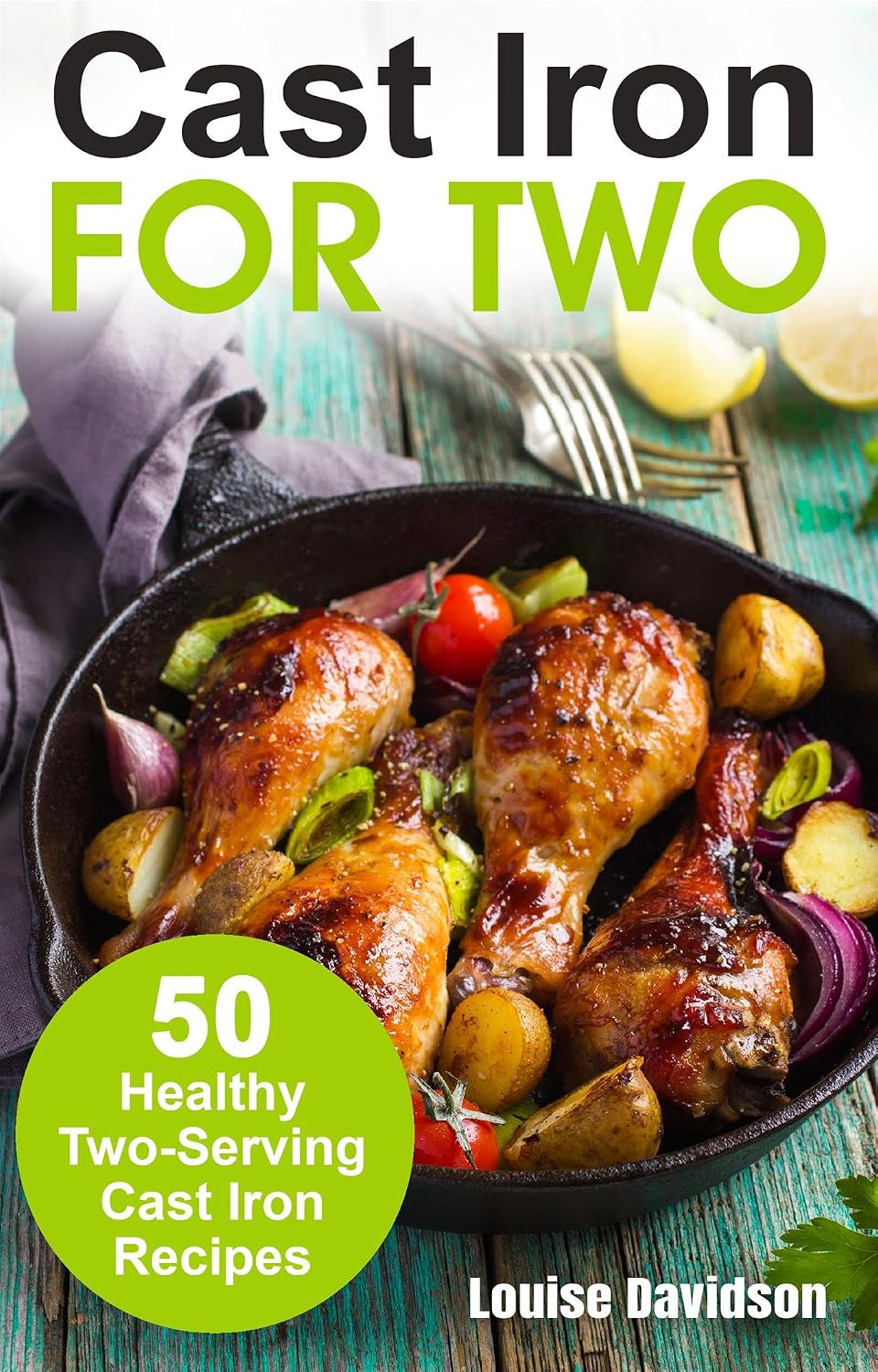
Cast Iron for Two: 50 Healthy Two-Serving Cast Iron Recipes (Small Batch Recipe Books)

Cooking for two can be challenging, but with a cast iron skillet, you can prepare healthy meals in no time!
Make cooking for two fun and delicious with these 50 creative and memorable recipes for two-servings designed for cast iron cookware.

The cast iron skillet is a perfect cooking companion for a household of two. And as it’s also one of the sturdiest of man’s kitchen inventions, the one you have now could be with you through your whole life and hand down to your children!

With cast iron’s strong heat retention and ability to distribute this heat evenly, you get ultimate flavors. It’s healthier, too: A well-seasoned cast iron skillet has a protective film that makes it naturally non-stick, which means you’ll need less oil to prepare your dishes. It does without the chemical linings used on modern non-stick pans and can supply the iron you need, without reaching dangerous levels.

You can sauté, sear, braise, fry, and bake in a cast iron skillet. Your cast iron pan can actually take the place of a Dutch oven, clay pot, baking pan or casserole dish. It’s especially convenient because you can go from the stovetop to the oven without needing a separate frying pan or saucepan and a baking pan. That will save you time and reduce cleanup afterward.

Inside, you’ll find 50 healthy and delicious two-serving recipes for all the meals of a day:
• Breakfast, snacks, sides & appetizers recipes such as the Garlic-Pepperoni Knots and the Unsweetened Skillet Cornbread
• Bountiful chicken and poultry recipes such as the Honey-Dijon Chicken with Brussels Sprouts and the Cornish Hens with Apples
• Wholesome beef, pork, lamb, & veal recipes like the Skillet Beef Burrito and the Thai-Style Pork Chops
• Traditional pasta recipes like the Baked Pasta with Parmesan Cream and the Chicken Alfredo Pasta
• Satisfying seafood recipes such as the Spicy Shrimp with White Beans and Tomatoes and the Easy Paella
• Tasty vegetarian recipes like the Moussaka with Mushrooms and Zucchini and the Eggplant, Chickpeas and Spinach Curry

All recipes come with a detailed list of ingredients, cooking and preparation times, number of servings, easy to follow step-by-step instructions, and nutritional information per serving.

Posted in Cookbooks

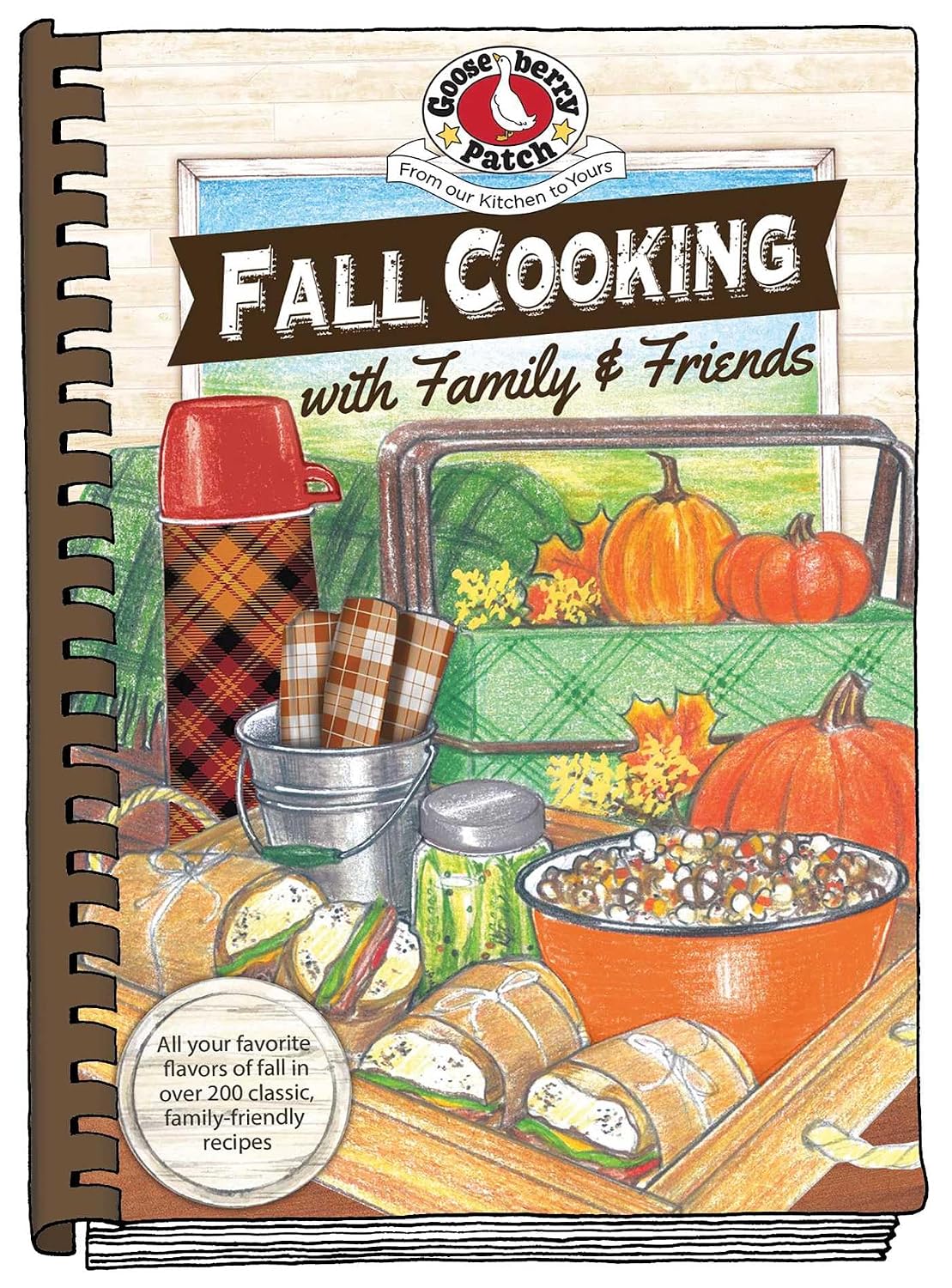
Fall Cooking with Family & Friends (Seasonal Cookbook Collection)

It’s fall! Farmstands are bursting with just-picked produce to share with family & friends. Celebrate this glorious season with back-to-school lunches, chilly-day soup suppers, tailgating parties, trick-or-treat goodies and Thanksgiving turkey with all the trimmings.

In Fall Cooking for Family & Friends, you’ll find delicious recipes for every occasion, shared by home cooks from across the country. Breakfast Egg Muffins or Fruit & Nut Granola Bars will send the kids off to school, ready to learn. Bacon Breakfast Casserole is perfect for a tailgating brunch with friends. Chicken Corn Chowder, White Bean & Kale Soup and All-Day Beef Barley Soup are equally good at lunch or supper…just add a basket of Easy Corn Sticks.

If you’re whipping up a quick busy-day dinner, you’ll find lots of satisfying choices like Shortcut Lasagna, BBQ Chicken Flatbread, Delicious Cola Roast and Meatless Taco Bowls. Hosting an oh-so special dinner for Thanksgiving? You can’t go wrong with Best Thanksgiving Turkey, Karen’s Corn Pudding, Honey-Roasted Sweet Potatoes and Glazed Fruit Salad.

Fall is party time, so you’ll find plenty of choices like Autumn Caramel Apple Dip, Freeze-Ahead Crab Appetizers, Fiesta Pinwheels and Aunt Jo’s Red Hot Punch. Check out the wonderful desserts too…Pumpkin-Oat Scotchies, Toffee Brickle Popcorn, Vermont Maple Cake and Christy’s Chocolate Trifle. Yum!

Each recipe uses familiar ingredients, with easy directions. You’ll find plenty of hints and tips for celebrating the season, too. 225 Recipes.

Posted in Cookbooks

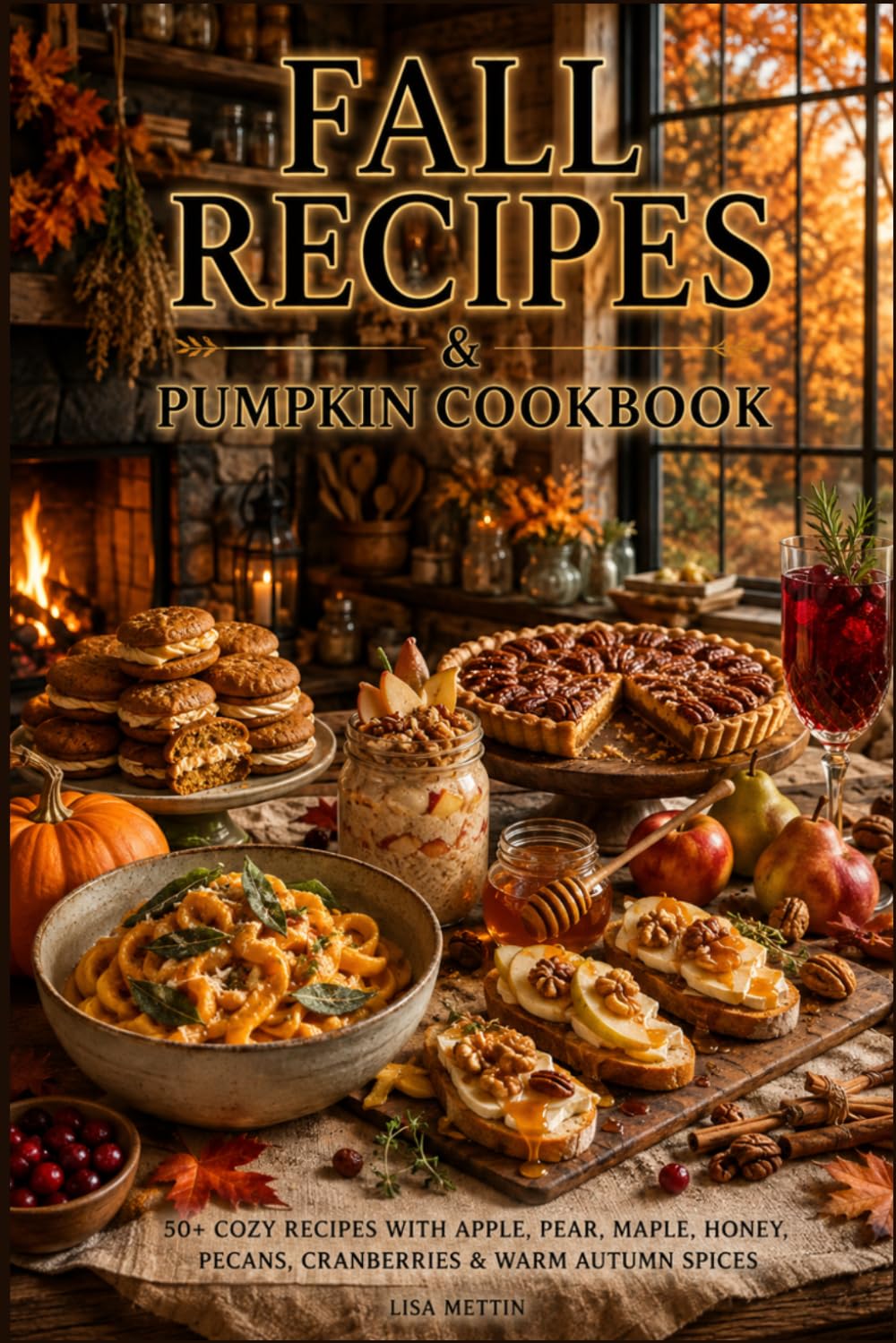
Fall Recipes & Pumpkin Cookbook

 50+ Cozy Recipes with Apple, Pear, Maple, Honey, Pecans, Cranberries & Warm Autumn Spices

Bring the Cozy Flavors of Fall to Your Kitchen
When the days get cooler and you start craving warm, comforting food, there’s nothing better than cooking with the flavors of autumn.

Fall Recipes & Pumpkin Cookbook brings together 52 cozy recipes inspired by the ingredients and flavors that make fall so special — from pumpkin and apples to pears, maple, honey, pecans, cranberries, chocolate, warm spices, and more.

Inside, you’ll discover:

Pumpkin Everything
Hearty soups, savory dishes, comforting bakes, cookies, desserts, and creative ways to enjoy pumpkin throughout the season.

Apple, Pear & Autumn Flavors
Cozy breakfasts, savory dishes, appetizers, rustic bakes, desserts, and sweet treats featuring apples, pears, and delicious seasonal combinations.

Maple, Honey & Nutty Autumn Flavors
Rich recipes featuring maple syrup, honey, pecans, almonds, hazelnuts, pistachios, chocolate, dried fruits, and other autumn favorites.

Cozy Autumn Drinks
Warm chai, creative hot chocolates, apple cider combinations, mulled wine, fruit-forward drinks, and comforting beverages inspired by autumn traditions from different places.

Whether you’re planning a cozy weekend breakfast, looking for something special to serve guests, or simply want a warm homemade dessert after a chilly day, you’ll find plenty of ideas to enjoy throughout the season.

Simple ingredients. Cozy flavors. Beautiful autumn food.

Bring the warmth of fall to your table, one recipe at a time.