Posted in Home & Pantry

Pantry Challenge: The Soup Pot

There’s something comforting about a pot of homemade soup, especially when you can make it with ingredients you already have in the pantry.

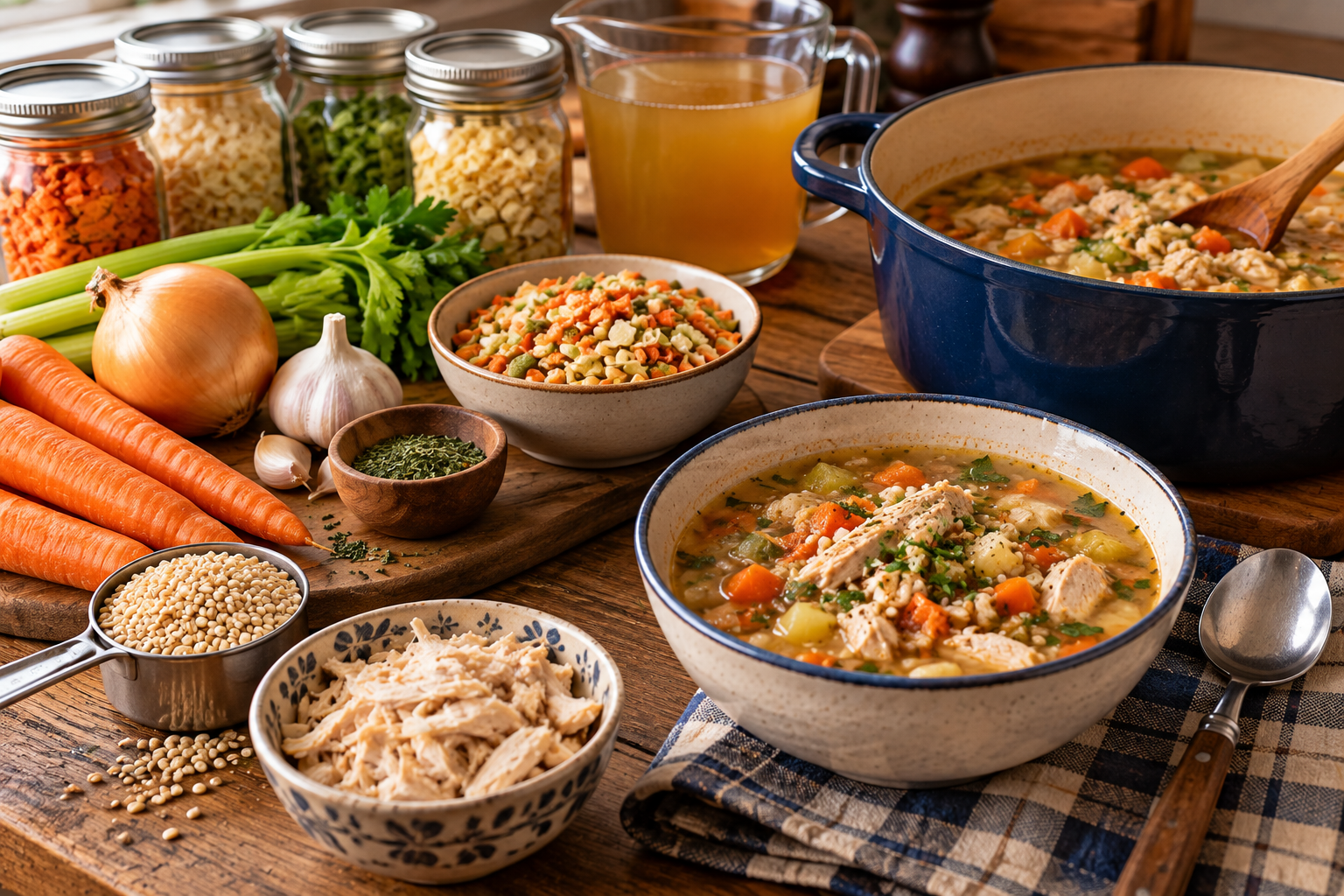
A can of chicken, a handful of dehydrated vegetables, some broth, and a little rice or barley can be the beginning of a satisfying supper. Add a few seasonings, let the ingredients cook until tender, and you’ve turned pantry staples into something warm and nourishing.

Soup is also one of the most flexible meals you can make.

You don’t need a complicated recipe or every ingredient on a shopping list. Once you understand the basic formula, you can change the protein, vegetables, starch, and seasonings to suit your pantry.

Welcome to Day Four of our October Pantry Challenge!

We’ve spent the past few days learning to make dinner from what we have, build meals around three ingredients, and turn available ingredients into skillet suppers. Today, we’re moving to another useful kitchen tool: the soup pot.

And don’t worry. You don’t necessarily need a big stockpot or an entire afternoon to make a good pot of soup.

Why Soup Is Perfect for the Pantry Challenge

Soup is one of the easiest ways to bring a collection of pantry ingredients together.

A small amount of cooked chicken can add protein to vegetable soup. A handful of dehydrated vegetables can provide flavor and texture. Leftover rice or barley can make a light broth more substantial.

You can also make soup in quantities that suit your household instead of preparing a large batch that leaves you wondering what to do with all the leftovers.

Here are a few reasons to keep pantry soup in your cooking rotation:

  • It’s flexible. Change the ingredients according to what you have available.
  • It’s budget-friendly. Small amounts of protein and vegetables can contribute to a satisfying meal.
  • It’s practical for small households. Prepare a modest batch instead of filling a large stockpot.
  • It helps reduce waste. Suitable leftover ingredients can become part of another meal.
  • It works with shelf-stable ingredients. Canned proteins, broth, rice, barley, and dehydrated vegetables are useful starting points.
  • It can fit your schedule. Make a quick soup for lunch or let a longer-cooking soup simmer while you go about your day.

You can even prepare a simple soup starter ahead of time by measuring dehydrated vegetables and suitable seasonings into a small jar.

When you’re ready for soup, add your liquid and the other ingredients the meal requires.

It’s a practical way to make your pantry work for you.

The Basic Pantry Soup Formula

Think of soup as a combination of five components:

Liquid + vegetables + protein + a hearty ingredient + seasonings

You don’t have to use all five every time. They’re simply a guide to help you build a satisfying pot of soup.

1. Start With Liquid

Your liquid helps determine the character of the finished soup.

Depending on what you’re making, you might use:

  • Chicken broth.
  • Vegetable broth.
  • Beef broth.
  • Water with appropriate seasonings.
  • Canned tomato liquid combined with broth or water.

For a small batch, begin with a modest amount of liquid. You can always add more if the soup becomes too thick.

Remember that rice, pasta, barley, and dehydrated vegetables absorb liquid as they cook. Allow for that when deciding how much to use.

If you’re using a concentrated broth or bouillon, follow the package directions and taste before adding extra salt.

2. Choose Your Vegetables

This is where your pantry can really help.

You might use:

  • Dehydrated onions.
  • Dehydrated carrots.
  • Dehydrated potatoes.
  • Dehydrated celery.
  • Canned tomatoes.
  • Canned green beans.
  • Frozen peas or corn.
  • Fresh carrots, celery, or onions.

Use one vegetable or several, depending on what you have.

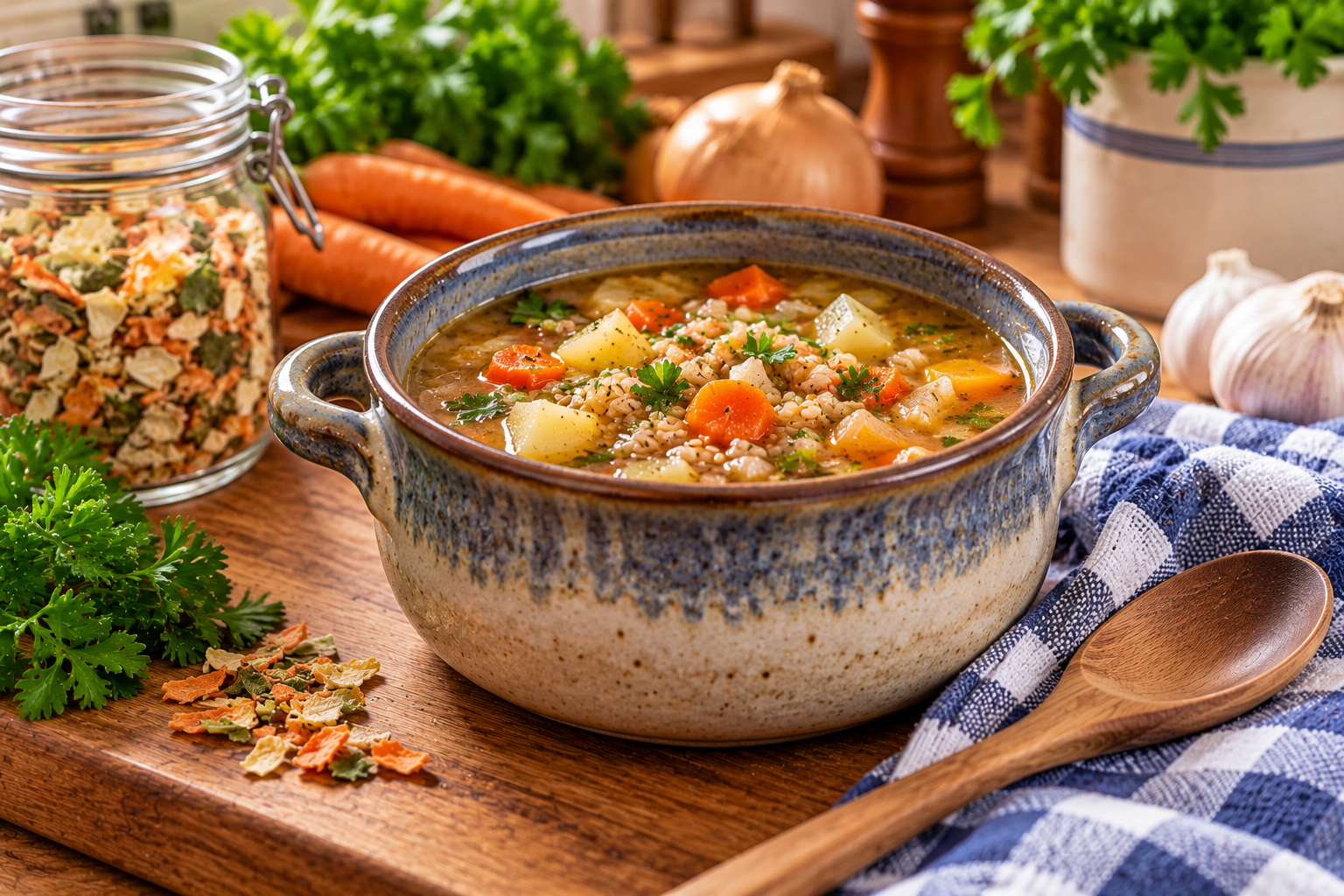
Dehydrated vegetables are particularly convenient because you can store them in small jars and measure out only what you need.

They also make it possible to prepare a pot of soup without having to purchase fresh vegetables every time you want to make it.

Fresh and frozen vegetables have their place, too. You can combine them with dehydrated ingredients or use whichever option suits the meal you’re making.

3. Add Protein

Your soup doesn’t have to contain a large quantity of meat to be satisfying.

Consider:

  • Canned chicken.
  • Cooked shredded chicken.
  • Leftover cooked beef or pork.
  • Ground turkey cooked thoroughly before adding.
  • Canned beans.
  • Lentils.

Canned chicken is particularly convenient because it’s already cooked. Add it at an appropriate point in the cooking process so it heats thoroughly without becoming unnecessarily dry.

If you’re using raw meat, make sure it reaches the appropriate safe internal temperature before serving.

Canned beans are another handy pantry staple. They’re already cooked, so you can add them toward the end of cooking and allow them to heat through.

Lentils are also worth keeping on hand. Depending on the variety, they can cook relatively quickly and add substance to a pot of soup.

Dried beans are useful, too, but they need a different approach. I generally save them for a bean soup that I plan to cook for several hours rather than trying to fit them into a quick lunch.

We’ll come back to that distinction in a moment.

4. Choose a Hearty Ingredient

A little starch or another substantial ingredient can turn a light broth into a more filling meal.

Consider:

  • Rice.
  • Barley.
  • Pasta.
  • Potatoes.
  • Sweet potatoes.
  • Canned beans.
  • Lentils.

Each ingredient has its own cooking requirements.

Rice, pasta, and barley need different amounts of liquid and different cooking times. Potatoes need enough time to become tender, while canned beans are already cooked and can be added near the end.

Lentils can be a good choice for a relatively quick soup. Their cooking times vary by variety, so check the package directions and cook them until tender.

Dried beans generally require much longer cooking and appropriate preparation. They’re better suited to a soup that has been planned around their cooking time.

The trick is to choose ingredients that fit the time you have available.

If you’re making a quick soup, cooked rice, leftover potatoes, or canned beans may be more convenient than an ingredient that needs a long cooking time.

If you have the day available and want a pot of dried-bean soup, plan for that instead.

Both approaches have a place in a practical kitchen.

5. Finish With Seasonings

Seasonings help bring the ingredients together.

Try combinations such as:

For chicken soup: Onion, garlic, parsley, and thyme.

For tomato soup: Italian seasoning, garlic, and basil.

For beef and barley soup: Onion and thyme.

For vegetable soup: Garlic, parsley, and your favorite herbs.

You don’t need a special soup seasoning packet. Start with what you have, add a little at a time, and taste the broth.

Remember that commercial broth and canned ingredients may already contain salt.

And if you dislike a particular seasoning, leave it out. Your pantry should reflect your tastes, not somebody else’s idea of what belongs in a recipe.

My Mini-Crock Method for Dehydrated Ingredients

If you keep dehydrated vegetables in your pantry, here’s a practical way to put them to work.

I’ve found that when I’m using dehydrated ingredients, popping them into my Mini-Crock on HIGH for about an hour cooks them perfectly for me.

I simply add the dehydrated ingredients and liquid, then add any fresh ingredients at the appropriate times along the way.

And if I get distracted making lunch or decide to do something else before eating, that’s fine, too. I’m not trying to beat a clock!

The hour is my starting point, not a deadline.

How I Approach a Small Pot of Pantry Soup

Step 1: Choose your dehydrated vegetables.

Start with the vegetables that will form the foundation of your soup.

Dehydrated onions, carrots, celery, and potatoes are useful choices, depending on the meal you’re making.

Step 2: Add the liquid.

Pour in enough broth or water to rehydrate the vegetables and create the amount of soup you want.

Remember that dehydrated vegetables absorb liquid. Check the mixture as it cooks and add more if necessary.

Step 3: Add your seasonings.

Garlic, parsley, thyme, and other suitable seasonings can begin building flavor while the vegetables cook.

If you’re using commercial broth, taste before adding extra salt.

Step 4: Let the Mini-Crock do its work.

For the dehydrated vegetables I’ve been using successfully, my usual approach is to cook them on HIGH for about an hour.

Different ingredients and quantities can require different cooking times, so check that everything is properly cooked and tender before serving.

Some ingredients, including raw meat and dried legumes, need particular attention to their cooking requirements. Don’t assume that an hour in the Mini-Crock is sufficient for every ingredient.

Step 5: Add fresh ingredients at the appropriate time.

Fresh vegetables that need more cooking time can go in earlier. Tender vegetables, canned beans, and cooked meat can be added later, according to what the soup requires.

For example, canned beans don’t need the same cooking time as dried beans. Since they’re already cooked, they generally need only enough time to heat through.

If you’re adding lentils, allow enough time for them to cook fully.

Step 6: Check the soup before serving.

Make sure the vegetables are tender, the ingredients are properly cooked, and the soup is hot throughout.

Adjust the liquid and seasonings to suit your preferences.

The advantage of this method is its simplicity. Once you’ve chosen ingredients that work well together, the Mini-Crock can handle much of the cooking while you get on with your day.

Just remember that slow-cooker cooking times vary with the appliance, the quantity of food, and the ingredients you’re using.

Three Pantry Soup Combinations to Try

Let’s put the formula into practice.

These are flexible starting points rather than rigid recipes. Adjust the quantities to suit your appetite and the ingredients you have available.

1. Chicken and Dehydrated Vegetable Soup

Start with:

  • Cooked chicken.
  • Dehydrated vegetables.
  • Chicken broth.

Add seasonings such as garlic, parsley, and thyme.

Cook the dehydrated vegetables in the broth until tender. Add the cooked chicken at an appropriate point so it heats thoroughly.

If you have cooked rice or barley, add a small amount to make the soup more substantial.

This is a good way to use homemade dehydrated vegetables and a small portion of cooked chicken.

You don’t need a large quantity of chicken. The vegetables and broth help make the most of what you have.

2. Tomato, Vegetable, and Lentil Soup

Start with:

  • Canned tomatoes.
  • Lentils.
  • Dehydrated, fresh, or frozen vegetables.

Add broth or water, along with garlic, onion, and herbs you enjoy.

Check the directions for your lentils and allow them to cook until tender. Add fresh vegetables according to how much cooking time they need.

This combination can make a hearty soup without requiring meat.

If you prefer a quicker preparation, canned lentils can also be convenient when available. Since they’re already cooked, add them near the end and heat them through.

3. Turkey and Barley Soup

Start with:

  • Cooked turkey.
  • Cooked barley.
  • Dehydrated vegetables.

Add broth, onion, thyme, and parsley.

Cook the dehydrated vegetables until tender, then stir in the cooked turkey and barley. Continue heating until everything is hot throughout.

If your barley isn’t cooked yet, prepare it according to its package directions or allow sufficient time for it to cook in the soup.

This combination is especially useful when you have a small amount of leftover turkey and want to turn it into another meal.

You can also substitute cooked chicken or another suitable protein.

What About Dried Beans?

Dried beans deserve a little extra consideration when you’re planning pantry soup.

They’re inexpensive, versatile, and excellent for making a hearty pot of soup. But they generally need much longer cooking than canned beans.

I like to save dried beans for a soup that I plan to cook for several hours.

That gives me time to prepare the beans properly and let the soup cook until everything is tender.

For a quick pantry soup, canned beans are usually the more convenient choice. They’re already cooked, so you can add them near the end rather than planning the entire cooking time around dried beans.

A few practical guidelines:

  • Canned beans: Convenient for quick soups. Drain and rinse if appropriate for the recipe, then heat through.
  • Dried lentils: Often suitable for relatively quick soups, depending on the variety. Follow the package directions and cook until tender.
  • Dried beans: Better for soups planned around their longer preparation and cooking requirements.

Always follow appropriate preparation and cooking instructions for dried legumes. Don’t rely on a short slow-cooker cycle to make every type of dried bean safe and tender.

There’s no need to avoid dried beans. Simply choose the right kind of soup for the amount of time you have.

What If Your Soup Is Too Thin or Too Thick?

One of the nice things about soup is that you can often adjust the consistency as you go.

If It’s Too Thin

Consider adding a small amount of cooked rice, pasta, barley, or potatoes.

These ingredients can make the soup more substantial without requiring a completely different recipe.

You can also allow a suitable soup to simmer uncovered for a little while to reduce excess liquid, provided the ingredients can tolerate the additional cooking.

If It’s Too Thick

Add a little broth or water.

Stir, allow the mixture to heat, and check the consistency again.

Remember that some ingredients continue absorbing liquid as the soup stands, so a soup that looks just right in the pot may become thicker after cooling.

If It Needs More Flavor

Taste the broth before adding more seasoning.

It might need a little garlic, onion, herbs, or another suitable flavoring.

If you’ve added too much salt, adding more salt won’t help. Depending on the soup, additional unsalted liquid or other ingredients may help bring the flavor back into balance.

Stretch Every Grocery Dollar

Soup is a practical way to make smaller quantities of ingredients go further.

A little cooked chicken can contribute to several servings of vegetable soup. A small amount of barley can make broth and vegetables more substantial. Dehydrated vegetables can provide flavor and variety without requiring you to buy fresh produce every time you make soup.

Canned beans and lentils are useful pantry staples, too. They provide convenient options when you want a hearty soup without planning around the longer cooking time of dried beans.

Think about the ingredients you use regularly and keep a few dependable options available.

You don’t need a pantry full of specialty products. A few vegetables, suitable proteins, broth, grains, and seasonings can provide the foundation for many different soups.

And because you can change the combinations, you don’t have to eat the same soup every time you open the pantry.

Waste Not, Want Not

Before putting away your ingredients, think about how you can use the remaining portions.

If you’ve opened a can of chicken or vegetables, refrigerate unused portions promptly in a suitable covered container and follow recommended storage times.

If you have leftover soup, refrigerate it promptly in shallow containers. Use refrigerated leftovers within recommended food-safety time limits, or freeze suitable portions for later.

Small containers are particularly useful when cooking for one or two. You can save an individual portion without having to thaw a large batch later.

Don’t forget to check your dehydrated ingredients periodically. Keep them properly stored and discard anything that shows signs of moisture, mold, or spoilage.

The goal is to make the most of your pantry while keeping the food you prepare safe to eat.

Cooking for One or Two

You don’t need a large soup pot to make a satisfying supper.

A small saucepan or Mini-Crock can be useful for preparing a modest batch, depending on the capacity of your appliance and the amount of soup you’re making.

Start with the amount of broth that suits your planned portion, then add the vegetables, protein, and hearty ingredients.

If you’re preparing two servings, consider whether you’ll eat the second portion soon or freeze it for another day.

You can also prepare a dry soup starter by measuring suitable dehydrated vegetables and seasonings into a small jar. When you’re ready to cook, add the liquid and any fresh or refrigerated ingredients the soup requires.

Keep in mind that dry ingredients with special preparation or longer cooking requirements may not be appropriate for every quick soup starter.

Kitchen Confidence: Soup Is a Formula, Not a Fixed List

Once you understand the basic components of soup, you can begin making decisions based on what’s available.

You might start with chicken and rice one day, then use barley and vegetables another time. You can change the seasonings, substitute suitable ingredients, or make a thicker soup when you want something more substantial.

You don’t need to follow a recipe word for word to make a good everyday soup.

You do, however, need to understand the ingredients you’re using, how much liquid they require, and how long they need to cook.

That knowledge allows you to be flexible without sacrificing the quality or safety of your meal.

And remember that not every soup needs to be prepared the same way. A quick lunch soup and a pot of dried-bean soup that simmers for several hours have different purposes, and both deserve a place in your cooking routine.

Your Pantry Challenge for Today

It’s time to put the soup pot to work!

  1. Choose a liquid, a vegetable, and a protein or hearty ingredient.
  2. Look for a few seasonings that complement your choices.
  3. Decide which ingredients need the most cooking time.
  4. Prepare a small pot of soup using what you have.
  5. Make a note of the combination if you enjoy it.

If you have dehydrated vegetables, consider whether your Mini-Crock method would suit the ingredients you’ve chosen.

If you have canned beans, think about using them in a quick soup. Save dried beans for a recipe that allows enough time for them to cook properly.

The goal is to become more comfortable turning pantry staples into a satisfying meal without needing a long shopping list.

Tomorrow, we’ll tackle another familiar kitchen situation in Pantry Challenge: The “Almost Empty” Pantry.

We’ll look at how to make good use of those small quantities that remain after you’ve used most of a package or jar.

Because sometimes a handful of this and a little of that are all you need to get dinner started.
Posted in Kitchen Tips

Three Ways to Change One Soup Starter

Yesterday, we turned a jar of homemade soup starter into Turkey & Barley Comfort Soup.

Today, we’re going to do something even more useful.

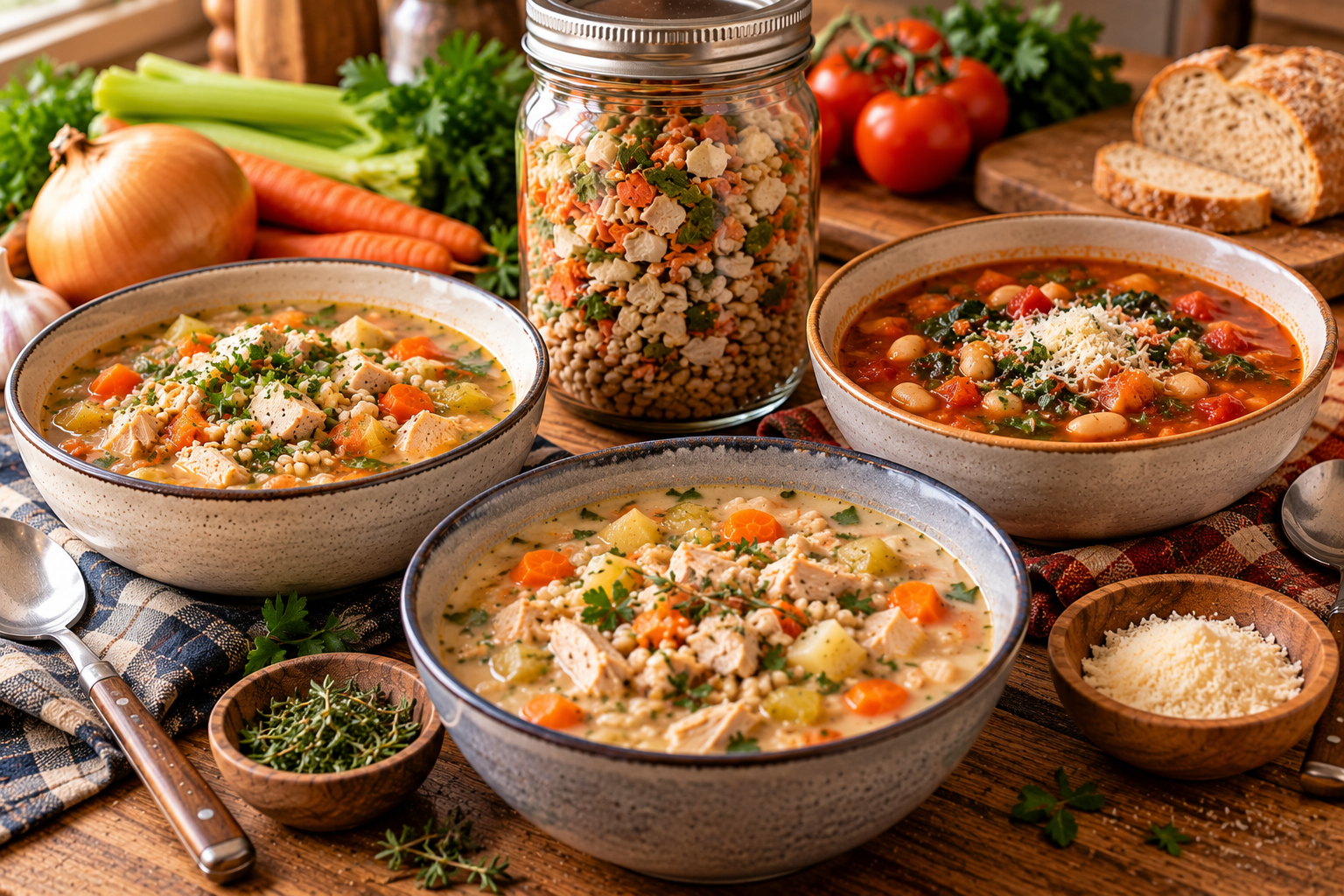
We’re going to take that same soup starter and turn it into three completely different meals.

Because that’s the secret to a practical pantry:

You don’t need a pantry full of recipes. You need ingredients that can work in more than one recipe.

A good soup starter gives you the vegetables, grain, and basic seasonings.

What you add to it determines what kind of soup ends up in the bowl.

And for a household of one or two, that kind of flexibility can make a big difference.

Start With the Same Soup Starter

Our Homemade Soup Starter Mix contains dehydrated:

  • Carrots
  • Celery
  • Onion
  • Potatoes

Along with:

  • Pearl barley
  • Parsley
  • Thyme
  • Garlic
  • Onion powder
  • Black pepper
  • Salt

The basic cooking method stays the same.

Add one portion of the starter to about 4 cups of broth, bring it to a simmer, and cook until the barley and vegetables are tender.

Then comes the fun part.

Change the protein. Change the vegetables. Change the seasoning. Change the finish.

And you’ve changed the soup.


1. Turkey & Barley Comfort Soup

Let’s start with the version we made yesterday.

It’s the classic combination:

Turkey + barley + root vegetables + herbs

Add

  • 1 to 1½ cups cooked turkey
  • Chicken or turkey broth
  • Fresh parsley
  • A squeeze of lemon

Optional

Add a handful of frozen peas during the last few minutes.

Why It Works

Turkey and barley are a natural match.

The barley makes the soup hearty, while the turkey adds protein without requiring a large amount of meat.

The lemon at the end gives the whole bowl a little lift.

This is the version to make when you’re craving a traditional, cozy bowl of soup.


2. Chicken, Vegetable & Lemon Soup

Now let’s change the personality of the same starter.

Instead of turkey, use chicken and brighten everything up.

Add

  • 1 to 1½ cups cooked chicken
  • Chicken broth
  • ½ cup frozen peas
  • A handful of fresh spinach
  • 1–2 teaspoons lemon juice
  • Fresh parsley

Optional

If you have leftover cooked carrots, green beans, or corn, add them too.

The Difference

The basic starter hasn’t changed.

But the addition of chicken, green vegetables, and lemon makes this version feel much lighter and brighter.

And this is a perfect example of why you don’t have to follow a recipe rigidly.

Maybe you don’t have turkey.

That’s fine.

Use chicken.

Maybe you have leftover vegetables that need a home.

Add them.

The soup adapts.


3. White Bean & Tomato Barley Soup

Now let’s take the same starter in an entirely different direction.

Skip the meat and add beans and tomatoes.

Add

  • 1 can (15 ounces) white beans, drained and rinsed
  • 1 cup diced tomatoes, canned or leftover
  • Vegetable or chicken broth
  • ½ teaspoon Italian seasoning
  • 1 tablespoon grated Parmesan, optional
  • Fresh parsley, optional

How to Make It

Start the soup starter in the broth as usual.

When the vegetables and barley are nearly tender, add the beans and tomatoes.

Simmer until everything is hot and the flavors have come together.

Taste before adding additional salt because canned beans and tomatoes can vary considerably in sodium.

Finish with Parmesan and parsley if desired.

The Difference

Suddenly we’re no longer talking about turkey soup.

We’re talking about a hearty bean-and-tomato soup with Italian-inspired flavors.

Same starter.

Completely different supper.


The Formula Behind the Three Soups

Here’s what changed:

SoupProteinFlavor DirectionFinish
Turkey & BarleyTurkeyClassic herbLemon + parsley
Chicken & VegetableChickenBright & freshLemon + greens
White Bean & TomatoWhite beansTomato & ItalianParmesan + parsley

The starter stayed essentially the same.

That’s the point.

You aren’t building three different pantry systems.

You’re building one useful base that can become several meals.

Kitchen Confidence: Think in Swaps

Once you understand the formula, you can start making substitutions without worrying that you’re somehow “ruining” the recipe.

Protein swaps

Turkey → Chicken → Beans → Lentils → Pork

Vegetable swaps

Peas → Green beans → Corn → Spinach → Cabbage

Grain swaps

Barley → Rice → Small pasta

Flavor swaps

Thyme & parsley → Italian herbs → Cumin & oregano

The combinations are practically endless.

But you don’t need endless combinations.

You only need enough variety to keep your pantry meals interesting.

What If You Don’t Have the Exact Ingredient?

This is where pantry cooking gets easier.

No fresh parsley?

Use dried.

No turkey?

Use chicken.

No chicken?

Use beans.

No peas?

Use frozen green beans.

No fresh spinach?

Skip it.

No lemon?

Try a tiny splash of vinegar in a savory soup.

No barley?

Use rice or small pasta, keeping in mind that the cooking method and timing may change.

The important thing is understanding what an ingredient contributes.

Once you know that, substitutions become much easier.

Stretch Every Grocery Dollar

This is one of the reasons I like homemade pantry mixes so much.

You’re not buying a different boxed soup mix for every flavor you want.

Instead, you keep a flexible base on hand and use the ingredients you already have to change it.

A can of white beans can become soup.

Leftover chicken can become soup.

A small amount of frozen vegetables can become soup.

That half can of tomatoes left from another recipe can become soup.

You’re getting more meals from the same groceries.

And that’s a much more useful kind of pantry stocking than simply buying more food.

Waste Not, Want Not

Soup is one of the easiest places to use small quantities of leftovers.

That doesn’t mean dumping everything into the pot.

Flavor matters.

But if you have a little cooked vegetable, a small amount of leftover meat, or part of a can of beans or tomatoes, soup is worth considering.

The trick is to ask:

Will this ingredient work with the flavor direction I’m creating?

If yes, use it.

If no, save it for something else.

“Use everything” shouldn’t mean “throw everything together.”

Cooking for One or Two

This concept is especially useful for small households.

You don’t have to make three different soups.

Make one starter mix.

Then change the additions.

For example:

Monday: Turkey soup

Wednesday: Chicken soup

Friday: Bean and tomato soup

You get variety without buying a completely different set of ingredients for each meal.

And if you live alone, you can make one or two servings at a time instead of cooking a large pot.

Meal Prep Note

If you want to make several versions during the same week, keep your starter mix dry and prepare only the amount of soup you need.

That way, you can make one flavor today and a different flavor later.

This is particularly helpful when you’re cooking for one.

There’s no reason the entire household has to eat the same soup three nights in a row simply because you made a large pot.

Storage & Freezing

Once prepared, store leftover soup in a covered container in the refrigerator and use within 3–4 days.

Individual portions can also be frozen.

If you know you’re going to freeze the soup, consider keeping delicate finishing ingredients such as fresh herbs, lemon juice, cheese, or yogurt until you’re ready to serve.

Add those after reheating for the freshest flavor.

The Bigger Lesson

This is what I really want you to take away from this week’s soup project:

A pantry doesn’t have to be a collection of finished meals.

It can be a collection of building blocks.

The soup starter gives you one building block.

Your freezer gives you another.

The canned goods on your shelf give you more.

Your refrigerator leftovers give you another.

And your knowledge of how those ingredients work together is what turns them into dinner.

That’s a much more flexible way to cook.

And once you start thinking this way, you’ll find yourself looking at your pantry a little differently.

Instead of seeing:

“I don’t have the ingredients for a recipe.”

You may start seeing:

“I have the ingredients to make something.”

And honestly, that’s a pretty useful cooking skill to have.

Posted in Jar Mixes (Meal Starters)

Homemade Soup Starter Mix

One of the best things about having a pantry stocked with dehydrated vegetables is realizing that those little jars aren’t just ingredients waiting for a recipe.

They can become the recipe starter.

A handful of dehydrated vegetables, a little barley or rice, some herbs and seasonings, and a jar of shelf-stable ingredients can turn into the beginning of a homemade pot of soup whenever you need it.

That’s the idea behind this Homemade Soup Starter Mix.

It isn’t meant to be a complete instant soup. Instead, it’s a flexible little pantry helper that gives you a head start.

Add broth. Add protein. Let everything simmer and rehydrate.

Dinner gets a whole lot easier.

Why Make a Homemade Soup Starter?

There are plenty of packaged soup mixes at the grocery store. So why make your own?

Because homemade lets you decide exactly what goes into it.

You can:

  • Use vegetables you already dehydrated.
  • Adjust the quantities for a small household.
  • Leave out ingredients your family doesn’t like.
  • Control the seasoning.
  • Use the grains or starches you already keep.
  • Make individual or two-serving portions.
  • Use up small quantities of dehydrated vegetables.
  • Build several different soups from the same basic starter.

And perhaps most importantly, you know what’s in the jar.

This isn’t about creating another complicated food-prep project.

It’s about making the pantry you already have more useful.

The Basic Soup Starter Formula

Think of your jar as four basic components:

Vegetables + Grain/Starch + Seasoning + Optional Dried Flavor Ingredients

That’s it.

The protein and broth can be added later.

For this version, we’re using dehydrated vegetables, pearl barley, onion, garlic, and simple herbs.

The result is a versatile starter that works particularly well with turkey or chicken.

Homemade Soup Starter Mix

Makes

4 small starter portions

Each portion makes approximately 2 servings of soup, depending on the amount of broth and protein added.

Ingredients

For the complete dry mix:

  • ½ cup dehydrated diced carrots
  • ½ cup dehydrated diced celery
  • ½ cup dehydrated diced onion
  • ½ cup dehydrated diced potatoes
  • 1 cup pearl barley
  • 2 teaspoons dried parsley
  • 1 teaspoon dried thyme
  • 1 teaspoon garlic powder
  • 1 teaspoon onion powder
  • ½ teaspoon black pepper
  • ½ teaspoon salt

To Package

You’ll also need:

  • Four pint-size mason jars or other airtight containers
  • Labels

A pint jar gives you plenty of room to combine the ingredients without having to cram everything inside.

Making the Mix

1. Make sure the vegetables are thoroughly dry.

This is the most important step.

Dehydrated vegetables intended for storage should be completely dry and properly cooled before being packed.

They should not feel soft or damp.

If you’re unsure whether a batch is sufficiently dry, give it more drying time rather than taking chances with storage.

2. Combine the dry ingredients.

In a large bowl, combine the dehydrated carrots, celery, onion, and potatoes.

Add the barley, parsley, thyme, garlic powder, onion powder, black pepper, and salt.

Stir thoroughly so the seasonings are distributed throughout the mixture.

3. Divide into four portions.

Measure approximately 1½ cups of the dry mixture into each jar.

Don’t worry if the portions aren’t perfectly identical. The mix is flexible.

4. Label the jars.

At minimum, write:

Homemade Soup Starter Mix

Use 1 jar for approximately 2 servings

Date prepared

If you’re keeping several mixes in your pantry, it’s also helpful to note the main ingredients.

How to Use the Soup Starter

When you’re ready to make soup, empty one jar into a saucepan.

Add:

  • 4 cups chicken or turkey broth
  • 1 to 1½ cups cooked turkey or chicken, chopped or shredded

Bring the mixture to a boil, then reduce the heat and simmer gently until the barley and vegetables are tender.

Because dehydrated vegetables vary in size and dryness, cooking time can vary.

Start checking around 35 minutes, but allow additional time if the barley or vegetables aren’t tender yet.

Add additional broth or water as needed.

Taste and adjust the seasoning before serving.

A Note About the Potatoes

Dehydrated potatoes can take a little longer to rehydrate than some other vegetables.

Cutting them into small, uniform pieces before dehydrating helps them cook more evenly.

If your dehydrated potato pieces are larger, give them extra cooking time.

What Goes Into the Soup Later?

This is intentionally a starter, not a finished meal.

That’s what makes it useful.

You can add:

Protein

  • Cooked turkey
  • Cooked chicken
  • Canned chicken
  • Cooked pork
  • Beans
  • Lentils

Extra Vegetables

  • Frozen peas
  • Frozen green beans
  • Corn
  • Spinach
  • Fresh cabbage
  • Fresh zucchini

Finishing Ingredients

  • Lemon juice
  • Fresh parsley
  • Greek yogurt
  • Parmesan
  • Shredded cheese
  • A splash of vinegar

The same jar can become several different soups depending on what you add.

Kitchen Confidence: Don’t Make the Mix Too Complicated

It’s tempting when making homemade mixes to keep adding ingredients.

A little of this.

A little of that.

Another spice.

Another dried vegetable.

Before you know it, you’ve created a jar that only works for one specific recipe.

That’s not what we’re trying to do here.

The most useful pantry mixes are flexible.

Think of this as a blank canvas rather than a finished recipe.

The jar gives you the vegetables, grain, and basic seasoning.

You decide what dinner becomes.

Stretch Every Grocery Dollar

This kind of mix can also help you make better use of food you’ve already preserved.

Dehydrated vegetables take up very little storage space, which makes them especially useful when refrigerator and freezer space are limited.

Instead of keeping a large bag of fresh vegetables in the refrigerator and hoping you’ll use them before they spoil, you can preserve some of them for later.

And once they’re dehydrated, they become incredibly convenient.

A tablespoon or two of dried onion can be exactly what a small recipe needs.

A handful of dried carrots can become part of a soup.

Those little quantities add up.

Waste Not, Want Not

This is also a good project for using the smaller quantities left over from different dehydrating batches.

You don’t need to dedicate an entire batch of vegetables to soup mix.

Have a little dehydrated carrot left?

Add it.

A small jar of dried onion?

Use it.

Some dehydrated celery that isn’t enough for another storage jar?

Into the soup mix it goes.

This is one of the places where dehydrating really shines for a small household.

Small quantities don’t have to become waste.

They can become ingredients.

Cooking for One or Two

The recipe makes four starter portions, but you can easily scale it down.

For a household of one, make smaller jars containing enough mix for one serving.

You can also prepare the four portions and simply use half of a jar when you need one bowl of soup.

The important thing is to keep the dry ingredients in a clean, dry, airtight container.

Meal Prep Note

These starter jars are a great way to make future meal prep easier.

You can prepare several jars at once and keep them ready in the pantry.

Then on a busy evening, you aren’t measuring five different dried vegetables and three different seasonings.

The measuring is already done.

You simply grab a jar and start cooking.

That is exactly what a good pantry convenience food should do.

Storage

For best storage, make sure every dehydrated ingredient is completely dry before assembling the mix.

Store the finished mix in a clean, dry, airtight container in a cool, dark pantry.

Label each jar with the date and ingredients.

Because this mix contains multiple homemade dehydrated ingredients, I recommend treating the storage life according to the ingredient with the shortest reliable storage life rather than assuming the entire mix will last indefinitely.

If you notice moisture, condensation, off odors, mold, or any other sign of spoilage, discard the mix.

When in doubt, throw it out.

Important Preservation Note

This homemade soup mix is a dry pantry mix, not a pressure-canned or shelf-stable canned meal.

Do not put the assembled soup mix into a canning jar and process it as though it were a tested canning recipe.

For food-preservation guidance, follow tested recommendations from reliable preservation authorities and use your dehydrated ingredients according to established dehydration and storage practices.

Three Ways to Use One Starter

The real beauty of this mix is what happens after the jar is opened.

Turkey & Barley Comfort Soup

Add turkey, chicken or turkey broth, and finish with parsley and a squeeze of lemon.

That’s the version we’ll be making tomorrow.

Chicken & Vegetable Soup

Use chicken instead of turkey and add a handful of frozen peas near the end.

The same starter suddenly has a completely different personality.

Vegetable & Bean Soup

Skip the meat and add a can of drained white beans or another bean you enjoy.

Add a little tomato if you want a richer, tomato-based soup.

One starter.

Three very different dinners.

And that’s before we start changing the seasonings.

The Bigger Pantry Idea

A pantry full of ingredients is useful.

A pantry full of ready-to-combine ingredients is even more useful.

That’s the difference between simply storing food and actually building a working pantry.

The goal isn’t to have shelves that look impressive.

The goal is to be able to open the pantry on a Wednesday night, look around, and think:

“I can make dinner from this.”

A few jars of homemade soup starter can help make that possible.

Tomorrow, we’ll put one of these jars to work with Turkey & Barley Comfort Soup—a good example of how a little advance preparation can turn dehydrated pantry ingredients into a genuinely comforting meal.

Posted in Soups & Stews

Building a Better Pantry Soup

There are nights when you have plenty of food in the pantry but absolutely no idea what to make for dinner.

You have a can of tomatoes. Maybe some broth. A little leftover chicken. A bag of rice or barley. A few vegetables tucked away in the refrigerator.

Nothing looks like a recipe.

But put the pieces together in the right order, and suddenly you have soup.

That’s one of the best things about keeping a practical pantry: you don’t always need a recipe to make dinner. You need a formula.

For October’s Pantry to Table series, we’re looking at the ingredients and habits that make everyday cooking easier. And learning how to build a good soup from what you already have may be one of the most useful skills in the whole pantry.

Why Build Soup From a Formula?

A recipe tells you exactly what to buy and exactly what to do.

A formula gives you room to work with what you already have.

That’s particularly useful when you’re cooking for one or two people. You may have half an onion, one lonely carrot, some leftover turkey, and a little cooked rice—but not enough of any one ingredient to make the recipe you found online.

Soup doesn’t care.

That’s its superpower.

You can combine small amounts of ingredients, adjust the proportions, and end up with a completely different soup every time.

The Basic Pantry Soup Formula

Think of your soup as a series of building blocks:

Broth + Protein + Vegetables + Starch or Grain + Seasoning + Finish

You don’t necessarily need every component every time, but this gives you a place to start.

1. Start With the Liquid

The broth forms the foundation of the soup.

Good pantry choices include:

  • Chicken broth
  • Turkey broth
  • Vegetable broth
  • Beef broth
  • Homemade stock
  • Bouillon or soup base mixed with water

You can also use water when your other ingredients provide plenty of flavor.

For a small household, shelf-stable broth in smaller containers can be particularly convenient. If you open a larger container, freeze the unused portion in meal-sized amounts rather than letting it sit in the refrigerator waiting for another recipe.

2. Add a Protein

Protein turns a bowl of soup from a side dish into a meal.

And it doesn’t have to mean cooking meat specifically for the soup.

Good pantry and leftover options include:

  • Canned chicken
  • Canned tuna, for appropriate soups
  • Canned salmon
  • Canned mackerel
  • Cooked turkey
  • Leftover chicken
  • Ground beef
  • Ground turkey
  • Cooked pork
  • Eggs
  • Beans
  • Lentils

This is one reason canned proteins can be so useful in a small household. You don’t have to wait until you have enough leftover meat to make soup.

And you don’t have to buy an ingredient just because a recipe says you need it.

3. Add Vegetables

This is where your pantry, freezer, refrigerator, and preservation projects can all work together.

Use whatever makes sense:

Fresh vegetables

  • Carrots
  • Celery
  • Onion
  • Bell pepper
  • Cabbage
  • Zucchini

Frozen vegetables

  • Peas
  • Corn
  • Green beans
  • Mixed vegetables
  • Spinach

Canned vegetables

  • Tomatoes
  • Green beans
  • Corn
  • Carrots

Dehydrated vegetables

  • Onion
  • Carrots
  • Celery
  • Potatoes
  • Other vegetables you’ve preserved

And don’t underestimate a small amount.

Half a carrot doesn’t look like much on the cutting board. In a bowl of soup, it matters.

4. Choose a Starch or Grain

This is another way to make a small amount of protein and vegetables feel like a complete meal.

Try:

  • Rice
  • Barley
  • Pasta
  • Potatoes
  • Sweet potatoes
  • Quinoa
  • Corn
  • Beans

You don’t always need a starch. A vegetable-heavy soup can stand on its own.

But when you’re trying to make soup satisfying enough for dinner, adding a grain, potato, or pasta can make a big difference.

One Small-Household Tip

Don’t automatically cook a large quantity of rice or pasta just because you’re making soup.

For small-batch cooking, adding a modest amount directly to the soup can be easier.

Just remember that grains and pasta continue absorbing liquid as the soup sits. If you’re planning leftovers, you may want to cook them separately and add them to individual portions.

5. Season It

This is where the same basic ingredients can become completely different soups.

For a classic chicken soup, think:

Garlic + thyme + parsley + black pepper

For a tomato-based soup:

Basil + oregano + garlic

For a Mexican-inspired soup:

Cumin + chili powder + oregano

For a cozy barley soup:

Thyme + garlic + onion + black pepper

For a curry-style vegetable soup:

Curry powder + garlic + ginger

You don’t need a cabinet full of specialty spices.

A handful of basic seasonings can take you a surprisingly long way.

6. Finish the Soup

This is the step people sometimes skip.

The soup may be perfectly good without a finishing touch, but something fresh or flavorful added at the end can wake everything up.

Try:

  • A squeeze of lemon
  • A splash of vinegar
  • Fresh parsley
  • Green onion
  • A spoonful of Greek yogurt
  • A little shredded cheese
  • Fresh herbs
  • A drizzle of olive oil

You don’t need much.

Sometimes half a teaspoon of lemon juice is enough to make a pot of soup taste brighter.

A Simple Way to Think About It

When standing in front of the pantry wondering what to make, ask yourself six questions:

1. What liquid do I have?
Broth, stock, or water?

2. What protein do I have?
Chicken, turkey, canned fish, beans, lentils, or something leftover?

3. What vegetables need to be used?
Fresh, frozen, canned, or dehydrated?

4. What will make it filling?
Rice, barley, pasta, potatoes, or another grain?

5. What flavor direction sounds good?
Herb and garlic? Tomato and Italian? Chili and cumin? Something creamy?

6. What can I add at the end?
Lemon, herbs, cheese, yogurt, or another fresh finish?

Once you’ve answered those questions, you’re halfway to dinner.

A Few Combinations to Get You Started

Here are some examples using the same basic formula.

Chicken + Rice Soup

Broth: Chicken
Protein: Chicken
Vegetables: Carrot, celery, onion
Starch: Rice
Seasoning: Thyme, parsley, garlic
Finish: Lemon

Turkey + Barley Soup

Broth: Turkey or chicken
Protein: Turkey
Vegetables: Carrot, celery, onion
Grain: Barley
Seasoning: Thyme, garlic, black pepper
Finish: Fresh parsley

Tomato + White Bean Soup

Liquid: Diced tomatoes + broth
Protein: White beans
Vegetables: Onion, carrot, spinach
Starch: Optional small pasta
Seasoning: Basil, oregano, garlic
Finish: Parmesan

Beef + Vegetable Soup

Broth: Beef
Protein: Ground beef or leftover beef
Vegetables: Carrot, celery, green beans
Starch: Potato
Seasoning: Garlic, thyme, black pepper
Finish: Fresh parsley

Notice something?

None of these combinations requires a special shopping trip.

They’re built from categories of ingredients, not one exact shopping list.

What If You Don’t Have Everything?

That’s where the formula becomes useful.

No celery?

Skip it.

No fresh onion?

Use dehydrated onion.

No carrots?

Use frozen mixed vegetables.

No chicken?

Use turkey.

No barley?

Use rice.

No fresh herbs?

Use dried.

No broth?

Use water and a good soup base.

The goal isn’t to recreate someone else’s recipe perfectly.

The goal is to make your ingredients work together.

Kitchen Confidence: Learn to Taste as You Go

Soup is forgiving, but seasoning can be tricky.

Start conservatively.

You can always add more salt, herbs, or spices. It’s much harder to fix a soup that’s become overwhelmingly salty or spicy.

Taste after the ingredients have had time to simmer together.

Then ask:

Does it need more salt?

Does it need more seasoning?

Does it need acidity?

That last question is particularly useful.

If the soup tastes flat even though you’ve seasoned it, a small splash of lemon juice or vinegar may be what it’s missing.

It doesn’t necessarily make the soup taste sour. It can simply make the other flavors more noticeable.

Stretch Every Grocery Dollar

Soup is one of the best ways to stretch ingredients without making the meal feel stretched.

A small amount of meat can flavor several servings when combined with vegetables, beans, grains, or potatoes.

That leftover roasted chicken breast that isn’t enough for another dinner?

Soup.

The two tablespoons of barley left in the jar?

Soup.

The handful of frozen vegetables at the bottom of the bag?

Soup.

The last cup of broth?

You guessed it.

Soup is where the little bits get a second chance.

Waste Not, Want Not

Keep a small container or freezer bag for suitable vegetable scraps and leftover cooked vegetables.

Things like carrot ends, celery leaves, onion pieces, and small amounts of cooked vegetables can sometimes be useful in homemade stock or future soups.

Just use common sense about what belongs in it. You don’t want strongly flavored, spoiled, or heavily seasoned leftovers ending up in your soup.

And label freezer containers.

That little frozen container that looks like broth today can become a mystery six weeks from now.

A date and a quick description are worth the extra few seconds.

Cooking for One or Two

The beauty of soup is that you don’t need a six-quart stockpot.

For two servings, start with roughly:

3 cups liquid + 1 cup protein/beans + 1½–2 cups vegetables + ½ cup cooked grain or pasta

Adjust from there.

Remember that some ingredients absorb a surprising amount of liquid.

Barley, rice, pasta, and dehydrated vegetables all need liquid to rehydrate and cook.

If your soup is becoming too thick, add more broth.

If it’s too thin, let it simmer uncovered for a little while longer.

There isn’t a magic number that makes soup “right.”

Right is the consistency you enjoy eating.

Meal Prep Note

If you’re intentionally making soup for leftovers, consider keeping certain ingredients separate.

Rice, pasta, and barley can continue absorbing broth after cooking.

For the best texture, store the cooked grain separately when practical and add it when reheating.

This is particularly helpful when you’re making soup for one or two people and expect it to last several meals.

Storage & Freezing

Cool leftover soup promptly and refrigerate in covered containers.

For best quality, use refrigerated soup within 3–4 days.

Many soups freeze beautifully. Broth-based soups containing meat and vegetables are particularly freezer-friendly.

Cream-based soups and soups containing potatoes can change texture after freezing, although they can still be perfectly usable.

For a small household, freeze soup in single-serving portions whenever possible.

That turns your freezer into a collection of future lunches and dinners instead of one enormous container of frozen soup.

The Pantry Is the Starting Point

A well-stocked pantry doesn’t mean you always have exactly what a recipe calls for.

It means you have enough building blocks to make something good.

That’s an important distinction.

Instead of asking:

“What recipe can I make with these ingredients?”

try asking:

“What kind of meal can these ingredients become?”

That’s the real skill behind pantry cooking.

And once you learn the formula, soup becomes one of the easiest answers.

Tomorrow, we’ll take that idea one step further by making a Homemade Soup Starter Mix using dehydrated and shelf-stable ingredients—something you can keep ready for the nights when you want soup without starting at the beginning.

Posted in Soups & Stews

Kitchen Sink Vegetable Soup

Introduction

There are soups you make because you planned them, and then there are soups that seem to make themselves.

Kitchen Sink Vegetable Soup belongs in the second category.

It’s the soup you make when the refrigerator has a little of this and a little of that: a carrot or two, some leftover corn, a handful of green beans, part of an onion, perhaps some cabbage or spinach that needs to be used. Add a few pantry staples and some broth, and suddenly those odds and ends become a hearty, nourishing meal.

This kind of cooking has been around forever. In my family, Saturday was often soup day, and whatever vegetables were still hanging around after the week’s meals had a good chance of finding their way into the soup pot.

It’s a lesson worth keeping: you don’t need a refrigerator full of perfect ingredients to make a good meal.


❤️ Why You’ll Love This Recipe

  • A delicious way to use vegetables that need a home
  • Budget-friendly
  • Flexible and forgiving
  • Easy to adapt to what you have
  • Makes several meals from small amounts of ingredients
  • Freezer-friendly
  • Perfect for a chilly campground evening or a simple lunch at home
simplegoodfood's avatarsimplegoodfood

Kitchen Sink Vegetable Soup

KitchenSink Vegetable Soup is the perfect way to use up the last bits of vegetablesand planned-over ingredients in your refrigerator.
Prep Time 15 minutes
Cook Time 30 minutes
Total Time 45 minutes
Servings: 6
Course: Dinner, Lunch, Soup
Cuisine: American
Calories: 225

Ingredients
  

  • 1 tablespoon olive oil
  • 1 medium onion diced
  • 2 cloves garlic minced
  • 2 medium carrots sliced
  • 2 celery stalks sliced
  • 1 medium potato peeled and diced
  • 1 cup green beans cut into bite-sized pieces
  • 1 cup corn
  • 1 cup diced tomatoes
  • 1 cup shredded cabbage
  • ½ cup peas
  • 6 cups low-sodium vegetable or chicken broth
  • 1 teaspoon Italian seasoning
  • ½ teaspoon dried parsley
  • ½ teaspoon salt or to taste
  • ¼ teaspoon black pepper
Optional additions:
  • 1 cup cooked pulled pork chopped
  • ½ cup cooked rice
  • ½ cup cooked pasta
  • 1 cup cooked beans
  • A handful of fresh spinach or kale

Method
 

  1. Heat the olive oil in a large soup pot or Dutch oven over medium heat.
  2. Add the onion, carrots, and celery. Cook for 4–5 minutes, stirring occasionally, until the vegetables begin to soften.
  3. Add the garlic and cook for about 30 seconds.
  4. Add the potatoes, green beans, corn, tomatoes, cabbage, peas, broth, Italian seasoning, parsley, salt, and pepper.
  5. Bring the soup to a gentle boil.
  6. Reduce the heat, cover, and simmer for about 20–25 minutes, or until the potatoes and carrots are tender.
  7. If you’re adding cooked pulled pork, rice, pasta, or beans, stir them in during the last 5–10 minutes, just long enough to heat everything through.
  8. Add spinach or other tender greens during the final 2–3 minutes of cooking.
  9. Taste and adjust the seasonings.
  10. Ladle into bowls and serve warm.

Notes

🧺 Kitchen Confidence
This Week’s Skill: Learning to Cook Without Measuring Everything
Soup is one of the best places to practice cooking by instinct.
Once you’ve made a few pots of vegetable soup, you’ll realize you don’t need exactly one cup of carrots or precisely half a cup of peas. You can adjust the amounts according to what you have.
The important thing is understanding the basics:
Start with aromatics. Add vegetables according to how long they need to cook. Add cooked ingredients near the end. Taste before serving.
That’s it.
And if your soup is a little thicker than you expected, add more broth. If it’s too thin, let it simmer uncovered for a few minutes.
There is a lot of room for confidence in a soup pot.

💰 Stretch Every Grocery Dollar

Soup is one of the easiest ways to turn inexpensive ingredients into several satisfying meals.

You can also stretch it further with inexpensive pantry staples like potatoes, rice, pasta, beans, or barley.

And don’t overlook frozen vegetables. They can be less expensive than fresh, require no preparation, and are an excellent way to keep a variety of vegetables available without worrying about using them immediately.


♻️ Waste Not, Want Not

This is the recipe where everything gets a chance.

That half an onion?

In the pot.

The last carrot?

Slice it up.

A little corn from the rice bowls?

Absolutely.

Some cabbage from the Rainbow Coleslaw?

Perfect.

A handful of spinach?

Toss it in near the end.

A small amount of pulled pork?

Now you’ve got a heartier soup.

The only rule is to use ingredients that are still fresh and safe to eat. “Kitchen sink” doesn’t mean “anything that has been hiding in the refrigerator too long.” 😉


🍽️ Cooking for One or Two

Six servings might sound like a lot for a small household, but soup is one of those meals that makes batch cooking worthwhile.

Enjoy a bowl for lunch or dinner, refrigerate a couple of portions for the next few days, and freeze the rest in individual containers.

That turns one pot of soup into several future meals without having to cook again.


🥣 Meal Prep Note

If you’re making this soup specifically to use up refrigerator odds and ends, gather everything together before you start cooking.

Give each vegetable a quick inspection, wash what you’re using, and chop everything into similar-sized pieces.

Then you can decide what goes into the pot first based on cooking time.

It’s a great way to practice the same mise en place concept used by professional cooks—only we’re doing it in a very relaxed, real-life kitchen.


Storage & Freezing

Refrigerator: Store cooled soup in airtight containers for up to 4 days.

Freezer: Freeze in individual or meal-sized containers for up to 3 months.

If you plan to freeze the soup, consider leaving out pasta and adding freshly cooked pasta when you reheat it. Pasta can become soft after freezing and thawing.

Reheating: Reheat gently on the stovetop or in the microwave until steaming hot.


🌾 Saturday Soup Tradition

There’s something comforting about ending the week with a pot of soup.

You start with ingredients that might otherwise have been forgotten, add a little patience, and end up with something warm and nourishing.

That’s more than saving money.

It’s a way of looking at food differently.

Instead of asking:

“What can I make with this recipe?”

you start asking:

“What can I make with what I have?”

And that’s a pretty valuable kitchen skill.