
Have you ever stood in front of the refrigerator at dinnertime, wondering how to turn what you have into a meal?
Maybe the meat you planned to use is still frozen. Perhaps you forgot to pick up a vegetable, or someone has decided to join you for supper and the meal you planned won’t stretch quite far enough.
These things happen. And when they do, a few dependable pantry staples can make the difference between a frustrating evening and a perfectly good meal.
You don’t need a huge pantry or dozens of specialty ingredients. You need a selection of foods that work with the meals you already enjoy.
That’s especially true when you’re cooking for one or two. You want enough variety to make everyday meals easier without buying so much that ingredients sit on the shelf for months.
Let’s look at some practical pantry staples that can help you put supper on the table, stretch a meal for an unexpected guest, or simply make better use of what you have.
Start With Foods You Already Enjoy
Before we talk about particular ingredients, let’s start with the most important pantry rule I know.
Stock the foods you actually eat.
It sounds obvious, but it’s easy to get caught up in lists of supposedly essential pantry ingredients. You may find yourself buying beans, grains, canned vegetables, or sauces because someone recommends them, even though they don’t fit your usual meals.
A pantry should support your household, not somebody else’s.
If you enjoy pasta, keep a few shapes on hand. If rice appears regularly on your dinner table, make sure you have some available. If you like canned green beans but rarely eat canned peas, there’s no reason to give them equal space.
The same applies to canned proteins. If you enjoy tuna but dislike canned salmon, buy tuna. If canned chicken makes quick lunches and casseroles easier, keep some in the pantry.
You can always experiment with something new, but your basic supplies should consist of foods you know you’ll use.
Canned Proteins: A Useful Backup Plan
Canned proteins are among the most convenient ingredients to keep on hand. They’re ready to use, don’t require thawing, and can help you prepare a meal when fresh meat isn’t available.
Here are a few possibilities.
Canned Chicken
Canned chicken can be useful for much more than chicken salad.
You can use it in:
- Chicken and rice dishes
- Quick casseroles
- Chicken salad sandwiches
- Simple pasta meals
- Soups made with broth and vegetables
It can also supplement a meal when you need a little more chicken than you have available.
For example, if you’ve prepared a small skillet of chicken and rice and discover that someone else will be joining you, a little canned chicken and an additional vegetable may help stretch the meal.
Check the label for sodium content if that’s a consideration for your household, and season the finished dish according to taste.
Tuna
Tuna is another versatile option, particularly for smaller households.
It can become a quick tuna salad sandwich, a simple tuna casserole, or a pasta dish with vegetables.
You can also prepare a small amount of tuna salad to serve alongside soup or another light meal.
If you enjoy tuna, a few cans can provide a convenient protein source without requiring much storage space.
Canned Salmon
Canned salmon works well in salmon patties, salads, and other dishes if your household enjoys it.
There’s no need to stock it simply because it belongs on a pantry list, though. Choose the canned fish that suits your tastes and the recipes you actually prepare.
Small Protein Pouches: Convenient for One or Two
Not every pantry staple comes in a can. Small, shelf-stable pouches of fully cooked meat can be especially useful when you’re cooking for one.
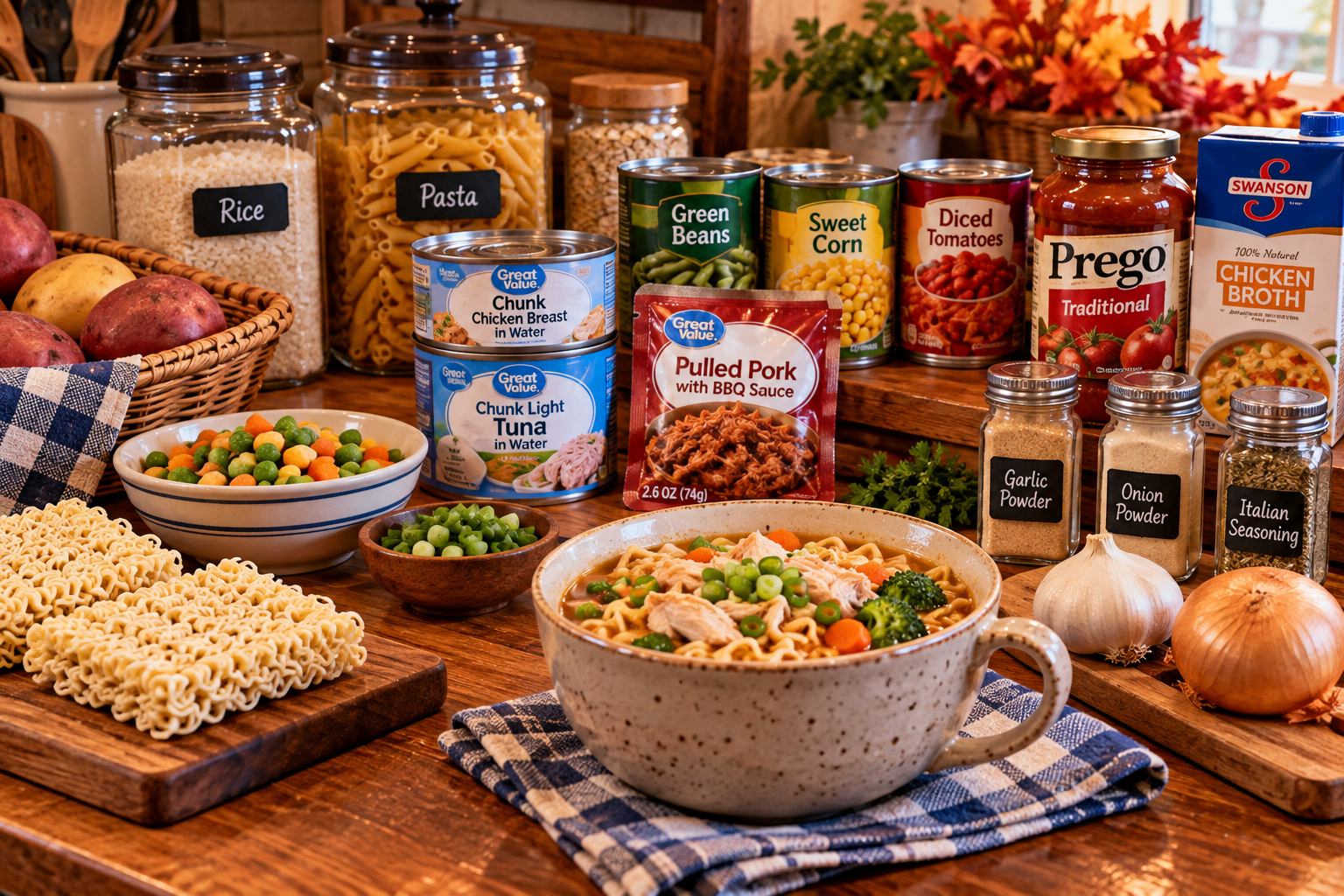
I recently spotted several options at Walmart, including small pouches of chicken and pulled pork, in addition to the tuna many of us already know.
These little packages have some practical advantages:
- Portion-friendly: A small pouch can provide protein for an individual meal without opening a larger container.
- Convenient: The meat is fully cooked and ready to use according to the package directions.
- Versatile: Depending on the variety, you can add the meat to sandwiches, wraps, salads, rice bowls, or quick skillet meals.
- Less leftover management: You can open only what you need for that meal.
Think about a few ways to use them.
Chicken: Stir it into rice with vegetables, add it to a small portion of pasta, or make a quick chicken salad sandwich.
Pulled pork: Serve it on a sandwich bun, add it to a baked potato, or warm it with a little barbecue sauce if that’s how you like your pulled pork.
Tuna: Make a small tuna salad, serve it with crackers, or mix it into a simple pasta dish.
These products can be particularly handy when you want to supplement a meal without cooking another portion of meat from scratch.
Check the package for serving size, sodium content, ingredients, and storage instructions. Once opened, refrigerate any unused portion promptly and follow the manufacturer’s directions.
As with any pantry staple, buy the varieties you enjoy and will actually use. Convenience is most valuable when it helps you prepare food you want to eat.
Give Ramen Noodles a Protein Boost
Here’s another use for those small protein pouches: dressing up a package of ramen noodles.
Ramen is inexpensive, cooks quickly, and can be a useful starting point for a simple meal. With a few additions, you can turn it into something more substantial.
Try adding:
- A small pouch of chicken or pulled pork
- A handful of frozen vegetables
- Sliced green onions, if you have them
- A little garlic, ginger, or another seasoning you enjoy
- An egg, if you want another source of protein and have one available
Cook the noodles according to the package directions, adding vegetables as appropriate for their cooking time. Stir in the fully cooked meat and heat it thoroughly. If you’re using the seasoning packet, taste the finished dish before adding extra salt or other salty seasonings.
You can also adjust the broth to your preference, using less of the seasoning packet or adding some unsalted broth if you want to moderate the sodium.
The combinations are flexible. Chicken with vegetables makes a simple chicken noodle bowl, while pulled pork can add a heartier flavor.
This is particularly useful when you want a quick lunch or supper for one. You don’t need to prepare a large recipe or open a family-sized package of meat to make your noodles more satisfying.
Ramen isn’t the only option, of course. The same small pouches can be added to rice, pasta, or other quick meals.
One thing to remember: compare the price per ounce with larger packages when shopping. The smaller portions can be convenient, but convenience doesn’t always mean the lowest cost.
Other Canned Proteins
Depending on your preferences, you might also keep canned beans or other shelf-stable protein foods.
The important thing is to consider how you’ll use them. A can of protein is most helpful when you already have a few meals in mind that call for it.
One practical reminder: canned foods have expiration or best-by information that should be considered alongside the condition of the container and the manufacturer’s guidance. Discard cans that are bulging, leaking, or badly damaged. Store unopened cans in a cool, dry place.
Canned Vegetables Make Easy Side Dishes
Vegetables are another useful pantry staple, particularly when you want to supplement a meal without preparing an entirely new recipe.
A can of green beans, corn, carrots, or peas can provide an extra side dish with very little effort.
Simply drain and heat the vegetables according to the directions, then season them as you prefer.
You might add a little butter, herbs, or another familiar seasoning. If the vegetable is already seasoned, taste it before adding anything else.
Canned vegetables can also become part of a larger dish.
For example:
- Corn can be added to a simple skillet meal.
- Green beans can supplement a dinner of chicken and potatoes.
- Carrots can add color and substance to soup.
- Peas can be stirred into rice or pasta dishes.
- Mixed vegetables can help turn leftover chicken into a quick casserole.
Choose vegetables your household enjoys. If you prefer frozen vegetables for certain dishes, keep those on hand instead.
The goal isn’t to fill every pantry shelf. It’s to have convenient options available when you need them.
Pasta and Rice: The Foundations of Many Meals
Pasta and rice are useful because they can accompany so many different foods.
They can serve as side dishes, become the base of a skillet supper, or help turn a small amount of meat into a more substantial meal.
Pasta
Keep a few shapes that work with your favorite sauces and recipes.
Spaghetti is useful for a quick pasta dinner. Short pasta shapes work well in casseroles, pasta salads, and skillet meals.
A jar of sauce, a can of chicken, and a handful of frozen vegetables can become a simple meal without much planning.
You don’t have to keep a dozen pasta shapes in the cupboard. Two or three that you regularly use may be plenty.
Rice
Rice pairs well with chicken, pork, fish, vegetables, and many sauces.
It can also help stretch a meal when you have a modest amount of protein available.
For example, a small portion of cooked chicken combined with rice and vegetables can make a satisfying skillet meal for two.
If you keep instant rice, it may be particularly convenient when time is short. Regular rice works just as well when you have time to cook it.
Choose whichever type fits your cooking habits.
Other Grains and Starches
Depending on your preferences, you might also keep barley, couscous, oats, or other grains and starches.
Barley is useful in soups, while oats can contribute to breakfast, baking, and homemade mixes.
Potatoes are worth considering, too, although they require different storage conditions from dry pantry goods. Keep them in a cool, dark, well-ventilated place rather than treating them like shelf-stable canned foods.
The best choices are the ones that fit the meals you enjoy.
Don’t Overlook Broth, Sauces, and Seasonings
Sometimes the difference between a collection of ingredients and a complete meal is what brings everything together.
Broth, sauces, and seasonings can help you turn basic pantry supplies into something flavorful.
Broth: Chicken or beef broth can become the starting point for soup, rice dishes, or simple skillet meals. Keep an eye on sodium levels if needed.
Pasta sauce: A jar of your favorite sauce can provide a quick foundation for pasta, meatballs, or a simple casserole.
Tomato products: Canned tomatoes and tomato sauce are useful for chili, soups, pasta dishes, and many one-pot meals. If you don’t care for tomato-based dishes, there’s no need to stock several cans.
Seasonings: Salt-free herb blends, garlic powder, onion powder, and other familiar seasonings can help you adjust a dish to your liking.
Cooking basics: Flour, cornstarch, and other ingredients you regularly use can help thicken sauces, prepare gravies, or complete a recipe.
These supplies don’t need to be complicated. A small selection of dependable ingredients can go a long way.
A Few Small Extras Can Make a Big Difference
Not every useful pantry item becomes the main part of a meal.
Some ingredients are valuable because they make a meal more complete or give you an easy alternative when the original plan changes.
Consider keeping a few of these, depending on your preferences:
- Crackers or crispbread
- Shelf-stable bread or crackers suitable for your household
- Pickles and other favorite condiments
- Canned fruit
- Ingredients for a simple dessert
- Nuts or seeds, if you enjoy them
- Shelf-stable milk or a milk alternative you regularly use
- Individual cups of vegetables or fruit, where practical
These items can be especially useful when you’re feeding an unexpected guest.
A bowl of canned fruit can finish a simple supper. Crackers can accompany soup. Pickles can add something familiar to a plate of sandwiches.
They may not seem particularly important when you’re making a shopping list, but they can be handy when you need a little something extra.
What About a Pantry for One or Two?
If you’re cooking for a small household, you may not need large packages of everything.
Consider your available storage space, how quickly you use particular foods, and how much money you want tied up in pantry supplies.
A practical pantry for one or two might include:
- Two or three favorite pasta shapes
- A package of rice
- A few cans of vegetables
- Several cans of a protein you enjoy
- A couple of jars of sauce
- Broth or soup ingredients
- Your usual baking and cooking supplies
- A few extras for snacks or simple desserts
You might also keep a few small protein pouches for quick meals when you don’t want to open a larger package of meat.
This is only a starting point, not a shopping list you must follow.
You might need more of some ingredients and none of others. If you cook with dehydrated vegetables or homemade soup mixes, those may take the place of some commercial products.
Use the storage space you have and build your pantry gradually.
Use What You Have Before Buying More
A well-stocked pantry isn’t necessarily a large pantry. It’s one where you know what’s available and use those supplies regularly.
Every so often, take a quick look at your shelves.
Are there cans you bought for a recipe you never made? Is there a package of pasta that has been sitting there for months? Do you have several jars of a sauce you no longer enjoy?
Make a point of using suitable foods while they’re still in good condition and within their recommended storage period.
You can also plan a meal around an ingredient you already have rather than buying something new.
A can of chicken might become a casserole. Rice and broth could become the foundation for a simple skillet meal. A few cans of vegetables might help you prepare soup. A small pouch of pulled pork could become a sandwich or a quick ramen bowl.
This is one way pantry planning can support a grocery budget: you make better use of what you’ve already purchased.
A Pantry That Works for Real Life
I like the idea of a pantry that quietly supports everyday life.
It doesn’t have to be impressive. It doesn’t need to be filled with ingredients you saw in somebody else’s kitchen. And it doesn’t need to be stocked all at once.
It simply needs to work for you.
When you have a few dependable ingredients available, you have more choices. You can prepare supper when fresh ingredients are limited, supplement a meal when company arrives, or use up something from the refrigerator before it goes to waste.
That’s the kind of practical flexibility we’ve been talking about this week.
My mom worked with the food she had and added to a meal when she needed to feed more people. Today, a well-planned pantry can help us do much the same thing.
The best pantry isn’t the one with the most food. It’s the one that helps you make good meals with what you have.
And sometimes, a few cans or a little pouch of ready-to-eat protein can save the day.
Discover more from Simple, Practical Meals for Real Life
Subscribe to get the latest posts sent to your email.
