Posted in Skillet Meals

Garden Vegetable Pasta Toss

Introduction

Sometimes the refrigerator doesn’t need another shopping trip.

It needs a little attention.

A zucchini that’s been waiting patiently in the vegetable drawer. A handful of mushrooms. Some green beans. A carrot or two. Maybe a little spinach that’s getting close to the end of its useful life.

That’s where Garden Vegetable Pasta Toss comes in.

This isn’t a recipe that requires you to have exactly the right vegetables. It’s a framework for turning the vegetables you already have into a simple pasta dinner.

The vegetables are sautéed until tender-crisp, tossed with pasta and a light garlic-herb sauce, and finished with Parmesan and fresh herbs.

It’s colorful, satisfying, inexpensive, and — perhaps most importantly — flexible.

Because sometimes the best ingredient in the kitchen is the one you already bought.

Why You’ll Love This Recipe

  • It’s a refrigerator-cleanout meal without feeling like one.
  • You can use almost any combination of vegetables.
  • It’s inexpensive and naturally meatless.
  • One pot of pasta and one skillet handle most of the work.
  • It can be served warm or at room temperature.
  • It’s easy to scale for one or two people.
  • The vegetables can be prepped ahead, making tomorrow’s dinner easier.
simplegoodfood's avatarsimplegoodfood

Garden Vegetable Pasta Toss

This isn't a recipe that requires you to have exactly the right vegetables. It's a framework for turning the vegetables you already have into a simple pasta dinner.
Prep Time 15 minutes
Cook Time 15 minutes
Total Time 30 minutes
Servings: 4
Course: Dinner, Lunch, Main Course
Cuisine: American
Calories: 390

Ingredients
  

  • 8 ounces pasta such as penne, rotini, or bow ties
  • 1 tablespoon olive oil
  • 1 small onion diced
  • 2 medium carrots thinly sliced
  • 1 cup sliced mushrooms
  • 1 cup green beans cut into bite-sized pieces
  • 1 medium zucchini diced
  • 2 cloves garlic minced
  • ½ teaspoon dried basil
  • ½ teaspoon dried parsley
  • ¼ teaspoon dried thyme
  • ½ teaspoon salt or to taste
  • ¼ teaspoon black pepper
  • ½ cup low-sodium vegetable broth
  • 1 tablespoon lemon juice
  • ¼ cup grated Parmesan cheese
  • 2 tablespoons chopped fresh parsley
Optional Additions
  • 1 cup fresh spinach
  • ½ cup frozen peas
  • leftover cooked corn
  • chopped bell pepper
  • roasted vegetables
  • cherry tomatoes
  • cooked chicken or turkey

Method
 

Cook the Pasta
  1. Bring a large pot of salted water to a boil.
  2. Cook the pasta according to the package directions until just tender.
  3. Before draining, reserve ½ cup of the pasta water.
  4. Drain the pasta and set aside.
Start With the Firm Vegetables
  1. While the pasta cooks, heat the olive oil in a large skillet over medium heat.
  2. Add the onion and carrots.
  3. Cook for 3–4 minutes, stirring occasionally.
  4. Add the green beans and mushrooms.
  5. Continue cooking for another 3–4 minutes.
Add the Quick-Cooking Vegetables
  1. Add the zucchini.
  2. Cook for 2–3 minutes, stirring occasionally.
  3. The vegetables should be tender but still have some texture.
  4. If you’re using bell peppers, peas, or other vegetables, add them according to how quickly they cook.
Add the Garlic and Herbs
  1. Add the garlic, basil, parsley, thyme, salt, and black pepper.
  2. Cook for about 30 seconds, just until fragrant.
Make the Light Sauce
  1. Pour the vegetable broth into the skillet.
  2. Add the lemon juice.
  3. Stir and allow the mixture to simmer for 1–2 minutes.
  4. The broth isn’t supposed to make a heavy sauce. It’s simply there to bring the flavors together and give the pasta a little moisture.
Toss Everything Together
  1. Add the drained pasta to the skillet.
  2. Toss gently until the pasta is coated with the vegetables and pan juices.
  3. If the mixture seems dry, add a tablespoon or two of the reserved pasta water.
  4. Continue tossing until everything is heated through.
Finish the Pasta
  1. Remove the skillet from the heat.
  2. Add the Parmesan cheese and fresh parsley.
  3. Toss again.
  4. Taste and adjust the seasoning.
  5. Serve warm.

🌿 Kitchen Confidence: Cook Vegetables in the Right Order

One of the easiest ways to improve a vegetable pasta dish is to stop treating every vegetable the same.

Some vegetables need more time.

Some need almost none.

For this recipe:

Carrots and onions go in first.

Green beans and mushrooms come next.

Zucchini goes in toward the end.

Spinach only needs a minute or two.

That simple change means you can have vegetables that are cooked through without turning everything into one soft, indistinguishable mixture.

And that matters.

Good vegetable dishes should still taste like vegetables.

The Refrigerator-Cleanout Rule

The beauty of this recipe is that you don’t need all five vegetables listed above.

Think of the recipe as a starting point.

You need:

Pasta + vegetables + a little liquid + seasoning.

That’s the basic formula.

If you have zucchini but no green beans, use zucchini.

If the mushrooms need to be used, add them.

If you’ve got leftover cooked broccoli, toss it in near the end.

If you have spinach that needs attention, add it just before the pasta.

The goal isn’t to make the vegetables match the recipe.

The goal is to make the recipe work for the vegetables you have.

Cook Today, Make Tomorrow Easier

This recipe can also become a small meal-prep project without really feeling like one.

If you’re already washing and chopping vegetables for dinner, chop a little extra.

If you’re already cooking pasta, make enough for another meal.

Store the extra cooked vegetables separately or refrigerate the finished pasta for another day.

You can even prepare a container of sautéed vegetables and freeze them as a meal starter for a future pasta dish, soup, or skillet meal.

That’s the whole philosophy we’ve been working with this week:

Do a little more while you’re already in the kitchen.

Make It Your Own

Add Protein

If you want a heartier meal, add:

  • leftover cooked chicken
  • turkey
  • cooked shrimp
  • white beans
  • chickpeas

Change the Pasta

Almost any medium-sized pasta works.

Try:

  • rotini
  • penne
  • bow ties
  • shells
  • whole-wheat pasta
  • chickpea pasta

Change the Flavor

For an Italian-style version, add extra basil and Parmesan.

For a brighter summer version, add more lemon and fresh parsley.

For a heartier fall version, try roasted carrots, mushrooms, and spinach.

The basic method stays the same.

Storage

Store leftovers in a covered container in the refrigerator.

Use within 3–4 days.

When reheating, add a splash of water or vegetable broth if the pasta has dried out.

For best texture, gently reheat in a skillet rather than overheating it in the microwave.

Posted in Skillet Meals

Beef Fried Rice

Introduction

Fried rice is one of those meals that can make you feel like you planned ahead even when you really didn’t.

A little cooked beef left from another meal. Some rice in the refrigerator. A few vegetables that need to be used.

Suddenly, dinner is handled.

This Beef Fried Rice is intentionally flexible. It’s a great way to use leftover cooked beef and rice, along with whatever vegetables are hanging around the refrigerator.

And that’s exactly what makes it such a good fit for Cooking Today, Planning for Tomorrow.

The beef doesn’t have to come from one particular recipe. Leftover beef from a skillet, rice bowl, roast, or meal-prep session can all find a second life here.

It’s not really leftovers anymore.

It’s dinner.

Why You’ll Love This Recipe

  • It’s ready in about 25 minutes.
  • Leftover cooked beef does the heavy lifting.
  • Day-old rice works beautifully.
  • It’s an excellent refrigerator clean-out meal.
  • The seasoning is savory without being overly spicy.
  • You can easily make two servings instead of four.
  • It’s perfect for an electric skillet or regular skillet at the campground.
simplegoodfood's avatarsimplegoodfood

Beef Fried Rice

Fried rice is one of those meals that can make you feel like you planned ahead even when you really didn't.
Prep Time 10 minutes
Cook Time 15 minutes
Total Time 25 minutes
Servings: 4
Course: Dinner, Lunch, Main Course
Cuisine: American
Calories: 500

Ingredients
  

  • 2 cups cooked lean beef chopped into small pieces
  • 3 cups cold cooked rice
  • 1 tablespoon olive oil
  • 1 small onion diced
  • 1 medium carrot finely diced
  • 1 cup frozen peas and carrots
  • ½ cup chopped green beans optional
  • 2 cloves garlic minced
  • 2 large eggs lightly beaten
  • 2 tablespoons low-sodium soy sauce
  • 1 tablespoon Worcestershire sauce
  • ½ teaspoon sesame oil
  • ¼ teaspoon black pepper
  • 2 green onions sliced
Optional Additions
  • mushrooms
  • zucchini
  • corn
  • leftover cooked broccoli
  • spinach
  • a small amount of shredded cabbage

Method
 

Get Everything Ready First
  1. Fried rice moves quickly once you start cooking. Have your beef chopped, rice separated, vegetables prepared, eggs beaten, and seasonings measured before you heat the skillet.
  2. If your rice is stuck together in the refrigerator, break it apart with your fingers or a fork before adding it to the skillet.
Cook the Vegetables
  1. Heat a large skillet or electric skillet over medium-high heat. Add the olive oil. Add the onion and carrot and cook for 2–3 minutes.
  2. Add the frozen peas and carrots and optional green beans. Cook for another 2–3 minutes, until the vegetables are hot and beginning to soften.
Add the Garlic and Beef
  1. Add the garlic and cook for about 30 seconds. Add the chopped cooked beef.
  2. Stir everything together and cook for 2–3 minutes, allowing the beef to warm through and pick up some of the flavor from the skillet.
Add the Rice
  1. Add the cold cooked rice. Spread it across the skillet and let it cook undisturbed for about 1 minute. Then stir and continue cooking for another 3–4 minutes. This little bit of contact with the hot skillet helps the rice develop the texture we’re looking for.
Make Room for the Eggs
  1. Push the beef, rice, and vegetables toward one side of the skillet. Pour the beaten eggs into the empty space. Cook, stirring gently, until the eggs are mostly set. Then stir them into the rice mixture.
Season the Fried Rice
  1. Add the soy sauce, Worcestershire sauce, sesame oil, and black pepper. Stir thoroughly so the seasonings are distributed throughout the rice. Cook for another 1–2 minutes.
  2. Taste and add a little more soy sauce if needed.
Finish and Serve
  1. Remove from the heat.
  2. Stir in the sliced green onions.
  3. Serve immediately.

Cook Today, Make Tomorrow Easier

This recipe is practically the definition of the week’s theme.

When you’re making rice for another meal, cook extra.

When you’re cooking beef, save a portion.

When you have vegetables that need to be used, put them aside.

Then later:

Rice + beef + vegetables = fried rice.

You don’t need to plan a special meal-prep session.

You simply made a few ingredients available for the next meal.

Make It Your Own

Change the Protein

Although we’re using beef here, the same method works with:

  • cooked chicken
  • pork
  • turkey
  • cooked sausage

Change the Vegetables

This is where fried rice really earns its refrigerator-cleanout reputation.

Use what you have.

Try:

  • cabbage
  • mushrooms
  • zucchini
  • corn
  • broccoli
  • spinach
  • green beans

Just remember that vegetables with a lot of moisture may need a little extra cooking time before the rice goes in.

Keep the Seasoning Mild

If you’re not a fan of spicy foods, there’s no reason to add hot sauce or chili peppers.

The combination of soy sauce, Worcestershire sauce, garlic, and a tiny amount of sesame oil gives the dish plenty of flavor without heat.

Storage

Refrigerate leftovers promptly in a shallow, covered container.

Use within 3–4 days.

Reheat thoroughly in a skillet or microwave.

Because this recipe contains cooked rice, it’s especially important to cool and refrigerate leftovers promptly rather than leaving the finished fried rice sitting at room temperature.

Posted in Recipe Roundup

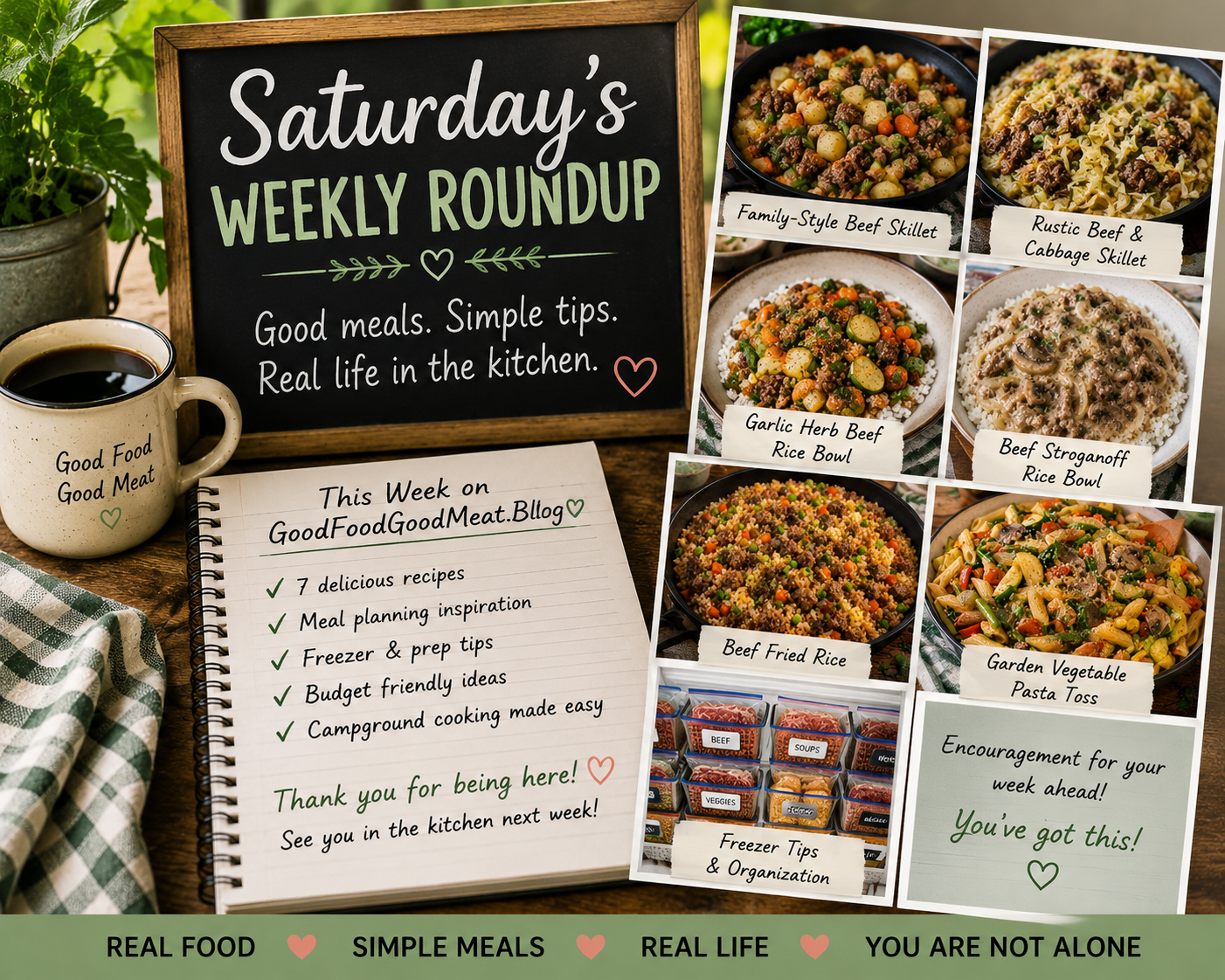
Cooking Today, Planning for Tomorrow: A Week of Practical Meal Prep

Sometimes saving money in the kitchen doesn’t require a complicated meal plan or an entire Sunday spent preparing food.

Sometimes it simply means thinking one meal ahead.

This week on Good Food Good Meat, we’re taking that idea into the kitchen with simple recipes, practical meal-prep strategies, and a little freezer organization.

The goal isn’t to cook everything in advance.

It’s to make a few smart choices while you’re already cooking so that tomorrow’s meal — or next week’s meal — is just a little easier.

That can mean cooking extra ground beef.

Chopping an extra onion.

Making enough rice for another meal.

Freezing a meal starter before it gets forgotten in the refrigerator.

Or organizing your freezer so you can actually find the food you’ve already bought.

That’s Cooking Today, Planning for Tomorrow.


🥘 Start With One Skillet

Family-Style Beef & Vegetable Skillet

We started the week with a simple idea:

Cook a little extra while you’re already cooking.

Our Family-Style Beef & Vegetable Skillet combines lean ground beef with carrots, mushrooms, zucchini, green beans, and onions in a simple savory sauce.

It’s a complete meal on its own, but the real beauty is what happens when you intentionally save a portion.

That extra beef and vegetable mixture can become the starting point for another meal later in the week.

The lesson: Meal prep doesn’t have to mean making a week’s worth of dinners. Sometimes it’s simply making enough for tomorrow.


🥬 Put Cabbage to Work

Rustic Beef & Cabbage Skillet

Cabbage is one of those wonderfully practical vegetables that can stretch a meal without stretching the grocery budget.

This rustic skillet combines ground beef with cabbage, carrots, and onions for a hearty meal that’s simple, inexpensive, and easy to adapt.

And because cabbage keeps well, it’s especially useful when you’re trying to make the most of the produce you’ve already purchased.

Kitchen confidence: Learn how to cook cabbage until it’s tender without turning it into mush.

The lesson: Inexpensive ingredients can still make satisfying meals when you know how to use them.


🥣 Build a Better Rice Bowl

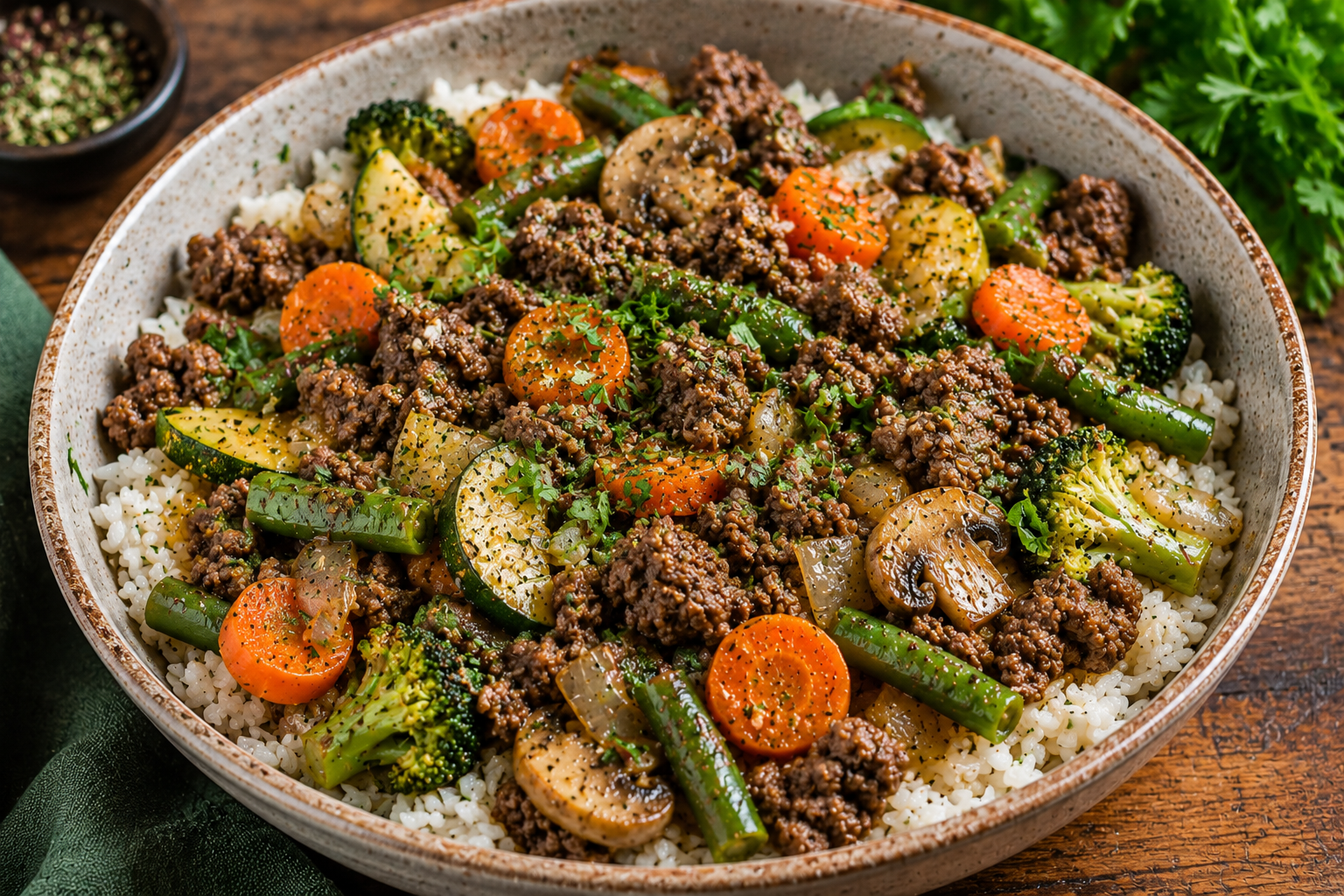
Garlic Herb Beef & Garden Vegetable Rice Bowl

Rice bowls are one of my favorite ways to make a small amount of protein stretch.

This one takes a completely different flavor direction from the other beef recipes this week.

Instead of a spicy sauce or heavily seasoned mixture, we’re using garlic, herbs, beef, rice, and a colorful collection of garden vegetables.

Carrots, green beans, zucchini, mushrooms, and onions make this a bowl that’s full of texture and color.

And because the beef and vegetables can be prepared ahead, you can make the components today and assemble the bowl when you’re ready to eat.

The lesson: Meal prep doesn’t mean every component has to be finished at the same time.


❄️ Build a Freezer Meal Kit

How to Build a Better Freezer Meal Kit

Wednesday took us from cooking today’s dinner to preparing for a future one.

A freezer meal kit doesn’t have to be a complete frozen dinner.

Sometimes the most useful thing to freeze is simply:

  • cooked meat
  • prepared vegetables
  • a sauce or seasoning
  • a label
  • a plan for what you’ll add later

That small package can become a skillet, rice bowl, soup, pasta dish, or another meal entirely.

For smaller households, this can be especially useful because you’re not filling the freezer with six identical meals.

You’re creating flexible meal starters.

The lesson: Freeze components when they’re fresh, and let tomorrow’s meal come together faster.


🍄 Give Stroganoff a Bowl Makeover

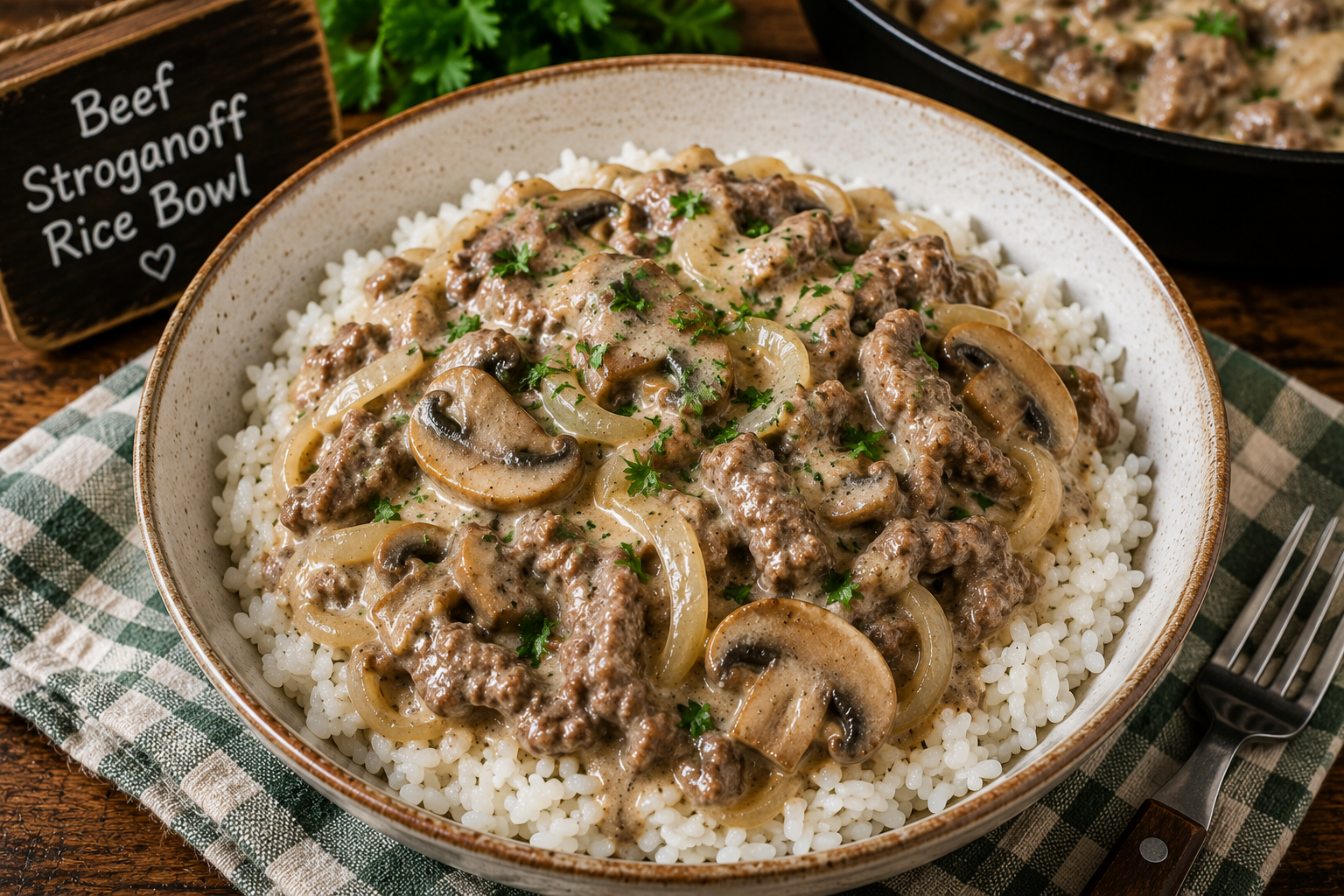
Beef Stroganoff Rice Bowl

Thursday brought us another rice bowl, but this one couldn’t be more different.

Savory beef and mushrooms are combined with onions and a light creamy sauce, then served over rice instead of the traditional noodles.

It’s familiar comfort food with a little flexibility built in.

And once again, the beef and mushroom mixture can be prepared ahead, refrigerated for the next few days, or frozen as a future meal starter.

The lesson: The same basic ingredients can take you in completely different directions when you change the flavor profile and the way you serve them.


❄️ Friday at the Farmhouse

How to Label and Organize Your Freezer

This week’s Friday post might be the most practical one of all.

And it started with a simple problem:

The ribs were at the bottom of the chest freezer.

Instead of continuing to dig through a 7-cubic-foot freezer every time something was buried underneath everything else, I bought baskets designed to fit the freezer.

Eight baskets later, the food was much easier to find.

But something else happened, too.

The baskets became a way to organize the freezer around the way I actually cooked.

Proteins could go together.

Vegetables could go together.

Meal starters could have their own space.

And when I was planning meals for an entire month, I could look at what I had and make sure I wasn’t accidentally serving the same kind of meal on the same day every week.

That turned freezer organization into something much more useful:

a meal-planning tool.

The freezer wasn’t telling me what to cook.

It was giving me enough visibility to make better choices.


🍚 Saturday Bonus Recipes

We’ve spent the week learning how to make today’s cooking work a little harder.

So let’s finish by putting those ideas into practice.

Beef Fried Rice

Have leftover cooked beef?

Have some rice in the refrigerator?

Add whatever vegetables need to be used and turn them into a completely different meal.

That’s exactly what we’re looking for when we talk about cook once, enjoy more than once.

The beef doesn’t have to taste like the meal it came from.

A few changes in seasoning and preparation can make leftovers feel like a new dinner.


Garden Vegetable Pasta Toss

And then there’s the ultimate “use what you’ve got” meal.

Garden Vegetable Pasta Toss is designed to be flexible.

Whatever vegetables are hanging around in the refrigerator can become part of dinner.

A little zucchini.

Some mushrooms.

Green beans.

Carrots.

Spinach.

Even leftover cooked vegetables from another meal.

Add pasta and a simple sauce, and you’ve got dinner instead of a collection of vegetables that might otherwise be forgotten.

The lesson: Before you shop for another ingredient, take a look at what needs to be used first.


The Bigger Idea: Small Steps Add Up

None of these ideas requires an entire day of meal preparation.

You can:

Cook extra beef.

Make extra rice.

Chop an extra onion.

Save a portion before it becomes an oversized pile of leftovers.

Freeze food while it’s still fresh.

Label what you freeze.

Organize your freezer so you can actually find it.

Those little decisions don’t look like much individually.

But together, they can change the way you cook.

Instead of starting every meal from zero, you begin to build a small collection of ingredients and meal starters that make future cooking easier.

And that’s especially valuable when you’re cooking for one or two people, cooking at a campground, working with limited refrigerator space, or simply trying to stretch the grocery budget a little further.


Cook Today. Make Tomorrow Easier.

That’s really what this week has been about.

Not elaborate meal prep.

Not spending your Sunday filling thirty freezer containers.

Not eating the same leftovers all week.

Just paying attention to the opportunities that naturally happen while you’re already in the kitchen.

Because sometimes the smartest meal you can cook today isn’t just the one you’re eating tonight.

It’s the one you quietly made easier for tomorrow. 🌿

Family-Style Beef & Vegetable Skillet
There is something wonderfully practical about cooking a little more than you need.
Check out this recipe
Rustic Beef & Cabbage Skillet
This Rustic Beef & Cabbage Skillet keeps things simple: browned ground beef, plenty of cabbage, onions, carrots, and a handful of familiar seasonings.
Check out this recipe
Beef Fried Rice
Fried rice is one of those meals that can make you feel like you planned ahead even when you really didn't.
Check out this recipe
How to Build a Better Freezer Meal Kit
Check out this recipe
Beef Stroganoff Rice Bowl
Love beef stroganoff but want something a little different?
Check out this recipe
How to Label and Organize Your Freezer
Check out this recipe
Beef Fried Rice
Fried rice is one of those meals that can make you feel like you planned ahead even when you really didn't.
Check out this recipe
Garden Vegetable Pasta Toss
This isn't a recipe that requires you to have exactly the right vegetables. It's a framework for turning the vegetables you already have into a simple pasta dinner.
Check out this recipe
Posted in Rice Bowls

Beef Stroganoff Rice Bowl

Introduction

Beef stroganoff has always been one of those wonderfully comforting meals that doesn’t need to be complicated.

Tender beef, mushrooms, onions, and a creamy sauce are a pretty hard combination to argue with.

For this Beef Stroganoff Rice Bowl, we’re taking that familiar flavor combination and giving it a little more flexibility. Instead of serving the beef and mushroom sauce over noodles, we’re spooning it over rice.

That makes this version especially useful for the Cooking Today, Planning for Tomorrow theme. Cooked rice can be prepared ahead, and the beef and mushroom mixture can be made separately and refrigerated or frozen for another meal.

It’s familiar comfort food with a practical little twist.

Why You’ll Love This Recipe

  • All the familiar stroganoff flavors without a complicated recipe.
  • Rice makes an inexpensive, flexible base.
  • Mushrooms add savory flavor and bulk without requiring more meat.
  • The creamy sauce is light enough to keep the bowl from feeling heavy.
  • It reheats well, making it useful for meal prep.
  • The beef mixture can be used as a freezer meal starter.
  • It’s easy to make in a regular skillet or electric skillet at the campground.

🥣 Build Your Bowl

Base

Cooked rice

White or brown rice both work beautifully. Use leftover rice when you have it, or prepare a fresh batch.

Protein

Savory ground beef

Lean ground beef is browned with onions and seasoned simply so it complements the mushroom sauce.

Vegetables

Mushrooms and onions

The mushrooms provide that classic stroganoff flavor while onions add sweetness and depth.

Sauce

Light Creamy Mushroom Sauce

A combination of low-sodium beef broth, Greek yogurt, and a small amount of flour creates a creamy sauce without needing a heavy amount of cream.

Fresh Finish

Fresh parsley

A little chopped parsley adds color and freshness to an otherwise rich-looking dish.

Optional Toppings

  • sliced green onions
  • a sprinkle of Parmesan
  • freshly cracked black pepper
  • additional sautéed mushrooms

Make It Your Own

Want more vegetables? Add finely chopped spinach, peas, or green beans to the beef and mushroom mixture.

Have leftover beef from earlier in the week? Use it here instead of starting with raw ground beef.

Prefer noodles? You can absolutely serve the stroganoff mixture over egg noodles. But the rice bowl version gives us a nice change of pace.

simplegoodfood's avatarsimplegoodfood

Beef Stroganoff Rice Bowl

Love beef stroganoff but want something a little different?
Prep Time 10 minutes
Cook Time 20 minutes
Total Time 30 minutes
Servings: 4
Course: Dinner, Lunch, Main Course
Cuisine: American
Calories: 510

Ingredients
  

For the Beef & Mushroom Mixture
  • 1 pound lean ground beef
  • 1 tablespoon olive oil
  • 1 small onion diced
  • 8 ounces mushrooms sliced
  • 2 cloves garlic minced
  • 1 teaspoon dried parsley
  • ½ teaspoon dried thyme
  • ½ teaspoon paprika
  • ½ teaspoon salt or to taste
  • ¼ teaspoon black pepper
For the Sauce
  • 1 tablespoon all-purpose flour
  • 1 cup low-sodium beef broth
  • 1 tablespoon Worcestershire sauce
  • ½ cup plain Greek yogurt
  • 1 teaspoon Dijon mustard
For Serving
  • 3 cups cooked rice
  • 2 tablespoons fresh parsley chopped

Method
 

Brown the Beef
  1. Heat a large skillet over medium-high heat.
  2. Add the ground beef and cook for 5–7 minutes, breaking it into small crumbles as it browns.
  3. Once the beef is cooked through, transfer it to a bowl and drain excess fat if necessary.
Cook the Mushrooms and Onion
  1. Reduce the heat to medium.
  2. Add the olive oil to the skillet.
  3. Add the onion and mushrooms.
  4. Cook for 5–7 minutes, stirring occasionally, until the onion softens and the mushrooms have released their moisture and begun to brown.
  5. Don’t rush this step. Allowing the mushrooms to actually brown gives the finished stroganoff much more flavor.
Add the Garlic and Seasonings
  1. Return the beef to the skillet.
  2. Add the garlic, parsley, thyme, paprika, salt, and black pepper.
  3. Cook for about 30 seconds, stirring constantly.
Make the Sauce
  1. Sprinkle the flour over the beef and mushroom mixture.
  2. Stir well and cook for about 1 minute.
  3. Gradually pour in the beef broth while stirring to prevent lumps.
  4. Add the Worcestershire sauce and Dijon mustard.
  5. Bring the mixture to a gentle simmer.
  6. Cook for 2–3 minutes, stirring occasionally, until the sauce thickens slightly.
Add the Greek Yogurt
  1. Remove the skillet from the heat.
  2. Let it cool for about a minute, then stir in the Greek yogurt.
  3. Don’t boil the sauce after adding the yogurt.
  4. This keeps the sauce creamy and helps prevent the yogurt from separating.
  5. Taste and adjust the seasoning.
Build the Bowls
  1. Divide the cooked rice among four bowls.
  2. Spoon the beef and mushroom stroganoff over the rice.
  3. Finish with fresh parsley.
  4. Serve warm.

Notes

🍄 Kitchen Confidence: Don’t Crowd Your Mushrooms
Mushrooms contain a surprising amount of water.
If you pack too many into a crowded skillet, they’ll release that water and essentially steam themselves.
For nicely browned mushrooms:
  • Use a large skillet.
  • Give them room to spread out.
  • Don’t stir constantly.
  • Let the moisture cook away before adding the sauce.
You’re looking for mushrooms that are golden around the edges and deeply savory, not pale and watery.
That one little technique makes a big difference in this dish.

Cooking Today, Planning for Tomorrow

This recipe is another opportunity to separate the components.

For tonight:

Build the bowls with hot rice and fresh parsley.

For tomorrow:

Store the beef stroganoff mixture separately and make fresh rice when you’re ready to eat.

For later:

Freeze the cooled beef and mushroom mixture in meal-sized portions.

Label it:

Beef Stroganoff — Add Rice
Prepared: 8/27/26

Then you’ve got the foundation of another dinner waiting for you.

This is exactly what we mean by a freezer meal kit that isn’t a complete frozen dinner.

Storage

Store the beef stroganoff mixture and rice separately in covered containers.

Refrigerate leftovers and use within 3–4 days.

For longer storage, freeze the beef and mushroom mixture separately from the rice.

When reheating, warm the stroganoff gently. Avoid bringing the yogurt-based sauce to a hard boil.

If the sauce has thickened too much in the refrigerator, add a tablespoon or two of beef broth or water while reheating.

Posted in Rice Bowls

Garlic Herb Beef & Garden Vegetable Rice Bowl

Introduction

A rice bowl doesn’t need a complicated sauce or a long list of ingredients to be satisfying.

Sometimes the best combination is simply seasoned beef, tender-crisp vegetables, fluffy rice, and a handful of fresh herbs.

This Garlic Herb Beef & Garden Vegetable Rice Bowl is built around that idea. Lean ground beef is seasoned with garlic, parsley, thyme, and a touch of lemon, then paired with carrots, green beans, zucchini, mushrooms, and onions.

The result is a simple, savory bowl with a little bit of everything — protein, vegetables, and rice — without leaning heavily in any one culinary direction.

And because we’re cooking with tomorrow in mind, the beef and vegetable mixture can be prepared ahead and refrigerated, making assembly of another bowl almost ridiculously easy.

Why You’ll Love This Recipe

  • It’s a complete meal in one bowl.
  • Five different vegetables give it plenty of color and texture.
  • Garlic and herbs provide flavor without heat.
  • It’s an excellent use for leftover cooked beef.
  • The components can be prepared ahead.
  • It’s easy to scale down for one or two people.
  • It works beautifully in an electric skillet or regular skillet.

🥣 Build Your Bowl

Base

Cooked rice

White or brown rice both work. Use whatever you already have cooked, or make a batch specifically for the week’s meals.

Protein

Garlic herb ground beef

Lean ground beef seasoned with garlic, parsley, thyme, and a little Worcestershire sauce.

Vegetables

  • Carrots
  • Green beans
  • Zucchini
  • Mushrooms
  • Onions

The vegetables are cooked until tender but still retain some texture.

Sauce

Garlic Herb Pan Sauce

A simple combination of beef broth, Worcestershire sauce, garlic, herbs, and lemon gives the bowl just enough moisture without drowning everything in sauce.

Fresh Finish

Fresh parsley and a squeeze of lemon

That little bit of freshness makes a surprisingly big difference.

Optional Toppings

  • sliced green onions
  • grated Parmesan
  • toasted sunflower seeds
  • additional fresh parsley

Make It Your Own

This is a great refrigerator-cleanout bowl.

Use whatever vegetables need to be cooked first. Bell peppers, broccoli, cabbage, spinach, peas, or leftover roasted vegetables can all step in for some of the vegetables listed here.

The important part is keeping the seasoning simple enough that the vegetables remain the stars.

simplegoodfood's avatarsimplegoodfood

Garlic Herb Beef & Garden Vegetable Rice Bowl

A rice bowl doesn't need a complicated sauce or a long list of ingredients to be satisfying.
Prep Time 15 minutes
Cook Time 20 minutes
Total Time 35 minutes
Servings: 4
Course: Dinner, Lunch, Main Course
Cuisine: American
Calories: 515

Ingredients
  

  • 1 pound lean ground beef
  • 1 tablespoon olive oil
  • 1 small onion diced
  • 2 medium carrots thinly sliced
  • 1 cup sliced mushrooms
  • 1 cup green beans cut into bite-sized pieces
  • 1 medium zucchini diced
  • 2 cloves garlic minced
  • 1 teaspoon dried parsley
  • 1 teaspoon dried thyme
  • ½ teaspoon paprika
  • ½ teaspoon salt or to taste
  • ¼ teaspoon black pepper
For the Pan Sauce
  • ½ cup low-sodium beef broth
  • 1 tablespoon Worcestershire sauce
  • 1 teaspoon lemon juice
  • 1 teaspoon cornstarch
  • 1 tablespoon cold water
For Serving
  • 3 cups cooked rice
  • 2 tablespoons chopped fresh parsley
  • lemon wedges optional

Method
 

  1. Cook the Rice Prepare the rice according to package directions. While it cooks, prepare the beef and vegetables. If you’re using leftover cooked rice, simply set it aside until the beef and vegetables are ready.
  2. Brown the Beef Heat a large skillet over medium-high heat. Add the ground beef and cook for 5–7 minutes, breaking it into crumbles as it browns. Once cooked through, transfer the beef to a bowl and drain excess fat if necessary.
  3. Cook the Vegetables Reduce the skillet heat to medium and add the olive oil. Add the onion and carrots. Cook for 3–4 minutes, then add the mushrooms and green beans. Cook another 3–4 minutes. Add the zucchini and cook for 2–3 minutes more. The goal is tender-crisp vegetables, not vegetables cooked until soft.
  4. Add the Garlic and Herbs Return the beef to the skillet. Add the garlic, parsley, thyme, paprika, salt, and black pepper. Stir everything together and cook for about 30 seconds.
  5. Make the Pan Sauce Whisk together the beef broth, Worcestershire sauce, and lemon juice. Pour into the skillet and stir. In a small bowl, mix the cornstarch with the cold water until smooth. Add it to the skillet and stir gently. Cook for 1–2 minutes, until the liquid becomes a light sauce that coats the beef and vegetables.
Build the Bowls
  1. Divide the cooked rice among four bowls. Top with the garlic herb beef and vegetables. Finish with fresh parsley and a squeeze of lemon.
Serve immediately.

    🌿 Kitchen Confidence: Don’t Overcook Your Bowl Vegetables

    One of the easiest ways to make a rice bowl disappointing is to cook every vegetable for the same amount of time.

    They don’t all need it.

    Carrots and green beans need a little head start.

    Mushrooms and onions can go in next.

    Zucchini cooks quickly and should go in toward the end.

    That simple timing keeps the finished bowl colorful and gives each vegetable a little texture.

    Cook Today, Make Tomorrow Easier

    This recipe is particularly useful for the week’s meal-prep theme because you don’t have to assemble all four bowls at once.

    Instead:

    Tonight: Make the beef and vegetables and serve them over rice.

    Tomorrow: Reheat one portion and serve over freshly cooked rice.

    Later in the week: Use the beef-and-vegetable mixture as the starting point for another meal.

    You can also freeze the beef and vegetable mixture separately from the rice for easier future meals.

    Storage

    Store the cooked beef and vegetables and cooked rice in separate covered containers in the refrigerator.

    Use refrigerated leftovers within 3–4 days.

    For longer storage, freeze the beef and vegetable mixture separately from the rice for best texture.

    Reheat until heated through.

    Posted in Skillet Meals

    Rustic Beef & Cabbage Skillet

    Cabbage is one of those vegetables that doesn’t get nearly enough credit.

    It’s inexpensive, keeps well in the refrigerator, and can turn a small amount of meat into a satisfying meal. The trick is knowing how to cook it without reducing it to a pile of mush.

    This Rustic Beef & Cabbage Skillet keeps things simple: browned ground beef, plenty of cabbage, onions, carrots, and a handful of familiar seasonings. Everything cooks together in one skillet until the cabbage is tender but still has enough texture to make the dish interesting.

    It’s the kind of meal that feels old-fashioned in the best possible way — hearty, economical, and uncomplicated.

    And because we’re talking about Cooking Today, Planning for Tomorrow, you can easily cook an extra portion or two to use later in the week.

    Why You’ll Love This Recipe

    • Cabbage does a lot of work for very little money.
    • One skillet keeps cleanup easy.
    • The flavors are mild and familiar, rather than heavily spiced.
    • Ground beef makes it filling and protein-rich.
    • It reheats well, making it a natural make-ahead meal.
    • The vegetables can be adjusted according to what’s already in your refrigerator.
    • It works equally well on a stovetop or in an electric skillet at the campground.

    🥬 Kitchen Confidence: How to Cook Cabbage Without Making It Mushy

    The secret is simple: don’t drown it.

    Cabbage naturally releases quite a bit of water as it cooks. Adding a lot of liquid at the beginning can turn a skillet meal into boiled cabbage.

    Instead:

    1. Cut the cabbage into bite-sized pieces. Thin ribbons cook quickly; slightly wider pieces give you more texture.
    2. Cook the cabbage in stages. Give the firmer vegetables a head start.
    3. Let the cabbage have contact with the skillet. A little browning adds wonderful flavor.
    4. Don’t cover the pan for the entire cooking time. Trapped steam makes cabbage soften much faster.
    5. Stop cooking when it’s tender-crisp. It will continue softening slightly from the residual heat.

    You want cabbage that’s tender enough to eat easily but still has a little bite.

    simplegoodfood's avatarsimplegoodfood

    Rustic Beef & Cabbage Skillet

    This Rustic Beef & Cabbage Skillet keeps things simple: browned ground beef, plenty of cabbage, onions, carrots, and a handful of familiar seasonings.
    Prep Time 10 minutes
    Cook Time 25 minutes
    Total Time 35 minutes
    Servings: 4
    Course: Dinner, Lunch, Main Course
    Cuisine: American
    Calories: 365

    Ingredients
      

    • 1 pound lean ground beef
    • 1 tablespoon olive oil if needed
    • 1 small onion diced
    • 2 medium carrots peeled and thinly sliced
    • 4 cups chopped green cabbage about ½ small head
    • 2 cloves garlic minced
    • 1 teaspoon dried parsley
    • 1 teaspoon dried thyme
    • ½ teaspoon paprika
    • ½ teaspoon salt or to taste
    • ¼ teaspoon black pepper
    • ½ cup low-sodium beef broth
    • 1 tablespoon Worcestershire sauce
    • 1 teaspoon Dijon mustard
    Optional
    • 1 tablespoon chopped fresh parsley for serving
    • 1 teaspoon apple cider vinegar or lemon juice for a brighter finish

    Method
     

    1. Brown the Beef
    2. Heat a large skillet over medium-high heat.
    3. Add the ground beef and cook for 5–7 minutes, breaking it into crumbles as it browns.
    4. When the beef is cooked through and nicely browned, drain excess fat if necessary.
    5. Kitchen Confidence reminder: Let the beef sit against the hot skillet for a minute before stirring. Constant stirring prevents the browning we’re after.
    6. Add the Onion and Carrots
    7. Reduce the heat to medium.
    8. Add the onion and carrots to the skillet with the beef.
    9. Cook for 4–5 minutes, stirring occasionally, until the onion begins to soften and the carrots are starting to become tender.
    10. Add the Cabbage
    11. Add the chopped cabbage in a couple of handfuls, stirring as it begins to wilt.
    12. Don’t worry if the skillet looks ridiculously full at first. Cabbage has a magical way of collapsing once it heats up. 😉
    13. Cook uncovered for about 5 minutes, stirring occasionally.
    14. Season Everything
    15. Add the garlic, parsley, thyme, paprika, salt, and black pepper.
    16. Stir and cook for about 30 seconds.
    17. Finish the Skillet
    18. Whisk together the beef broth, Worcestershire sauce, and Dijon mustard.
    19. Pour the mixture into the skillet and stir well.
    20. Cook uncovered for another 5–7 minutes, stirring occasionally, until the cabbage is tender but still has some texture and most of the liquid has cooked away.
    21. Taste and adjust the seasoning.
    22. Brighten It Up
    23. If you’d like a little more brightness, add a teaspoon of apple cider vinegar or lemon juice just before serving.
    24. That small splash of acid helps balance the richness of the beef and brings out the flavor of the cabbage.

    Notes

    🍽️ Serving Suggestions
    This is a complete meal on its own, but it can also be served with:
    • cooked brown or white rice
    • boiled or roasted potatoes
    • mashed potatoes
    • a slice of whole-grain bread
    For a cook-once, enjoy-more-than-once approach, I especially like this over a small scoop of potatoes or rice. The vegetables and beef make the bulk of the meal while the starch stretches it a little further.

    Make It Your Own

    Have extra cabbage? Add another cup or two. Just give it enough room in the skillet to cook down.

    Have leftover vegetables? Carrots, mushrooms, green beans, zucchini, or even a handful of spinach can find a home here.

    Want to change the flavor later? Keep the base seasoning mild. That makes leftovers much easier to transform into another meal.

    Using leftover beef from Sunday’s skillet? You can absolutely do that. Skip the beef-browning step, start with the onion and carrots, then add your cooked beef once the vegetables begin to soften.

    That’s a perfect example of the week’s theme: tonight’s cooking can make tomorrow’s cooking easier.

    Storage & Reheating

    Cool leftovers promptly and refrigerate in a covered container.

    Use refrigerated leftovers within 3–4 days.

    For longer storage, portion the cooled skillet into freezer-safe containers, label with the date and contents, and freeze.

    Reheat gently in a skillet or microwave until heated through. If the mixture seems dry, add a tablespoon or two of water or broth while reheating.