Posted in Kitchen Tips

How to Stretch a Dutch Oven Meal Into Two Suppers

One of the easiest ways to stretch your grocery budget isn’t necessarily buying cheaper food.

It’s cooking once and getting more than one meal from it.

That’s one of the reasons I love Dutch oven cooking.

A Dutch oven is perfectly suited to meals that can be made in a slightly larger batch, portioned, refrigerated or frozen, and then turned into something different the next day.

And for a household of one or two, that doesn’t mean making a giant pot of food and eating the same leftovers for four days.

It means thinking ahead just a little.

Dinner tonight can become the starting point for dinner tomorrow.

The Goal Isn’t More Leftovers

There’s an important distinction here.

We’re not talking about making a six-serving recipe because the original recipe says it serves six.

We’re talking about making a meal intentionally large enough to give you two useful meals.

For two people, that might mean four servings.

For one person, it might mean two or three.

The trick is to stop thinking of the second serving as a leftover and start thinking of it as an ingredient for another meal.

That’s where things get interesting.

Start With a Meal That Can Change

Some meals are naturally better candidates for stretching than others.

Good choices include:

  • Beef stew
  • Chicken and rice
  • Chili
  • Pulled pork
  • Shredded chicken
  • Bean stew
  • Braised chicken
  • Meatballs
  • Pot roast
  • Cooked ground meat
  • Roasted or braised vegetables

The best candidates are foods that can be reheated without losing their texture and can be incorporated into something new.

Example #1: Beef Stew → Beef Pot Pie

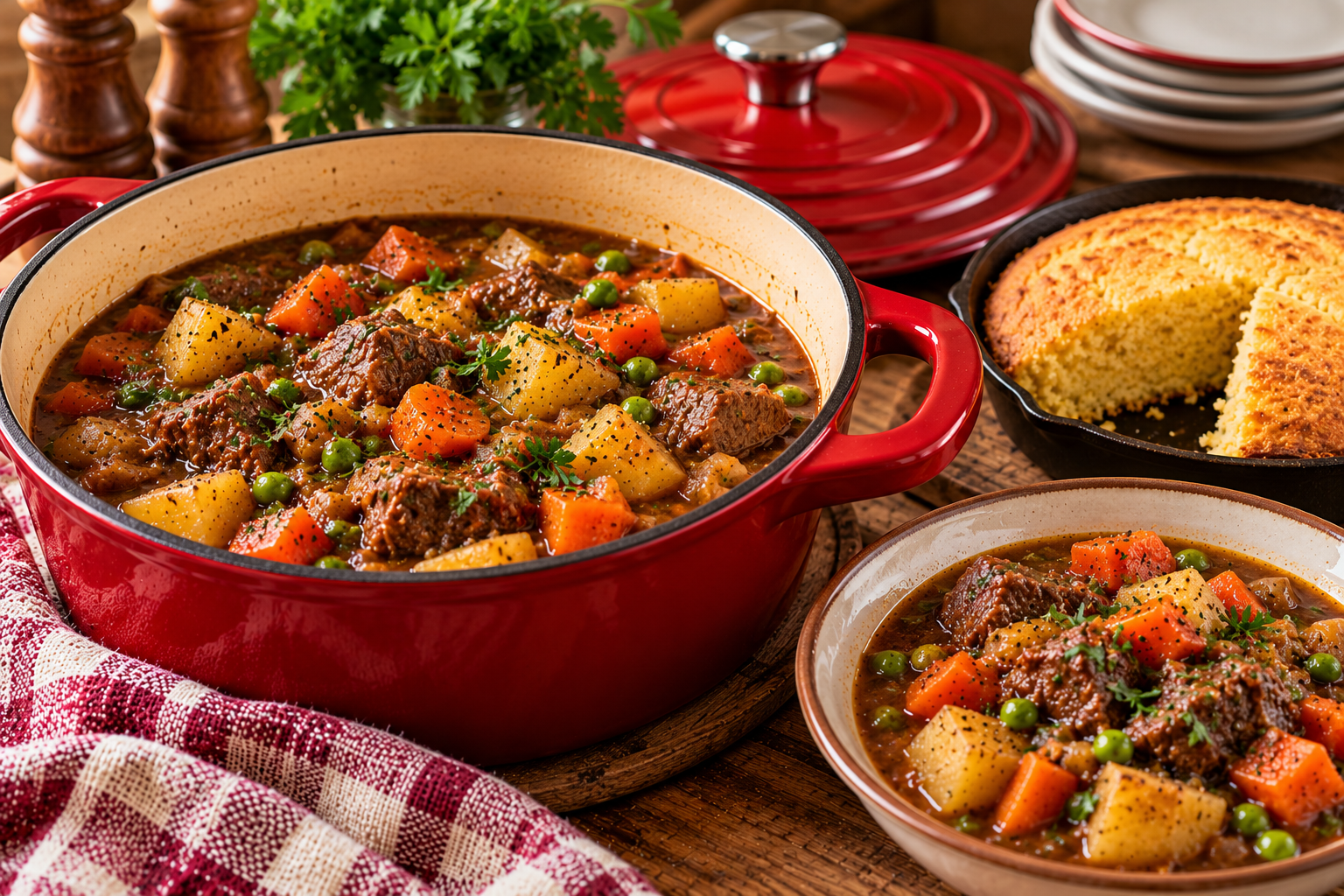
Sunday’s Dutch Oven Beef Stew is a perfect example.

Serve the first portion as stew.

Then save enough for another meal.

The next day, add a little extra cooked vegetable if needed, place the stew in a small baking dish, top it with biscuits or a little pie crust, and bake until golden.

Same basic food.

Completely different dinner.

You didn’t need another pound of beef.

You simply changed the presentation.

Example #2: Chicken & Rice → Chicken Soup

Tuesday’s Dutch Oven Chicken & Rice can take another direction.

Add some additional chicken broth.

Toss in a handful of frozen vegetables.

Add a little more seasoning.

Now your leftover chicken and rice has become a simple chicken soup.

And if the rice has absorbed most of the original broth overnight, that’s actually helpful. It gives the soup some body.

Example #3: Chili → Chili Baked Potato

Make chili one night.

The next day, spoon it over a baked potato.

Add a little shredded cheese, green onion, or plain Greek yogurt if you like.

Suddenly the leftovers aren’t leftovers anymore.

They’re the topping for another meal.

Example #4: Pulled Chicken → Sandwiches

Cook extra chicken in the Dutch oven.

Use the first portion with vegetables and a starch.

Shred the remaining chicken and refrigerate it.

The next day, turn it into:

  • A sandwich
  • A wrap
  • A rice bowl
  • Chicken salad
  • Quesadillas
  • A small casserole

The original cooking session did most of the work.

The Three-Part Stretch

When I’m planning a meal that needs to go further, I like to think in three steps:

1. Cook a useful amount.

Not an enormous amount.

Just enough to create another meal.

2. Store the extra separately.

Don’t automatically mix everything together.

If you have extra chicken, keep the chicken separate when practical.

If you’re making stew, keep the stew together.

If you’re cooking rice, consider storing some separately.

This gives you more choices later.

3. Change the second meal.

This is the part that keeps you from getting tired of leftovers.

The second meal doesn’t have to be completely different.

It just needs to feel different.

Change the starch.

Change the sauce.

Change the seasonings.

Add a different vegetable.

Turn it into a sandwich, soup, bowl, or casserole.

Small changes can make a big difference.

Stretching Meat Without Making Dinner Feel Cheap

This is especially useful when meat prices are high.

Instead of thinking:

“I need enough meat for two dinners.”

Think:

“I need enough meat to contribute to two dinners.”

That’s a very different calculation.

A small amount of beef can flavor a stew.

A few ounces of chicken can become part of a rice bowl.

A modest amount of sausage can flavor beans and cabbage.

A little ground turkey can become the foundation of a skillet meal.

The vegetables, grains, beans, potatoes, and other ingredients aren’t just fillers.

They’re part of the meal.

Use the Pantry to Change the Leftovers

This is where having a useful pantry really pays off.

A few inexpensive staples can turn yesterday’s meal into something new.

Keep things like:

  • Rice
  • Pasta
  • Potatoes
  • Cornmeal
  • Tortillas
  • Canned tomatoes
  • Beans
  • Frozen vegetables
  • Broth
  • Canned corn
  • Crackers
  • Flour
  • Basic seasonings

You don’t need all of these.

Just keep the ingredients you actually use.

Then when you look at yesterday’s dinner, you can ask:

“What can I add to make this feel like a new meal?”

The Leftover Makeover Doesn’t Have to Be Complicated

Sometimes we make meal planning harder than it needs to be.

If you have leftover beef stew, you don’t need to create a complicated new recipe.

Serve it over mashed potatoes.

Put it in a small casserole.

Top it with biscuits.

Add a little broth and turn it into soup.

That’s enough.

If you have leftover chicken and rice:

Add broth.

Add vegetables.

Make soup.

Done.

The goal isn’t to impress anybody.

The goal is to feed yourself well without starting from scratch every night.

Cooking for One or Two

This strategy can be particularly helpful for small households.

When you’re cooking for a family, leftovers tend to disappear quickly.

When you’re cooking for one or two, a recipe that makes four servings can become a refrigerator problem.

That’s why I recommend thinking about planned leftovers rather than accidental leftovers.

Before you start cooking, decide:

What will we eat tonight?

And:

What will tomorrow’s version be?

Once you answer those two questions, you know how much to make.

A Simple Example

Suppose you’re cooking for two.

Instead of making enough beef stew for six people, make enough for four servings.

Tonight:
Beef stew + Dutch oven cornbread

Tomorrow:
Beef pot pie using the remaining stew

You’ve cooked once.

You’ve bought one set of ingredients.

You’ve cleaned the Dutch oven once.

But you’ve solved dinner twice.

That’s a pretty good return on your effort.

Don’t Save Everything

There’s another side to this strategy that’s worth mentioning.

Not everything needs to be saved.

If you’ve made enough food for two meals, great.

But if you have one tablespoon of vegetables left in the bottom of the pot, don’t feel obligated to create an elaborate plan for it.

Sometimes the most economical thing you can do is recognize that an ingredient has reached the end of its useful life.

Waste reduction should make life easier, not turn your refrigerator into a puzzle.

Food Safety Matters

Planned leftovers work best when you handle them properly.

Refrigerate cooked food promptly in shallow containers so it cools quickly.

Don’t leave a large Dutch oven of hot food sitting on the counter for hours.

For larger batches, dividing the food into smaller containers can help it cool more quickly.

Use refrigerated leftovers within about 3–4 days, or freeze them if you won’t use them in that time.

When reheating, heat food thoroughly and only reheat the portion you plan to eat whenever practical.

Freeze the Second Supper

If you know you won’t want the second meal for a few days, freeze it.

This can be especially helpful when cooking for one.

Make two servings.

Eat one.

Freeze the other.

Now you have a homemade freezer meal waiting for a day when cooking feels like too much work.

That’s a very different kind of leftover.

It’s future-you doing present-you a favor.

Stretch Every Grocery Dollar

The savings from this approach come from several places.

You’re:

  • Using the same ingredients twice.
  • Reducing the amount of meat needed per meal.
  • Reducing food waste.
  • Saving cooking time.
  • Saving cleanup time.
  • Making better use of pantry staples.
  • Creating convenience meals without buying convenience food.

And there’s another savings that doesn’t show up on the grocery receipt:

You are less likely to buy takeout because there’s already something useful waiting in the refrigerator.

That’s worth something, too.

Waste Not, Want Not

The best way to avoid wasting food is to have a plan for it before you cook it.

If you’re making chicken and rice tonight, decide whether tomorrow’s meal will be soup.

If you’re making chili, decide whether you’ll use the leftovers over potatoes.

If you’re making beef stew, decide whether you’re saving enough for a pot pie.

It doesn’t have to be complicated.

Just give tomorrow’s portion a job.

Kitchen Confidence

The more you practice this, the easier it becomes.

Eventually you’ll look at a pot of dinner and automatically start seeing possibilities.

This could become soup.

That would make a great sandwich.

I could put this over rice tomorrow.

A couple of eggs would turn this into breakfast.

That’s the real advantage of learning to cook rather than simply learning recipes.

You begin to understand what food can become.

Pantry to Table

This week’s Dutch oven meals have really been one long lesson.

Sunday showed us how to make a small-batch beef stew.

Monday gave us the Pantry-to-Pot formula.

Tuesday put that formula to work with chicken and rice.

Wednesday showed how beans can become a meal instead of merely a side dish.

Thursday gave us a small batch of cornbread to go alongside those meals.

And now we’re looking at what happens after dinner.

Because Pantry to Table isn’t only about getting tonight’s meal on the table.

It’s about making the food you buy work harder.

It’s about cooking realistically for one or two.

And sometimes, the smartest meal you can make tonight is the one that quietly takes care of tomorrow, too.
Posted in Cookbooks

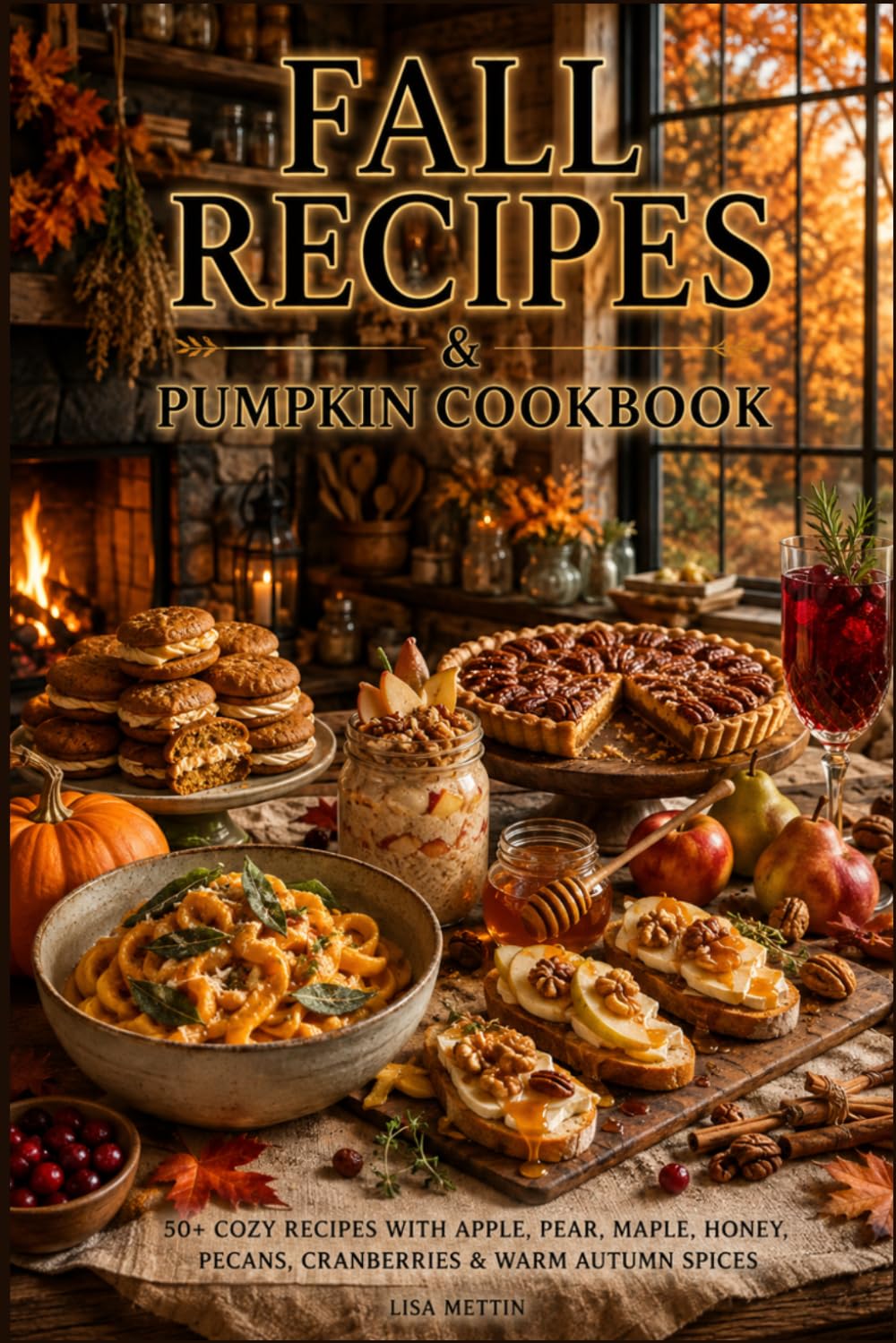
Fall Recipes & Pumpkin Cookbook

 50+ Cozy Recipes with Apple, Pear, Maple, Honey, Pecans, Cranberries & Warm Autumn Spices

Bring the Cozy Flavors of Fall to Your Kitchen
When the days get cooler and you start craving warm, comforting food, there’s nothing better than cooking with the flavors of autumn.

Fall Recipes & Pumpkin Cookbook brings together 52 cozy recipes inspired by the ingredients and flavors that make fall so special — from pumpkin and apples to pears, maple, honey, pecans, cranberries, chocolate, warm spices, and more.

Inside, you’ll discover:

Pumpkin Everything
Hearty soups, savory dishes, comforting bakes, cookies, desserts, and creative ways to enjoy pumpkin throughout the season.

Apple, Pear & Autumn Flavors
Cozy breakfasts, savory dishes, appetizers, rustic bakes, desserts, and sweet treats featuring apples, pears, and delicious seasonal combinations.

Maple, Honey & Nutty Autumn Flavors
Rich recipes featuring maple syrup, honey, pecans, almonds, hazelnuts, pistachios, chocolate, dried fruits, and other autumn favorites.

Cozy Autumn Drinks
Warm chai, creative hot chocolates, apple cider combinations, mulled wine, fruit-forward drinks, and comforting beverages inspired by autumn traditions from different places.

Whether you’re planning a cozy weekend breakfast, looking for something special to serve guests, or simply want a warm homemade dessert after a chilly day, you’ll find plenty of ideas to enjoy throughout the season.

Simple ingredients. Cozy flavors. Beautiful autumn food.

Bring the warmth of fall to your table, one recipe at a time.

Posted in Side Dishes

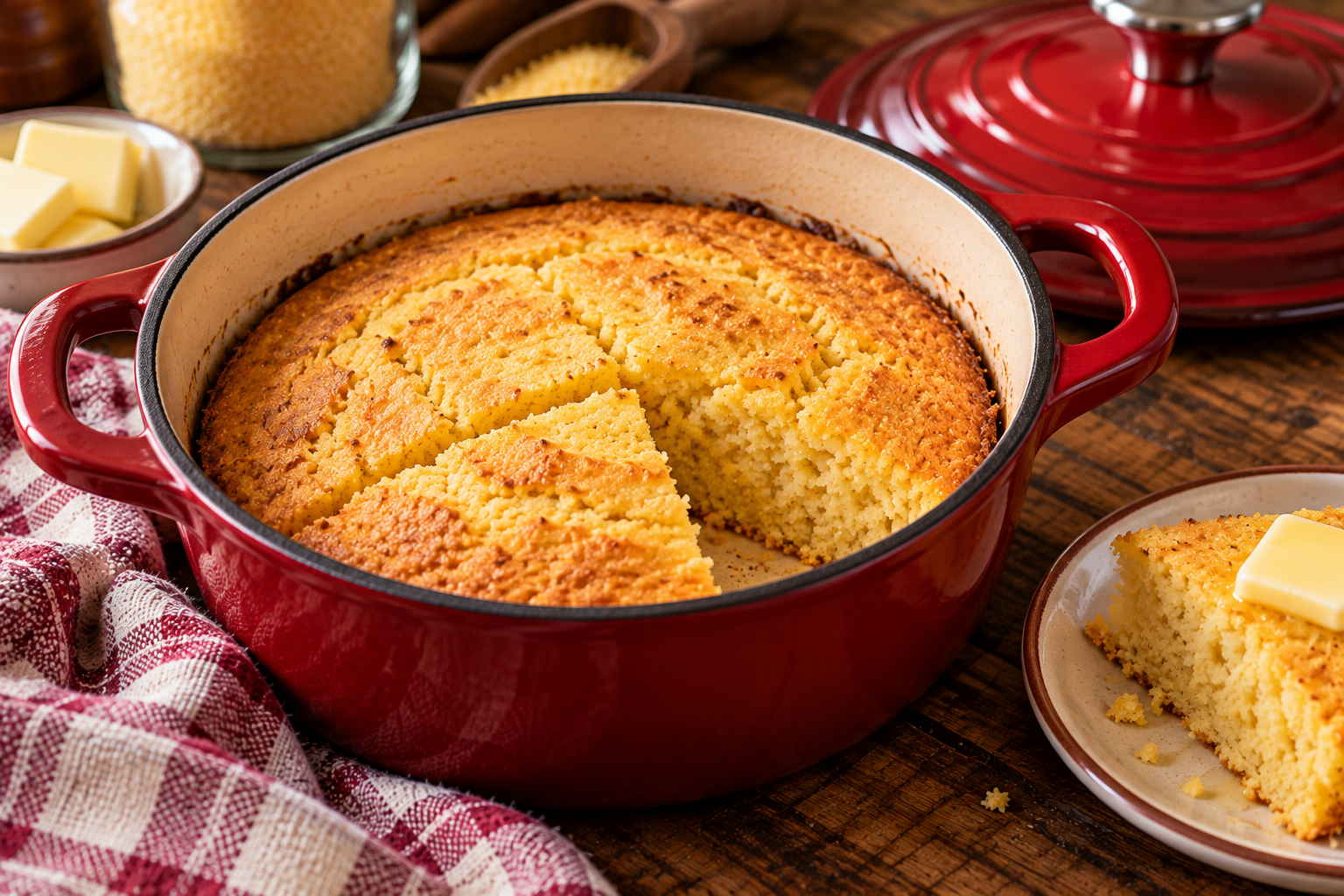
Dutch Oven Cornbread for Two

A pot of soup or stew has a way of asking for cornbread.

There’s just something about having a warm piece of cornbread alongside a bowl of chili, beef stew, or beans. But if you’re cooking for one or two people, a traditional pan of cornbread can leave you with far more than you want.

That’s why this Dutch Oven Cornbread for Two is intentionally small.

It makes just enough for two generous servings—or one serving tonight and another tomorrow—without requiring a full-size skillet or a big batch of leftovers.

And because we’re talking about Pantry to Table, most of the ingredients are simple pantry staples you can keep ready for exactly this kind of meal.

Why You’ll Love This Recipe

  • Makes a genuinely small batch.
  • Uses inexpensive pantry ingredients.
  • No special baking pan required.
  • Works beautifully with soups, stews, chili, and beans.
  • Slightly crisp around the edges while staying tender inside.
  • Easy to adapt for either sweet or savory preferences.
  • Makes good use of a small Dutch oven.

Recipe Information

Servings: 2
Serving size: 1 generous piece per serving
Prep time: 10 minutes
Cook time: 15–18 minutes
Total time: About 25–30 minutes
Meal category: Side Dish / Dutch Oven Meals
Main protein: None
Estimated calories: Approximately 240–260 calories per serving

simplegoodfood's avatarsimplegoodfood

Dutch Oven Cornbread for Two

A pot of soup or stew has a way of asking for cornbread.
Prep Time 10 minutes
Cook Time 18 minutes
Total Time 30 minutes
Servings: 2
Course: Side Dish
Cuisine: American
Calories: 260

Ingredients
  

  • ¼ cup yellow cornmeal
  • ¼ cup all-purpose flour
  • 1 tablespoon granulated sugar optional
  • ½ teaspoon baking powder
  • ⅛ teaspoon baking soda
  • ⅛ teaspoon salt
  • 1 large egg
  • ¼ cup buttermilk
  • 1 tablespoon unsalted butter melted
  • 1 teaspoon butter or olive oil for the Dutch oven

Method
 

Prepare the Dutch oven
  1. Preheat your oven to 400°F.
  2. Place a small oven-safe Dutch oven—approximately 6 inches in diameter—in the oven while it preheats.
  3. The preheated pot helps create those lightly crisp edges that make cornbread so good.
Mix the dry ingredients
  1. In a small bowl, whisk together the cornmeal, flour, sugar if using, baking powder, baking soda, and salt.
Mix the wet ingredients
  1. In another small bowl, whisk together the egg, buttermilk, and melted butter.
Combine
  1. Pour the wet ingredients into the dry ingredients.
  2. Stir just until everything is combined.
  3. Don’t overmix. A few small lumps are perfectly fine.
Add the batter to the Dutch oven
  1. Carefully remove the hot Dutch oven from the oven.
  2. Add the teaspoon of butter or olive oil and swirl carefully to coat the bottom.
  3. Pour in the cornbread batter.
  4. It should begin to sizzle gently when it hits the hot pot.
Bake
  1. Return the Dutch oven to the oven.
  2. Bake for 15–18 minutes, or until the top is golden and a toothpick inserted in the center comes out clean.
  3. The exact time will depend on the size and material of your Dutch oven.
Rest and serve
  1. Let the cornbread cool for about 5 minutes before removing it from the pot.
  2. Cut into two pieces and serve warm.

Notes

Kitchen Confidence
Don’t overmix the batter.
Cornbread doesn’t need the same kind of mixing as a cake.
Stir just until the dry ingredients are moistened. Overmixing can make the finished cornbread tougher.
Preheat the pot.
This is one of the little tricks that makes Dutch oven cornbread special.
The hot cooking surface helps the edges begin cooking immediately, giving you a lightly crisp exterior while the center stays tender.
Just remember that the pot will be very hot. Use oven mitts and keep the handle of the lid and pot turned away from the edge of the counter when possible.
Sweet or Savory?
This is one place where I don’t think there’s a single correct answer.
If you like a slightly sweet cornbread, keep the tablespoon of sugar.
If you prefer savory cornbread, leave it out.
You can also add a little extra flavor with:
  • 1 tablespoon finely chopped green onion
  • 1 tablespoon shredded cheddar cheese
  • A few tablespoons of corn
  • A pinch of dried herbs
For this small batch, keep additions modest so they don’t weigh down the batter.

Stretch Every Grocery Dollar

Cornmeal is one of those pantry ingredients that can quietly earn its keep.

A bag lasts a long time, and a small amount can become cornbread, cornmeal coating, or part of a casserole or skillet meal.

You don’t need to buy a special cornbread mix every time you want a couple of servings.

Keeping cornmeal, flour, baking powder, and eggs on hand gives you the ability to make a small batch whenever you need it.

And because this recipe makes only two servings, you’re not spending money on ingredients for a large batch that may sit around until it goes stale.

Waste Not, Want Not

If you don’t use the entire container of buttermilk, don’t let it become a refrigerator science experiment.

You can freeze buttermilk in small portions for future baking, or use it in pancakes, waffles, biscuits, or another cornbread batch.

No buttermilk?

You can make a quick substitute by adding about ¾ teaspoon lemon juice or vinegar to ¼ cup milk. Let it stand for about 5 minutes before using.

The result won’t be exactly the same, but it works well for a small batch like this.

Cooking for One or Two

For two people, divide the cornbread in half and serve it alongside your main meal.

For one person, you can eat half today and refrigerate the other half for tomorrow.

Reheat gently before serving.

You can also cut the finished cornbread into small cubes and toast them lightly to make a simple addition to soups or salads.

Meal Prep Note

Cornbread is best fresh, but it holds up reasonably well for a day or two.

If you’re planning ahead, wrap the cooled cornbread tightly and refrigerate it.

Reheat briefly in the microwave or warm it in the oven.

For the best texture, don’t overheat it.

Storage & Freezing

Store cooled cornbread in an airtight container.

Refrigerate for up to 3 days.

For longer storage, wrap individual pieces well and freeze for up to 2 months.

Thaw at room temperature or in the refrigerator and warm before serving.

What to Serve With Dutch Oven Cornbread

This little cornbread is a natural partner for all kinds of Pantry to Table meals.

Try it with:

  • Beef stew
  • Chicken soup
  • Vegetable soup
  • Chili
  • Black-eyed peas
  • White bean soup
  • Pinto beans
  • Chicken and vegetable stew
  • Pulled pork
  • A simple skillet meal

And don’t overlook breakfast.

A leftover piece of cornbread warmed with a little butter can make a surprisingly good small breakfast or snack.

A Dutch Oven Isn’t Just for Dinner

When we think about Dutch ovens, it’s easy to picture a big pot of stew simmering away.

But they’re useful for much more than that.

A small Dutch oven can bake a small loaf of bread, a couple of servings of cornbread, a fruit crisp, or another small-batch dessert.

That’s part of what makes Dutch oven cooking so practical for a small household.

You don’t need a huge pot to get the benefits.

Pantry to Table

This little recipe is a good reminder that a practical pantry doesn’t have to contain complicated ingredients.

Cornmeal.

Flour.

Egg.

Buttermilk.

A little butter.

A few basic leaveners.

That’s enough to turn a few pantry staples into something warm and homemade to put beside dinner.

And sometimes that’s exactly what makes an ordinary bowl of soup feel like a meal.

Posted in Cookbooks

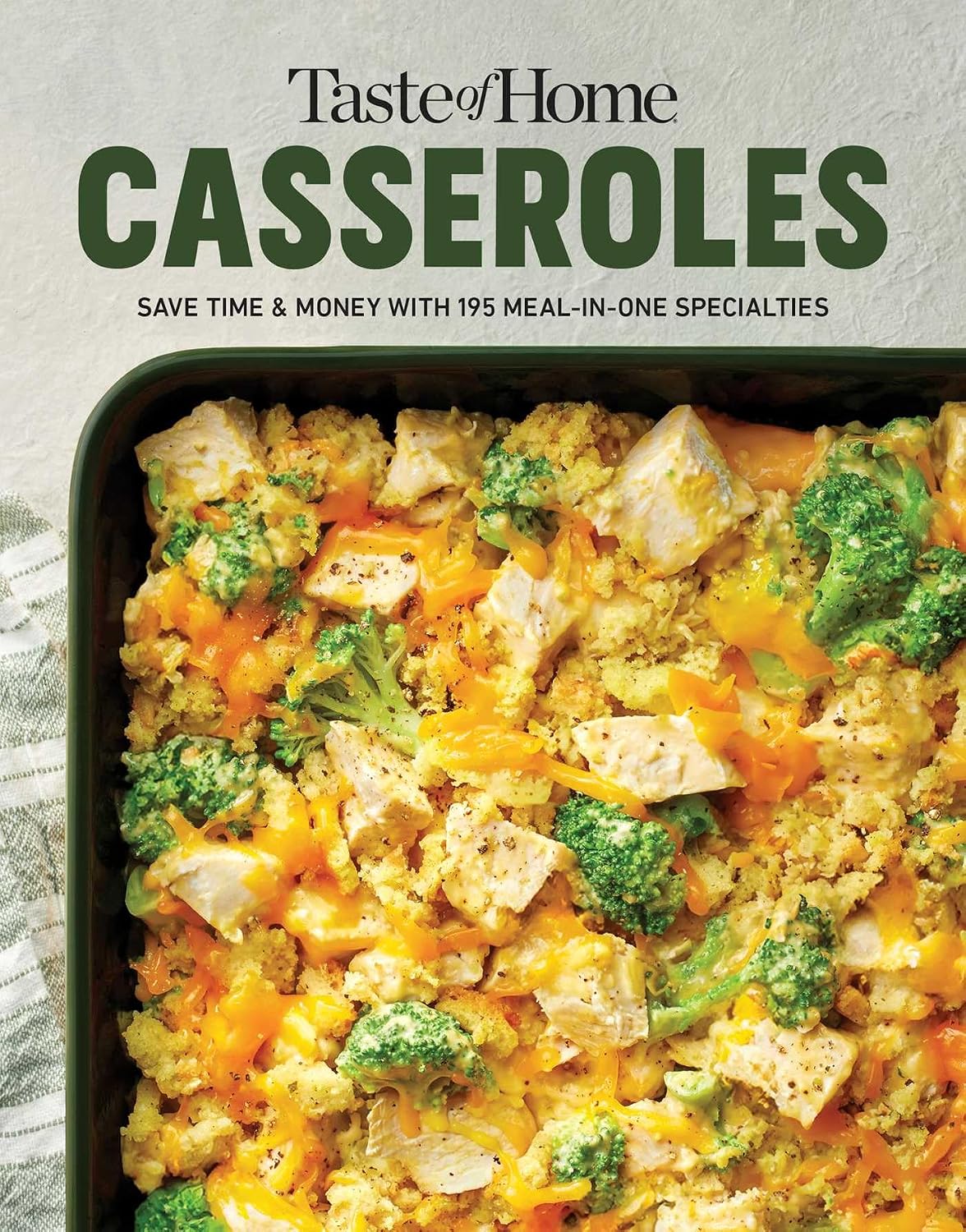
Taste of Home Casseroles

Over 150 Easy Meal in One Recipes Bonus Chapter Includes 8×8 Casseroles (Taste of Home Quick & Easy)

Casseroles are the perfect solution for busy families and anyone craving delicious, comforting meals with minimal effort. The Taste of Home Casseroles cookbook offers a collection of over 150 unbeatable meal-in-one recipes that will simplify your meal planning. Whether you’re a fan of cheesy classics, hearty breakfasts, or lighter meat-free options, this cookbook has something for everyone.

  • Explore Variety Including Cheesy Classics, Meat-Free Options and Breakfast Casseroles.
  • Simplify Meal Planning with Minimal Prep and Make-Ahead Options for Extra Time.
  • Use Leftovers Creatively to Reduce Food Waste and Cut Grocery Costs Effortlessly.
  • Discover Bonus 8×8 Casseroles Chapter Ideal for Smaller Households or Less Leftovers.
  • Enjoy Ultimate Convenience with Over 150 Easy Meal Recipes Perfect for Busy Schedules.

Effortless Convenience

Experience the ultimate in meal prep convenience with recipes that come together quickly and require minimal effort. Many of the casseroles can be prepared in advance to save time on hectic days, letting you enjoy more quality moments with loved ones.

Incredible Variety

From bubbling, cheesy favorites to modern twists on all-time classics, the cookbook offers endless variety to keep your family excited for every meal. Vegetarian diners will appreciate the “Make It Meatless” tips, while fans of cozy mornings will find joy in the breakfast and brunch casseroles.

Perfect for Every Household

Cooking for a small household? The special Bonus Chapter for 8×8 Casseroles is perfect for creating smaller dishes without overloading on leftovers. Whether you’re prepping dinner for one, two, or a crowd, there’s a recipe tailored to your needs.

Reduce Waste and Save Money

Casseroles are a great way to make the most of your leftovers and pantry staples, helping you reduce food waste while cutting down on grocery bills. These budget-friendly dishes bring great taste and exceptional value to any table.

Special Features

  • Freezer-Friendly Recipes: Look for the Freezer Icon highlighting dishes that can be stored for busy nights, complete with reheating directions for stress-free meals.
  • Make and Take Options: Ideal for potlucks, buffets, or church suppers, these casseroles are designed to travel well and please any crowd.

With easy-to-follow instructions, nutrition facts included for every recipe, and expert tips throughout, Taste of Home Casseroles is more than a cookbook—it’s your go-to guide for serving up warmth, flavor, and convenience. Bring the joy of comforting, hassle-free meals into your home today!

Posted in Kitchen Tips

Pantry Beans: More Than a Side Dish

Beans have a reputation for being a side dish.

Put a spoonful of beans next to a piece of chicken. Add them to a plate of barbecue. Maybe serve them alongside cornbread.

But beans can do a lot more than sit quietly at the edge of the plate.

For a small household, beans are one of the most useful foods you can keep in the pantry. They’re inexpensive, versatile, filling, and available in forms that make sense whether you’re cooking from scratch or trying to get dinner on the table quickly.

And when you’re trying to stretch the grocery dollar, beans can help you make a little meat go a lot further.

Beans Can Be Dinner

One of the biggest mistakes we make with pantry cooking is thinking that every meal needs a large piece of meat in the center of the plate.

It doesn’t.

Beans can be the main protein in a meal, or they can share the job with a smaller amount of meat.

Think of:

  • Beans with rice
  • White beans with chicken
  • Black beans with corn and rice
  • Beans in soup
  • Beans in chili
  • Beans with pasta
  • Beans folded into a skillet meal
  • Beans served with cornbread

A half-can of beans can turn a small amount of leftover chicken into another meal.

That’s not just convenient.

That’s smart grocery shopping.

Choosing the Right Beans for Your Pantry

You don’t need ten different kinds of beans.

Buy the ones you actually enjoy eating.

Some useful choices include:

  • Black beans
  • Kidney beans
  • Pinto beans
  • Great Northern beans
  • Cannellini beans
  • Navy beans
  • Chickpeas
  • Black-eyed peas
  • Lentils

And there’s no rule saying you have to like all of them.

Your pantry should reflect your tastes, not somebody else’s idea of a perfectly stocked pantry.

If you don’t enjoy a particular bean preparation, don’t buy it just because it’s cheap.

An inexpensive ingredient that never gets eaten isn’t a bargain.

Canned or Dried?

Both have a place in a practical pantry.

Canned Beans

Canned beans are hard to beat for convenience.

They’re already cooked, they don’t require soaking, and they’re ready to add to a meal.

For one or two people, smaller cans can also be useful because you aren’t committed to finding a use for a huge batch of cooked beans.

Drain and rinse canned beans before using them in most recipes. This removes some of the excess sodium and the liquid they are packed in.

Look for lower-sodium varieties when available, especially if you use beans frequently.

Dried Beans

Dried beans are usually economical when purchased in larger quantities, and they can be an excellent pantry staple if you have the time and inclination to cook them.

They’re particularly useful for soups, stews, and larger batches that can be portioned and frozen.

But don’t assume dried is automatically better.

For a small household, convenience has value, too.

If a can of beans means you’re willing to make dinner instead of reaching for takeout, that can be the better choice.

Beans + Rice = A Pantry Classic

There is a reason beans and rice show up in so many food traditions around the world.

They’re inexpensive, filling, and adaptable.

You can keep the combination simple:

Beans + rice + vegetables + seasoning

Or turn it into something more substantial with a little chicken, sausage, or ground turkey.

You can also change the flavor profile completely.

Southwestern

Black beans, rice, corn, cumin, garlic, and a little chili powder.

Mediterranean-Inspired

White beans, rice, garlic, oregano, spinach, and lemon.

Rustic

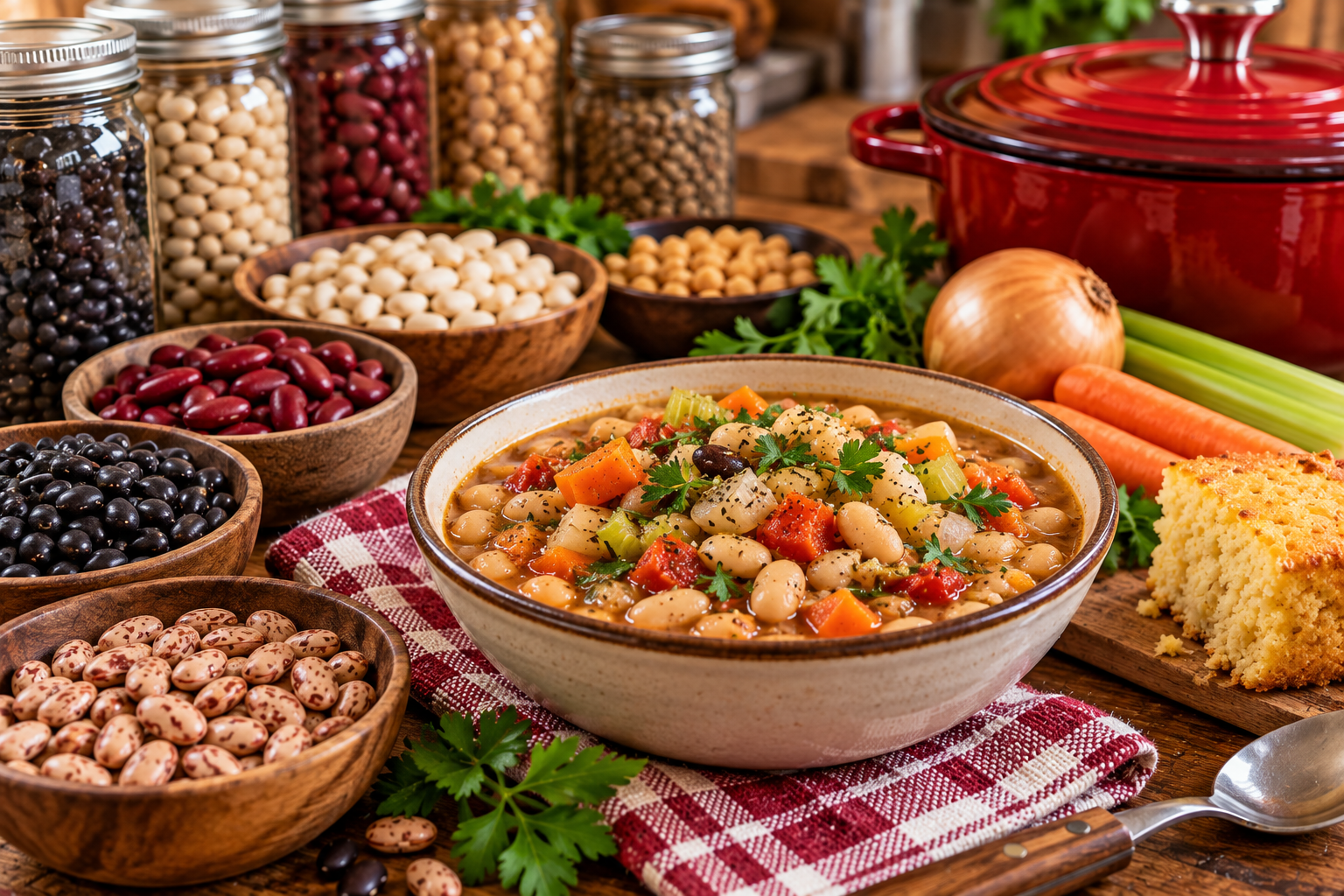
Great Northern beans, carrots, celery, onion, and herbs in a savory broth.

The basic ingredients don’t have to change much.

The seasonings can take dinner in a completely different direction.

Beans Are Excellent Meat Stretchers

This is where beans become particularly useful for budget-conscious cooking.

Suppose you have four ounces of cooked chicken.

That’s not necessarily enough for two complete meals.

But add a half-cup of beans, some vegetables, and a little rice, and suddenly that chicken can become the protein component of two satisfying servings.

The same idea works with:

  • Ground turkey
  • Ground beef
  • Sausage
  • Leftover pork
  • Shredded rotisserie chicken

You aren’t trying to disguise the beans.

You’re simply allowing the beans and meat to share the workload.

What About Black-Eyed Peas?

Black-eyed peas deserve special mention because they are often treated as a Southern side dish when they can easily become the foundation of a meal.

You can combine them with:

  • Rice
  • Greens
  • Corn
  • Onions
  • Peppers
  • Ham or leftover pork
  • Smoked turkey
  • A little sausage

And here’s another important pantry rule:

Cook beans the way you actually like them.

If you don’t enjoy black-eyed peas cooked with ketchup or stewed tomatoes, don’t put them in that combination simply because somebody’s recipe says you should.

There are plenty of other ways to season them.

Your pantry should serve you.

Pantry Bean Meal Ideas

Here are some easy combinations to keep in mind when you need dinner but don’t have a recipe planned.

White Bean & Chicken Skillet

White beans + leftover chicken + carrots + spinach + broth + garlic.

Black Bean Rice Bowl

Black beans + rice + corn + peppers + cumin + a little cheese.

Rustic Bean Soup

White beans + carrots + onion + celery + potatoes + broth + herbs.

Bean & Sausage Skillet

A small amount of sausage + white beans + cabbage + onion.

Black-Eyed Pea Supper

Black-eyed peas + rice + sautéed vegetables + a small amount of leftover pork.

Chickpea Pasta

Chickpeas + pasta + garlic + vegetables + broth or a light sauce.

The point isn’t to memorize these combinations.

It’s to start recognizing the possibilities.

Beans Don’t Have to Mean a Vegetarian Meal

There’s sometimes an assumption that adding beans means you’re making a meatless meal.

Not necessarily.

A small amount of meat combined with beans can make a particularly satisfying meal for a small household.

Think:

4 ounces chicken + ½ cup beans

instead of:

8 ounces chicken

The first combination can give you a meal that is every bit as satisfying while making the meat stretch farther.

Pantry Beans and the Dutch Oven

Beans fit beautifully into the Dutch oven theme we’re exploring this week.

They’re especially good in:

  • Soups
  • Stews
  • Chili
  • Casseroles
  • Slow-simmered skillet meals
  • Bean and vegetable dishes

And because cooked beans don’t require long cooking, canned beans can often be added toward the end of a recipe rather than simmered for an hour.

That’s useful when you’re cooking a small batch.

Stretch Every Grocery Dollar

Beans are one of those ingredients where the savings come from how you use them, not simply from their price.

A can of beans may not seem like a dramatic grocery savings by itself.

But if it allows you to:

  • Use less meat
  • Turn leftovers into another meal
  • Bulk up a soup
  • Make a small amount of protein feed two people
  • Create a meatless meal when you want one

the savings add up.

And because beans are shelf-stable, they can wait patiently in the pantry until you need them.

That’s exactly what we want from a pantry staple.

Waste Not, Want Not

Once you’ve opened a can of beans, you don’t have to use the whole thing in one recipe.

For one or two people, divide the beans between two meals.

Use some in today’s skillet.

Save the rest for tomorrow’s soup.

You can also freeze cooked beans if you know you won’t use them within a few days.

Small portions are particularly useful for small households.

Cooking for One or Two

Beans are almost tailor-made for small-batch cooking.

If a recipe calls for a whole can and you only need half, use half.

Don’t automatically double a recipe because that’s how the original recipe was written.

A half-cup of beans can be enough to change a single serving of leftovers into a completely different meal.

And if you cook dried beans, freeze them in small portions rather than one giant container.

That way you can pull out exactly what you need.

Kitchen Confidence: Learn to See Beans Differently

The next time you’re looking at a can of beans in the pantry, don’t automatically think:

“What side dish can I make?”

Ask:

“What meal can I build around these?”

That small change in perspective can make a big difference.

Beans can be the protein.

They can stretch the protein.

They can add substance to soup.

They can replace part of the meat.

They can turn leftovers into something new.

They can help you make dinner when the pantry is looking a little sparse.

That’s a pretty impressive little pantry staple.

Pantry to Table

A well-stocked pantry isn’t about having every ingredient imaginable.

It’s about having a collection of ingredients that can work together.

Beans are one of those ingredients.

Keep a few varieties you actually enjoy. Pair them with rice, potatoes, vegetables, broth, or a modest amount of meat, and you’ve got the foundation for dozens of practical meals.

That’s Pantry to Table at its best: simple ingredients, a little creativity, and dinner without a special grocery-store trip.

Posted in Cookbooks

High-Protein Crock Pot for One Person

Truly Single-Serve Slow Cooker Recipes. No Waste. No Guessing. Just One Perfect Meal (Crock Pot Meals for One Person Book 2)

Finally – a high-protein slow cooker cookbook that actually cooks for one.

No halving recipes. No oversized portions. No accidental three-day leftovers.

Made specifically for 1.5- and 2-quart slow cookers, with exact cook times for both sizes on Low and High – so getting more protein into your meals is simple, predictable, and low-waste.

80 true single-serve high-protein recipes made with familiar ingredients – plus nutritional information for every recipe

  • Chicken and turkey
  • Beef, lamb and pork
  • Fish and seafood
  • Beans, lentils and chickpeas
What makes this book different:
  • High-protein recipes designed specifically for one person – no scaling required
  • Cook times for both 1.5 qt and 2 qt slow cookers on Low and High
  • Satisfying meals built around familiar, everyday protein sources
  • An emphasis on whole, minimally processed ingredients rather than specialty foods
  • Simple “done-ness” cues so you know when your meal is ready – no guessing
  • Full nutritional information for every recipe, so you can see the protein content at a glance
  • Freezer-friendly guidance if you do want to make food for later
You’ll love this book if:
  • You are cooking for one and and want to eat more protein without cooking family-sized portions
  • You want filling, satisfying meals made with familiar supermarket ingredients
  • You want to know how much protein is actually in your meal

Every recipe was personally tested in 1.5-quart and 2-quart slow cookers to make sure it truly fits and truly serves one.Scroll up and start cooking meals designed for you – not for a crowd.