Posted in Side Dishes

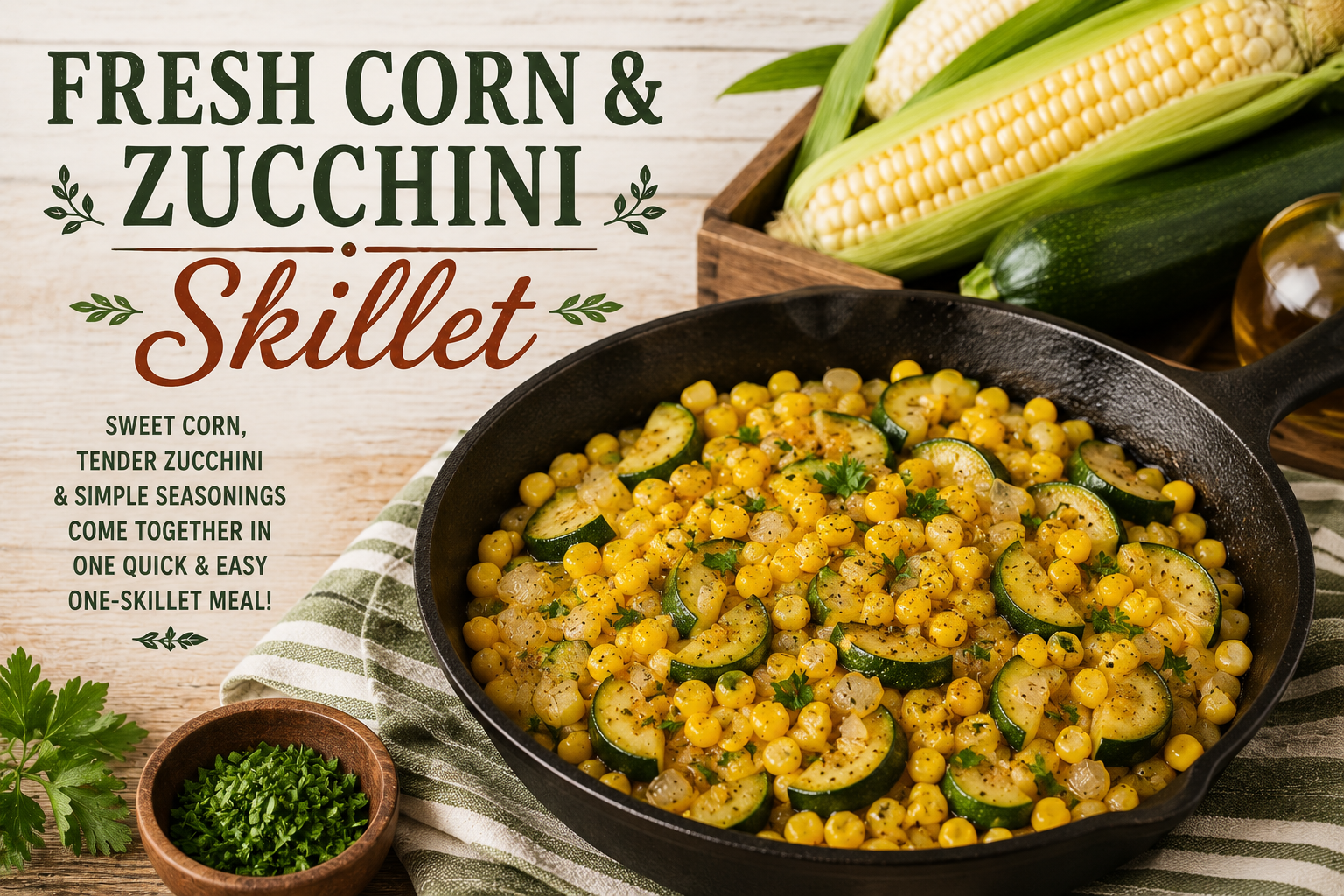
Fresh Corn & Zucchini Skillet

When summer vegetables are at their best, they don’t need much help.

Fresh corn brings sweetness. Zucchini brings tenderness. A little onion, garlic, and seasoning bring everything together without covering up the vegetables themselves.

That’s the idea behind this Fresh Corn & Zucchini Skillet.

It’s a simple side dish for a grilled meal, a bowl of soup, or just about anything else that needs a little color on the plate. And because everything cooks in one skillet, it’s just as practical for a campground kitchen as it is at home.

It’s also a good reminder that seasonal cooking doesn’t have to mean complicated cooking.

Sometimes the best way to enjoy the harvest is simply to let it shine.

simplegoodfood's avatarsimplegoodfood

Fresh Corn & Zucchini Skillet

Fresh summer corn and tender zucchini come together in this simple one-skillet side dish.
Prep Time 10 minutes
Cook Time 10 minutes
Total Time 20 minutes
Servings: 4
Course: Dinner, Side Dish
Cuisine: American
Calories: 125

Ingredients
  

  • 2 cups fresh corn kernels cut from about 3 ears of corn
  • 2 medium zucchini diced
  • 1/2 small onion diced
  • 1 tablespoon olive oil
  • 1 clove garlic minced
  • 1/2 teaspoon dried parsley
  • 1/4 teaspoon black pepper
  • 1/4 teaspoon salt or to taste
  • 1 tablespoon chopped fresh parsley optional
  • 1 tablespoon grated Parmesan cheese optional

Method
 

Prepare the vegetables.
  1. Cut the corn kernels from the cobs and dice the zucchini into bite-sized pieces.
Start the onion.
  1. Heat the olive oil in a large skillet over medium heat. Add the diced onion and cook for 2–3 minutes, until it begins to soften.
Add the corn.
  1. Stir in the fresh corn and cook for about 3 minutes, stirring occasionally. The corn should become bright and slightly tender.
Add the zucchini.
  1. Stir in the zucchini, garlic, parsley, black pepper, and salt.
Cook until tender-crisp.
  1. Continue cooking for about 5–7 minutes, stirring occasionally. The zucchini should be tender but still have a little bite. Avoid overcooking it into mush.
Finish and serve.
  1. Remove from the heat. Sprinkle with fresh parsley and Parmesan, if using.

Notes

🌾 Kitchen Confidence: When Are Summer Vegetables at Their Peak?
One of the easiest ways to make seasonal cooking taste better is to learn what fresh actually looks like.
Corn: Look for bright green husks and silk that is moist rather than dry. The kernels should feel plump when you gently press the husk.
Zucchini: Choose smaller to medium zucchini that feel firm and heavy for their size. Very large zucchini can be watery and have larger seeds.
Green beans: Look for beans that are crisp and snap easily rather than bend limply.
Tomatoes: They should have good color, feel heavy for their size, and have a fresh tomato aroma.
And don’t be afraid of vegetables that aren’t perfectly shaped. A crooked zucchini can taste every bit as good as a picture-perfect one.

💡 Make It Your Own

This skillet is intentionally simple, but you can change it depending on what’s available.

Try adding:

  • Diced red bell pepper
  • Fresh tomatoes
  • Sliced mushrooms
  • A handful of fresh spinach
  • Chopped green beans
  • A sprinkle of Italian seasoning

For a little more richness, add a teaspoon of butter along with the olive oil.

For a heartier dish, stir in leftover cooked chicken or turkey.

🏕️ Campground-Friendly Tip

This is exactly the kind of recipe that works well in a small electric skillet.

You don’t need an oven, a pile of cookware, or much counter space. Everything happens in one pan, and the vegetables cook quickly enough that you’re not spending half the evening standing over the stove.

It’s also a great recipe for using corn and zucchini that you picked up because they were simply too good a bargain to pass up.

Posted in Soups & Stews

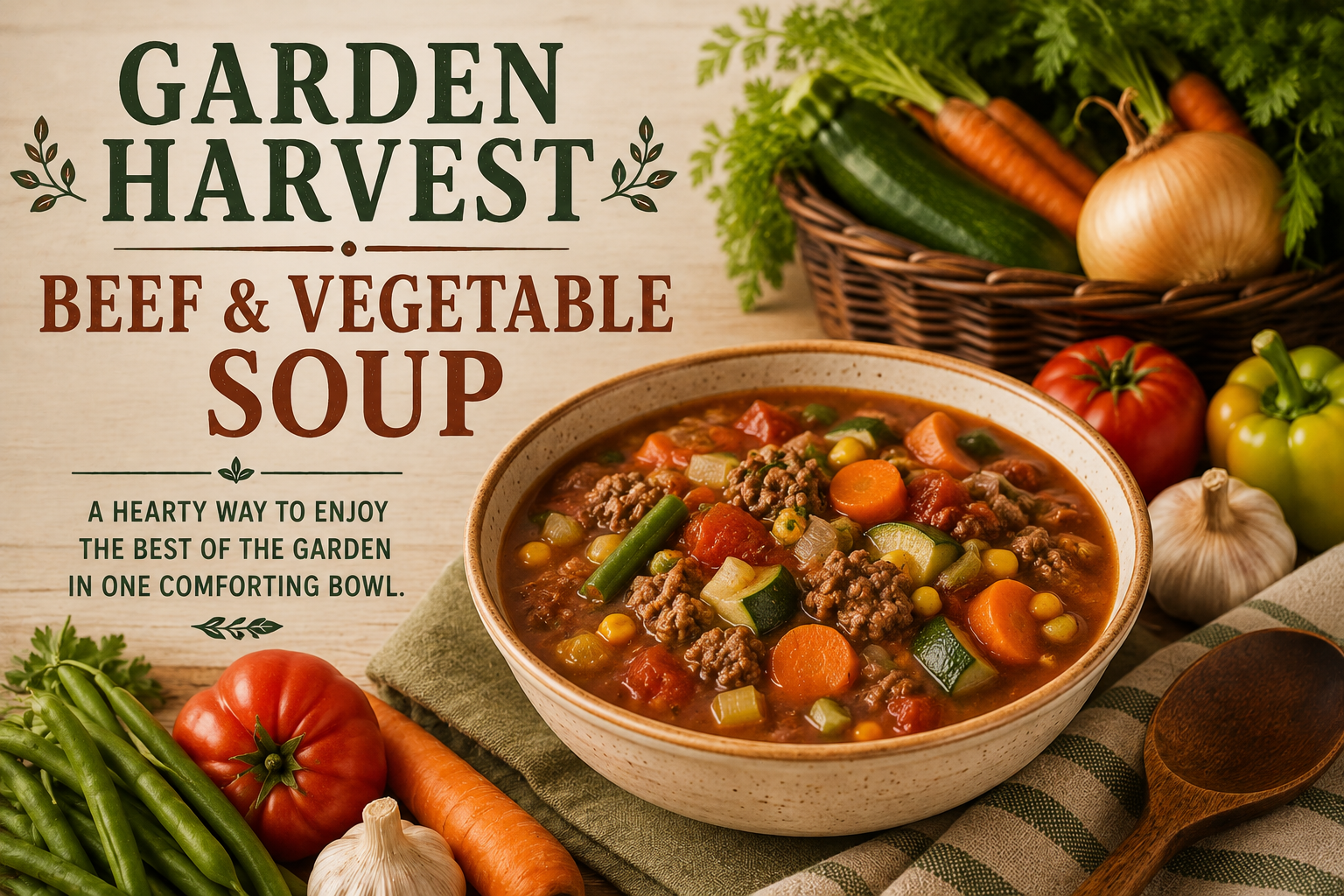
Garden Harvest Beef & Vegetable Soup

There is something wonderfully practical about a pot of vegetable soup.

You don’t need a special occasion or an elaborate recipe. You need some ground beef, a handful of vegetables, a little broth, and a pot big enough to bring everything together.

This Garden Harvest Beef & Vegetable Soup is especially good for that transition from summer into fall. It makes good use of the vegetables that are still plentiful at the end of the growing season while giving us our first taste of cozy soup weather.

Use fresh vegetables from the garden or farmers market when you have them. Use frozen vegetables when that’s what you’ve got. And if you have a few odds and ends tucked away in the refrigerator, this is a great place for them, too.

That’s the spirit behind this month’s Harvest & Putting Things Back theme: enjoy what is plentiful today, and make a little extra while you’re at it.

This soup freezes beautifully, making it an easy way to put a few servings back for another day.

simplegoodfood's avatarsimplegoodfood

Garden Harvest Beef & Vegetable Soup

There is something wonderfully practical about a pot of vegetable soup.
Prep Time 10 minutes
Cook Time 25 minutes
Total Time 35 minutes
Servings: 4
Course: Dinner, Lunch, Soup
Cuisine: American
Calories: 330

Ingredients
  

  • 1/2 pound lean ground beef
  • 1 small onion diced
  • 2 cloves garlic minced
  • 2 medium carrots sliced
  • 2 celery stalks sliced
  • 1 medium zucchini diced
  • 1 cup fresh or frozen green beans cut into bite-sized pieces
  • 1 cup corn fresh or frozen
  • 1 can 14.5 ounces diced tomatoes, with juices
  • 4 cups low-sodium beef broth
  • 1 teaspoon Italian seasoning
  • 1/2 teaspoon dried parsley
  • 1/4 teaspoon black pepper
  • 1 tablespoon Worcestershire sauce
  • Salt to taste
  • 1 tablespoon olive oil if needed

Method
 

Brown the beef.
  1. Heat a large soup pot or Dutch oven over medium heat. Add the ground beef and cook, breaking it into small pieces, until no longer pink. Drain excess fat if necessary.
Add the aromatics.
  1. Add the onion and celery to the pot. Cook for 3–4 minutes, until the onion begins to soften. Add the garlic and cook for about 30 seconds.
Build the soup.
  1. Add the carrots, zucchini, green beans, corn, and diced tomatoes with their juices.
Add the broth and seasonings.
  1. Pour in the beef broth. Stir in the Italian seasoning, parsley, black pepper, and Worcestershire sauce.
Simmer.
  1. Bring the soup to a gentle boil, then reduce the heat and cover. Simmer for about 20–25 minutes, or until the vegetables are tender.
Taste and adjust.
  1. Taste the broth and add salt as needed. If you prefer a thinner soup, add a little more broth or water.
Serve.
  1. Ladle into bowls and serve hot with crusty bread, crackers, or a simple side salad.

Notes

🌾 Make It Your Own
This is one of those recipes where the vegetable drawer gets a vote.
Try swapping in:
  • Green peas for some of the corn
  • Cabbage for some of the zucchini
  • Diced potatoes for the carrots
  • Spinach stirred in during the last few minutes
  • Mushrooms for some of the zucchini
  • Fresh tomatoes in place of canned tomatoes
You can also use ground turkey instead of beef if that’s what you have available.

🧊 Put a Little Back

This soup is an excellent freezer meal.

Let the soup cool, portion it into freezer-safe containers, label it with the name and date, and freeze.

For one or two people, freezing individual portions means you don’t have to thaw an entire pot just to have soup for lunch.

Important canning note: Although this soup is suitable for freezing, don’t assume a freezer soup recipe is automatically safe for home canning. Because it contains meat and vegetables, any version you intend to pressure-can should be based on a tested, approved canning recipe rather than adapting this recipe yourself.

That’s an important part of putting food back: preserve it in a way that’s both practical and safe.

🥄 Serving Suggestions

Serve with:

  • Whole-grain bread
  • A small green salad
  • Crackers
  • Toasted cornbread

Or simply enjoy a bowl on its own. With beef, vegetables, and broth all in one pot, you’ve already got a pretty complete meal.

Posted in Monthly Introductions

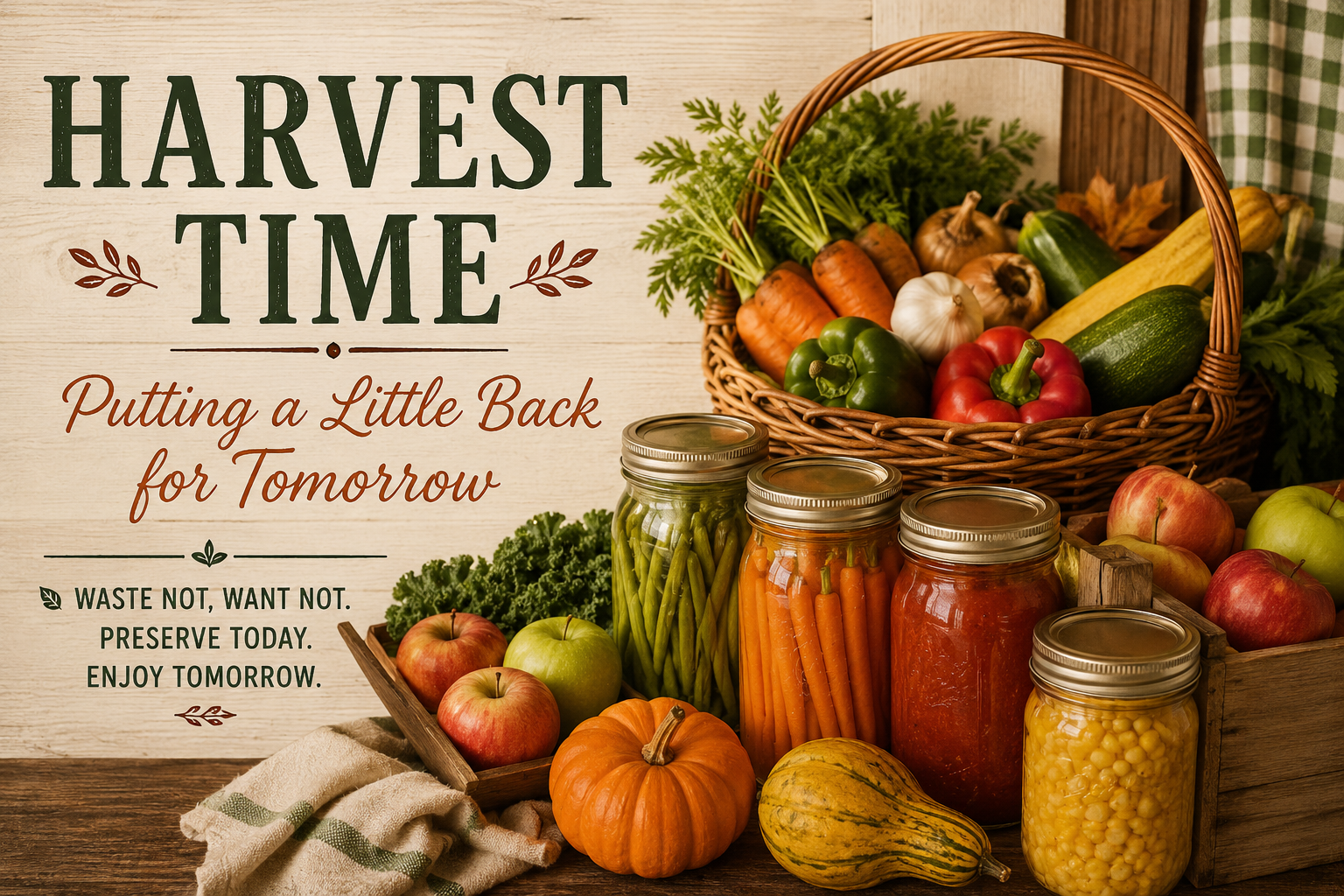
Harvest Time: Putting a Little Back for Tomorrow

There is something special about September.

The gardens are still giving us tomatoes, peppers, green beans, zucchini, and corn. Apples are beginning to show up at roadside stands. Farmers markets are overflowing with the last big harvests of summer while the first signs of autumn are starting to appear.

When I was growing up, this was the time of year when people started thinking about putting a little something back.

Saturday mornings might mean a trip to the farmers market. A roadside stand might have a bushel of peaches or tomatoes for a good price. A neighbor might have more green beans or zucchini than their family could possibly eat.

And then came the family canning days.

There would be jars lined up on the counter, vegetables being prepared, pots simmering, and shelves slowly filling with food that had been gathered while it was plentiful.

It wasn’t about filling every shelf to overflowing.

It was about being practical.

Put a little back while it’s available.

That idea still makes sense today, even if our kitchens—and our lives—look very different.

Maybe you don’t have a garden.

Maybe your harvest comes from a farmers market, a roadside stand, a grocery-store sale, or a surprisingly good deal at Costco.

Maybe putting food back means freezing a few portions instead of canning dozens of jars. Maybe it means dehydrating vegetables, making a soup starter, or simply buying extra of something you know you’ll use later.

The method isn’t really the point.

The principle is.

When something is plentiful and affordable, we can make today’s abundance work a little harder for us tomorrow.

And that’s what September will be about here at Good Food Good Meat.

We’ll talk about preserving the season, stretching a grocery bargain, using what we already have, and building a practical pantry one small step at a time.

We’ll also keep things sensible. Safe food preservation matters, so when we’re talking about canning, we’ll point you toward tested recipes and guidance from the USDA and National Center for Home Food Preservation rather than asking you to guess at a method.

Because putting food back shouldn’t feel overwhelming.

It doesn’t have to mean buying a pressure canner and spending an entire weekend filling jars.

Sometimes it can be as simple as freezing those extra peppers before they go bad.

Or drying a few carrots.

Or making one extra batch of soup.

Or putting one useful jar on the pantry shelf.

🫙 One Thing at a Time

That’s why we’re adding a new September feature: Pantry Builder.

Each week, we’ll choose one practical thing to put back.

Not twenty things.

Just one.

By the end of the month, you may not have a perfectly stocked pantry—and that’s not the goal.

You’ll simply have a few more useful things waiting for you when you need them.

Because there’s something comforting about knowing that tomorrow’s dinner doesn’t always have to start with tomorrow’s grocery trip.

September is a reminder that abundance is temporary.

But with a little planning, some of today’s abundance can become tomorrow’s comfort.

So let’s enjoy the harvest while it’s here—and put a little back for later. 🌾

Today’s plenty can become tomorrow’s peace of mind.

Posted in Skillet Meals

Garden Vegetable Pasta Toss

Introduction

Sometimes the refrigerator doesn’t need another shopping trip.

It needs a little attention.

A zucchini that’s been waiting patiently in the vegetable drawer. A handful of mushrooms. Some green beans. A carrot or two. Maybe a little spinach that’s getting close to the end of its useful life.

That’s where Garden Vegetable Pasta Toss comes in.

This isn’t a recipe that requires you to have exactly the right vegetables. It’s a framework for turning the vegetables you already have into a simple pasta dinner.

The vegetables are sautéed until tender-crisp, tossed with pasta and a light garlic-herb sauce, and finished with Parmesan and fresh herbs.

It’s colorful, satisfying, inexpensive, and — perhaps most importantly — flexible.

Because sometimes the best ingredient in the kitchen is the one you already bought.

Why You’ll Love This Recipe

  • It’s a refrigerator-cleanout meal without feeling like one.
  • You can use almost any combination of vegetables.
  • It’s inexpensive and naturally meatless.
  • One pot of pasta and one skillet handle most of the work.
  • It can be served warm or at room temperature.
  • It’s easy to scale for one or two people.
  • The vegetables can be prepped ahead, making tomorrow’s dinner easier.
simplegoodfood's avatarsimplegoodfood

Garden Vegetable Pasta Toss

This isn't a recipe that requires you to have exactly the right vegetables. It's a framework for turning the vegetables you already have into a simple pasta dinner.
Prep Time 15 minutes
Cook Time 15 minutes
Total Time 30 minutes
Servings: 4
Course: Dinner, Lunch, Main Course
Cuisine: American
Calories: 390

Ingredients
  

  • 8 ounces pasta such as penne, rotini, or bow ties
  • 1 tablespoon olive oil
  • 1 small onion diced
  • 2 medium carrots thinly sliced
  • 1 cup sliced mushrooms
  • 1 cup green beans cut into bite-sized pieces
  • 1 medium zucchini diced
  • 2 cloves garlic minced
  • ½ teaspoon dried basil
  • ½ teaspoon dried parsley
  • ¼ teaspoon dried thyme
  • ½ teaspoon salt or to taste
  • ¼ teaspoon black pepper
  • ½ cup low-sodium vegetable broth
  • 1 tablespoon lemon juice
  • ¼ cup grated Parmesan cheese
  • 2 tablespoons chopped fresh parsley
Optional Additions
  • 1 cup fresh spinach
  • ½ cup frozen peas
  • leftover cooked corn
  • chopped bell pepper
  • roasted vegetables
  • cherry tomatoes
  • cooked chicken or turkey

Method
 

Cook the Pasta
  1. Bring a large pot of salted water to a boil.
  2. Cook the pasta according to the package directions until just tender.
  3. Before draining, reserve ½ cup of the pasta water.
  4. Drain the pasta and set aside.
Start With the Firm Vegetables
  1. While the pasta cooks, heat the olive oil in a large skillet over medium heat.
  2. Add the onion and carrots.
  3. Cook for 3–4 minutes, stirring occasionally.
  4. Add the green beans and mushrooms.
  5. Continue cooking for another 3–4 minutes.
Add the Quick-Cooking Vegetables
  1. Add the zucchini.
  2. Cook for 2–3 minutes, stirring occasionally.
  3. The vegetables should be tender but still have some texture.
  4. If you’re using bell peppers, peas, or other vegetables, add them according to how quickly they cook.
Add the Garlic and Herbs
  1. Add the garlic, basil, parsley, thyme, salt, and black pepper.
  2. Cook for about 30 seconds, just until fragrant.
Make the Light Sauce
  1. Pour the vegetable broth into the skillet.
  2. Add the lemon juice.
  3. Stir and allow the mixture to simmer for 1–2 minutes.
  4. The broth isn’t supposed to make a heavy sauce. It’s simply there to bring the flavors together and give the pasta a little moisture.
Toss Everything Together
  1. Add the drained pasta to the skillet.
  2. Toss gently until the pasta is coated with the vegetables and pan juices.
  3. If the mixture seems dry, add a tablespoon or two of the reserved pasta water.
  4. Continue tossing until everything is heated through.
Finish the Pasta
  1. Remove the skillet from the heat.
  2. Add the Parmesan cheese and fresh parsley.
  3. Toss again.
  4. Taste and adjust the seasoning.
  5. Serve warm.

🌿 Kitchen Confidence: Cook Vegetables in the Right Order

One of the easiest ways to improve a vegetable pasta dish is to stop treating every vegetable the same.

Some vegetables need more time.

Some need almost none.

For this recipe:

Carrots and onions go in first.

Green beans and mushrooms come next.

Zucchini goes in toward the end.

Spinach only needs a minute or two.

That simple change means you can have vegetables that are cooked through without turning everything into one soft, indistinguishable mixture.

And that matters.

Good vegetable dishes should still taste like vegetables.

The Refrigerator-Cleanout Rule

The beauty of this recipe is that you don’t need all five vegetables listed above.

Think of the recipe as a starting point.

You need:

Pasta + vegetables + a little liquid + seasoning.

That’s the basic formula.

If you have zucchini but no green beans, use zucchini.

If the mushrooms need to be used, add them.

If you’ve got leftover cooked broccoli, toss it in near the end.

If you have spinach that needs attention, add it just before the pasta.

The goal isn’t to make the vegetables match the recipe.

The goal is to make the recipe work for the vegetables you have.

Cook Today, Make Tomorrow Easier

This recipe can also become a small meal-prep project without really feeling like one.

If you’re already washing and chopping vegetables for dinner, chop a little extra.

If you’re already cooking pasta, make enough for another meal.

Store the extra cooked vegetables separately or refrigerate the finished pasta for another day.

You can even prepare a container of sautéed vegetables and freeze them as a meal starter for a future pasta dish, soup, or skillet meal.

That’s the whole philosophy we’ve been working with this week:

Do a little more while you’re already in the kitchen.

Make It Your Own

Add Protein

If you want a heartier meal, add:

  • leftover cooked chicken
  • turkey
  • cooked shrimp
  • white beans
  • chickpeas

Change the Pasta

Almost any medium-sized pasta works.

Try:

  • rotini
  • penne
  • bow ties
  • shells
  • whole-wheat pasta
  • chickpea pasta

Change the Flavor

For an Italian-style version, add extra basil and Parmesan.

For a brighter summer version, add more lemon and fresh parsley.

For a heartier fall version, try roasted carrots, mushrooms, and spinach.

The basic method stays the same.

Storage

Store leftovers in a covered container in the refrigerator.

Use within 3–4 days.

When reheating, add a splash of water or vegetable broth if the pasta has dried out.

For best texture, gently reheat in a skillet rather than overheating it in the microwave.

Posted in Skillet Meals

Beef Fried Rice

Introduction

Fried rice is one of those meals that can make you feel like you planned ahead even when you really didn’t.

A little cooked beef left from another meal. Some rice in the refrigerator. A few vegetables that need to be used.

Suddenly, dinner is handled.

This Beef Fried Rice is intentionally flexible. It’s a great way to use leftover cooked beef and rice, along with whatever vegetables are hanging around the refrigerator.

And that’s exactly what makes it such a good fit for Cooking Today, Planning for Tomorrow.

The beef doesn’t have to come from one particular recipe. Leftover beef from a skillet, rice bowl, roast, or meal-prep session can all find a second life here.

It’s not really leftovers anymore.

It’s dinner.

Why You’ll Love This Recipe

  • It’s ready in about 25 minutes.
  • Leftover cooked beef does the heavy lifting.
  • Day-old rice works beautifully.
  • It’s an excellent refrigerator clean-out meal.
  • The seasoning is savory without being overly spicy.
  • You can easily make two servings instead of four.
  • It’s perfect for an electric skillet or regular skillet at the campground.
simplegoodfood's avatarsimplegoodfood

Beef Fried Rice

Fried rice is one of those meals that can make you feel like you planned ahead even when you really didn't.
Prep Time 10 minutes
Cook Time 15 minutes
Total Time 25 minutes
Servings: 4
Course: Dinner, Lunch, Main Course
Cuisine: American
Calories: 500

Ingredients
  

  • 2 cups cooked lean beef chopped into small pieces
  • 3 cups cold cooked rice
  • 1 tablespoon olive oil
  • 1 small onion diced
  • 1 medium carrot finely diced
  • 1 cup frozen peas and carrots
  • ½ cup chopped green beans optional
  • 2 cloves garlic minced
  • 2 large eggs lightly beaten
  • 2 tablespoons low-sodium soy sauce
  • 1 tablespoon Worcestershire sauce
  • ½ teaspoon sesame oil
  • ¼ teaspoon black pepper
  • 2 green onions sliced
Optional Additions
  • mushrooms
  • zucchini
  • corn
  • leftover cooked broccoli
  • spinach
  • a small amount of shredded cabbage

Method
 

Get Everything Ready First
  1. Fried rice moves quickly once you start cooking. Have your beef chopped, rice separated, vegetables prepared, eggs beaten, and seasonings measured before you heat the skillet.
  2. If your rice is stuck together in the refrigerator, break it apart with your fingers or a fork before adding it to the skillet.
Cook the Vegetables
  1. Heat a large skillet or electric skillet over medium-high heat. Add the olive oil. Add the onion and carrot and cook for 2–3 minutes.
  2. Add the frozen peas and carrots and optional green beans. Cook for another 2–3 minutes, until the vegetables are hot and beginning to soften.
Add the Garlic and Beef
  1. Add the garlic and cook for about 30 seconds. Add the chopped cooked beef.
  2. Stir everything together and cook for 2–3 minutes, allowing the beef to warm through and pick up some of the flavor from the skillet.
Add the Rice
  1. Add the cold cooked rice. Spread it across the skillet and let it cook undisturbed for about 1 minute. Then stir and continue cooking for another 3–4 minutes. This little bit of contact with the hot skillet helps the rice develop the texture we’re looking for.
Make Room for the Eggs
  1. Push the beef, rice, and vegetables toward one side of the skillet. Pour the beaten eggs into the empty space. Cook, stirring gently, until the eggs are mostly set. Then stir them into the rice mixture.
Season the Fried Rice
  1. Add the soy sauce, Worcestershire sauce, sesame oil, and black pepper. Stir thoroughly so the seasonings are distributed throughout the rice. Cook for another 1–2 minutes.
  2. Taste and add a little more soy sauce if needed.
Finish and Serve
  1. Remove from the heat.
  2. Stir in the sliced green onions.
  3. Serve immediately.

Cook Today, Make Tomorrow Easier

This recipe is practically the definition of the week’s theme.

When you’re making rice for another meal, cook extra.

When you’re cooking beef, save a portion.

When you have vegetables that need to be used, put them aside.

Then later:

Rice + beef + vegetables = fried rice.

You don’t need to plan a special meal-prep session.

You simply made a few ingredients available for the next meal.

Make It Your Own

Change the Protein

Although we’re using beef here, the same method works with:

  • cooked chicken
  • pork
  • turkey
  • cooked sausage

Change the Vegetables

This is where fried rice really earns its refrigerator-cleanout reputation.

Use what you have.

Try:

  • cabbage
  • mushrooms
  • zucchini
  • corn
  • broccoli
  • spinach
  • green beans

Just remember that vegetables with a lot of moisture may need a little extra cooking time before the rice goes in.

Keep the Seasoning Mild

If you’re not a fan of spicy foods, there’s no reason to add hot sauce or chili peppers.

The combination of soy sauce, Worcestershire sauce, garlic, and a tiny amount of sesame oil gives the dish plenty of flavor without heat.

Storage

Refrigerate leftovers promptly in a shallow, covered container.

Use within 3–4 days.

Reheat thoroughly in a skillet or microwave.

Because this recipe contains cooked rice, it’s especially important to cool and refrigerate leftovers promptly rather than leaving the finished fried rice sitting at room temperature.

Posted in Recipe Roundup

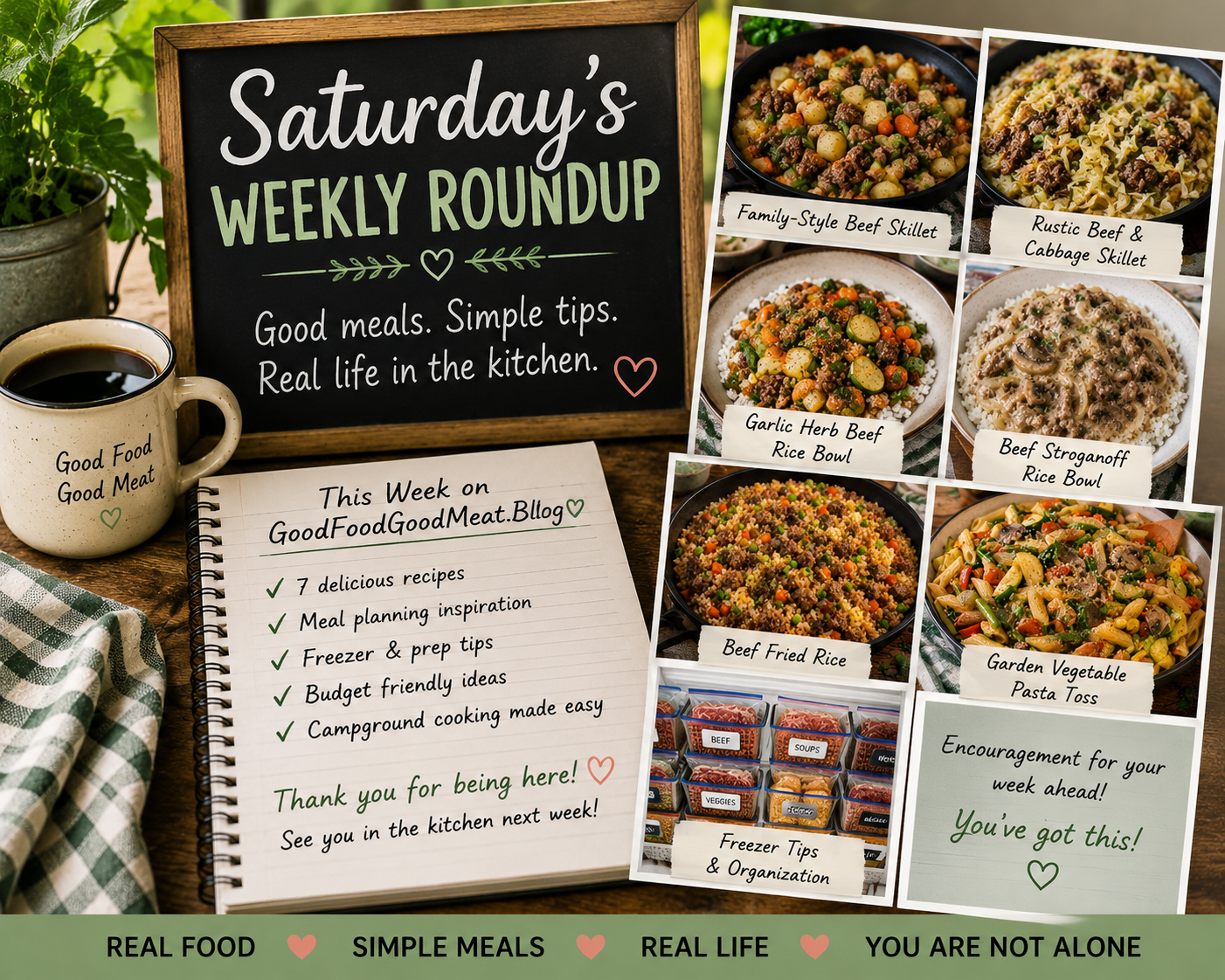
Cooking Today, Planning for Tomorrow: A Week of Practical Meal Prep

Sometimes saving money in the kitchen doesn’t require a complicated meal plan or an entire Sunday spent preparing food.

Sometimes it simply means thinking one meal ahead.

This week on Good Food Good Meat, we’re taking that idea into the kitchen with simple recipes, practical meal-prep strategies, and a little freezer organization.

The goal isn’t to cook everything in advance.

It’s to make a few smart choices while you’re already cooking so that tomorrow’s meal — or next week’s meal — is just a little easier.

That can mean cooking extra ground beef.

Chopping an extra onion.

Making enough rice for another meal.

Freezing a meal starter before it gets forgotten in the refrigerator.

Or organizing your freezer so you can actually find the food you’ve already bought.

That’s Cooking Today, Planning for Tomorrow.


🥘 Start With One Skillet

Family-Style Beef & Vegetable Skillet

We started the week with a simple idea:

Cook a little extra while you’re already cooking.

Our Family-Style Beef & Vegetable Skillet combines lean ground beef with carrots, mushrooms, zucchini, green beans, and onions in a simple savory sauce.

It’s a complete meal on its own, but the real beauty is what happens when you intentionally save a portion.

That extra beef and vegetable mixture can become the starting point for another meal later in the week.

The lesson: Meal prep doesn’t have to mean making a week’s worth of dinners. Sometimes it’s simply making enough for tomorrow.


🥬 Put Cabbage to Work

Rustic Beef & Cabbage Skillet

Cabbage is one of those wonderfully practical vegetables that can stretch a meal without stretching the grocery budget.

This rustic skillet combines ground beef with cabbage, carrots, and onions for a hearty meal that’s simple, inexpensive, and easy to adapt.

And because cabbage keeps well, it’s especially useful when you’re trying to make the most of the produce you’ve already purchased.

Kitchen confidence: Learn how to cook cabbage until it’s tender without turning it into mush.

The lesson: Inexpensive ingredients can still make satisfying meals when you know how to use them.


🥣 Build a Better Rice Bowl

Garlic Herb Beef & Garden Vegetable Rice Bowl

Rice bowls are one of my favorite ways to make a small amount of protein stretch.

This one takes a completely different flavor direction from the other beef recipes this week.

Instead of a spicy sauce or heavily seasoned mixture, we’re using garlic, herbs, beef, rice, and a colorful collection of garden vegetables.

Carrots, green beans, zucchini, mushrooms, and onions make this a bowl that’s full of texture and color.

And because the beef and vegetables can be prepared ahead, you can make the components today and assemble the bowl when you’re ready to eat.

The lesson: Meal prep doesn’t mean every component has to be finished at the same time.


❄️ Build a Freezer Meal Kit

How to Build a Better Freezer Meal Kit

Wednesday took us from cooking today’s dinner to preparing for a future one.

A freezer meal kit doesn’t have to be a complete frozen dinner.

Sometimes the most useful thing to freeze is simply:

  • cooked meat
  • prepared vegetables
  • a sauce or seasoning
  • a label
  • a plan for what you’ll add later

That small package can become a skillet, rice bowl, soup, pasta dish, or another meal entirely.

For smaller households, this can be especially useful because you’re not filling the freezer with six identical meals.

You’re creating flexible meal starters.

The lesson: Freeze components when they’re fresh, and let tomorrow’s meal come together faster.


🍄 Give Stroganoff a Bowl Makeover

Beef Stroganoff Rice Bowl

Thursday brought us another rice bowl, but this one couldn’t be more different.

Savory beef and mushrooms are combined with onions and a light creamy sauce, then served over rice instead of the traditional noodles.

It’s familiar comfort food with a little flexibility built in.

And once again, the beef and mushroom mixture can be prepared ahead, refrigerated for the next few days, or frozen as a future meal starter.

The lesson: The same basic ingredients can take you in completely different directions when you change the flavor profile and the way you serve them.


❄️ Friday at the Farmhouse

How to Label and Organize Your Freezer

This week’s Friday post might be the most practical one of all.

And it started with a simple problem:

The ribs were at the bottom of the chest freezer.

Instead of continuing to dig through a 7-cubic-foot freezer every time something was buried underneath everything else, I bought baskets designed to fit the freezer.

Eight baskets later, the food was much easier to find.

But something else happened, too.

The baskets became a way to organize the freezer around the way I actually cooked.

Proteins could go together.

Vegetables could go together.

Meal starters could have their own space.

And when I was planning meals for an entire month, I could look at what I had and make sure I wasn’t accidentally serving the same kind of meal on the same day every week.

That turned freezer organization into something much more useful:

a meal-planning tool.

The freezer wasn’t telling me what to cook.

It was giving me enough visibility to make better choices.


🍚 Saturday Bonus Recipes

We’ve spent the week learning how to make today’s cooking work a little harder.

So let’s finish by putting those ideas into practice.

Beef Fried Rice

Have leftover cooked beef?

Have some rice in the refrigerator?

Add whatever vegetables need to be used and turn them into a completely different meal.

That’s exactly what we’re looking for when we talk about cook once, enjoy more than once.

The beef doesn’t have to taste like the meal it came from.

A few changes in seasoning and preparation can make leftovers feel like a new dinner.


Garden Vegetable Pasta Toss

And then there’s the ultimate “use what you’ve got” meal.

Garden Vegetable Pasta Toss is designed to be flexible.

Whatever vegetables are hanging around in the refrigerator can become part of dinner.

A little zucchini.

Some mushrooms.

Green beans.

Carrots.

Spinach.

Even leftover cooked vegetables from another meal.

Add pasta and a simple sauce, and you’ve got dinner instead of a collection of vegetables that might otherwise be forgotten.

The lesson: Before you shop for another ingredient, take a look at what needs to be used first.


The Bigger Idea: Small Steps Add Up

None of these ideas requires an entire day of meal preparation.

You can:

Cook extra beef.

Make extra rice.

Chop an extra onion.

Save a portion before it becomes an oversized pile of leftovers.

Freeze food while it’s still fresh.

Label what you freeze.

Organize your freezer so you can actually find it.

Those little decisions don’t look like much individually.

But together, they can change the way you cook.

Instead of starting every meal from zero, you begin to build a small collection of ingredients and meal starters that make future cooking easier.

And that’s especially valuable when you’re cooking for one or two people, cooking at a campground, working with limited refrigerator space, or simply trying to stretch the grocery budget a little further.


Cook Today. Make Tomorrow Easier.

That’s really what this week has been about.

Not elaborate meal prep.

Not spending your Sunday filling thirty freezer containers.

Not eating the same leftovers all week.

Just paying attention to the opportunities that naturally happen while you’re already in the kitchen.

Because sometimes the smartest meal you can cook today isn’t just the one you’re eating tonight.

It’s the one you quietly made easier for tomorrow. 🌿

Family-Style Beef & Vegetable Skillet
There is something wonderfully practical about cooking a little more than you need.
Check out this recipe
Rustic Beef & Cabbage Skillet
This Rustic Beef & Cabbage Skillet keeps things simple: browned ground beef, plenty of cabbage, onions, carrots, and a handful of familiar seasonings.
Check out this recipe
Beef Fried Rice
Fried rice is one of those meals that can make you feel like you planned ahead even when you really didn't.
Check out this recipe
How to Build a Better Freezer Meal Kit
Check out this recipe
Beef Stroganoff Rice Bowl
Love beef stroganoff but want something a little different?
Check out this recipe
How to Label and Organize Your Freezer
Check out this recipe
Beef Fried Rice
Fried rice is one of those meals that can make you feel like you planned ahead even when you really didn't.
Check out this recipe
Garden Vegetable Pasta Toss
This isn't a recipe that requires you to have exactly the right vegetables. It's a framework for turning the vegetables you already have into a simple pasta dinner.
Check out this recipe