Posted in Kitchen Tips

How to Stretch a Dutch Oven Meal Into Two Suppers

One of the easiest ways to stretch your grocery budget isn’t necessarily buying cheaper food.

It’s cooking once and getting more than one meal from it.

That’s one of the reasons I love Dutch oven cooking.

A Dutch oven is perfectly suited to meals that can be made in a slightly larger batch, portioned, refrigerated or frozen, and then turned into something different the next day.

And for a household of one or two, that doesn’t mean making a giant pot of food and eating the same leftovers for four days.

It means thinking ahead just a little.

Dinner tonight can become the starting point for dinner tomorrow.

The Goal Isn’t More Leftovers

There’s an important distinction here.

We’re not talking about making a six-serving recipe because the original recipe says it serves six.

We’re talking about making a meal intentionally large enough to give you two useful meals.

For two people, that might mean four servings.

For one person, it might mean two or three.

The trick is to stop thinking of the second serving as a leftover and start thinking of it as an ingredient for another meal.

That’s where things get interesting.

Start With a Meal That Can Change

Some meals are naturally better candidates for stretching than others.

Good choices include:

  • Beef stew
  • Chicken and rice
  • Chili
  • Pulled pork
  • Shredded chicken
  • Bean stew
  • Braised chicken
  • Meatballs
  • Pot roast
  • Cooked ground meat
  • Roasted or braised vegetables

The best candidates are foods that can be reheated without losing their texture and can be incorporated into something new.

Example #1: Beef Stew → Beef Pot Pie

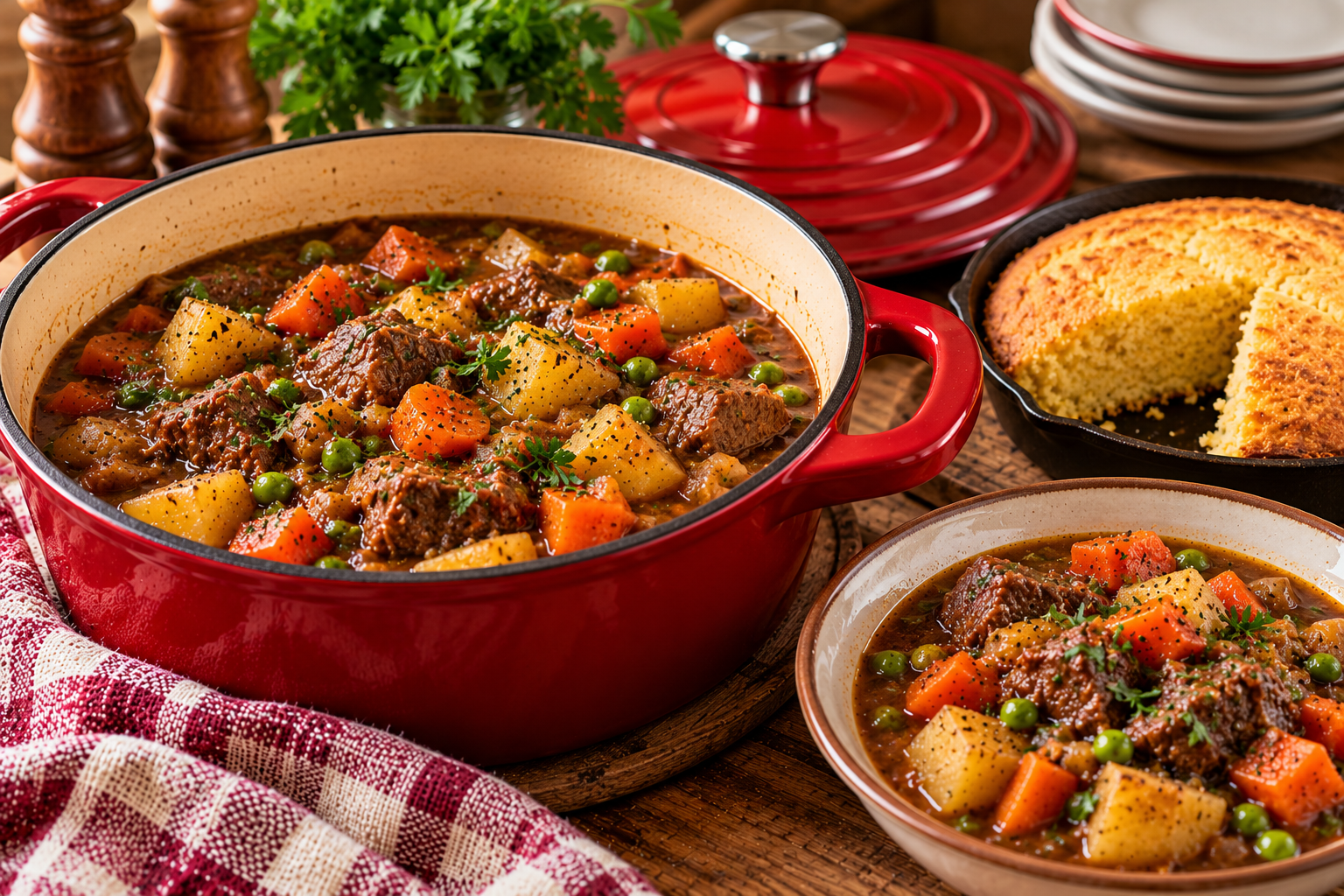
Sunday’s Dutch Oven Beef Stew is a perfect example.

Serve the first portion as stew.

Then save enough for another meal.

The next day, add a little extra cooked vegetable if needed, place the stew in a small baking dish, top it with biscuits or a little pie crust, and bake until golden.

Same basic food.

Completely different dinner.

You didn’t need another pound of beef.

You simply changed the presentation.

Example #2: Chicken & Rice → Chicken Soup

Tuesday’s Dutch Oven Chicken & Rice can take another direction.

Add some additional chicken broth.

Toss in a handful of frozen vegetables.

Add a little more seasoning.

Now your leftover chicken and rice has become a simple chicken soup.

And if the rice has absorbed most of the original broth overnight, that’s actually helpful. It gives the soup some body.

Example #3: Chili → Chili Baked Potato

Make chili one night.

The next day, spoon it over a baked potato.

Add a little shredded cheese, green onion, or plain Greek yogurt if you like.

Suddenly the leftovers aren’t leftovers anymore.

They’re the topping for another meal.

Example #4: Pulled Chicken → Sandwiches

Cook extra chicken in the Dutch oven.

Use the first portion with vegetables and a starch.

Shred the remaining chicken and refrigerate it.

The next day, turn it into:

  • A sandwich
  • A wrap
  • A rice bowl
  • Chicken salad
  • Quesadillas
  • A small casserole

The original cooking session did most of the work.

The Three-Part Stretch

When I’m planning a meal that needs to go further, I like to think in three steps:

1. Cook a useful amount.

Not an enormous amount.

Just enough to create another meal.

2. Store the extra separately.

Don’t automatically mix everything together.

If you have extra chicken, keep the chicken separate when practical.

If you’re making stew, keep the stew together.

If you’re cooking rice, consider storing some separately.

This gives you more choices later.

3. Change the second meal.

This is the part that keeps you from getting tired of leftovers.

The second meal doesn’t have to be completely different.

It just needs to feel different.

Change the starch.

Change the sauce.

Change the seasonings.

Add a different vegetable.

Turn it into a sandwich, soup, bowl, or casserole.

Small changes can make a big difference.

Stretching Meat Without Making Dinner Feel Cheap

This is especially useful when meat prices are high.

Instead of thinking:

“I need enough meat for two dinners.”

Think:

“I need enough meat to contribute to two dinners.”

That’s a very different calculation.

A small amount of beef can flavor a stew.

A few ounces of chicken can become part of a rice bowl.

A modest amount of sausage can flavor beans and cabbage.

A little ground turkey can become the foundation of a skillet meal.

The vegetables, grains, beans, potatoes, and other ingredients aren’t just fillers.

They’re part of the meal.

Use the Pantry to Change the Leftovers

This is where having a useful pantry really pays off.

A few inexpensive staples can turn yesterday’s meal into something new.

Keep things like:

  • Rice
  • Pasta
  • Potatoes
  • Cornmeal
  • Tortillas
  • Canned tomatoes
  • Beans
  • Frozen vegetables
  • Broth
  • Canned corn
  • Crackers
  • Flour
  • Basic seasonings

You don’t need all of these.

Just keep the ingredients you actually use.

Then when you look at yesterday’s dinner, you can ask:

“What can I add to make this feel like a new meal?”

The Leftover Makeover Doesn’t Have to Be Complicated

Sometimes we make meal planning harder than it needs to be.

If you have leftover beef stew, you don’t need to create a complicated new recipe.

Serve it over mashed potatoes.

Put it in a small casserole.

Top it with biscuits.

Add a little broth and turn it into soup.

That’s enough.

If you have leftover chicken and rice:

Add broth.

Add vegetables.

Make soup.

Done.

The goal isn’t to impress anybody.

The goal is to feed yourself well without starting from scratch every night.

Cooking for One or Two

This strategy can be particularly helpful for small households.

When you’re cooking for a family, leftovers tend to disappear quickly.

When you’re cooking for one or two, a recipe that makes four servings can become a refrigerator problem.

That’s why I recommend thinking about planned leftovers rather than accidental leftovers.

Before you start cooking, decide:

What will we eat tonight?

And:

What will tomorrow’s version be?

Once you answer those two questions, you know how much to make.

A Simple Example

Suppose you’re cooking for two.

Instead of making enough beef stew for six people, make enough for four servings.

Tonight:
Beef stew + Dutch oven cornbread

Tomorrow:
Beef pot pie using the remaining stew

You’ve cooked once.

You’ve bought one set of ingredients.

You’ve cleaned the Dutch oven once.

But you’ve solved dinner twice.

That’s a pretty good return on your effort.

Don’t Save Everything

There’s another side to this strategy that’s worth mentioning.

Not everything needs to be saved.

If you’ve made enough food for two meals, great.

But if you have one tablespoon of vegetables left in the bottom of the pot, don’t feel obligated to create an elaborate plan for it.

Sometimes the most economical thing you can do is recognize that an ingredient has reached the end of its useful life.

Waste reduction should make life easier, not turn your refrigerator into a puzzle.

Food Safety Matters

Planned leftovers work best when you handle them properly.

Refrigerate cooked food promptly in shallow containers so it cools quickly.

Don’t leave a large Dutch oven of hot food sitting on the counter for hours.

For larger batches, dividing the food into smaller containers can help it cool more quickly.

Use refrigerated leftovers within about 3–4 days, or freeze them if you won’t use them in that time.

When reheating, heat food thoroughly and only reheat the portion you plan to eat whenever practical.

Freeze the Second Supper

If you know you won’t want the second meal for a few days, freeze it.

This can be especially helpful when cooking for one.

Make two servings.

Eat one.

Freeze the other.

Now you have a homemade freezer meal waiting for a day when cooking feels like too much work.

That’s a very different kind of leftover.

It’s future-you doing present-you a favor.

Stretch Every Grocery Dollar

The savings from this approach come from several places.

You’re:

  • Using the same ingredients twice.
  • Reducing the amount of meat needed per meal.
  • Reducing food waste.
  • Saving cooking time.
  • Saving cleanup time.
  • Making better use of pantry staples.
  • Creating convenience meals without buying convenience food.

And there’s another savings that doesn’t show up on the grocery receipt:

You are less likely to buy takeout because there’s already something useful waiting in the refrigerator.

That’s worth something, too.

Waste Not, Want Not

The best way to avoid wasting food is to have a plan for it before you cook it.

If you’re making chicken and rice tonight, decide whether tomorrow’s meal will be soup.

If you’re making chili, decide whether you’ll use the leftovers over potatoes.

If you’re making beef stew, decide whether you’re saving enough for a pot pie.

It doesn’t have to be complicated.

Just give tomorrow’s portion a job.

Kitchen Confidence

The more you practice this, the easier it becomes.

Eventually you’ll look at a pot of dinner and automatically start seeing possibilities.

This could become soup.

That would make a great sandwich.

I could put this over rice tomorrow.

A couple of eggs would turn this into breakfast.

That’s the real advantage of learning to cook rather than simply learning recipes.

You begin to understand what food can become.

Pantry to Table

This week’s Dutch oven meals have really been one long lesson.

Sunday showed us how to make a small-batch beef stew.

Monday gave us the Pantry-to-Pot formula.

Tuesday put that formula to work with chicken and rice.

Wednesday showed how beans can become a meal instead of merely a side dish.

Thursday gave us a small batch of cornbread to go alongside those meals.

And now we’re looking at what happens after dinner.

Because Pantry to Table isn’t only about getting tonight’s meal on the table.

It’s about making the food you buy work harder.

It’s about cooking realistically for one or two.

And sometimes, the smartest meal you can make tonight is the one that quietly takes care of tomorrow, too.
Posted in Home & Pantry

Pantry Beans: More Than a Side Dish

Beans have a reputation for being a side dish.

Put a spoonful of beans next to a piece of chicken. Add them to a plate of barbecue. Maybe serve them alongside cornbread.

But beans can do a lot more than sit quietly at the edge of the plate.

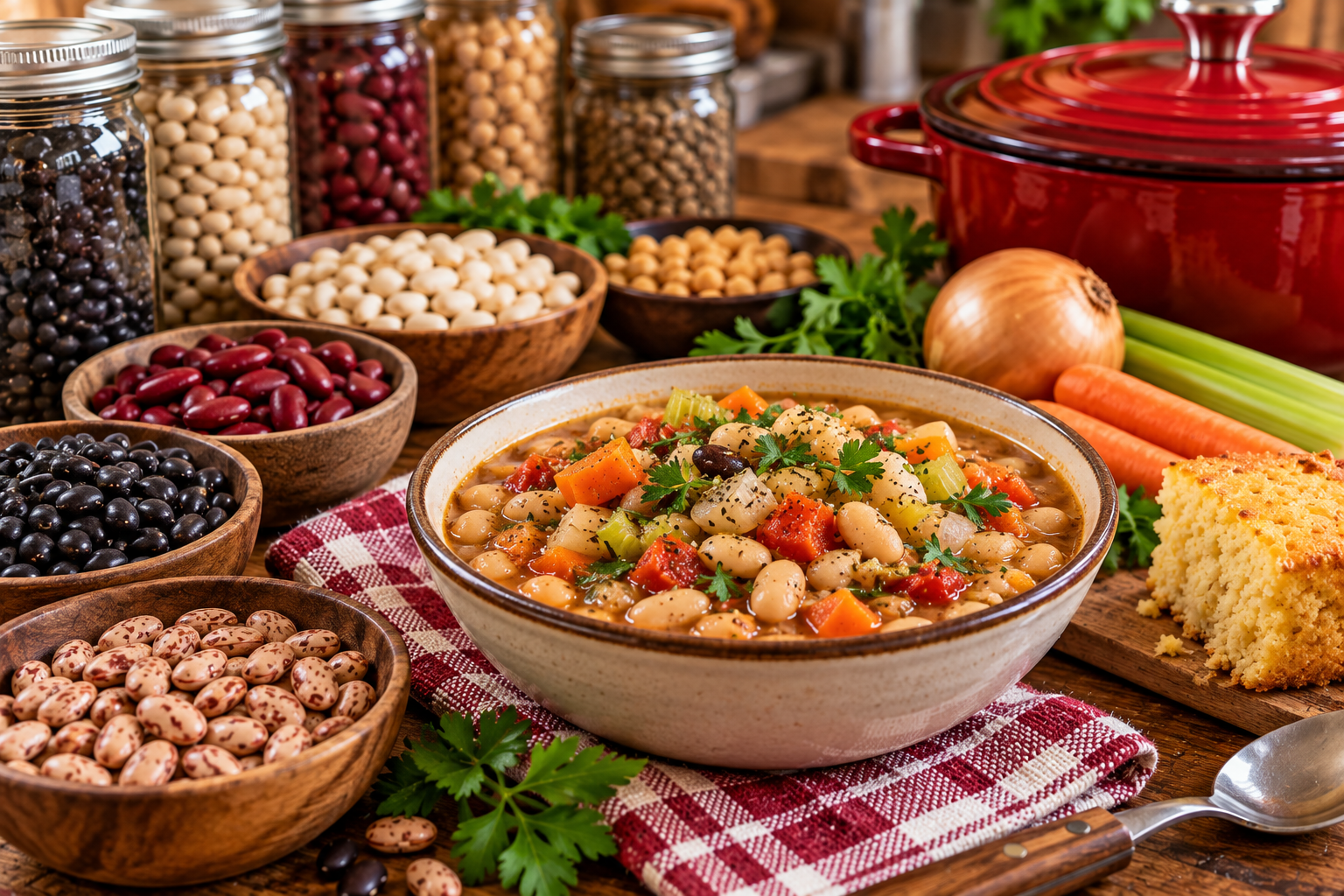
For a small household, beans are one of the most useful foods you can keep in the pantry. They’re inexpensive, versatile, filling, and available in forms that make sense whether you’re cooking from scratch or trying to get dinner on the table quickly.

And when you’re trying to stretch the grocery dollar, beans can help you make a little meat go a lot further.

Beans Can Be Dinner

One of the biggest mistakes we make with pantry cooking is thinking that every meal needs a large piece of meat in the center of the plate.

It doesn’t.

Beans can be the main protein in a meal, or they can share the job with a smaller amount of meat.

Think of:

  • Beans with rice
  • White beans with chicken
  • Black beans with corn and rice
  • Beans in soup
  • Beans in chili
  • Beans with pasta
  • Beans folded into a skillet meal
  • Beans served with cornbread

A half-can of beans can turn a small amount of leftover chicken into another meal.

That’s not just convenient.

That’s smart grocery shopping.

Choosing the Right Beans for Your Pantry

You don’t need ten different kinds of beans.

Buy the ones you actually enjoy eating.

Some useful choices include:

  • Black beans
  • Kidney beans
  • Pinto beans
  • Great Northern beans
  • Cannellini beans
  • Navy beans
  • Chickpeas
  • Black-eyed peas
  • Lentils

And there’s no rule saying you have to like all of them.

Your pantry should reflect your tastes, not somebody else’s idea of a perfectly stocked pantry.

If you don’t enjoy a particular bean preparation, don’t buy it just because it’s cheap.

An inexpensive ingredient that never gets eaten isn’t a bargain.

Canned or Dried?

Both have a place in a practical pantry.

Canned Beans

Canned beans are hard to beat for convenience.

They’re already cooked, they don’t require soaking, and they’re ready to add to a meal.

For one or two people, smaller cans can also be useful because you aren’t committed to finding a use for a huge batch of cooked beans.

Drain and rinse canned beans before using them in most recipes. This removes some of the excess sodium and the liquid they are packed in.

Look for lower-sodium varieties when available, especially if you use beans frequently.

Dried Beans

Dried beans are usually economical when purchased in larger quantities, and they can be an excellent pantry staple if you have the time and inclination to cook them.

They’re particularly useful for soups, stews, and larger batches that can be portioned and frozen.

But don’t assume dried is automatically better.

For a small household, convenience has value, too.

If a can of beans means you’re willing to make dinner instead of reaching for takeout, that can be the better choice.

Beans + Rice = A Pantry Classic

There is a reason beans and rice show up in so many food traditions around the world.

They’re inexpensive, filling, and adaptable.

You can keep the combination simple:

Beans + rice + vegetables + seasoning

Or turn it into something more substantial with a little chicken, sausage, or ground turkey.

You can also change the flavor profile completely.

Southwestern

Black beans, rice, corn, cumin, garlic, and a little chili powder.

Mediterranean-Inspired

White beans, rice, garlic, oregano, spinach, and lemon.

Rustic

Great Northern beans, carrots, celery, onion, and herbs in a savory broth.

The basic ingredients don’t have to change much.

The seasonings can take dinner in a completely different direction.

Beans Are Excellent Meat Stretchers

This is where beans become particularly useful for budget-conscious cooking.

Suppose you have four ounces of cooked chicken.

That’s not necessarily enough for two complete meals.

But add a half-cup of beans, some vegetables, and a little rice, and suddenly that chicken can become the protein component of two satisfying servings.

The same idea works with:

  • Ground turkey
  • Ground beef
  • Sausage
  • Leftover pork
  • Shredded rotisserie chicken

You aren’t trying to disguise the beans.

You’re simply allowing the beans and meat to share the workload.

What About Black-Eyed Peas?

Black-eyed peas deserve special mention because they are often treated as a Southern side dish when they can easily become the foundation of a meal.

You can combine them with:

  • Rice
  • Greens
  • Corn
  • Onions
  • Peppers
  • Ham or leftover pork
  • Smoked turkey
  • A little sausage

And here’s another important pantry rule:

Cook beans the way you actually like them.

If you don’t enjoy black-eyed peas cooked with ketchup or stewed tomatoes, don’t put them in that combination simply because somebody’s recipe says you should.

There are plenty of other ways to season them.

Your pantry should serve you.

Pantry Bean Meal Ideas

Here are some easy combinations to keep in mind when you need dinner but don’t have a recipe planned.

White Bean & Chicken Skillet

White beans + leftover chicken + carrots + spinach + broth + garlic.

Black Bean Rice Bowl

Black beans + rice + corn + peppers + cumin + a little cheese.

Rustic Bean Soup

White beans + carrots + onion + celery + potatoes + broth + herbs.

Bean & Sausage Skillet

A small amount of sausage + white beans + cabbage + onion.

Black-Eyed Pea Supper

Black-eyed peas + rice + sautéed vegetables + a small amount of leftover pork.

Chickpea Pasta

Chickpeas + pasta + garlic + vegetables + broth or a light sauce.

The point isn’t to memorize these combinations.

It’s to start recognizing the possibilities.

Beans Don’t Have to Mean a Vegetarian Meal

There’s sometimes an assumption that adding beans means you’re making a meatless meal.

Not necessarily.

A small amount of meat combined with beans can make a particularly satisfying meal for a small household.

Think:

4 ounces chicken + ½ cup beans

instead of:

8 ounces chicken

The first combination can give you a meal that is every bit as satisfying while making the meat stretch farther.

Pantry Beans and the Dutch Oven

Beans fit beautifully into the Dutch oven theme we’re exploring this week.

They’re especially good in:

  • Soups
  • Stews
  • Chili
  • Casseroles
  • Slow-simmered skillet meals
  • Bean and vegetable dishes

And because cooked beans don’t require long cooking, canned beans can often be added toward the end of a recipe rather than simmered for an hour.

That’s useful when you’re cooking a small batch.

Stretch Every Grocery Dollar

Beans are one of those ingredients where the savings come from how you use them, not simply from their price.

A can of beans may not seem like a dramatic grocery savings by itself.

But if it allows you to:

  • Use less meat
  • Turn leftovers into another meal
  • Bulk up a soup
  • Make a small amount of protein feed two people
  • Create a meatless meal when you want one

the savings add up.

And because beans are shelf-stable, they can wait patiently in the pantry until you need them.

That’s exactly what we want from a pantry staple.

Waste Not, Want Not

Once you’ve opened a can of beans, you don’t have to use the whole thing in one recipe.

For one or two people, divide the beans between two meals.

Use some in today’s skillet.

Save the rest for tomorrow’s soup.

You can also freeze cooked beans if you know you won’t use them within a few days.

Small portions are particularly useful for small households.

Cooking for One or Two

Beans are almost tailor-made for small-batch cooking.

If a recipe calls for a whole can and you only need half, use half.

Don’t automatically double a recipe because that’s how the original recipe was written.

A half-cup of beans can be enough to change a single serving of leftovers into a completely different meal.

And if you cook dried beans, freeze them in small portions rather than one giant container.

That way you can pull out exactly what you need.

Kitchen Confidence: Learn to See Beans Differently

The next time you’re looking at a can of beans in the pantry, don’t automatically think:

“What side dish can I make?”

Ask:

“What meal can I build around these?”

That small change in perspective can make a big difference.

Beans can be the protein.

They can stretch the protein.

They can add substance to soup.

They can replace part of the meat.

They can turn leftovers into something new.

They can help you make dinner when the pantry is looking a little sparse.

That’s a pretty impressive little pantry staple.

Pantry to Table

A well-stocked pantry isn’t about having every ingredient imaginable.

It’s about having a collection of ingredients that can work together.

Beans are one of those ingredients.

Keep a few varieties you actually enjoy. Pair them with rice, potatoes, vegetables, broth, or a modest amount of meat, and you’ve got the foundation for dozens of practical meals.

That’s Pantry to Table at its best: simple ingredients, a little creativity, and dinner without a special grocery-store trip.

Posted in Kitchen Tips

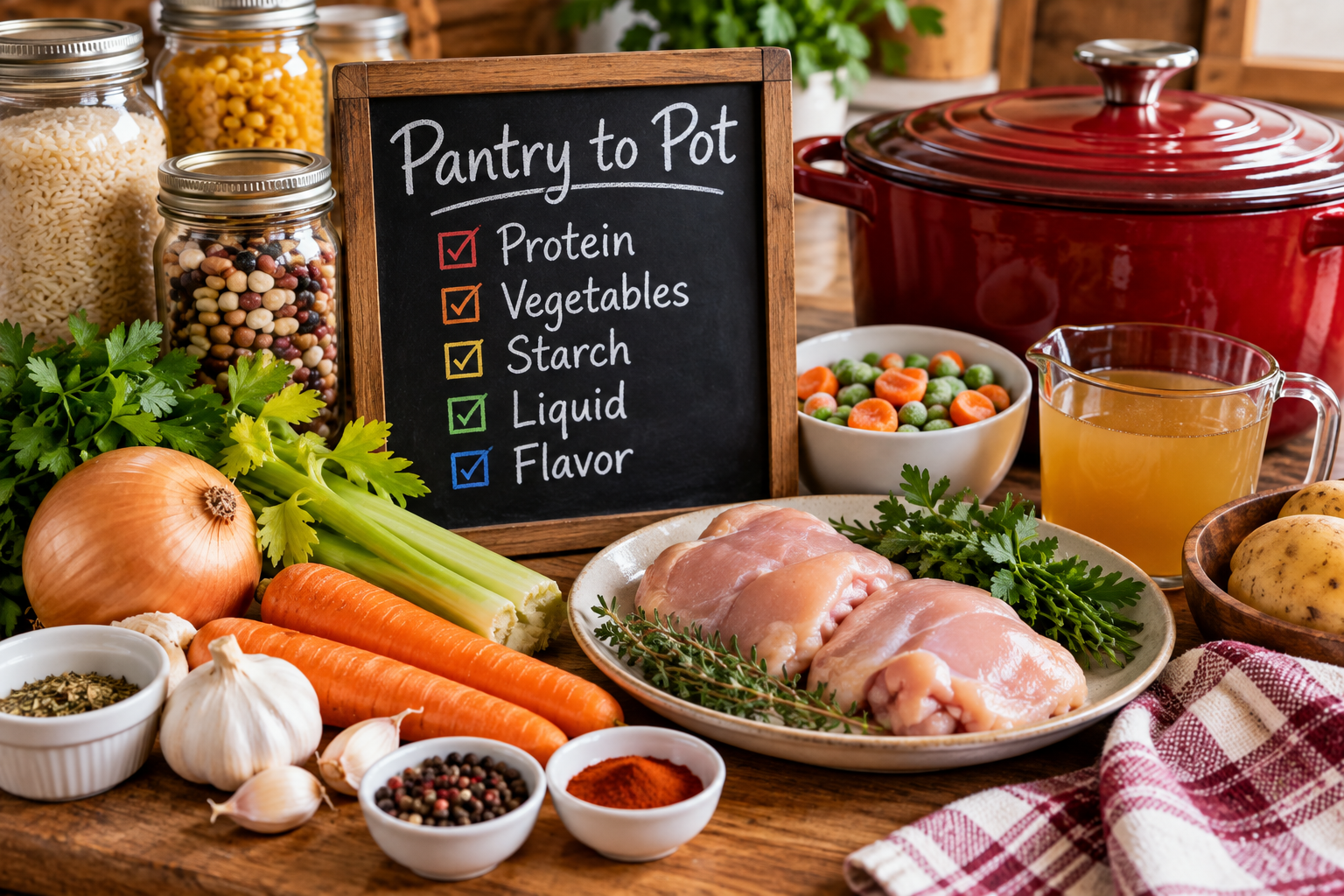
The Pantry-to-Pot Formula: Building a One-Pot Meal

One of the best things about a well-stocked pantry isn’t having everything you could possibly need.

It’s being able to look at what you do have and figure out how to turn it into dinner.

That’s the idea behind Pantry to Table.

And when you add a Dutch oven or another heavy pot to the equation, the possibilities get even better. You can build an entire meal in one pot using a simple combination of protein, vegetables, a starch, and something flavorful to bring everything together.

You don’t necessarily need a recipe.

You need a formula.

The Basic Pantry-to-Pot Formula

When you’re staring into the pantry or refrigerator wondering what’s for dinner, start with these five pieces:

Protein + Vegetables + Starch + Liquid + Flavor = One-Pot Meal

Not every meal needs all five components in exactly the same form, but this gives you a place to start.

1. Choose Your Protein

The protein doesn’t have to be the star of the entire meal.

For a small household, using a modest amount of meat and stretching it with vegetables and a starch is often more economical than building dinner around a large piece of meat.

Good choices include:

  • Chicken thighs or breasts
  • Ground beef or ground turkey
  • Small pieces of beef stew meat
  • Pork
  • Sausage
  • Canned chicken
  • Canned tuna or salmon, depending on the recipe
  • Eggs
  • Beans or lentils

And remember: the protein doesn’t always have to be meat.

Beans, lentils, and eggs can turn a pot of vegetables and grains into a satisfying meal without making the grocery bill climb.

2. Add Vegetables

This is where pantry cooking gets really practical.

Use what you have.

Fresh vegetables are wonderful, but they aren’t the only option.

Try:

  • Fresh carrots
  • Onions
  • Celery
  • Cabbage
  • Potatoes
  • Bell peppers
  • Frozen peas
  • Frozen mixed vegetables
  • Canned corn
  • Canned green beans
  • Tomatoes
  • Dehydrated vegetables

A pantry meal shouldn’t require you to make a special trip to the grocery store for three vegetables you only need a handful of.

If you have frozen vegetables, use them.

If you have canned vegetables, use them.

If you have a few fresh vegetables that need to be used, even better.

3. Pick a Starch

The starch is often what turns a pot of ingredients into an actual meal.

Some good choices are:

  • Potatoes
  • Rice
  • Pasta
  • Barley
  • Quinoa
  • Corn
  • Beans
  • Couscous
  • Small amounts of bread or cornbread served alongside

Rice and potatoes are particularly useful because they’re inexpensive, filling, and easy to keep on hand.

And don’t underestimate barley. It’s an old-fashioned pantry staple that works beautifully in soups and one-pot meals.

4. Add Liquid

This is where your meal starts becoming dinner.

Depending on what you’re making, your liquid might be:

  • Chicken broth
  • Beef broth
  • Vegetable broth
  • Water
  • Tomato sauce
  • Canned tomatoes
  • Milk
  • Coconut milk
  • A combination of broth and another liquid

You don’t always need a lot.

In fact, when cooking for one or two, starting with less liquid is often easier. You can always add more. Removing excess liquid is considerably harder.

5. Give It Some Flavor

This is the part that keeps pantry cooking from becoming boring.

Start with the basics:

  • Onion
  • Garlic
  • Herbs
  • Spices
  • Low-sodium broth
  • Tomato paste
  • Mustard
  • Worcestershire sauce
  • Soy sauce
  • Lemon juice or vinegar

Then think about the flavor direction you want.

Want something cozy and traditional?

Try beef, potatoes, carrots, onion, thyme, and beef broth.

Want something Mediterranean-inspired?

Try chicken, tomatoes, garlic, oregano, vegetables, and a little lemon.

Want something Southwestern?

Try chicken or ground turkey, corn, peppers, tomatoes, cumin, and chili powder.

Want something hearty and rustic?

Try sausage, cabbage, potatoes, onions, and broth.

The same basic formula can produce very different meals.

The Dutch Oven Makes It Even Easier

A Dutch oven is particularly good at this kind of cooking because you can build layers of flavor in the same pot.

You can:

  1. Brown the meat.
  2. Sauté the vegetables.
  3. Add your starch.
  4. Pour in the liquid.
  5. Season everything.
  6. Cover and let it cook.

That’s dinner without a sink full of pots and pans.

And because a Dutch oven holds heat so well, it is especially useful for meals that benefit from slower cooking.

Don’t Feel Like You Have to Use Every Ingredient

Here’s an important pantry-cooking rule:

You don’t need to use everything you have.

If you have chicken, rice, carrots, peas, tomatoes, corn, beans, and three kinds of pasta, that doesn’t mean dinner needs to contain all of them.

Choose a direction.

A meal with five well-matched ingredients is usually better than a meal containing twelve ingredients that don’t belong together.

Pantry cooking isn’t about throwing random things into a pot.

It’s about making smart substitutions.

Think in Categories, Not Exact Ingredients

This is one of the most useful habits you can develop.

Instead of asking:

“What can I make if I don’t have carrots?”

Ask:

“What vegetable do I have that will work here?”

Instead of:

“I don’t have chicken broth.”

Ask:

“What liquid can provide moisture and flavor?”

Instead of:

“The recipe calls for rice.”

Ask:

“What starch do I have that cooks in roughly the same way?”

That little shift in thinking can save you a surprising number of grocery-store trips.

A Pantry-to-Pot Example

Let’s say you have:

  • A small amount of ground turkey
  • Half an onion
  • A couple of carrots
  • A can of corn
  • Some rice
  • Chicken broth
  • Garlic
  • A few dried herbs

You don’t need a recipe telling you what to do.

Brown the turkey.

Add the onion and carrots.

Add the rice.

Pour in the broth.

Season it.

Cover and simmer until the rice is tender.

Stir in the corn near the end.

You’ve just built a one-pot meal.

Maybe it’s not something you’d find in a cookbook under a fancy name.

That’s okay.

Dinner doesn’t need a fancy name. It needs to work.

Cooking for One or Two Changes the Formula

This is especially important for small households.

When you’re cooking for one or two people, you have more freedom than you might think.

You don’t need a giant stockpot.

You don’t need a 5-pound roast.

You don’t need to buy an ingredient in a quantity that guarantees you’ll be eating it for the next two weeks.

Instead, think small:

  • 4–8 ounces of meat
  • One or two servings of vegetables
  • ½ cup or less of dry grains or pasta
  • A small can of vegetables
  • A few cups of broth

And if a recipe makes two servings, that’s not a problem.

One for tonight. One for tomorrow.

That’s often more practical than trying to make exactly one serving every time.

Make Your Pantry Work for You

A good pantry isn’t necessarily a pantry filled with expensive specialty ingredients.

It’s a pantry filled with things you actually eat.

For a small household, that might include:

  • Rice
  • Pasta
  • Potatoes
  • Barley
  • Canned tomatoes
  • Canned vegetables
  • Frozen vegetables
  • Broth
  • Canned chicken
  • Tuna
  • Salmon
  • Beans
  • Cornmeal
  • Flour
  • Basic herbs and spices

And then there are the ingredients that make those basics more interesting: mustard, Worcestershire sauce, tomato paste, vinegar, garlic, onions, and a few favorite seasonings.

Your pantry should reflect your tastes, not somebody else’s idea of what a perfectly stocked pantry looks like.

There’s no prize for having six kinds of beans if you don’t like beans.

There’s certainly no prize for buying ingredients because they’re inexpensive if they sit on the shelf until they expire.

Stretching the Grocery Dollar Without Making Dinner Boring

One-pot cooking naturally lends itself to economical meals.

A small amount of meat can be stretched with vegetables and grains.

A leftover cooked vegetable can become part of tomorrow’s supper.

A half package of rice can become the base of a completely different meal.

And a pot of soup, stew, chili, or casserole can often give you two meals from one cooking session.

That’s not just convenient.

It’s a way of making your grocery dollars work harder.

Waste Not, Want Not

Before starting a new meal, take a quick look at what’s already open.

Do you have:

  • Half an onion?
  • A few carrots?
  • Leftover cooked chicken?
  • A container of broth?
  • Half a can of corn?
  • A little cooked rice?
  • Vegetables that need to be used?

Those ingredients should get first consideration.

You don’t have to build every meal around leftovers, but using them before opening something new is one of the simplest ways to reduce food waste.

The Pantry-to-Pot Formula at a Glance

When you don’t know what to cook, remember:

1. Pick a protein.

Meat, poultry, fish, eggs, beans, or lentils.

2. Add two vegetables.

Fresh, frozen, canned, or dehydrated.

3. Choose a starch.

Potatoes, rice, pasta, barley, or another grain.

4. Add enough liquid.

Broth, tomatoes, water, or another appropriate liquid.

5. Choose a flavor direction.

Herbs, spices, sauces, or seasonings that make sense together.

6. Cook it all in one pot.

Brown first when appropriate, then simmer, bake, or braise until everything is tender.

And there you have it.

Pantry to Pot.

It isn’t a recipe.

It’s a way of thinking.

Kitchen Confidence

The more comfortable you become with this formula, the less dependent you’ll be on recipes for everyday meals.

Recipes are wonderful when you’re trying something new or want very specific results.

But sometimes you just need dinner.

That’s when knowing how ingredients work together becomes more useful than having a recipe open on your phone.

Start with what you have.

Make reasonable substitutions.

Keep the batch small.

And don’t be afraid to call something dinner simply because you invented it yourself.

One Last Thought

A well-stocked pantry doesn’t mean you never need to go grocery shopping.

It means that when life gets busy, the weather turns nasty, or you simply don’t feel like making another trip to the store, you have options.

That’s the real goal of Pantry to Table.

Not perfection.

Not a picture-perfect pantry.

Just enough good ingredients, a little kitchen confidence, and the ability to turn what you have into something worth sitting down to eat.

Posted in Recipe Roundup

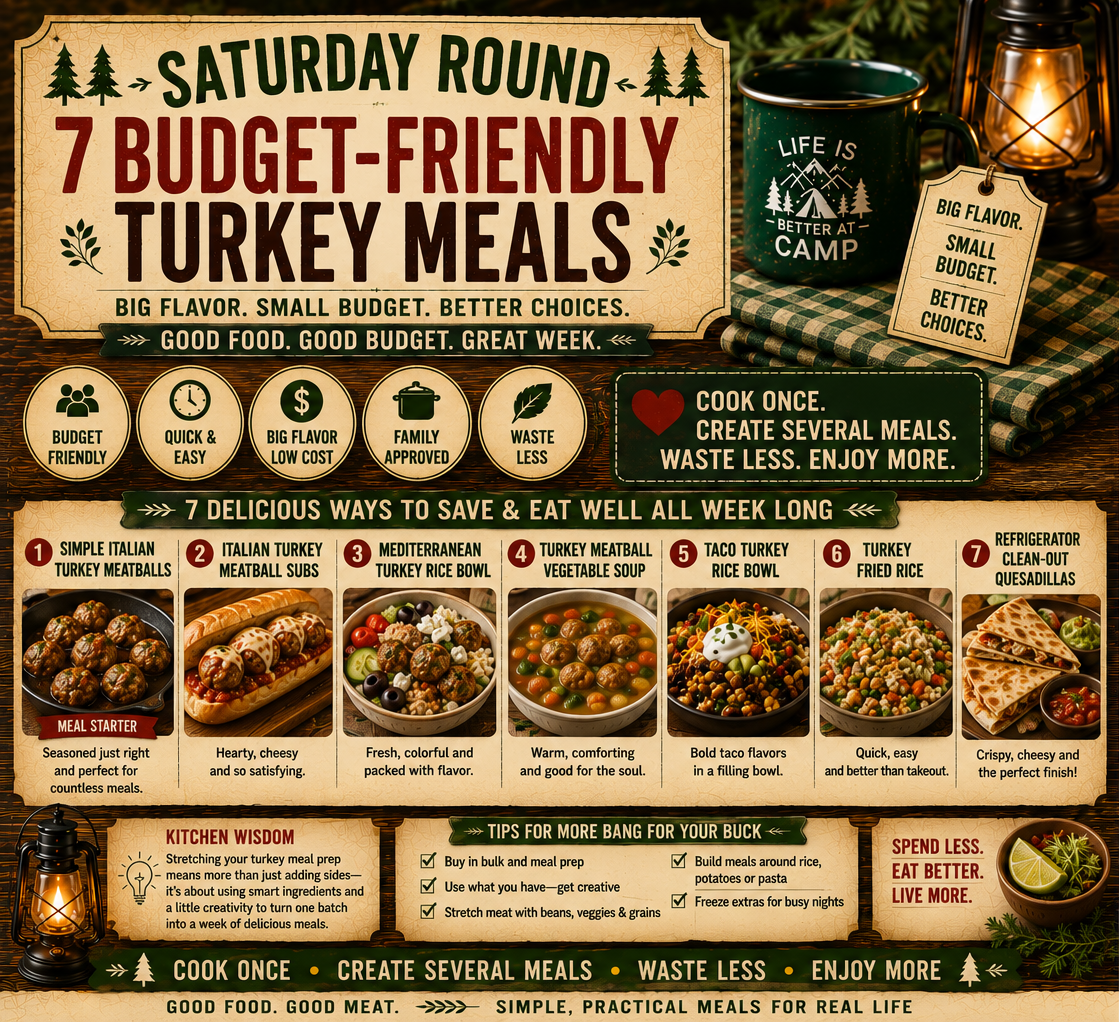
7 Budget-Friendly Turkey Meals

Looking for ways to make one package of ground turkey stretch into several delicious meals?

This week’s Stretch Every Grocery Dollar series showed how a simple batch of homemade Italian turkey meatballs can become a full week of satisfying dinners. Whether you’re cooking for one, feeding a small family, or simply trying to lower your grocery bill, these recipes prove that a little planning can go a long way.

From hearty soups and sandwiches to rice bowls and creative leftover meals, here are seven budget-friendly turkey recipes to inspire your next meal plan.


🍝 1. Simple Italian Turkey Meatballs

The meal prep foundation that starts the week and makes several later meals quick and easy.


🥪 2. Italian Turkey Meatball Subs

A toasted roll, marinara, melted mozzarella, and homemade turkey meatballs make an easy comfort-food favorite.


🥗 3. Mediterranean Turkey Rice Bowl

Fresh vegetables, brown rice, feta, and a creamy lemon herb yogurt sauce transform turkey meatballs into a fresh Mediterranean-inspired meal.


🥣 4. Turkey Meatball Vegetable Soup

A comforting soup filled with vegetables, pasta, and hearty turkey meatballs.


🌮 5. Taco Turkey Rice Bowl

Seasoned turkey meatballs, brown rice, black beans, corn, salsa, and fresh toppings come together in a colorful Build-A-Bowl dinner.


🍳 6. Turkey Fried Rice (Bonus Recipe)

A quick skillet meal that gives leftover turkey meatballs a delicious second life.


🧀 7. Refrigerator Clean-Out Quesadillas (Bonus Recipe)

One of the easiest ways to use leftover turkey, vegetables, cheese, and odds and ends from the refrigerator. Every quesadilla is a little different—and that’s exactly the point!


💡 Related Reading

Before you head to the grocery store, don’t miss:

Five Ways to Stretch Ground Turkey

You’ll find practical tips for meal prepping, freezing, using beans and vegetables to stretch your meat, and making every grocery dollar work a little harder.


Final Thoughts

Budget-friendly cooking isn’t about giving up the foods you love—it’s about making smart use of what you already have.

By starting with one simple batch of turkey meatballs and thinking creatively about leftovers, you can enjoy a full week of flavorful, satisfying meals while reducing food waste and saving money.

That’s exactly what the Stretch Every Grocery Dollar series is all about.

Simple Italian Turkey Meatballs
Thesetender Italian Turkey Meatballs are seasoned with classic herbs and Parmesancheese, then baked until juicy and lightly browned.
Check out this recipe
Italian Turkey Meatball Subs
Oneof the easiest ways to stretch your grocery budget is to transform leftoversinto something that feels completely new.
Check out this recipe
Mediterranean Turkey Rice Bowl
Thiscolorful Mediterranean Turkey Rice Bowl transforms a few of this week'shomemade turkey meatballs into a completely new meal.
Check out this recipe
Turkey Fried Rice
Oneof my favorite ways to stretch leftovers is to turn them into fried rice.
Check out this recipe
Turkey Meatball Vegetable Soup
Halfway through the week is the perfect time for a comforting bowl of homemade soup.
Check out this recipe
Taco Turkey Rice Bowl
Today's Taco Turkey Rice Bowl gives Sunday's Italian turkey meatballs a Southwestern makeover.
Check out this recipe
Refrigerator Clean-Out Quesadillas
Almost any leftover meat, vegetables, cheese, or rice can become a quesadilla.
Check out this recipe
Posted in Heat & Eat, Sandwiches, Wraps & Handhelds

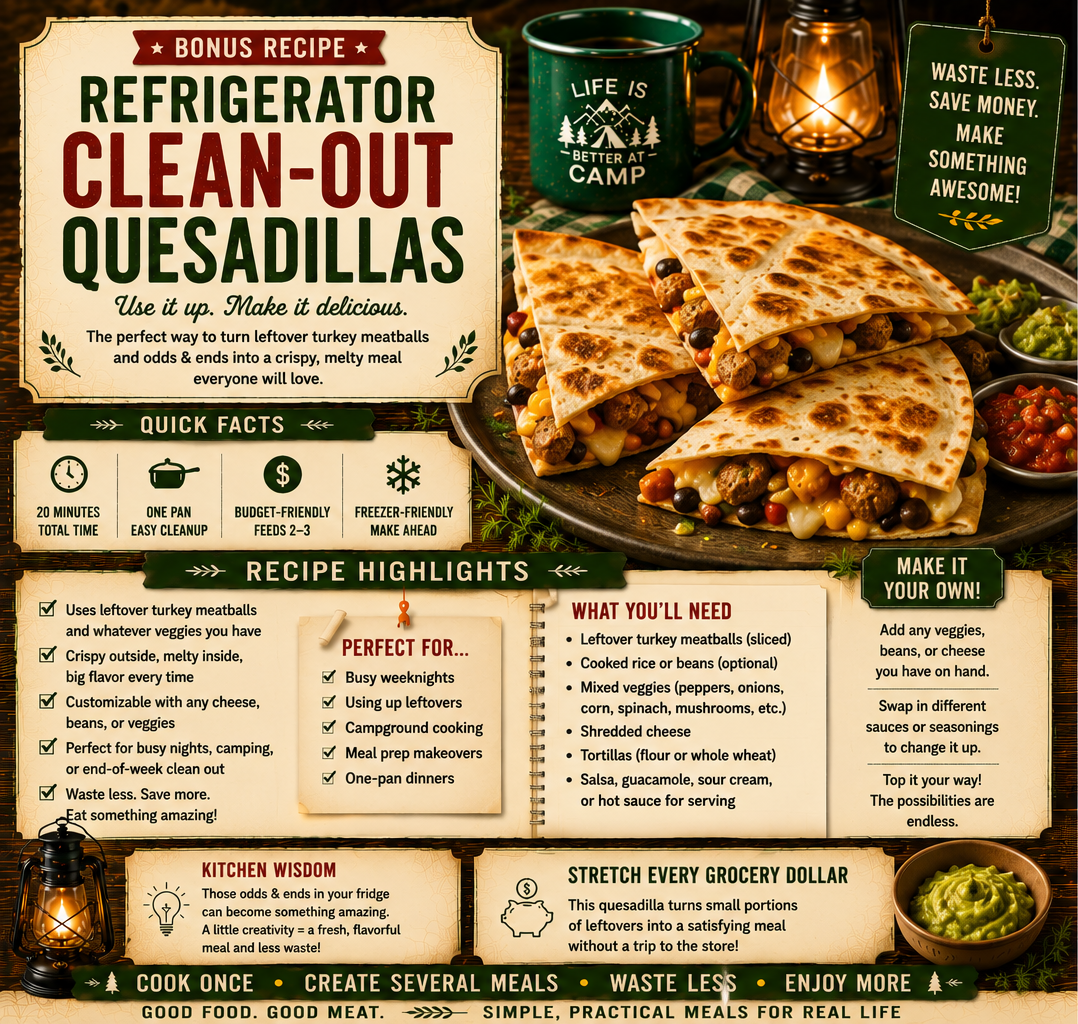
Refrigerator Clean-Out Quesadillas

Quesadillas are one of the easiest “clean out the refrigerator” meals you can make.

Almost any cooked meat, vegetable, or cheese can become a delicious filling. Before buying more groceries, challenge yourself to build one meal using what’s already in your refrigerator. You’ll save money, reduce food waste, and might even discover a new favorite combination.

simplegoodfood's avatarsimplegoodfood

Refrigerator Clean-Out Quesadillas

Almost any leftover meat, vegetables, cheese, or rice can become a quesadilla.
Prep Time 5 minutes
Cook Time 10 minutes
Total Time 15 minutes
Servings: 2
Course: Breakfast, Dinner, Lunch
Cuisine: American
Calories: 510

Ingredients
  

  • 4 large flour tortillas 8-inch
  • 4 –6 cooked turkey meatballs chopped
  • 1 cup shredded cheese Cheddar, Monterey Jack, Mexican blend, or whatever you have
  • 1 cup assorted leftover vegetables chopped
  • o Bell peppers
  • o Onions
  • o Corn
  • o Mushrooms
  • o Spinach
  • o Zucchini
  • o Tomatoes drained
  • o Cooked broccoli
  • 1 teaspoon olive oil or butter
  • Salsa Greek yogurt, or sour cream for serving (optional)

Method
 

  1. Heat a large skillet over medium heat.
  2. Lightly brush one side of each tortilla with olive oil or butter.
  3. Place one tortilla, oiled side down, in the skillet.
  4. Sprinkle half of the cheese over the tortilla.
  5. Add the chopped turkey meatballs and leftover vegetables in an even layer.
  6. Top with the remaining cheese and place the second tortilla on top, oiled side up.
  7. Cook for 3–4 minutes until golden brown.
  8. Carefully flip and cook the second side until crisp and the cheese has melted.
  9. Repeat with the remaining ingredients.
  10. Slice into wedges and serve with salsa, Greek yogurt, or sour cream.

Notes

Tips & Variations
  • Add a spoonful of black beans for extra protein and fiber.
  • Sprinkle in taco seasoning or Italian seasoning to change the flavor.
  • Mix different cheeses for more flavor.
  • Serve with a simple side salad or fresh fruit.
  • Leftover cooked chicken, pork, roast beef, or vegetables work just as well.
Don’t overstuff your quesadilla. It can be tempting to use every last bit of leftovers, but a thinner layer of filling lets the cheese melt around everything like glue. If you have lots of leftovers, make two quesadillas instead of one giant one.

Related Reading

🍽️ Keep Cooking Smarter

Continue building your budget-friendly kitchen with these helpful articles and recipes:

  • Stretch This Week’s Groceries Even Farther
  • Five Ways to Stretch Ground Turkey
  • Freezer & Make-Ahead Meals
  • Pantry Meal Starters
  • Side Dish Library
  • Meal Prep Collections
Posted in Kitchen Tips

Five Ways to Stretch Ground Turkey

Introduction

Ground turkey has become one of my favorite budget-friendly proteins. It’s often less expensive than ground beef, works well in countless recipes, and easily takes on the flavors of whatever seasonings you use.

Growing up Pennsylvania Dutch, I learned early that wasting food simply wasn’t an option. You learned to make one ingredient work in several different meals, and that’s exactly what we’ve been doing this week.

If you’re looking for ways to make your grocery budget go further, here are five simple ways to stretch a pound of ground turkey without anyone leaving the table hungry.


1. Make Meal Prep Work for You

Instead of cooking one dinner, cook a larger batch that can become several meals.

This week, one batch of Italian Turkey Meatballs became:

  • Meatball Subs
  • Mediterranean Rice Bowls
  • Vegetable Soup
  • Taco Rice Bowls

One afternoon of cooking provided several completely different dinners.


2. Add Beans

Beans are inexpensive, high in protein, and rich in fiber.

Try mixing:

  • Black beans
  • Pinto beans
  • Cannellini beans
  • Great Northern beans

They’re perfect in:

  • Chili
  • Taco meat
  • Rice bowls
  • Soups
  • Pasta dishes

You can often replace one-third to one-half of the meat without sacrificing flavor.


3. Bulk It Up with Vegetables

Finely chopped vegetables disappear into many recipes while adding nutrition and stretching your meat.

Some favorites include:

  • Mushrooms
  • Zucchini
  • Carrots
  • Bell peppers
  • Onions
  • Spinach

For sauces, soups, casseroles, and meatloaf, they’re almost invisible.


4. Build Meals Around Rice or Potatoes

Instead of serving meat as the star of the plate, let hearty, inexpensive sides do more of the work.

Ideas include:

  • Rice bowls
  • Stuffed baked potatoes
  • Skillet meals
  • Fried rice
  • Soup
  • Pasta

A smaller amount of turkey goes much farther when it’s part of a complete meal.


5. Stock Your Freezer

When you find ground turkey on sale, cook several pounds at once.

Freeze portions as:

  • Meatballs
  • Taco meat
  • Seasoned crumbles
  • Meatloaf mixture
  • Cooked patties

Having cooked turkey ready to go makes weeknight meals much easier and helps you avoid expensive takeout.


💡 Kitchen Wisdom

Don’t overlook frozen vegetables when you’re stretching your grocery budget.

Corn, peas, green beans, broccoli, and mixed vegetables can be used straight from the freezer, allowing you to use only what you need and save the rest for another meal. Fresh vegetables like carrots and butternut squash often hold their texture better in recipes where you want them to stay firm, while frozen vegetables shine in soups, casseroles, and skillet meals.


Final Thoughts

Stretching your grocery dollar isn’t about serving less food—it’s about making smart use of the ingredients you buy.

With a little planning, one package of ground turkey can become several satisfying meals, helping you save both time and money while reducing food waste.

That’s a lesson that’s just as valuable today as it was in my Pennsylvania Dutch childhood kitchen.


Related Recipes from This Week