
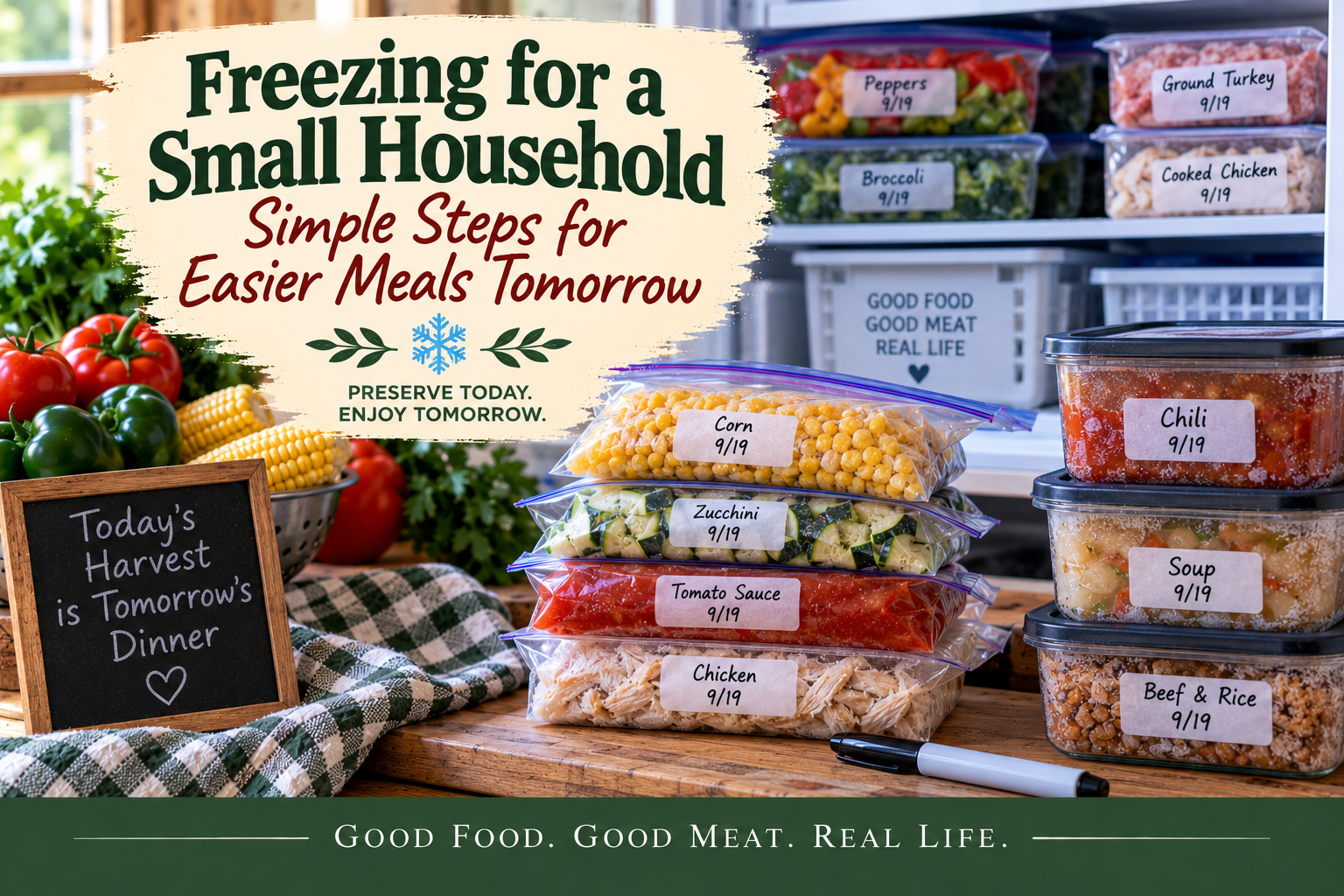
Freezing food sounds simple enough: buy it, prepare it, put it in the freezer, and you’re done.
But when you’re cooking for one or two people, there’s another question to answer:
How much do I really need to freeze?
A freezer can be one of the best tools for stretching a grocery budget and making seasonal food last longer. But a small household doesn’t need six-quart bags of everything. The goal is to put food back in useful amounts — portions that make sense for the meals you actually cook.
This week, we focused on making the freezer work for real life.
❄️ This Week’s Freezing Roundup


The week’s posts looked at freezing from a practical perspective: what is worth freezing, how much to put away, how to package it, and how to make sure those frozen foods actually get used later.
Freeze for the Meals You Make
One of the easiest mistakes to make when preserving food is thinking only about the food itself.
Instead, think about the meal.
If you usually cook for one or two, freezing several small portions may be much more useful than putting one enormous package into the freezer.
A bag of corn in one-cup portions gives you options.
A few portions of cooked chicken can become soup, a skillet meal, a wrap, or a rice bowl.
Frozen vegetables can be pulled out in exactly the amount you need instead of thawing a whole container and wondering what to do with the leftovers.
That’s the kind of freezer we’re building: a freezer that helps make supper easier.
A Little Today Can Become a Lot Later
You don’t have to fill your freezer in one afternoon.
A bag of seasonal corn here.
A couple of portions of cooked chicken there.
Some vegetables when they’re plentiful and reasonably priced.
Before long, those small additions become a collection of ingredients that can save both time and money.
And that’s especially useful when you’re cooking for a small household. You’re not trying to stock a restaurant freezer. You’re building a little reserve of ingredients that fit your life and your meals.
The Real Goal: Less Waste, Easier Meals
Putting food in the freezer isn’t the finish line.
Using it is.
The best freezer stash is one you can actually see, identify, and use. Labeling matters. Portion size matters. Keeping track of what you have matters.
And perhaps most importantly, frozen food should eventually come back out of the freezer and become dinner.
That’s why this month’s theme isn’t simply about preservation.
It’s about putting a little something back today so tomorrow’s meals are easier.
What’s Next?
We’ve been working our way through the harvest — choosing what to buy, deciding what to use now, and learning how to save some for later.
Next week, we’ll take that idea one step further as The Pantry Gets Bigger.
Because not everything needs to live in the freezer.
Some foods can become shelf-stable pantry ingredients, meal starters, and little pieces of future suppers waiting for us when we need them.
And that’s where the real payoff of putting food back begins.
Today’s harvest can become tomorrow’s dinner.
Pinterest Caption
Freezing for a small household doesn’t have to mean filling your freezer with oversized packages. Learn how to freeze useful portions, reduce food waste, stretch your grocery budget, and build a freezer stash that actually makes future meals easier.
Social Media Excerpt
Freezing food is one thing. Freezing it in portions that actually work for a household of one or two is another. This week’s roundup is all about making the freezer useful — not just full.
Hashtags
#GoodFoodGoodMeat, #SimplePracticalMeals, #RealFoodRealLife, #CookingForOneOrTwo, #BudgetFriendlyMeals, #FreezerMeals, #FreezerCooking, #FoodPreservation, #MealPrep, #SmallHouseholdCooking, #HarvestCooking, #PutALittleBack,
Discover more from Simple, Practical Meals for Real Life
Subscribe to get the latest posts sent to your email.
