Posted in Soups & Stews

Building a Better Pantry Soup

There are nights when you have plenty of food in the pantry but absolutely no idea what to make for dinner.

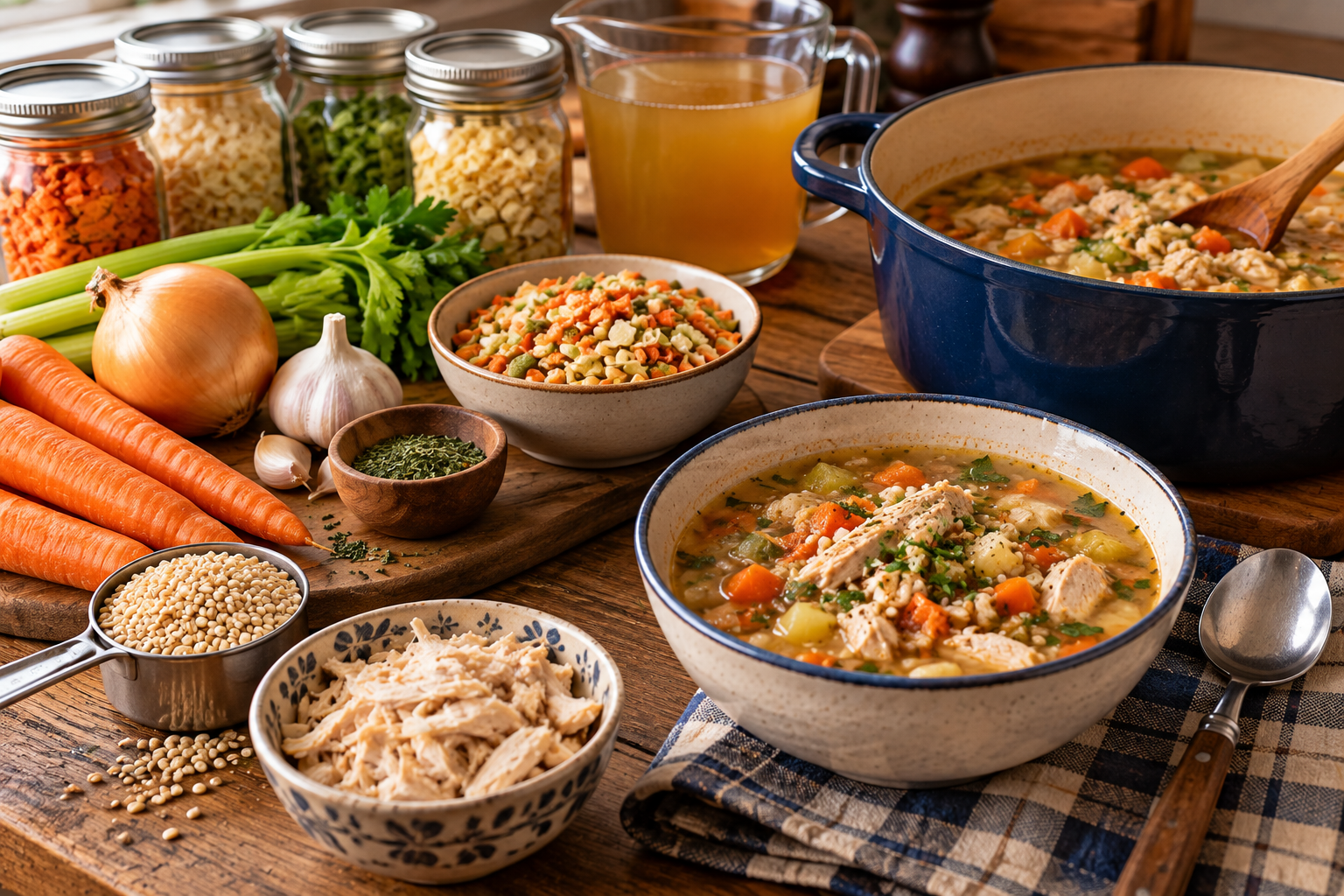
You have a can of tomatoes. Maybe some broth. A little leftover chicken. A bag of rice or barley. A few vegetables tucked away in the refrigerator.

Nothing looks like a recipe.

But put the pieces together in the right order, and suddenly you have soup.

That’s one of the best things about keeping a practical pantry: you don’t always need a recipe to make dinner. You need a formula.

For October’s Pantry to Table series, we’re looking at the ingredients and habits that make everyday cooking easier. And learning how to build a good soup from what you already have may be one of the most useful skills in the whole pantry.

Why Build Soup From a Formula?

A recipe tells you exactly what to buy and exactly what to do.

A formula gives you room to work with what you already have.

That’s particularly useful when you’re cooking for one or two people. You may have half an onion, one lonely carrot, some leftover turkey, and a little cooked rice—but not enough of any one ingredient to make the recipe you found online.

Soup doesn’t care.

That’s its superpower.

You can combine small amounts of ingredients, adjust the proportions, and end up with a completely different soup every time.

The Basic Pantry Soup Formula

Think of your soup as a series of building blocks:

Broth + Protein + Vegetables + Starch or Grain + Seasoning + Finish

You don’t necessarily need every component every time, but this gives you a place to start.

1. Start With the Liquid

The broth forms the foundation of the soup.

Good pantry choices include:

  • Chicken broth
  • Turkey broth
  • Vegetable broth
  • Beef broth
  • Homemade stock
  • Bouillon or soup base mixed with water

You can also use water when your other ingredients provide plenty of flavor.

For a small household, shelf-stable broth in smaller containers can be particularly convenient. If you open a larger container, freeze the unused portion in meal-sized amounts rather than letting it sit in the refrigerator waiting for another recipe.

2. Add a Protein

Protein turns a bowl of soup from a side dish into a meal.

And it doesn’t have to mean cooking meat specifically for the soup.

Good pantry and leftover options include:

  • Canned chicken
  • Canned tuna, for appropriate soups
  • Canned salmon
  • Canned mackerel
  • Cooked turkey
  • Leftover chicken
  • Ground beef
  • Ground turkey
  • Cooked pork
  • Eggs
  • Beans
  • Lentils

This is one reason canned proteins can be so useful in a small household. You don’t have to wait until you have enough leftover meat to make soup.

And you don’t have to buy an ingredient just because a recipe says you need it.

3. Add Vegetables

This is where your pantry, freezer, refrigerator, and preservation projects can all work together.

Use whatever makes sense:

Fresh vegetables

  • Carrots
  • Celery
  • Onion
  • Bell pepper
  • Cabbage
  • Zucchini

Frozen vegetables

  • Peas
  • Corn
  • Green beans
  • Mixed vegetables
  • Spinach

Canned vegetables

  • Tomatoes
  • Green beans
  • Corn
  • Carrots

Dehydrated vegetables

  • Onion
  • Carrots
  • Celery
  • Potatoes
  • Other vegetables you’ve preserved

And don’t underestimate a small amount.

Half a carrot doesn’t look like much on the cutting board. In a bowl of soup, it matters.

4. Choose a Starch or Grain

This is another way to make a small amount of protein and vegetables feel like a complete meal.

Try:

  • Rice
  • Barley
  • Pasta
  • Potatoes
  • Sweet potatoes
  • Quinoa
  • Corn
  • Beans

You don’t always need a starch. A vegetable-heavy soup can stand on its own.

But when you’re trying to make soup satisfying enough for dinner, adding a grain, potato, or pasta can make a big difference.

One Small-Household Tip

Don’t automatically cook a large quantity of rice or pasta just because you’re making soup.

For small-batch cooking, adding a modest amount directly to the soup can be easier.

Just remember that grains and pasta continue absorbing liquid as the soup sits. If you’re planning leftovers, you may want to cook them separately and add them to individual portions.

5. Season It

This is where the same basic ingredients can become completely different soups.

For a classic chicken soup, think:

Garlic + thyme + parsley + black pepper

For a tomato-based soup:

Basil + oregano + garlic

For a Mexican-inspired soup:

Cumin + chili powder + oregano

For a cozy barley soup:

Thyme + garlic + onion + black pepper

For a curry-style vegetable soup:

Curry powder + garlic + ginger

You don’t need a cabinet full of specialty spices.

A handful of basic seasonings can take you a surprisingly long way.

6. Finish the Soup

This is the step people sometimes skip.

The soup may be perfectly good without a finishing touch, but something fresh or flavorful added at the end can wake everything up.

Try:

  • A squeeze of lemon
  • A splash of vinegar
  • Fresh parsley
  • Green onion
  • A spoonful of Greek yogurt
  • A little shredded cheese
  • Fresh herbs
  • A drizzle of olive oil

You don’t need much.

Sometimes half a teaspoon of lemon juice is enough to make a pot of soup taste brighter.

A Simple Way to Think About It

When standing in front of the pantry wondering what to make, ask yourself six questions:

1. What liquid do I have?
Broth, stock, or water?

2. What protein do I have?
Chicken, turkey, canned fish, beans, lentils, or something leftover?

3. What vegetables need to be used?
Fresh, frozen, canned, or dehydrated?

4. What will make it filling?
Rice, barley, pasta, potatoes, or another grain?

5. What flavor direction sounds good?
Herb and garlic? Tomato and Italian? Chili and cumin? Something creamy?

6. What can I add at the end?
Lemon, herbs, cheese, yogurt, or another fresh finish?

Once you’ve answered those questions, you’re halfway to dinner.

A Few Combinations to Get You Started

Here are some examples using the same basic formula.

Chicken + Rice Soup

Broth: Chicken
Protein: Chicken
Vegetables: Carrot, celery, onion
Starch: Rice
Seasoning: Thyme, parsley, garlic
Finish: Lemon

Turkey + Barley Soup

Broth: Turkey or chicken
Protein: Turkey
Vegetables: Carrot, celery, onion
Grain: Barley
Seasoning: Thyme, garlic, black pepper
Finish: Fresh parsley

Tomato + White Bean Soup

Liquid: Diced tomatoes + broth
Protein: White beans
Vegetables: Onion, carrot, spinach
Starch: Optional small pasta
Seasoning: Basil, oregano, garlic
Finish: Parmesan

Beef + Vegetable Soup

Broth: Beef
Protein: Ground beef or leftover beef
Vegetables: Carrot, celery, green beans
Starch: Potato
Seasoning: Garlic, thyme, black pepper
Finish: Fresh parsley

Notice something?

None of these combinations requires a special shopping trip.

They’re built from categories of ingredients, not one exact shopping list.

What If You Don’t Have Everything?

That’s where the formula becomes useful.

No celery?

Skip it.

No fresh onion?

Use dehydrated onion.

No carrots?

Use frozen mixed vegetables.

No chicken?

Use turkey.

No barley?

Use rice.

No fresh herbs?

Use dried.

No broth?

Use water and a good soup base.

The goal isn’t to recreate someone else’s recipe perfectly.

The goal is to make your ingredients work together.

Kitchen Confidence: Learn to Taste as You Go

Soup is forgiving, but seasoning can be tricky.

Start conservatively.

You can always add more salt, herbs, or spices. It’s much harder to fix a soup that’s become overwhelmingly salty or spicy.

Taste after the ingredients have had time to simmer together.

Then ask:

Does it need more salt?

Does it need more seasoning?

Does it need acidity?

That last question is particularly useful.

If the soup tastes flat even though you’ve seasoned it, a small splash of lemon juice or vinegar may be what it’s missing.

It doesn’t necessarily make the soup taste sour. It can simply make the other flavors more noticeable.

Stretch Every Grocery Dollar

Soup is one of the best ways to stretch ingredients without making the meal feel stretched.

A small amount of meat can flavor several servings when combined with vegetables, beans, grains, or potatoes.

That leftover roasted chicken breast that isn’t enough for another dinner?

Soup.

The two tablespoons of barley left in the jar?

Soup.

The handful of frozen vegetables at the bottom of the bag?

Soup.

The last cup of broth?

You guessed it.

Soup is where the little bits get a second chance.

Waste Not, Want Not

Keep a small container or freezer bag for suitable vegetable scraps and leftover cooked vegetables.

Things like carrot ends, celery leaves, onion pieces, and small amounts of cooked vegetables can sometimes be useful in homemade stock or future soups.

Just use common sense about what belongs in it. You don’t want strongly flavored, spoiled, or heavily seasoned leftovers ending up in your soup.

And label freezer containers.

That little frozen container that looks like broth today can become a mystery six weeks from now.

A date and a quick description are worth the extra few seconds.

Cooking for One or Two

The beauty of soup is that you don’t need a six-quart stockpot.

For two servings, start with roughly:

3 cups liquid + 1 cup protein/beans + 1½–2 cups vegetables + ½ cup cooked grain or pasta

Adjust from there.

Remember that some ingredients absorb a surprising amount of liquid.

Barley, rice, pasta, and dehydrated vegetables all need liquid to rehydrate and cook.

If your soup is becoming too thick, add more broth.

If it’s too thin, let it simmer uncovered for a little while longer.

There isn’t a magic number that makes soup “right.”

Right is the consistency you enjoy eating.

Meal Prep Note

If you’re intentionally making soup for leftovers, consider keeping certain ingredients separate.

Rice, pasta, and barley can continue absorbing broth after cooking.

For the best texture, store the cooked grain separately when practical and add it when reheating.

This is particularly helpful when you’re making soup for one or two people and expect it to last several meals.

Storage & Freezing

Cool leftover soup promptly and refrigerate in covered containers.

For best quality, use refrigerated soup within 3–4 days.

Many soups freeze beautifully. Broth-based soups containing meat and vegetables are particularly freezer-friendly.

Cream-based soups and soups containing potatoes can change texture after freezing, although they can still be perfectly usable.

For a small household, freeze soup in single-serving portions whenever possible.

That turns your freezer into a collection of future lunches and dinners instead of one enormous container of frozen soup.

The Pantry Is the Starting Point

A well-stocked pantry doesn’t mean you always have exactly what a recipe calls for.

It means you have enough building blocks to make something good.

That’s an important distinction.

Instead of asking:

“What recipe can I make with these ingredients?”

try asking:

“What kind of meal can these ingredients become?”

That’s the real skill behind pantry cooking.

And once you learn the formula, soup becomes one of the easiest answers.

Tomorrow, we’ll take that idea one step further by making a Homemade Soup Starter Mix using dehydrated and shelf-stable ingredients—something you can keep ready for the nights when you want soup without starting at the beginning.
Posted in Soups & Stews

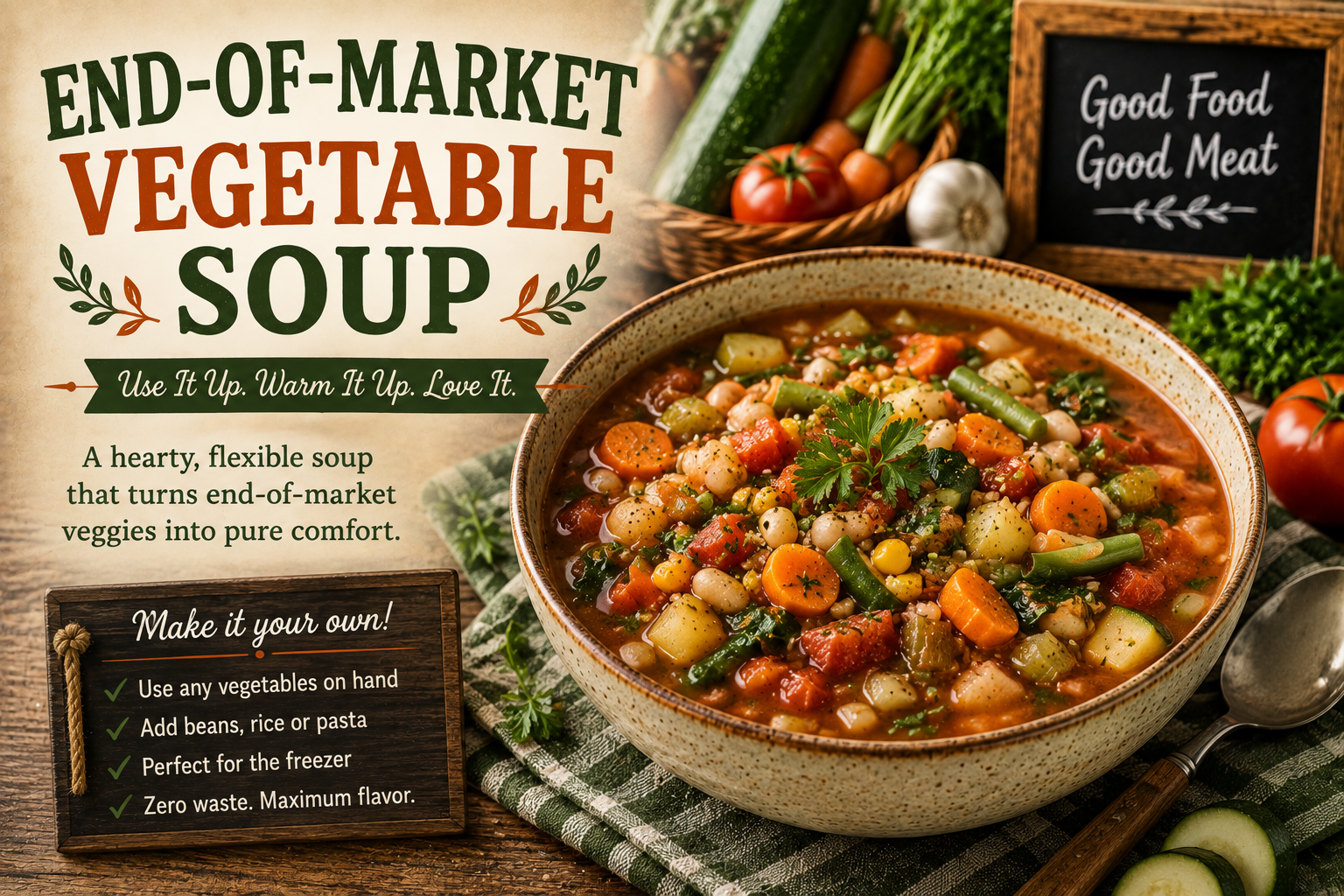
End-of-Market Vegetable Soup

You know that feeling when you come home from the farmers market with a little bit of everything?

A few tomatoes.

Some carrots.

An onion.

Maybe green beans, zucchini, corn, or peppers.

Everything looked so good at the market that you couldn’t resist—and now you have to figure out what to do with it all.

That’s where End-of-Market Vegetable Soup comes in.

There isn’t one perfect vegetable combination for this soup. In fact, the whole idea is that you use what you have.

It’s a practical, flexible soup for the end of the week, when the refrigerator contains a collection of odds and ends that are all still perfectly good but don’t necessarily make a complete meal on their own.

Put them in a pot.

Add some broth and tomatoes.

Season it simply.

And suddenly those little bits and pieces become dinner.

That’s Waste Not, Want Not in action.

simplegoodfood's avatarsimplegoodfood

End-of-Market Vegetable Soup

A flexible, no-waste vegetable soup designed for all those little bits of produce left after market day.
Prep Time 10 minutes
Cook Time 30 minutes
Total Time 40 minutes
Servings: 4
Course: Dinner, Lunch, Soup
Cuisine: American
Calories: 180

Ingredients
  

  • 1 tablespoon olive oil
  • 1 small onion diced
  • 2 carrots sliced
  • 2 celery stalks sliced
  • 2 cloves garlic minced
  • 4 cups mixed vegetables cut into bite-sized pieces
  • 1 can 14.5 ounces diced tomatoes, with juices
  • 4 cups low-sodium vegetable or chicken broth
  • 1 teaspoon Italian seasoning
  • 1/2 teaspoon dried parsley
  • 1/4 teaspoon black pepper
  • 1/4 teaspoon salt or to taste
  • 1 tablespoon chopped fresh parsley optional
Use whatever you have. Good choices include:
  • Zucchini
  • Green beans
  • Corn
  • Peas
  • Bell peppers
  • Cabbage
  • Mushrooms
  • Spinach
  • Potatoes
  • Roasted vegetables left from another meal

Method
 

Start with the aromatics.
  1. Heat the olive oil in a large soup pot or Dutch oven over medium heat. Add the onion, carrots, and celery. Cook for 4–5 minutes, stirring occasionally, until the vegetables begin to soften.
Add the garlic.
  1. Stir in the garlic and cook for about 30 seconds, just until fragrant.
  2. Add the vegetables.
  3. Add your remaining vegetables to the pot. If you’re using potatoes or other firm vegetables, add those first. More delicate vegetables such as zucchini, spinach, or already-roasted vegetables can be added later.
Add tomatoes and broth.
  1. Pour in the diced tomatoes and broth. Stir in the Italian seasoning, parsley, black pepper, and salt.
Simmer.
  1. Bring the soup to a gentle boil, then reduce the heat and simmer for 20–25 minutes, or until the firmest vegetables are tender.
Add delicate vegetables.
  1. If you’re using spinach, leftover roasted vegetables, or other already-cooked vegetables, stir them in during the last 5 minutes.
Taste and adjust.
  1. Taste the broth and add additional salt or seasoning if needed.
Serve.
  1. Ladle into bowls and finish with fresh parsley.

Notes

🌾 The End-of-Market Rule
There are really only three rules for this soup:
Use what you have.
Use what needs to be used first.
Don’t overthink it.
If the zucchini needs to be used today but the carrots will be perfectly happy for another week, the zucchini goes into the soup.
If you have leftover roasted vegetables from earlier in the week, they can go in, too.
If you have a lonely tomato sitting on the counter, dice it up and add it.
This is not a recipe where someone needs to run to the grocery store because they are missing one particular vegetable.
The refrigerator is the ingredient list.

🥔 Make It Heartier

Want to turn this vegetable soup into more of a complete meal?

Add one of these:

  • 1 cup cooked rice
  • 1 cup cooked pasta
  • 1 cup cooked barley
  • 1 cup diced cooked potatoes
  • 1 cup cooked beans
  • 1 cup shredded cooked chicken
  • 1/2 pound cooked ground beef

If adding cooked ingredients, stir them in during the final few minutes just long enough to heat them through.

🧊 Freeze the Extras

This soup is a great candidate for freezing.

If you’re cooking for one or two, portion the cooled soup into individual freezer containers rather than freezing the entire batch together.

Label each container with the name and date.

Then future-you has a homemade lunch or light dinner waiting in the freezer.

That’s one of my favorite forms of food preservation because the preservation and the meal happen at the same time.

🏕️ Campground Version

You can make this soup almost anywhere you have a pot and a heat source.

An electric skillet with a deep lid, Dutch oven, or large saucepan will all work.

And because the vegetables are flexible, this is particularly handy when you’re cooking with limited refrigerator space.

Instead of trying to keep every little leftover ingredient until it becomes a complete meal, turn several small leftovers into one pot of soup.

Less storage.

Less waste.

More dinner.

🫙 Pantry Builder Connection

This soup also shows why a practical pantry doesn’t need to contain dozens of specialty ingredients.

If you have:

  • Canned tomatoes
  • Broth
  • Rice or another grain
  • A few basic seasonings

you already have the foundation for turning a refrigerator full of vegetables into a meal.

That’s the idea behind Pantry Builder this month.

We’re not trying to create a perfect emergency pantry.

We’re building a collection of useful ingredients that help us make good meals from whatever happens to be available.

Posted in Soups & Stews

Kitchen Sink Vegetable Soup

Introduction

There are soups you make because you planned them, and then there are soups that seem to make themselves.

Kitchen Sink Vegetable Soup belongs in the second category.

It’s the soup you make when the refrigerator has a little of this and a little of that: a carrot or two, some leftover corn, a handful of green beans, part of an onion, perhaps some cabbage or spinach that needs to be used. Add a few pantry staples and some broth, and suddenly those odds and ends become a hearty, nourishing meal.

This kind of cooking has been around forever. In my family, Saturday was often soup day, and whatever vegetables were still hanging around after the week’s meals had a good chance of finding their way into the soup pot.

It’s a lesson worth keeping: you don’t need a refrigerator full of perfect ingredients to make a good meal.


❤️ Why You’ll Love This Recipe

  • A delicious way to use vegetables that need a home
  • Budget-friendly
  • Flexible and forgiving
  • Easy to adapt to what you have
  • Makes several meals from small amounts of ingredients
  • Freezer-friendly
  • Perfect for a chilly campground evening or a simple lunch at home
simplegoodfood's avatarsimplegoodfood

Kitchen Sink Vegetable Soup

KitchenSink Vegetable Soup is the perfect way to use up the last bits of vegetablesand planned-over ingredients in your refrigerator.
Prep Time 15 minutes
Cook Time 30 minutes
Total Time 45 minutes
Servings: 6
Course: Dinner, Lunch, Soup
Cuisine: American
Calories: 225

Ingredients
  

  • 1 tablespoon olive oil
  • 1 medium onion diced
  • 2 cloves garlic minced
  • 2 medium carrots sliced
  • 2 celery stalks sliced
  • 1 medium potato peeled and diced
  • 1 cup green beans cut into bite-sized pieces
  • 1 cup corn
  • 1 cup diced tomatoes
  • 1 cup shredded cabbage
  • ½ cup peas
  • 6 cups low-sodium vegetable or chicken broth
  • 1 teaspoon Italian seasoning
  • ½ teaspoon dried parsley
  • ½ teaspoon salt or to taste
  • ¼ teaspoon black pepper
Optional additions:
  • 1 cup cooked pulled pork chopped
  • ½ cup cooked rice
  • ½ cup cooked pasta
  • 1 cup cooked beans
  • A handful of fresh spinach or kale

Method
 

  1. Heat the olive oil in a large soup pot or Dutch oven over medium heat.
  2. Add the onion, carrots, and celery. Cook for 4–5 minutes, stirring occasionally, until the vegetables begin to soften.
  3. Add the garlic and cook for about 30 seconds.
  4. Add the potatoes, green beans, corn, tomatoes, cabbage, peas, broth, Italian seasoning, parsley, salt, and pepper.
  5. Bring the soup to a gentle boil.
  6. Reduce the heat, cover, and simmer for about 20–25 minutes, or until the potatoes and carrots are tender.
  7. If you’re adding cooked pulled pork, rice, pasta, or beans, stir them in during the last 5–10 minutes, just long enough to heat everything through.
  8. Add spinach or other tender greens during the final 2–3 minutes of cooking.
  9. Taste and adjust the seasonings.
  10. Ladle into bowls and serve warm.

Notes

🧺 Kitchen Confidence
This Week’s Skill: Learning to Cook Without Measuring Everything
Soup is one of the best places to practice cooking by instinct.
Once you’ve made a few pots of vegetable soup, you’ll realize you don’t need exactly one cup of carrots or precisely half a cup of peas. You can adjust the amounts according to what you have.
The important thing is understanding the basics:
Start with aromatics. Add vegetables according to how long they need to cook. Add cooked ingredients near the end. Taste before serving.
That’s it.
And if your soup is a little thicker than you expected, add more broth. If it’s too thin, let it simmer uncovered for a few minutes.
There is a lot of room for confidence in a soup pot.

💰 Stretch Every Grocery Dollar

Soup is one of the easiest ways to turn inexpensive ingredients into several satisfying meals.

You can also stretch it further with inexpensive pantry staples like potatoes, rice, pasta, beans, or barley.

And don’t overlook frozen vegetables. They can be less expensive than fresh, require no preparation, and are an excellent way to keep a variety of vegetables available without worrying about using them immediately.


♻️ Waste Not, Want Not

This is the recipe where everything gets a chance.

That half an onion?

In the pot.

The last carrot?

Slice it up.

A little corn from the rice bowls?

Absolutely.

Some cabbage from the Rainbow Coleslaw?

Perfect.

A handful of spinach?

Toss it in near the end.

A small amount of pulled pork?

Now you’ve got a heartier soup.

The only rule is to use ingredients that are still fresh and safe to eat. “Kitchen sink” doesn’t mean “anything that has been hiding in the refrigerator too long.” 😉


🍽️ Cooking for One or Two

Six servings might sound like a lot for a small household, but soup is one of those meals that makes batch cooking worthwhile.

Enjoy a bowl for lunch or dinner, refrigerate a couple of portions for the next few days, and freeze the rest in individual containers.

That turns one pot of soup into several future meals without having to cook again.


🥣 Meal Prep Note

If you’re making this soup specifically to use up refrigerator odds and ends, gather everything together before you start cooking.

Give each vegetable a quick inspection, wash what you’re using, and chop everything into similar-sized pieces.

Then you can decide what goes into the pot first based on cooking time.

It’s a great way to practice the same mise en place concept used by professional cooks—only we’re doing it in a very relaxed, real-life kitchen.


Storage & Freezing

Refrigerator: Store cooled soup in airtight containers for up to 4 days.

Freezer: Freeze in individual or meal-sized containers for up to 3 months.

If you plan to freeze the soup, consider leaving out pasta and adding freshly cooked pasta when you reheat it. Pasta can become soft after freezing and thawing.

Reheating: Reheat gently on the stovetop or in the microwave until steaming hot.


🌾 Saturday Soup Tradition

There’s something comforting about ending the week with a pot of soup.

You start with ingredients that might otherwise have been forgotten, add a little patience, and end up with something warm and nourishing.

That’s more than saving money.

It’s a way of looking at food differently.

Instead of asking:

“What can I make with this recipe?”

you start asking:

“What can I make with what I have?”

And that’s a pretty valuable kitchen skill.

Posted in Soups & Stews

Turkey Meatball Vegetable Soup

Halfway through the week is the perfect time for a comforting bowl of homemade soup.

This Turkey Meatball Vegetable Soup turns a handful of Sunday’s meal-prepped turkey meatballs into a hearty dinner loaded with vegetables and tender pasta. It’s simple enough for a busy weeknight, budget-friendly, and a wonderful way to stretch one batch of meatballs into yet another completely different meal.

Serve it with whole-grain bread or crackers for an easy supper that’s sure to satisfy.


💡 Meal Prep Shortcut

This recipe uses the Simple Italian Turkey Meatballs you prepared earlier in the week as part of the Stretch Every Grocery Dollar series.Joining us midweek? Substitute 8 fully cooked frozen turkey meatballs, thawed and cut in half before adding them to the soup.

simplegoodfood's avatarsimplegoodfood

Turkey Meatball Vegetable Soup

Halfway through the week is the perfect time for a comforting bowl of homemade soup.
Prep Time 10 minutes
Cook Time 20 minutes
Total Time 30 minutes
Servings: 4
Course: Dinner, Lunch, Soup
Cuisine: American
Calories: 335

Ingredients
  

  • 8 cooked Italian turkey meatballs halved
  • 1 tablespoon olive oil
  • 1 small onion diced
  • 2 carrots sliced
  • 2 celery stalks sliced
  • 2 cloves garlic minced
  • 1 teaspoon Italian seasoning
  • 6 cups low-sodium chicken broth
  • 1 14.5-ounce can diced tomatoes, undrained
  • 1 cup frozen green beans
  • 1 cup frozen corn
  • 1 cup chopped zucchini
  • ½ cup small pasta ditalini, small shells, or elbow macaroni
  • Salt and black pepper to taste
  • 2 tablespoons chopped fresh parsley optional
  • Grated Parmesan cheese for serving optional

Method
 

  1. Heat the olive oil in a Dutch oven or soup pot over medium heat.
  2. Add the onion, carrots, and celery. Cook for 5–6 minutes until they begin to soften.
  3. Stir in the garlic and Italian seasoning and cook for 30 seconds.
  4. Add the chicken broth and diced tomatoes. Bring to a gentle boil.
  5. Stir in the pasta and cook according to the package directions until almost tender.
  6. Add the green beans, corn, zucchini, and halved turkey meatballs.
  7. Simmer for another 5–8 minutes until the vegetables are tender and the meatballs are heated through.
  8. Taste and adjust the seasoning with salt and pepper if needed.
  9. Garnish with parsley and a sprinkle of Parmesan cheese, if desired.

Notes

Tips & Variations
  • Substitute barley or brown rice for the pasta if preferred.
  • Stir in a handful of fresh spinach during the last minute of cooking.
  • Add cannellini beans for extra fiber and protein.
  • Freeze leftovers without the pasta for the best texture. Cook fresh pasta when reheating.
  • This soup is a great way to use leftover vegetables from your refrigerator before grocery day.

🍽️ This Week’s Menu

  • Sunday – Simple Italian Turkey Meatballs
  • Monday – Italian Turkey Meatball Subs
  • Tuesday – Mediterranean Turkey Rice Bowl
  • ⭐ Wednesday – Turkey Meatball Vegetable Soup (Today’s Recipe)
  • Thursday – Taco Turkey Rice Bowl
  • Friday – Five Ways to Stretch Ground Turkey
  • Saturday – Six Budget-Friendly Turkey Meals

Bonus Recipes

  • Turkey Fried Rice
  • Refrigerator Clean-Out Quesadillas

Tomorrow we’ll give those turkey meatballs a Southwestern twist with our Taco Turkey Rice Bowl!

Posted in Soups & Stews

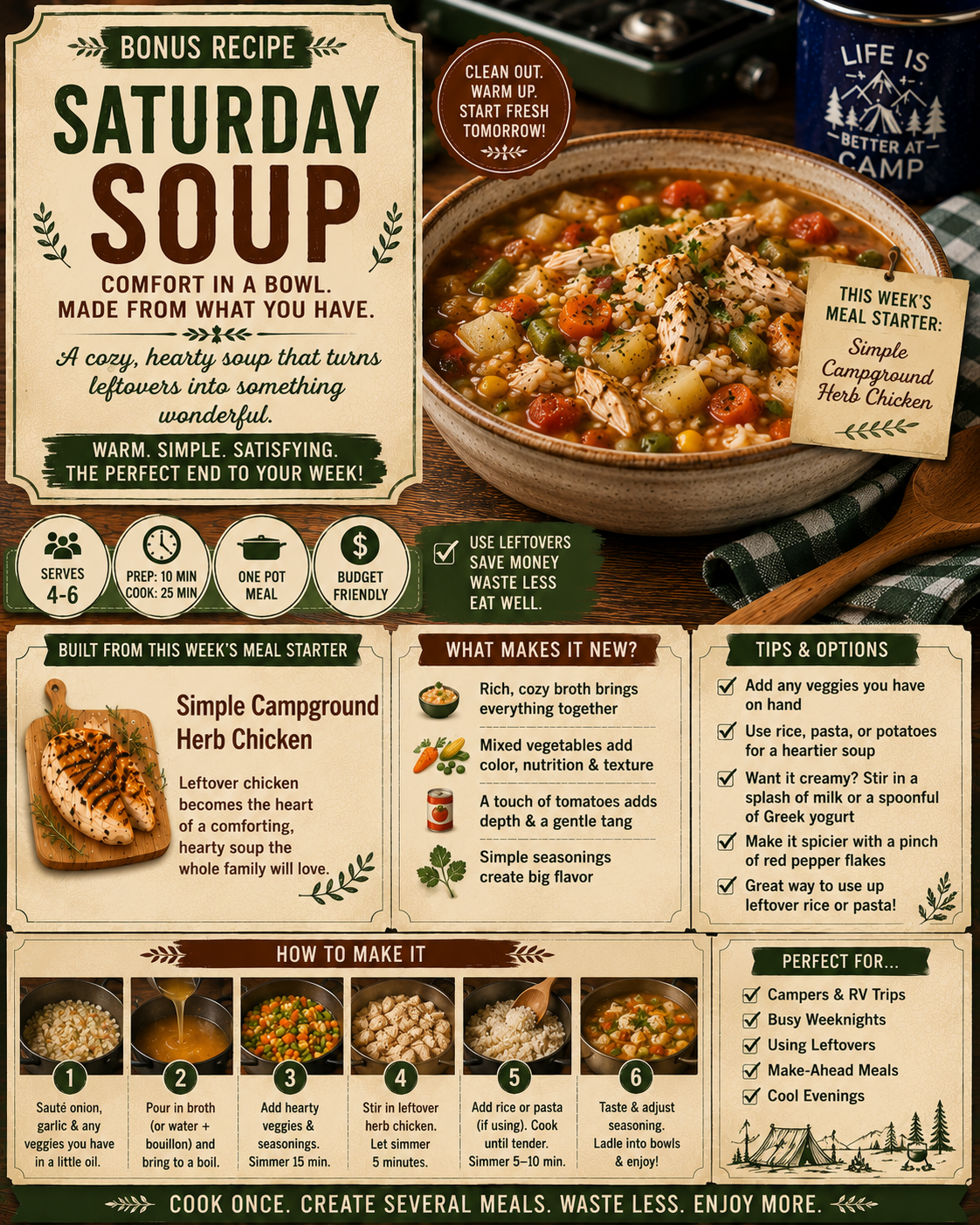
Saturday Soup

By Saturday, the refrigerator often tells the story of the week. There’s a little cooked chicken left, a handful of vegetables, perhaps some rice or potatoes, and just enough odds and ends that aren’t quite enough for another full meal.

That’s where Saturday Soup comes in.

Rather than letting those ingredients go to waste, gather them into one comforting pot of soup. There’s no need to follow this recipe exactly—it’s meant to be flexible. Use what you have, adjust the seasonings to your taste, and enjoy one last hearty meal before restocking your kitchen. Whether you’re breaking camp, preparing for next week’s grocery trip, or simply trying to waste less food, Saturday Soup is a delicious reminder that some of the best meals come from making the most of what you already have.

simplegoodfood's avatarsimplegoodfood

Saturday Soup

Every pot of Saturday Soup will be a little different—that's part of its charm.
Prep Time 15 minutes
Cook Time 30 minutes
Total Time 45 minutes
Servings: 4
Course: Dinner, Lunch, Soup
Cuisine: American
Calories: 275

Ingredients
  

  • 1 tablespoon olive oil
  • 1 small onion diced
  • 2 cloves garlic minced
  • 1½ cups cooked Simple Campground Herb Chicken diced
  • 5 cups low-sodium chicken broth
  • 1 cup diced potatoes or cooked rice
  • 1 cup mixed vegetables carrots, celery, peas, corn, green beans, broccoli, or whatever is left from the week
  • 1 teaspoon dried parsley
  • ½ teaspoon dried thyme
  • ½ teaspoon Italian seasoning
  • Salt and black pepper to taste
Optional additions:
  • A handful of spinach
  • Leftover mushrooms
  • Cooked pasta
  • Barley
  • Corn
  • A squeeze of fresh lemon juice before serving

Method
 

  1. Heat the olive oil in a soup pot over medium heat.
  2. Cook the onion until softened, about 4 minutes.
  3. Add the garlic and cook for another 30 seconds.
  4. Stir in the chicken broth.
  5. Add the chicken, potatoes (or rice), vegetables, parsley, thyme, and Italian seasoning.
  6. Bring the soup to a gentle boil.
  7. Reduce the heat and simmer for about 20 minutes.
  8. Taste and adjust the seasonings as needed.
  9. Stir in spinach or a squeeze of lemon juice just before serving, if desired.

Notes

I can tell you from personal experience, this soup makes a great lunch the next day!
Notes
  • Every pot of Saturday Soup will be a little different—that’s part of its charm.
  • This recipe is perfect for using small amounts of leftover vegetables that might otherwise be discarded.
  • If you have leftover gravy, add a spoonful for extra richness.
  • A little cooked barley or orzo also works beautifully.

Leftover & Meal Prep Tips

Saturday Soup isn’t just a recipe—it’s a habit.

Instead of asking, “What should I throw away?”

Ask yourself,

“What could go into today’s soup?”

Chicken, turkey, pork, beef, vegetables, rice, potatoes, barley, pasta, and beans can all find a home in the soup pot.

It’s one of the easiest ways to reduce food waste while stretching your grocery budget.


Food Storage & Preservation

Cool leftover soup promptly and refrigerate within two hours.

If you’re freezing soup or preserving ingredients by canning, freezing, or dehydrating, always check the latest USDA recommendations for safe food preservation methods.

Posted in Campground Meals

Stars, Stripes & Campfire Suppers

Independence Day weekend is the perfect time to gather around the campfire, enjoy the outdoors, and share great food with family and friends. This week’s campground menu featured a collection of easy, satisfying meals designed for camping adventures, RV trips, and backyard cookouts alike.

From hearty Dutch oven dinners and cheesy skillet meals to flavorful foil packets and a classic burger cookout, these recipes prove that delicious meals don’t require a full kitchen. Whether you’re spending the holiday at your favorite campground or simply enjoying a summer weekend at home, these campfire-inspired recipes are sure to bring plenty of flavor to your table.

Here’s a look back at all the campground meals featured this week.

This Week’s Campground Meals

  • Campfire Chicken & Rice Bake
  • Loaded BBQ Chicken Nachos
  • Cheesy Smoked Sausage & Potato Skillet
  • Campground French Dip Sandwiches
  • Southwest Chicken Foil Packets
  • Patriotic Grilled Burgers with Ranch Potato Packets

Happy camping, and Happy Fourth of July!

This week’s campground meals brought plenty of campfire flavor to the table! From Dutch oven comfort food and loaded nachos to foil packet dinners and patriotic burgers, these easy camping recipes are perfect for summer adventures and holiday weekends.

🇺🇸🏕️ Stars, Stripes & Campfire Suppers! This week’s campground meal lineup featured everything from Campfire Chicken & Rice Bake and BBQ Chicken Nachos to French Dip Sandwiches and Patriotic Grilled Burgers. If you’re looking for easy camping meals for your next outdoor adventure, you’ll find plenty of inspiration in this week’s roundup!

Campfire Chicken & Rice Bake
Asimple Dutch oven meal that can be assembled ahead and cooked over the fire.
Check out this recipe
Loaded BBQ Chicken Nachos
Loaded BBQ Chicken Nachos are a quick and satisfying campground meal featuring layers of tortilla chips, barbecue chicken, melted cheese, black beans, and corn. Easy to prepare and fun to share around the campsite.
Check out this recipe
Cheesy Smoked Sausage & Potato Skillet
Make campground cooking easy with this Cheesy Smoked Sausage & Potato Skillet! A hearty one-pan meal featuring smoked sausage, potatoes, vegetables, and melted cheddar cheese.
Check out this recipe
One-pan comfort food that's filling, budget-friendly, and campground approved.
Campground French Dip Sandwiches
Slow-cookeror Dutch oven shredded beef served on rolls with au jus for dipping.
Check out this recipe
Southwest Chicken Foil Packets
Chicken,peppers, onions, black beans, and corn cooked in individual foil packets.
Check out this recipe
Patriotic Grilled Burgers with Ranch Potato Packets
Aclassic holiday weekend meal that fits perfectly before Independence Dayfestivities.
Check out this recipe

#WeekendSuppers, #ComfortFood, #CozyMeals, #FamilyDinnerIdeas, #EasyDinnerRecipes,
#ComfortFoodRecipes, #WeekendCooking, #CozyDinnerIdeas, #HomestyleCooking,
#DinnerInspiration, #HeartyMeals, #EasyComfortFood, #CasseroleRecipes,
#SkilletMeals, #SoupSeason, #SundaySupper, #OnePanMeals, #CozyKitchen,
#MealPlanning, #FoodBlogger, #RecipeRoundup, #DinnerRecipes, #FamilyMeals,
#EasySuppers, #HomeCookedMeals,