Posted in Home & Pantry

Pantry Challenge: The Skillet Meal

There’s something wonderfully practical about a skillet supper.

You gather a few ingredients, pull out one pan, and turn what you have into a meal without dirtying half the kitchen. For a small household, that’s a pretty good deal!

A skillet meal is also one of the easiest ways to put the Pantry Challenge into practice. You don’t need a special recipe, a long list of ingredients, or a trip to the grocery store.

You need a skillet, a few ingredients that work well together, and a basic understanding of how to bring them together.

Today, we’re going to build a flexible skillet meal from the pantry, refrigerator, and freezer.

Why Skillet Meals Work So Well for Pantry Cooking

Skillet meals are adaptable. They can accommodate cooked chicken, ground turkey, leftover vegetables, rice, pasta, potatoes, and many other ingredients.

They’re especially useful when you’re cooking for one or two because you can prepare a modest portion without making a large casserole or filling a big soup pot.

Here are a few reasons to keep skillet meals in your cooking rotation:

  • One-pan convenience: Many combinations can be prepared in a single skillet.
  • Flexible ingredients: You can change the protein, vegetables, starch, and seasonings to suit what you have.
  • Easy portion control: It’s simple to make one or two servings.
  • Budget-friendly cooking: Small amounts of leftover ingredients can become part of a satisfying meal.
  • Less waste: A skillet is a handy place to use vegetables or cooked proteins that need attention.

You can make a skillet supper from scratch, or you can use ingredients that are already cooked and simply need to be combined and heated.

The trick is knowing which ingredients need the most cooking and which should be added near the end.

The Basic Pantry Skillet Formula

Think of a skillet meal as a combination of four components:

Protein + vegetable + starch + flavor

You don’t necessarily need all four, but they’re a useful starting point.

1. Choose Your Protein

Start with what you have available.

Possibilities include:

  • Ground turkey.
  • Cooked shredded chicken.
  • Canned chicken.
  • Canned tuna, when appropriate for the dish.
  • Leftover cooked pork or beef.
  • Eggs, if they suit the meal.
  • Beans or lentils.

You don’t have to make meat the largest component of the meal. A modest amount of protein combined with vegetables and a starch can go a long way.

If you’re using raw ground turkey or another raw meat, cook it thoroughly before adding ingredients that only need reheating.

2. Add a Vegetable

Fresh, frozen, canned, and dehydrated vegetables can all have a place in a skillet meal.

Look for ingredients such as:

  • Onions.
  • Bell peppers.
  • Carrots.
  • Green beans.
  • Corn.
  • Peas.
  • Spinach.
  • Broccoli.
  • Mushrooms.

Use whatever complements the other ingredients.

Frozen vegetables are especially convenient because you can take out the amount you need and return the rest to the freezer.

Canned vegetables work well, too. Drain them when appropriate and add them late enough that they don’t become overly soft.

Dehydrated vegetables can be useful in certain skillet dishes, but they may need soaking or additional liquid and cooking time. Follow the preparation requirements for the particular vegetable.

3. Pick a Starch

A starch can turn a skillet full of protein and vegetables into a more substantial meal.

Consider:

  • Cooked rice.
  • Cooked pasta.
  • Cooked potatoes.
  • Small pieces of cooked sweet potato.
  • Barley that’s already been cooked.
  • Corn.

You can also use uncooked ingredients in some skillet recipes, but they require enough liquid and cooking time to become tender.

For a quick pantry skillet, cooked rice, leftover potatoes, and cooked pasta are especially convenient.

Kitchen tip: If you’re using leftover rice or pasta, keep it refrigerated until needed and reheat it thoroughly. Don’t leave cooked starches sitting at room temperature for extended periods.

4. Bring Everything Together With Flavor

A few seasonings can help the ingredients taste as though they belong together.

Try:

  • Garlic and onion.
  • Italian seasoning.
  • Thyme and parsley.
  • Paprika.
  • Chili powder and cumin.
  • A little broth.
  • A small amount of tomato sauce.
  • A spoonful of salsa.

Choose flavors that complement the protein and vegetables you’ve selected.

You don’t need to use every seasoning in the cabinet. Two or three appropriate flavors are often enough.

How to Build Your Skillet Meal

Now let’s put the formula to work.

Step 1: Gather Your Ingredients

Before turning on the stove, decide what you’re making.

For example, you might have:

  • 4 ounces of cooked chicken.
  • 1 cup of frozen mixed vegetables.
  • 1 cup of cooked rice.

Those ingredients could become a simple chicken and rice skillet.

Or perhaps you have:

  • 4 ounces of ground turkey.
  • 1 small potato.
  • 1/2 cup of corn.

That combination could become a turkey and potato skillet.

The amounts are examples, not requirements. Adjust them to suit your appetite and the ingredients you have.

Step 2: Prepare the Ingredients

Cut vegetables into reasonably uniform pieces so they cook evenly.

If you’re using raw meat, keep it separate from ready-to-eat foods during preparation and wash your hands and utensils appropriately.

If your starch is already cooked, measure out the amount you’ll need.

If you’re using canned ingredients, open and drain them as appropriate.

A few minutes of preparation makes the cooking process much easier.

Step 3: Start With the Ingredients That Need the Most Cooking

Heat a little oil in your skillet over medium heat.

Add ingredients such as raw ground turkey or firm vegetables first, allowing them to cook appropriately before adding more delicate ingredients.

If you’re using raw ground turkey, break it into small pieces and cook it thoroughly. Ground turkey should reach an internal temperature of 165°F.

Raw potatoes may need to be cooked separately or cut into small pieces and given sufficient time to become tender. A little water and a lid can help them cook through without burning.

Step 4: Add the Vegetables and Starch

Once the ingredients that require the most cooking are ready, add the remaining vegetables and your cooked rice, pasta, or potatoes.

Stir everything together.

If the skillet looks dry, add a small amount of broth or water. Start with a tablespoon or two and add more if needed.

You want enough moisture to help the ingredients come together, not so much that your skillet turns into soup.

Step 5: Season and Finish

Add your chosen seasonings and taste the mixture.

Does it need more garlic? A little parsley? A splash of broth?

Make small adjustments until the flavors come together.

If you’re adding cooked chicken or another cooked protein, make sure it heats thoroughly before serving.

Then take the skillet off the heat and serve.

That’s the basic process!

Three Pantry Skillet Ideas to Try

Here are three combinations to help you get started. Each one is flexible enough to accommodate what you already have.

Chicken, Rice, and Vegetable Skillet

Starting ingredients:

  • Cooked chicken.
  • Cooked rice.
  • Frozen mixed vegetables.

How to make it:

Warm the vegetables in a skillet with a little oil or broth. Stir in the cooked chicken and rice. Add garlic, onion, parsley, or another seasoning you enjoy.

Add a splash of broth if the mixture seems dry. Heat thoroughly and serve.

If you have leftover carrots, green beans, or corn, you can use those instead of the mixed vegetables.

Turkey and Potato Skillet

Starting ingredients:

  • Ground turkey.
  • Potatoes.
  • Corn or another vegetable.

How to make it:

Brown the ground turkey thoroughly in a skillet. Remove excess liquid if necessary.

Add small pieces of potato. If they’re raw, give them enough time to cook until tender, adding a little water and covering the skillet when helpful.

Stir in the corn near the end, along with seasonings such as garlic, onion, and parsley.

If you already have cooked potatoes, the meal will come together more quickly.

Tomato and Pasta Skillet

Starting ingredients:

  • Cooked pasta.
  • Canned tomatoes.
  • Cooked chicken or another suitable protein.

How to make it:

Warm the tomatoes in a skillet with your preferred seasonings. Stir in the cooked chicken and pasta, adding a little water or broth if needed.

Heat until everything is thoroughly hot.

If you have spinach, mushrooms, or another vegetable, add a small amount. If you don’t, keep the meal simple.

You can change the protein or seasonings to suit your pantry.

What If Your Ingredients Don’t Seem to Match?

Sometimes you’ll have three ingredients that don’t immediately suggest a meal.

Before giving up, ask yourself a few questions.

Would a different starch help?

Perhaps the rice doesn’t seem right for your ingredients, but pasta or potatoes would work.

Could you change the cooking method?

Ingredients that don’t work well in a dry skillet might be better suited to a saucier dish.

Would a seasoning bring the flavors together?

A little Italian seasoning, garlic, or another suitable flavor might be all you need.

Could you leave one ingredient out?

Not every ingredient needs to go into the same meal. Save the one that doesn’t fit for another day.

And if the combination still doesn’t appeal to you, choose something else. The Pantry Challenge should make dinner easier, not turn it into an unpleasant experiment.

Stretch Every Grocery Dollar

Skillet meals are a useful way to stretch ingredients without making every supper taste the same.

A package of ground turkey can be divided into small portions and used for several meals.

Cooked chicken can become part of a rice skillet one evening and a soup on another day.

A small amount of leftover pasta can be combined with vegetables and tomato sauce rather than discarded.

When you shop, consider buying ingredients that can work in several kinds of meals. Rice, potatoes, frozen vegetables, and broth can be used in countless combinations.

You don’t need a different set of groceries for every recipe.

Waste Not, Want Not

Before putting away the ingredients you didn’t use, think about how you’ll use them next.

If you’ve opened a can of vegetables or tomatoes, refrigerate the unused portion promptly in a suitable covered container and follow recommended storage times.

If you have leftover cooked meat, rice, or pasta, refrigerate it promptly in shallow containers and use it within recommended food-safety time limits.

You can also portion suitable leftovers for the freezer.

A little planning helps prevent ingredients from being forgotten and gives you a head start on another meal.

Cooking for One or Two

A skillet is particularly useful when you’re preparing a small supper.

You don’t need to fill the pan. Choose quantities that make sense for your appetite and the ingredients you have.

For one person, a modest amount of protein, a serving of vegetables, and a small portion of rice or potatoes may be enough.

For two, increase the quantities as needed.

If you’re unsure how much to use, start with smaller amounts. It’s easier to add another spoonful of rice or vegetables than to figure out what to do with a large pan of leftovers.

And remember that a skillet meal doesn’t have to contain meat. Eggs, beans, or a combination of vegetables and starches can also form the basis of a satisfying supper.

Kitchen Confidence: Learn the Order of Operations

The most important skillet skill isn’t memorizing a recipe. It’s learning the order in which ingredients should be added.

Raw proteins and firm vegetables generally need more cooking time than cooked meat, canned vegetables, or cooked starches.

Delicate ingredients added too early may become mushy, while ingredients that need more cooking can remain underdone if added too late.

As you become familiar with your ingredients, you’ll get better at recognizing what needs to go into the skillet first and what can wait until the end.

That’s what makes a flexible skillet formula so useful: you can apply the same basic technique to many different combinations.

Your Pantry Challenge for Today

It’s time to put the skillet to work!

  1. Find one protein, one vegetable, and one starch in your pantry, refrigerator, or freezer.
  2. Decide which ingredient needs the most cooking.
  3. Choose seasonings that complement your ingredients.
  4. Prepare a small skillet meal using what you have.
  5. Write down the combination if you discover something you enjoy.

Don’t worry about making a perfect dish. The goal is to become more comfortable turning available ingredients into supper.

Tomorrow, we’ll take the Pantry Challenge to the soup pot and explore another flexible way to make dinner from what you have.

Because sometimes all you need is a skillet, a few ingredients, and a little kitchen confidence.
Posted in Recipe Roundup

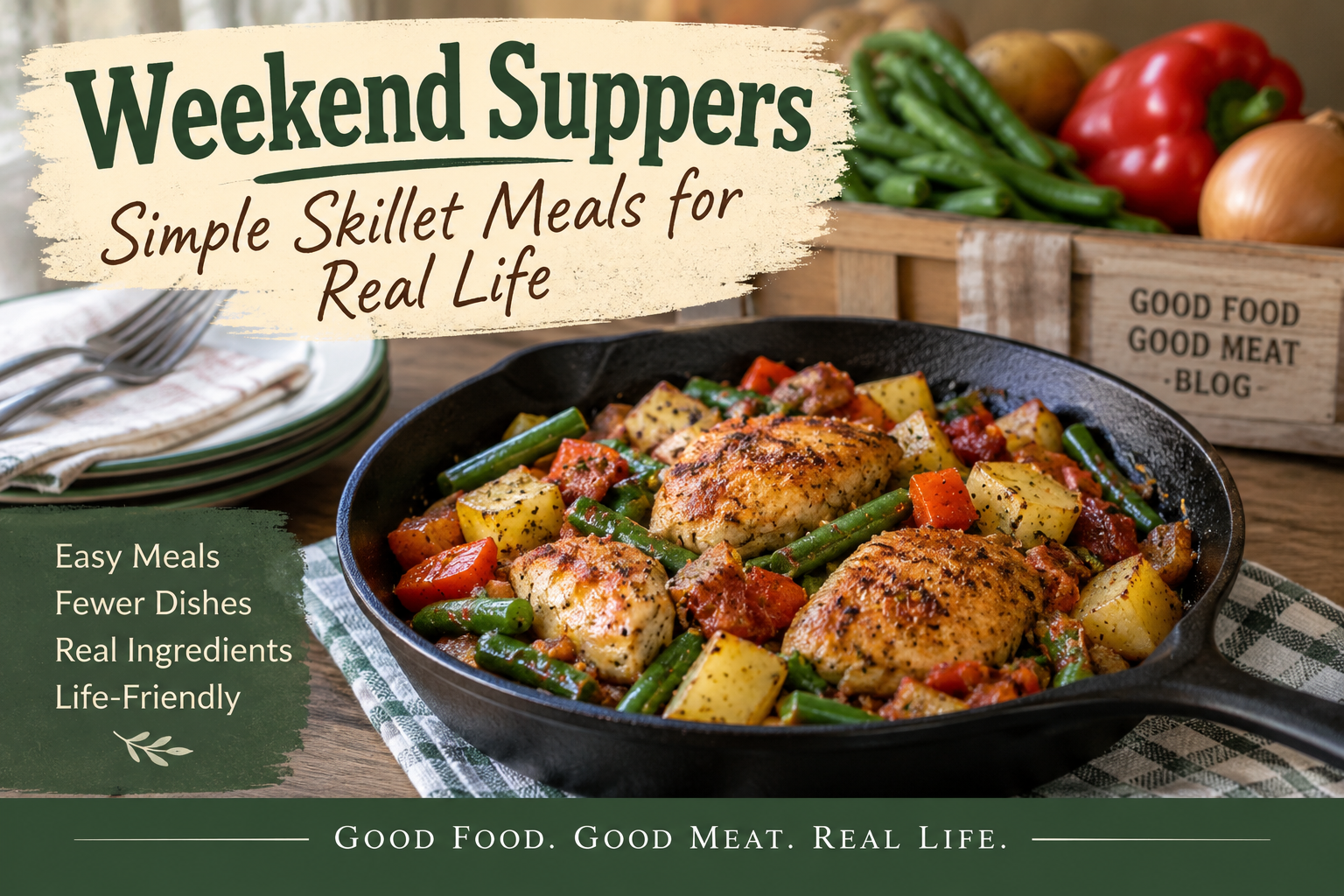
Weekend Suppers: Simple Skillet Meals for Fall

There is something wonderfully practical about a skillet supper.

One pan. A handful of ingredients. Enough food for supper without ending up with a refrigerator full of leftovers.

And as September winds down and we head into October, skillet meals are especially welcome. They’re hearty enough for a cool evening, but they don’t require the oven to be running for an hour.

So, this week’s Weekend Suppers is all about simple skillet meals — the kind of dinners that make sense when you’re cooking for one or two.

Three Skillet Suppers to Try

🍗 Chicken & Veggie Skillet

Chicken and vegetables come together in one skillet for a simple supper that doesn’t require a lot of ingredients or complicated preparation.

This is a good choice when you’re looking for something that’s satisfying without being especially heavy.

Main Protein: Chicken
Meal Category: Skillet Meals


🥔 Sausage & Potato Skillet

If you’re looking for something a little heartier, potatoes and sausage make a classic combination.

This is the kind of supper that feels right as the weather starts cooling down — filling, familiar, and made in one pan.

Main Protein: Sausage
Meal Category: Skillet Meals


🍚 Cajun Sausage & Rice Skillet

Sometimes you want a skillet supper with a little more personality.

Sausage and rice make this one filling enough for supper, while the Cajun seasoning brings a little extra flavor to the table.

And because it’s a skillet meal, cleanup stays pleasantly simple.

Main Protein: Sausage
Meal Category: Skillet Meals


More Skillet Suppers

If those three don’t quite fit what you’re hungry for, there are more skillet meals in the Good Food Good Meat kitchen.

🧀 Philly Cheesesteak Skillet

All the familiar flavors of a cheesesteak in an easy skillet meal.

🌭 Easy Sausage & Potato Skillet Dinner

Another sausage-and-potato option when you want a straightforward, budget-friendly supper.

🥬 Beef & Cabbage Skillet

Beef and cabbage are a particularly good pairing when you’re looking for a simple meal built around inexpensive ingredients.


Why I Keep Coming Back to Skillet Meals

Skillet meals solve a lot of the problems that come with cooking for one or two.

You don’t need a big roasting pan.

You don’t have to make a recipe designed for six people and figure out what to do with the leftovers.

And most of the time, you can get dinner on the table with one pan to wash.

That’s a pretty good combination.

They’re also flexible. A little leftover cooked meat, a potato or two, some vegetables, and a handful of rice or pasta can often become the foundation for supper.

That’s practical cooking.

And practical cooking is what Good Food Good Meat is all about.

Cooking for One or Two

When you’re cooking for a smaller household, don’t be afraid to scale a skillet recipe down.

You may not need to cut every ingredient exactly in half. Sometimes it’s easier to make the full amount of one component — such as cooked rice or potatoes — and use the leftovers in another meal.

That’s one of the easiest ways to make a small kitchen work harder without making your cooking feel like a production.

Your Turn: Pick a Skillet for Supper

Which one sounds good tonight?

Pick a skillet, grab what you have on hand, and put supper on the table.

If you make one of these recipes, I’d love to know which one you chose — and what you thought of it. And if you have a favorite skillet supper of your own, share it in the comments.

Sometimes the best recipes are the ones that become regulars simply because they’re easy, affordable, and good enough to make again.

Looking Toward October

This is our final Weekend Supper of September, and we’ve spent the month thinking about Harvest & Putting Things Back — taking advantage of seasonal food, preserving what we can, and thinking ahead to the meals those foods can become.

Tomorrow, we’ll begin the final week of the series by looking at one of the most familiar foods to preserve from the late-summer harvest:

tomatoes. 🍅

But before we start putting tomatoes into jars, we’re going to talk about something that every new home canner needs to understand:

Why can some foods be processed in a boiling-water canner while others cannot?

That’s an important question, and understanding the answer is more useful than simply memorizing a processing time.

For tonight, though, let’s keep it simple.

Grab a skillet and make supper.

Posted in Skillet Meals

Rustic Beef & Cabbage Skillet

Cabbage is one of those vegetables that doesn’t get nearly enough credit.

It’s inexpensive, keeps well in the refrigerator, and can turn a small amount of meat into a satisfying meal. The trick is knowing how to cook it without reducing it to a pile of mush.

This Rustic Beef & Cabbage Skillet keeps things simple: browned ground beef, plenty of cabbage, onions, carrots, and a handful of familiar seasonings. Everything cooks together in one skillet until the cabbage is tender but still has enough texture to make the dish interesting.

It’s the kind of meal that feels old-fashioned in the best possible way — hearty, economical, and uncomplicated.

And because we’re talking about Cooking Today, Planning for Tomorrow, you can easily cook an extra portion or two to use later in the week.

Why You’ll Love This Recipe

  • Cabbage does a lot of work for very little money.
  • One skillet keeps cleanup easy.
  • The flavors are mild and familiar, rather than heavily spiced.
  • Ground beef makes it filling and protein-rich.
  • It reheats well, making it a natural make-ahead meal.
  • The vegetables can be adjusted according to what’s already in your refrigerator.
  • It works equally well on a stovetop or in an electric skillet at the campground.

🥬 Kitchen Confidence: How to Cook Cabbage Without Making It Mushy

The secret is simple: don’t drown it.

Cabbage naturally releases quite a bit of water as it cooks. Adding a lot of liquid at the beginning can turn a skillet meal into boiled cabbage.

Instead:

  1. Cut the cabbage into bite-sized pieces. Thin ribbons cook quickly; slightly wider pieces give you more texture.
  2. Cook the cabbage in stages. Give the firmer vegetables a head start.
  3. Let the cabbage have contact with the skillet. A little browning adds wonderful flavor.
  4. Don’t cover the pan for the entire cooking time. Trapped steam makes cabbage soften much faster.
  5. Stop cooking when it’s tender-crisp. It will continue softening slightly from the residual heat.

You want cabbage that’s tender enough to eat easily but still has a little bite.

simplegoodfood's avatarsimplegoodfood

Rustic Beef & Cabbage Skillet

This Rustic Beef & Cabbage Skillet keeps things simple: browned ground beef, plenty of cabbage, onions, carrots, and a handful of familiar seasonings.
Prep Time 10 minutes
Cook Time 25 minutes
Total Time 35 minutes
Servings: 4
Course: Dinner, Lunch, Main Course
Cuisine: American
Calories: 365

Ingredients
  

  • 1 pound lean ground beef
  • 1 tablespoon olive oil if needed
  • 1 small onion diced
  • 2 medium carrots peeled and thinly sliced
  • 4 cups chopped green cabbage about ½ small head
  • 2 cloves garlic minced
  • 1 teaspoon dried parsley
  • 1 teaspoon dried thyme
  • ½ teaspoon paprika
  • ½ teaspoon salt or to taste
  • ¼ teaspoon black pepper
  • ½ cup low-sodium beef broth
  • 1 tablespoon Worcestershire sauce
  • 1 teaspoon Dijon mustard
Optional
  • 1 tablespoon chopped fresh parsley for serving
  • 1 teaspoon apple cider vinegar or lemon juice for a brighter finish

Method
 

  1. Brown the Beef
  2. Heat a large skillet over medium-high heat.
  3. Add the ground beef and cook for 5–7 minutes, breaking it into crumbles as it browns.
  4. When the beef is cooked through and nicely browned, drain excess fat if necessary.
  5. Kitchen Confidence reminder: Let the beef sit against the hot skillet for a minute before stirring. Constant stirring prevents the browning we’re after.
  6. Add the Onion and Carrots
  7. Reduce the heat to medium.
  8. Add the onion and carrots to the skillet with the beef.
  9. Cook for 4–5 minutes, stirring occasionally, until the onion begins to soften and the carrots are starting to become tender.
  10. Add the Cabbage
  11. Add the chopped cabbage in a couple of handfuls, stirring as it begins to wilt.
  12. Don’t worry if the skillet looks ridiculously full at first. Cabbage has a magical way of collapsing once it heats up. 😉
  13. Cook uncovered for about 5 minutes, stirring occasionally.
  14. Season Everything
  15. Add the garlic, parsley, thyme, paprika, salt, and black pepper.
  16. Stir and cook for about 30 seconds.
  17. Finish the Skillet
  18. Whisk together the beef broth, Worcestershire sauce, and Dijon mustard.
  19. Pour the mixture into the skillet and stir well.
  20. Cook uncovered for another 5–7 minutes, stirring occasionally, until the cabbage is tender but still has some texture and most of the liquid has cooked away.
  21. Taste and adjust the seasoning.
  22. Brighten It Up
  23. If you’d like a little more brightness, add a teaspoon of apple cider vinegar or lemon juice just before serving.
  24. That small splash of acid helps balance the richness of the beef and brings out the flavor of the cabbage.

Notes

🍽️ Serving Suggestions
This is a complete meal on its own, but it can also be served with:
  • cooked brown or white rice
  • boiled or roasted potatoes
  • mashed potatoes
  • a slice of whole-grain bread
For a cook-once, enjoy-more-than-once approach, I especially like this over a small scoop of potatoes or rice. The vegetables and beef make the bulk of the meal while the starch stretches it a little further.

Make It Your Own

Have extra cabbage? Add another cup or two. Just give it enough room in the skillet to cook down.

Have leftover vegetables? Carrots, mushrooms, green beans, zucchini, or even a handful of spinach can find a home here.

Want to change the flavor later? Keep the base seasoning mild. That makes leftovers much easier to transform into another meal.

Using leftover beef from Sunday’s skillet? You can absolutely do that. Skip the beef-browning step, start with the onion and carrots, then add your cooked beef once the vegetables begin to soften.

That’s a perfect example of the week’s theme: tonight’s cooking can make tomorrow’s cooking easier.

Storage & Reheating

Cool leftovers promptly and refrigerate in a covered container.

Use refrigerated leftovers within 3–4 days.

For longer storage, portion the cooled skillet into freezer-safe containers, label with the date and contents, and freeze.

Reheat gently in a skillet or microwave until heated through. If the mixture seems dry, add a tablespoon or two of water or broth while reheating.

Posted in Skillet Meals

Family-Style Beef & Vegetable Skillet

There is something wonderfully practical about cooking a little more than you need.

Not a week’s worth of meals. Not an entire Sunday spent chopping, portioning, and labeling containers. Just enough extra to make the next meal easier.

This Family-Style Beef & Vegetable Skillet is built around that idea. Ground beef is browned with onions, carrots, zucchini, mushrooms, and green beans, then finished with a simple savory seasoning that lets the vegetables and beef do most of the work.

Serve it as-is for an easy one-pan dinner, or cook a little extra and set some aside for another meal later in the week. That extra beef and vegetables can become the starting point for a rice bowl, fried rice, or another quick supper when you don’t feel like starting from scratch.

It’s simple cooking with a little bit of tomorrow built in.

Why You’ll Love This Recipe

One skillet does most of the work.

It’s packed with vegetables without feeling like a vegetable-only meal.

Ground beef keeps it affordable while adding plenty of protein.

The flavor is flexible, so the leftovers can easily become something completely different.

It’s practical for smaller households. Four servings means dinner tonight plus a couple of portions to use another day.

It fits the campground kitchen, too. An electric skillet works beautifully if you’re cooking away from home.

🥘 Kitchen Confidence: How to Brown Ground Beef Without Steaming It

If you’ve ever ended up with gray, watery ground beef instead of nicely browned meat, the problem probably wasn’t your beef. It was the pan.

For good browning:

Preheat the skillet before adding the beef. A hot cooking surface helps the meat brown instead of immediately releasing moisture into a lukewarm pan.

Don’t crowd the skillet. If you’re doubling the recipe, brown the beef in batches.

Let it sit for a minute or two. Resist the temptation to constantly stir. The meat needs contact with the hot skillet to develop those browned bits.

Break it up as it browns. Once you have some good color, continue breaking the beef into bite-sized crumbles.

Drain excess fat if necessary. With lean ground beef, you may not need much draining at all.

Those browned bits left in the bottom of the skillet are flavor. When the vegetables go in, they’ll help pick up all that goodness.

simplegoodfood's avatarsimplegoodfood

Family-Style Beef & Vegetable Skillet

There is something wonderfully practical about cooking a little more than you need.
Prep Time 15 minutes
Cook Time 25 minutes
Total Time 40 minutes
Servings: 4
Course: Dinner, Lunch, Main Course
Cuisine: American
Calories: 390

Ingredients
  

  • 1 pound lean ground beef preferably 90% lean or leaner
  • 1 tablespoon olive oil divided
  • 1 small onion diced
  • 2 medium carrots peeled and diced
  • 1 cup sliced mushrooms
  • 1 medium zucchini diced
  • 1 cup green beans cut into bite-sized pieces
  • 2 cloves garlic minced
  • 1 teaspoon dried parsley
  • 1 teaspoon dried thyme
  • ½ teaspoon paprika
  • ½ teaspoon salt or to taste
  • ¼ teaspoon black pepper
  • ½ cup low-sodium beef broth
  • 1 tablespoon Worcestershire sauce
  • 1 teaspoon cornstarch
  • 1 tablespoon cold water
Optional Serving Ideas
  • Serve the skillet as-is or spoon it over:
  • cooked brown or white rice
  • mashed potatoes
  • cooked barley
  • egg noodles
  • crusty whole-grain bread

Method
 

  1. Brown the Beef
  2. Heat a large skillet over medium-high heat.
  3. Add the ground beef and cook, breaking it into small pieces as it browns, about 5–7 minutes.
  4. Once the beef is browned, transfer it to a plate or bowl. Drain excess fat if needed.
  5. Start the Vegetables
  6. Reduce the heat to medium and add 1 teaspoon of the olive oil to the skillet.
  7. Add the onion and carrots. Cook for 3–4 minutes, stirring occasionally.
  8. Add the mushrooms and cook for another 2 minutes.
  9. Add the Quick-Cooking Vegetables
  10. Add the zucchini and green beans.
  11. Cook for 4–5 minutes, stirring occasionally, until the vegetables are beginning to soften but still have some texture.
  12. Add the garlic, parsley, thyme, paprika, salt, and pepper. Cook for about 30 seconds, just until fragrant.
  13. Bring Everything Together
  14. Return the browned beef to the skillet.
  15. Whisk together the beef broth and Worcestershire sauce and pour into the skillet. Stir well, scraping up any browned bits from the bottom.
  16. Bring to a gentle simmer and cook for 3–4 minutes.
  17. Thicken the Sauce
  18. In a small bowl, stir together the cornstarch and cold water until smooth.
  19. Pour into the skillet while stirring.
  20. Cook for 1–2 minutes, until the broth becomes a light, savory sauce that coats the beef and vegetables.
  21. Taste and adjust the seasoning if needed.
  22. Serve — and Save Some for Tomorrow
  23. Serve immediately over rice, potatoes, barley, or noodles, or enjoy it on its own.

Notes

If you’re cooking ahead, allow the extra portion to cool before transferring it to a shallow storage container. Label it with the date and refrigerate or freeze according to your meal plan.
Tip: If you’re intentionally making this for future meals, don’t sauce every portion quite as heavily. A slightly less-saucy beef-and-vegetable mixture gives you more flexibility when you turn it into another dish later.

Make It Work for Your Kitchen

Campground kitchen: An electric skillet works perfectly. You can also make this in a large cast-iron skillet.

Smaller household: Divide the finished skillet into four portions. Enjoy one or two for dinner and refrigerate or freeze the rest.

Want more vegetables? Add whatever needs to be used first — bell pepper, cabbage, spinach, or leftover cooked vegetables all work.

No fresh green beans? Frozen green beans are perfectly fine. Add them directly to the skillet.

Planning another meal? Reserve 1–2 portions of the beef and vegetables before serving. Those portions become the foundation for later meals without requiring another round of cooking.

Storage

Refrigerate leftovers in a covered container and use within 3–4 days.

For longer storage, portion the cooled beef and vegetables into freezer-safe containers, label with the date and contents, and freeze.

For best quality, thaw refrigerated portions overnight before reheating.

Posted in Bowls, Rice Bowls

Sweet & Tangy Pork & Veggie Rice Bowl

Introduction

One of the easiest ways to make meal planning feel fresh is by changing the flavors—not the entire recipe. This Sweet & Tangy Pork & Veggie Rice Bowl starts with the same precooked pulled pork and rice you already have on hand but gives them a completely new personality with a simple homemade sauce and colorful vegetables.

It’s another Build-A-Bowl meal that’s perfect for busy weeknights, campground cooking, or anyone looking to stretch ingredients without sacrificing flavor. With just a few pantry staples, you’ll have a wholesome dinner that’s as colorful as it is satisfying.


❤️ Why You’ll Love This Recipe

  • Ready in about 20 minutes
  • Uses precooked pulled pork
  • A fresh flavor twist on yesterday’s meal
  • Packed with colorful vegetables
  • Budget-friendly and easy to customize
  • Perfect for meal prep and small households

🥣 Build Your Bowl

Build-A-Bowl meals are all about mixing and matching simple ingredients you already have on hand. Start with a base, add a protein, pile on vegetables, then finish with a flavorful sauce and your favorite toppings.

  • 🍚 Base: Cooked Rice
  • 🥩 Protein: Precooked Pulled Pork
  • 🥕 Vegetables: Broccoli, Carrots & Bell Pepper
  • 🥣 Sauce: Sweet & Tangy Honey-Garlic Sauce
  • 🥬 Fresh Finish: Sliced Green Onions
  • ✨ Optional Toppings: Sesame Seeds, Crushed Peanuts, Fresh Cilantro, Sriracha, Plain Greek Yogurt, Crispy Chow Mein Noodles

💡 Make It Your Own: Use whatever vegetables you have available. Snow peas, green beans, zucchini, mushrooms, cabbage, or even leftover roasted vegetables all work wonderfully.

simplegoodfood's avatarsimplegoodfood

Sweet & Tangy Pork & Veggie Rice Bowl

Oneof the easiest ways to make meal planning feel fresh is by changing theflavors—not the entire recipe.
Prep Time 10 minutes
Cook Time 10 minutes
Total Time 20 minutes
Servings: 4
Course: Dinner, Lunch, Main Course
Cuisine: American
Calories: 450

Ingredients
  

For the Bowls
  • 2 cups cooked rice
  • 2 cups precooked pulled pork
  • 1 cup broccoli florets
  • 1 cup shredded carrots
  • 1 bell pepper thinly sliced
  • 2 green onions sliced
For the Sweet & Tangy Sauce
  • ¼ cup reduced-sodium soy sauce
  • 2 tablespoons honey
  • 1 tablespoon rice vinegar or apple cider vinegar
  • 1 teaspoon sesame oil
  • 2 cloves garlic minced
  • 1 teaspoon grated fresh ginger or ¼ teaspoon ground ginger
  • 1 teaspoon cornstarch
  • 2 tablespoons water

Method
 

  1. In a small bowl, whisk together the soy sauce, honey, vinegar, sesame oil, garlic, ginger, cornstarch, and water.
  2. Heat a large skillet over medium heat.
  3. Add the broccoli, carrots, and bell pepper. Cook for 4–5 minutes until crisp-tender.
  4. Stir in the pulled pork and cook until heated through.
  5. Pour the sauce over the pork and vegetables, stirring until everything is evenly coated and the sauce thickens slightly.
  6. Divide the warm rice among four bowls.
  7. Spoon the pork and vegetable mixture over the rice.
  8. Garnish with green onions and any optional toppings before serving.

Notes

🧺 Kitchen Confidence
This Week’s Skill: One Sauce, A Whole New Meal
You don’t need a new recipe every night. Learning a few simple sauces is one of the easiest ways to create variety in your cooking.
Today’s sweet and tangy honey-garlic sauce transforms the same pulled pork you enjoyed earlier this week into a completely different meal. Once you’re comfortable making simple sauces like this one, you’ll discover endless ways to reinvent leftovers and pantry staples.

💰 Stretch Every Grocery Dollar

Frozen vegetables are an excellent budget-friendly option. They’re picked at peak freshness, require no chopping, and let you use only what you need, reducing food waste.


♻️ Waste Not, Want Not

This recipe is perfect for cleaning out the vegetable drawer. Small amounts of broccoli, carrots, cabbage, zucchini, mushrooms, peas, or peppers all work beautifully together. There’s no need to make a special trip to the store if you already have vegetables waiting to be used.


🍽️ Cooking for One or Two

Prepare only the amount you’ll eat today and refrigerate the remaining ingredients separately. The cooked pork, vegetables, and rice can be mixed and matched for easy lunches or another quick dinner later in the week.


🥣 Meal Prep Note

If you have extra vegetables after making this recipe, don’t throw them away. They’ll be perfect for this week’s Kitchen Sink Vegetable Soup, where every little bit helps create a hearty, nourishing meal.


Storage & Freezing

Refrigerator: Store in an airtight container for up to 4 days.

Freezer: Freeze the pork and vegetable mixture separately from the rice for best quality, up to 3 months.

Reheating: Warm gently in a skillet or microwave. Add a splash of water if the sauce has thickened too much.

Posted in Skillet Meals

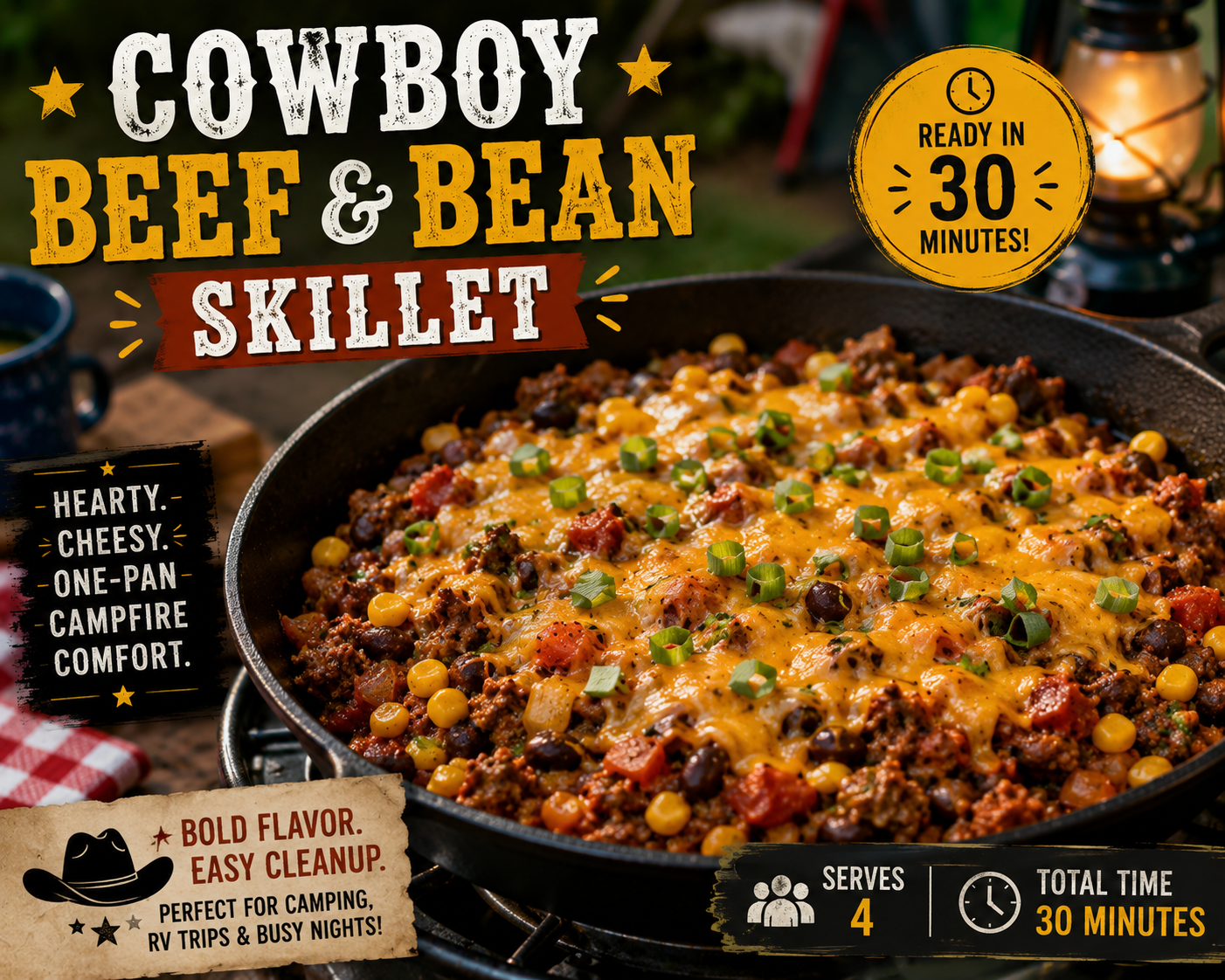
Cowboy Beef & Bean Skillet

When you need a filling campground dinner that doesn’t require a sink full of dishes, this Cowboy Beef & Bean Skillet gets the job done. Ground beef, beans, corn, onions, and seasonings come together in one pan for a hearty meal that’s perfect after a day of hiking, fishing, or exploring. Whether you’re cooking on a camp stove, propane burner, or electric skillet, this recipe delivers big flavor with minimal fuss.

simplegoodfood's avatarsimplegoodfood

Cowboy Beef & Bean Skillet

Groundbeef, beans, corn, onions, and cheese cooked in one skillet.
Prep Time 10 minutes
Cook Time 20 minutes
Total Time 30 minutes
Servings: 4
Course: Dinner, Lunch, Main Course
Cuisine: American
Calories: 470

Ingredients
  

  • 1 pound lean ground beef
  • 1 small onion diced
  • 1 15-ounce can pinto beans, drained and rinsed
  • 1 cup frozen corn
  • 1 10-ounce can diced tomatoes with green chilies, undrained
  • 1 teaspoon chili powder
  • 1 teaspoon smoked paprika
  • ½ teaspoon garlic powder
  • ½ teaspoon cumin
  • ½ teaspoon salt
  • ¼ teaspoon black pepper
  • 1 cup shredded cheddar cheese
  • 2 green onions sliced (optional)

Method
 

Brown the Beef
  1. Heat a large skillet over medium heat.
  2. Add the ground beef and onion.
  3. Cook until the beef is browned and the onion is softened.
  4. Drain excess grease if needed.
Add the Remaining Ingredients
  1. Stir in the beans, corn, diced tomatoes with green chilies, chili powder, smoked paprika, garlic powder, cumin, salt, and pepper.
  2. Bring the mixture to a gentle simmer.
  3. Cook for 8–10 minutes, stirring occasionally, until heated through.
Finish the Dish
  1. Sprinkle the cheddar cheese evenly over the top.
  2. Cover the skillet with a lid or foil.
  3. Cook for 2–3 minutes until the cheese melts.
Serve
  1. Remove from heat.
  2. Garnish with sliced green onions if desired.

Notes

Storage & Reheating Tips
  • Refrigerate leftovers in an airtight container for up to 3 days.
  • Reheat in a skillet over medium-low heat or in the microwave.
  • Leftovers also make an excellent filling for burritos or loaded baked potatoes.