Posted in Meal Plans, Seasonal

Thanksgiving Prep Timeline: What to Make Ahead

Thanksgiving has a way of making even a simple meal feel like a major production. There are dishes to prepare, ingredients to organize, appliances competing for counter space, and the ever-present question of how everything is going to be ready at the same time.

But here’s a little secret: You don’t have to do everything on Thanksgiving Day.

A little planning can take much of the pressure out of preparing a holiday meal, especially when you’re cooking for one or two. Instead of spending the entire day in the kitchen, you can spread the work over several days and enjoy the holiday itself.

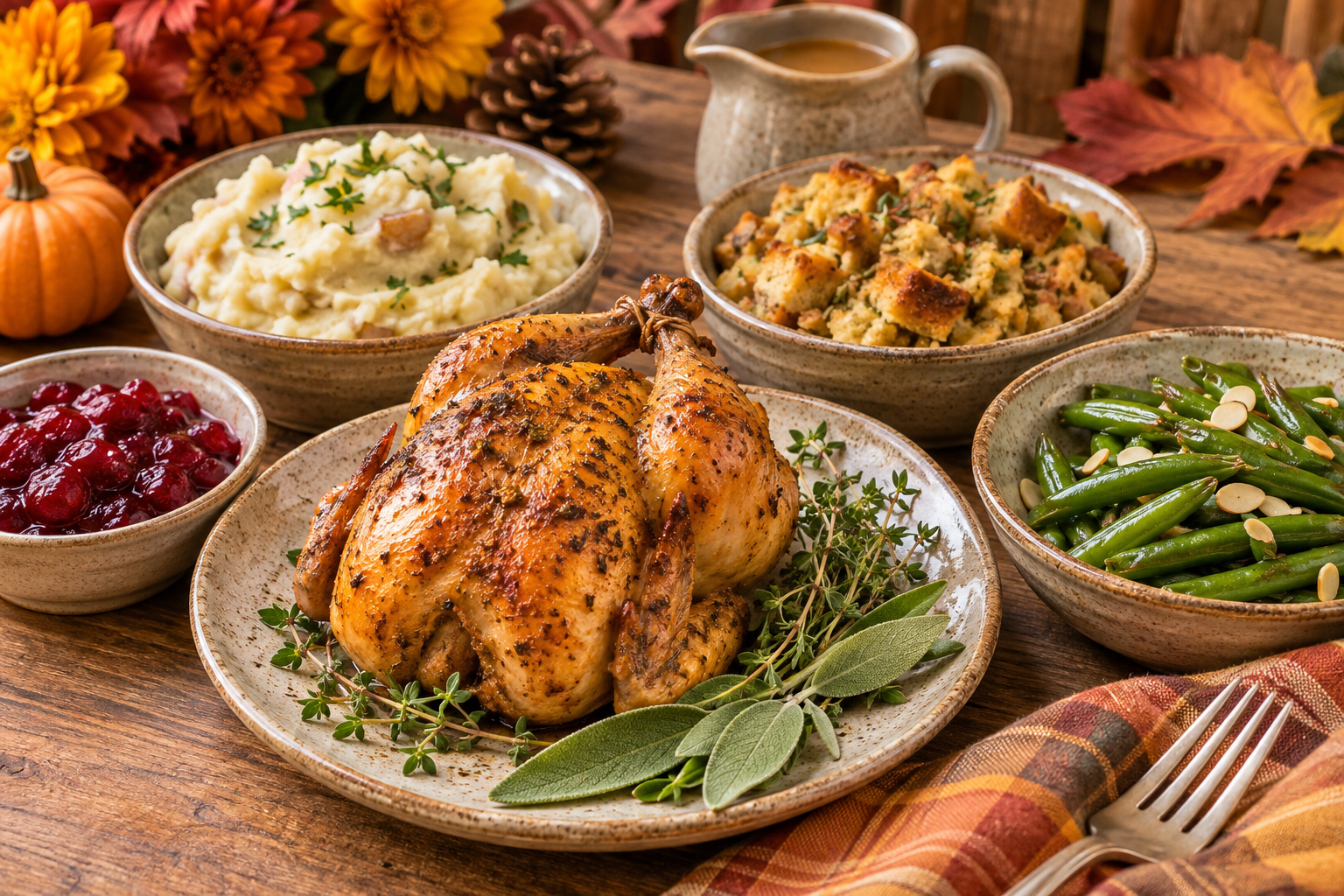
For this small-appliance Thanksgiving, we’re keeping the menu manageable with Cornish game hens, homemade cranberry sauce, turkey wing gravy, savory dressing, mashed potatoes, and a simple vegetable side.

The goal isn’t to prepare a huge feast. It’s to enjoy the foods that make Thanksgiving special without making more work than necessary.

Why Make-Ahead Preparation Works

When you’re cooking for a smaller household, there’s no reason to prepare every dish in large quantities or tackle everything at once.

I gradually moved toward smaller appliances and cookware because they make much more sense for the way I cook now. I don’t need a large slow cooker or a family-sized skillet for every meal. Smaller equipment takes up less space, makes portion control easier, and helps keep leftovers manageable.

The same thinking applies to holiday cooking. Preparing a few dishes ahead of time means fewer things competing for your attention on Thanksgiving morning.

Your Thanksgiving Prep Timeline

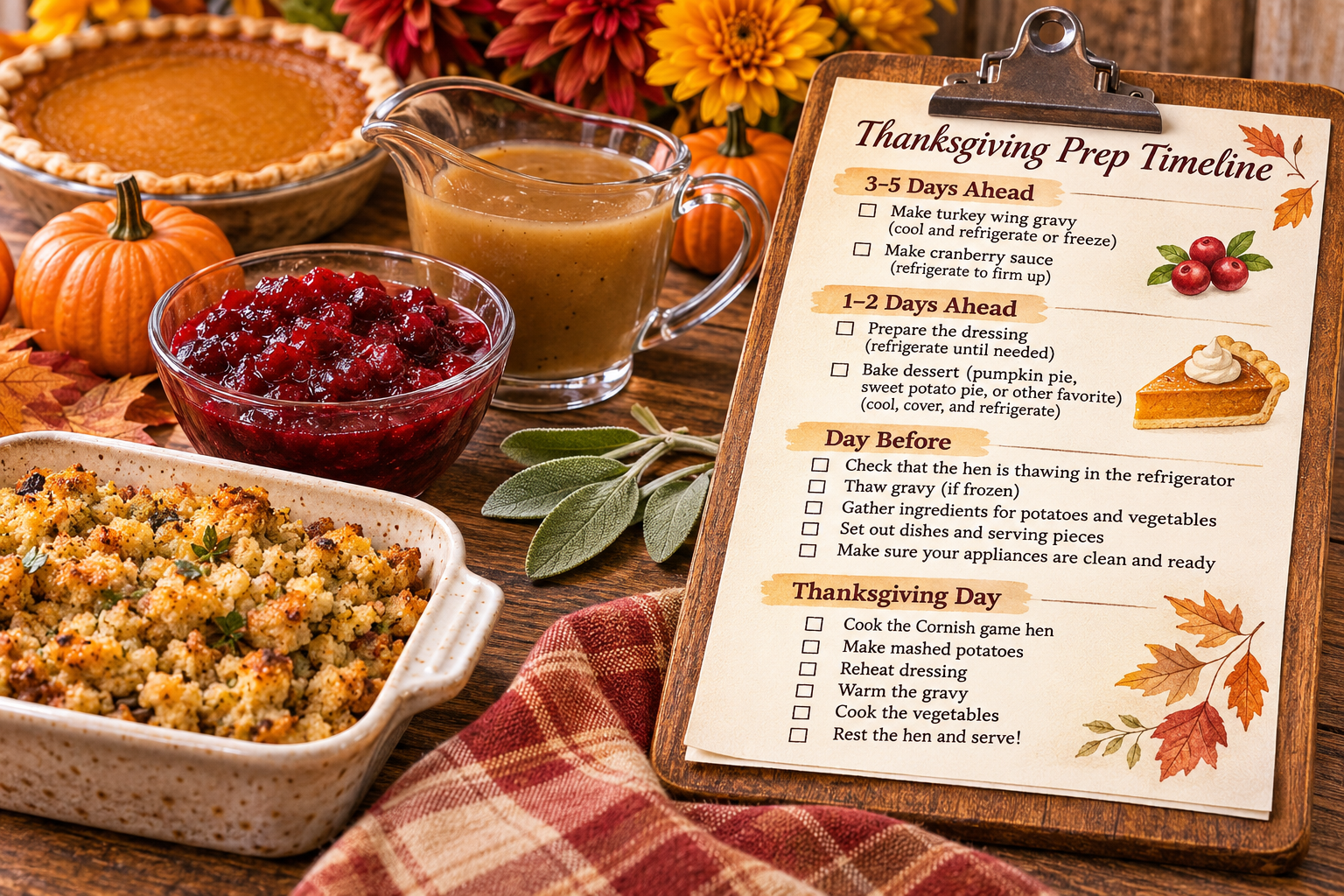
Here’s a simple schedule to follow. You can adjust the days to fit your own plans, but this gives you a good starting point.

3–5 Days Ahead: Make the Gravy and Cranberry Sauce

Turkey Wing Gravy

Make your turkey wing gravy early in the week. Once it’s finished, cool it promptly and divide it into meal-sized portions.

Refrigerate it briefly if you’re using it within the next few days, or freeze it for Thanksgiving. Freezing makes it easy to prepare the gravy well ahead of time without worrying about keeping it in the refrigerator too long.

If frozen, transfer the gravy to the refrigerator to thaw a day or two before Thanksgiving.

Homemade Cranberry Sauce

Cranberry sauce is another excellent make-ahead dish. It needs time to cool and firm up, so preparing it early is actually an advantage.

Make it in the Instant Pot, transfer it to a covered container, and refrigerate it. By Thanksgiving, it will be ready to serve.

There’s no need to spend Thanksgiving morning tending to a saucepan of cranberries!

1–2 Days Ahead: Prepare the Dressing

Savory Dressing for Two

Prepare your dressing ahead of time and refrigerate it in a covered baking dish or suitable storage container.

On Thanksgiving Day, you’ll simply need to heat it thoroughly. If you’re reheating previously cooked dressing, bring the center to 165°F before serving.

Preparing the dressing separately from the poultry also makes it easier to manage the cooking schedule and portion size.

This is one of those dishes that can be ready and waiting while you concentrate on the main course.

1–2 Days Ahead: Make Dessert

Don’t Forget the Pie!

If you’re planning to serve dessert, this is another great opportunity to get ahead of the holiday cooking.

Pumpkin pie and sweet potato pie are especially good choices for making the day before Thanksgiving. They need time to cool and set properly, so preparing them ahead of time works beautifully.

Once baked, allow the pies to cool, then cover and refrigerate them. Pies made with eggs and milk or other dairy ingredients should be refrigerated rather than left out at room temperature.

If you’re making a crumble, cobbler, or another dessert, check its storage requirements. Many can also be prepared ahead, leaving you with one less thing to worry about on Thanksgiving Day.

And here’s a little bonus: When dessert is already taken care of, you don’t have to find room in the oven for it while you’re preparing the rest of the meal!

The Day Before: Get Organized

This is a good time to do a little kitchen housekeeping.

  • Check that your Cornish game hen is thawing safely in the refrigerator.
  • Make sure your gravy is thawing in the refrigerator if you froze it.
  • Check that you have all the ingredients for the mashed potatoes and vegetables.
  • Don’t forget about dessert if you are serving it.
  • Set out the dishes, utensils, and serving pieces you’ll need.
  • Make sure your small appliances are clean and ready to use.

A few minutes of preparation now can save a surprising amount of time the next day.

Thanksgiving Morning: Keep Things Simple

Start by checking that everything is ready to go. Gather your ingredients and equipment before you begin cooking.

Here’s how the meal comes together:

1. Start the Cornish Game Hen

Prepare your hen for the Ninja Foodi Grill or another suitable air fryer. Follow the recipe’s cooking instructions, allowing enough time for the hen to cook completely and rest before serving.

Always check the internal temperature with a food thermometer. The thickest part of the breast and the innermost part of the thigh should reach 165°F, avoiding contact with bone.

2. Prepare the Mashed Potatoes

While the hen cooks, use the 3-quart Instant Pot to prepare mashed baby potatoes.

I like to wash and quarter the potatoes, leave the skins on, and cook them before mashing. It’s a simple method that produces a delicious side dish without having to peel a pile of potatoes.

3. Reheat the Dressing

Warm the prepared dressing until the center reaches 165°F. Keep it covered while reheating to help prevent it from drying out.

4. Warm the Gravy

Reheat the thawed turkey wing gravy to 165°F. Once hot, keep it at 140°F or above if you’re holding it for serving.

5. Cook the Vegetables

Use the small electric skillet to prepare a modest serving of vegetables. Green beans or carrots would both be good choices.

You don’t need a large pan or a big batch. Just enough for the meal.

6. Rest and Serve

Once the Cornish hen is cooked, allow it to rest before serving. Finish getting everything onto the table, and enjoy your Thanksgiving dinner!

A Few Food Safety Reminders

Make-ahead cooking is convenient, but safe handling is important.

  • Cool cooked gravy promptly and divide it into shallow, meal-sized containers before refrigerating or freezing.
  • Refrigerate cranberry sauce and prepared dressing in covered containers.
  • Thaw frozen gravy in the refrigerator, not on the counter.
  • Reheat gravy and prepared dressing to 165°F.
  • Keep hot foods at 140°F or above if they’re being held for serving.
  • Refrigerated leftovers should generally be used within 3–4 days.

A little attention to cooling, storage, and reheating means you can enjoy the convenience of preparing ahead without cutting corners on food safety.

Don’t Forget: Thanksgiving Is Supposed to Be Enjoyed!

The biggest advantage of this approach is that Thanksgiving Day becomes less about cooking everything from scratch and more about bringing the meal together.

You still get the traditional flavors: cranberry sauce, gravy, dressing, mashed potatoes, vegetables, and a special main dish. You simply spread the work out so that the holiday itself is easier.

And that’s really the point of using smaller appliances and preparing smaller meals. You can still have a wonderful holiday dinner without needing a kitchen full of oversized equipment or a table full of people.

Sometimes, a feast for two is exactly the right size.

Posted in Meal Plans, Seasonal

A Small-Appliance Thanksgiving: Making a Feast for Two

Thanksgiving dinner doesn’t have to mean a large turkey, a kitchen full of pots and pans, or an entire day spent cooking. Sometimes, all you really need is a few good ingredients, some familiar recipes, and the right tools for the job.

For those of us cooking for one or two, preparing a traditional holiday meal can present a few challenges. Most recipes are designed to feed a crowd, and traditional kitchen appliances aren’t always well suited to preparing smaller portions. But that doesn’t mean we have to give up the foods and traditions we enjoy.

In fact, preparing a holiday dinner with smaller appliances can make the entire process easier, more manageable, and even a little more enjoyable.

This week, we’re looking at how to prepare a Thanksgiving-style dinner using a collection of small appliances. We’ll make several dishes ahead of time, prepare others on the holiday itself, and bring everything together for a delicious meal without overwhelming the kitchen.

And the best part? You don’t need to cook everything at once!

Why Cook Thanksgiving with Small Appliances?

If you’re cooking for one or two people, using smaller appliances makes a lot of sense.

A full-sized oven can be inconvenient when you’re preparing just one or two dishes. A large slow cooker might make enough mashed potatoes for the entire neighborhood, and a full-sized skillet can be more than you need for a couple of servings of vegetables.

Smaller appliances allow us to prepare appropriately sized meals without wasting ingredients, electricity, or precious refrigerator space.

They also give us the flexibility to prepare several dishes using different cooking methods.

You might already have everything you need sitting on your kitchen counter!

The Small Appliances We’re Putting to Work

For our small-batch Thanksgiving dinner, we’ll be using a few appliances that are particularly useful when cooking for one or two.

Ninja Foodi Grill or Basket-Style Air Fryer

Our main dish will be Cornish game hens.

These little birds are a wonderful alternative to roasting a large turkey breast or whole turkey. They provide that familiar holiday presentation without leaving you with several pounds of leftover meat.

I’ll be preparing mine in the Ninja Foodi Grill using the Bake setting and its air-frying basket. A basket-style air fryer with enough room for the hen can work as well.

The raised basket allows air to circulate around the bird, helping it cook evenly.

The 3-Quart Instant Pot

A smaller pressure cooker is surprisingly versatile.

We’ll use it for homemade cranberry sauce earlier in the week. Making it ahead gives the sauce time to cool and firm up in the refrigerator.

We’ll also use it for mashed potatoes on Thanksgiving Day.

Rather than peeling a large quantity of potatoes, we’ll use baby potatoes. Simply wash them, quarter them, and cook them with their skins on. Once cooked, they’re ready to mash.

The skins add texture, and skipping the peeling saves both time and food waste.

The Mini Crock Pot

A mini slow cooker is another handy appliance for preparing small portions.

It’s useful for soups, sauces, side dishes, and keeping suitable foods warm when the temperature can be maintained safely.

You don’t need a large slow cooker to prepare a meal for two.

The 7-Inch Electric Skillet

This little skillet has become one of my favorite tools for cooking small portions.

It’s just the right size for preparing the single-serving skillet meals you find in the grocery store, and it works equally well for preparing a small batch of vegetables.

For our holiday dinner, we’ll put it to work preparing one of the vegetable sides.

There’s no reason to heat up a large skillet when a little one will do the job!

What’s on Our Small-Batch Thanksgiving Menu?

We’re keeping the menu familiar, with traditional flavors and manageable quantities.

Here’s what we’ll be preparing throughout the week:

  • Cornish Game Hens: Our holiday main dish, prepared in the Ninja Foodi Grill or a suitably sized air fryer.
  • Homemade Cranberry Sauce: Prepared ahead in the Instant Pot and refrigerated until Thanksgiving.
  • Turkey Wing Gravy: A simple homemade gravy made with turkey wings, prepared early and frozen until needed.
  • Savory Bread Dressing: A small-batch dressing that can be prepared ahead and reheated on Thanksgiving.
  • Mashed Baby Potatoes: Prepared in the Instant Pot using washed and quartered baby potatoes, skins and all.
  • Skillet Vegetables: A small serving of green beans, carrots, or another favorite vegetable prepared in the electric skillet.

Nothing extravagant. Just the foods that make a holiday dinner feel like a holiday dinner.

The Secret Is Preparing Ahead

One of the biggest mistakes we can make when preparing a holiday meal is trying to do everything on the same day.

There’s really no reason to.

Some dishes actually benefit from being prepared ahead. Cranberry sauce, for example, needs time to cool and firm up. Homemade gravy can be made several days in advance and frozen. Dressing can be assembled and refrigerated before baking or reheating.

By spreading the work over several days, Thanksgiving becomes much less stressful.

We’ll be sharing a simple preparation timeline later in this series so you can see exactly what to make ahead and what can wait until the holiday.

Food safety is important when preparing meals in advance. Cooked foods should be cooled promptly in shallow containers, refrigerated or frozen appropriately, and reheated to 165°F when required.

Making a Holiday Meal Work for One or Two

There’s another advantage to preparing a small-batch Thanksgiving dinner: you can make it your own.

Don’t care for green beans? Make carrots instead.

Prefer sweet potatoes to mashed potatoes? There’s no reason you can’t substitute them.

Have a favorite family dressing recipe? Make a smaller batch.

The idea isn’t to follow a rigid menu. It’s to enjoy the foods you love without preparing more than you need.

And if you happen to have a little leftover turkey or dressing, that’s perfectly fine. A sandwich or another small meal the following day can be a welcome treat.

A Holiday Dinner Doesn’t Have to Be Complicated

Over the next several days, we’ll be sharing the individual recipes and preparation tips for this small-appliance Thanksgiving dinner.

We’ll start with cranberry sauce, move on to homemade turkey gravy and savory dressing, and finish with our Cornish game hens and the remaining sides.

By the time Thanksgiving arrives, much of the work will already be done.

You can spend less time juggling pots and pans and more time enjoying the meal.

After all, Thanksgiving isn’t about how much food you prepare or how many people sit around the table.

It’s about enjoying good food, familiar traditions, and the simple pleasure of sharing a meal.

You don’t need a crowd to have a feast. Sometimes, a table set for two is just right.


Posted in Meal Plans

Pantry Proteins: More Than a Backup Plan

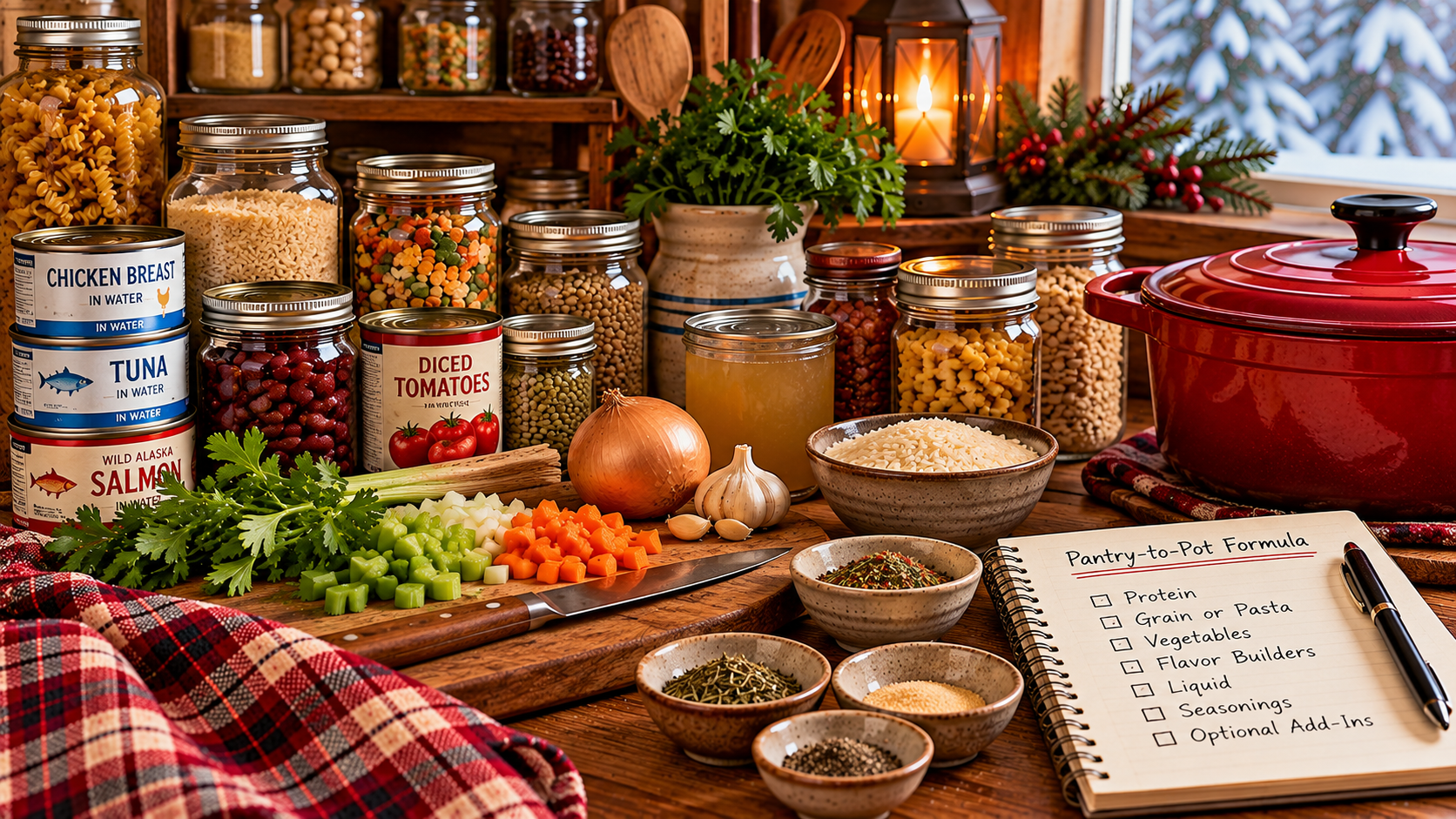
When we talk about stocking a pantry, it’s easy to focus on flour, rice, pasta, canned vegetables, and other familiar staples. But there’s another category worth considering: protein.

Keeping a few protein sources on hand can make everyday cooking easier, especially when you’re preparing meals for one or two. You don’t always need to thaw meat, make a special trip to the grocery store, or plan supper days in advance.

Canned chicken, tuna, salmon, beans, lentils, and peanut butter can all play a role in a practical pantry. Some are ready to eat, some need cooking, and others are best suited to particular kinds of meals.

The trick isn’t to stock every possible option. It’s to choose protein sources that fit your tastes, budget, storage space, and cooking habits.

Let’s look at what makes these foods useful and how to get the most from them.

Why Keep Protein in the Pantry?

Protein helps make a meal satisfying, but fresh meat isn’t the only way to include it.

Shelf-stable protein sources offer several practical advantages.

Convenience: Many canned proteins are ready to use once opened. They can shorten preparation time when you need a quick lunch or supper.

Storage: Unopened cans and properly stored dry legumes can be kept in the pantry without taking up valuable refrigerator or freezer space.

Portion flexibility: Small households can use a portion of an ingredient without having to cook an entire package of fresh meat.

Meal variety: Different protein sources bring different flavors and textures to the table, making it easier to vary meals even when the rest of the pantry remains much the same.

Budget management: Comparing prices and choosing products that can be used in several different meals may help you make better use of your grocery budget.

A pantry protein isn’t merely something to save for emergencies. It can be a regular part of everyday cooking.

1. Canned Chicken: A Convenient Starting Point

Canned chicken is useful when you want chicken in a meal without having to cook it from raw.

Because the chicken is already cooked, it can be added to many dishes with relatively little preparation.

Try it in:

  • Chicken salad sandwiches.
  • Chicken and rice.
  • Quick skillet meals.
  • Chicken noodle soup.
  • Casseroles.
  • Wraps and handheld meals.

Why It Works

Cooking chicken from raw takes time, and it requires careful handling to prevent cross-contamination. Canned chicken eliminates those preparation steps.

It’s particularly useful in recipes where the chicken will be mixed with other ingredients, such as a casserole, soup, or rice dish.

However, canned chicken usually has a softer texture than freshly cooked chicken. It may break apart during stirring, so add it toward the end of cooking when possible.

Kitchen tip: Drain the chicken according to the recipe’s needs. If the can contains a noticeable amount of liquid, account for that moisture when adding broth or sauce.

Compare the price per usable portion rather than judging the value by the can’s price alone.

2. Tuna: More Than Sandwich Filling

Tuna is one of the most familiar pantry proteins, but it can do much more than make a tuna salad sandwich.

Consider:

  • Tuna melts.
  • Tuna pasta.
  • Tuna patties.
  • Tuna and white bean salad.
  • Tuna-stuffed baked potatoes.
  • Simple tuna casseroles.

Tuna works particularly well with ingredients such as pasta, potatoes, peas, celery, lemon, and mayonnaise or other suitable dressings.

Why It Works

Tuna is already cooked and generally requires little preparation. Its firm, flaky texture makes it easy to incorporate into cold dishes and warm meals.

It also pairs well with starches, which can help turn a modest amount into a more substantial dish.

Kitchen tip: Add tuna toward the end of cooking when preparing a hot dish. Excessive stirring or prolonged cooking can break it into very small pieces and dry out the finished meal.

Different tuna species have different mercury levels. If tuna is a frequent part of your diet, consult current FDA and EPA guidance about choosing varieties and recommended consumption.

3. Canned Salmon and Other Canned Fish

Canned salmon offers another way to keep seafood available without relying on fresh or frozen fish.

It can be used in:

  • Salmon patties.
  • Salmon salad.
  • Fish cakes.
  • Pasta dishes.
  • Rice bowls.
  • Simple lunches served with crackers or vegetables.

Other canned fish, including sardines and mackerel, may also suit your pantry, depending on your preferences.

Why It Works

Canned fish is cooked during processing, making it convenient for recipes that need a ready-to-use protein.

Its texture and flavor differ from tuna, so the two aren’t always interchangeable in a recipe. Salmon tends to work particularly well in patties and cakes, while some other fish are better suited to salads, sandwiches, or meals where their distinctive flavor can stand out.

Kitchen tip: Check the can for skin and bones if you prefer a smoother texture. In many canned salmon products, the softened bones are edible, but you can remove them if you don’t like them.

Choose the types of fish you actually enjoy. There’s no point buying a pantry full of canned seafood if it will sit untouched on the shelf.

4. Beans, Peas, and Lentils

Legumes provide another useful group of pantry proteins.

They include:

  • Canned kidney beans.
  • Black beans.
  • Chickpeas.
  • Canned or dried peas.
  • Lentils.
  • Split peas.

Each behaves a little differently in cooking, so it’s helpful to understand the distinctions.

Canned Beans

Canned beans are already cooked. Drain and rinse them when appropriate for the recipe, then add them to soups, stews, salads, or skillet meals.

Rinsing can remove some of the sodium in the canning liquid. If the liquid is part of a recipe, you can instead drain the beans and adjust the seasoning to suit your needs.

Dried Lentils

Lentils are particularly useful because many varieties cook relatively quickly compared with dried beans.

They work well in soups, stews, and seasoned grain dishes.

Unlike canned beans, dried lentils need to be cooked before they’re ready to eat. Follow the package directions and ensure they become tender.

Split Peas

Split peas are useful in thick soups. As they cook, they soften and break down, contributing body to the finished dish.

This is different from using canned peas, which are already cooked and are generally better added near the end of a recipe.

Why These Differences Matter

Not all legumes can be treated the same way.

Canned beans need only to be heated through in many recipes. Dried lentils require cooking, while dried kidney beans need particular care: they must be properly boiled before being simmered or otherwise prepared according to safe food-handling guidance.

Never put raw dried kidney beans directly into a slow cooker. Slow cookers may not reach the temperatures needed to destroy the naturally occurring lectin in improperly prepared kidney beans.

If you want the convenience of beans in a slow-cooker recipe, use commercially canned beans or cook dried kidney beans properly before adding them.

The larger lesson is that knowing whether an ingredient is raw, partially prepared, or fully cooked helps you choose the right cooking method.

5. Peanut Butter: A Different Kind of Pantry Protein

Peanut butter may not be the first thing that comes to mind when planning supper, but it can be a useful pantry staple.

Beyond sandwiches, it can be used in:

  • Peanut sauces for noodles.
  • Sauces for chicken or vegetables.
  • Oatmeal.
  • Smoothies.
  • Simple snacks paired with fruit.

Peanut butter provides protein and fat, making it a concentrated food that can contribute to a satisfying meal or snack.

Why It Works

Its fat content helps create creamy sauces, while its flavor pairs well with ingredients such as soy sauce, garlic, ginger, and a little acidity.

A spoonful of peanut butter can become the base of a sauce when whisked with suitable liquids and seasonings.

Start with a small amount of liquid, stir until smooth, and add more gradually to reach the consistency you want.

Kitchen tip: Peanut butter is calorie-dense, so a modest portion can go a long way. If sodium or added sugar is a concern, compare product labels and choose an option that fits your needs.

Always account for peanut allergies when preparing food for others.

6. Other Pantry Proteins Worth Considering

Your pantry should reflect the meals you like to eat, but a few other options may be worth considering.

Shelf-stable tofu: Certain packaged tofu products can be stored unopened at room temperature. Check the package instructions carefully, since ordinary refrigerated tofu is not shelf-stable.

Textured vegetable protein: This dried soy product can be rehydrated and used in some recipes in place of or alongside ground meat.

Shelf-stable meat products: Some canned or commercially packaged meats may be useful for sandwiches, quick meals, or emergency supplies. Follow the product’s storage instructions.

Dry soup ingredients: Some dehydrated mixes include ingredients that contribute protein, although their nutritional value varies. Read the ingredient list and nutrition information rather than assuming all soup mixes are substantial protein sources.

You don’t need all of these. A few well-chosen items are more useful than an assortment you never use.

How to Build a Pantry That Works for You

A practical pantry begins with your actual eating habits.

If you enjoy tuna sandwiches, keep tuna available. If you make soups regularly, beans, lentils, or canned chicken may be more useful.

Think about the meals you already prepare and identify which protein sources would make them easier.

Then consider these questions:

  • How many meals could I make with this ingredient?
  • Do I like the flavor and texture?
  • Is it affordable compared with other options?
  • Does it fit the storage space I have?
  • Can I use the entire container before it needs to be discarded or refrigerated?

For a small household, package size matters. A large container may be less economical if you can’t use the contents before they spoil.

When possible, choose package sizes that fit your meals or plan ahead to use the remainder safely.

Stretch Every Grocery Dollar

Compare cost per serving. A low price doesn’t necessarily mean a good value if the product contains very little usable food.

Look beyond meat. Beans, lentils, eggs, canned fish, and other suitable protein sources can provide variety without requiring every meal to include a large portion of meat.

Use ingredients in several ways. If you buy canned chicken, identify two or three dishes you can make with it. That makes it less likely to sit unused.

Choose familiar foods. Buying something because it’s inexpensive only helps if you actually eat it.

Rotate your pantry. Use older products first, provided they’re still safe and of acceptable quality, and replace what you use during ordinary shopping trips.

Food Safety and Storage

Shelf-stable does not mean safe forever.

Store unopened canned goods in a cool, dry place and follow product storage guidance. Avoid cans that are bulging, leaking, badly rusted, or deeply dented, particularly around seams.

Once opened, canned chicken, fish, beans, and other perishable contents generally need refrigeration. Transfer leftovers to a suitable covered container if needed, refrigerate promptly, and follow recommended storage times.

Dried foods should be kept dry and protected from insects and moisture.

Always follow the manufacturer’s instructions for products that have special storage requirements.

Cooking for One or Two

Pantry proteins are particularly useful when you don’t need a large quantity of food.

A small can of tuna can provide the starting point for lunch. A portion of canned chicken can be added to rice or soup. A little peanut butter can turn noodles and vegetables into a different kind of meal.

You can also combine a modest amount of meat with beans or lentils when the recipe suits both ingredients.

The aim isn’t to make every serving identical. It’s to keep enough variety available that you can prepare a satisfying meal without relying on a single ingredient.

Waste Not, Want Not

The best pantry is one that gets used.

If you discover that you don’t enjoy a particular canned fish or bean, don’t keep buying it simply because it seems like something you ought to have.

Use the ingredients you like, learn a few ways to prepare them, and replace them as needed.

A well-stocked pantry doesn’t have to be large. It needs to contain foods that help you make meals you enjoy.

More Than a Backup Plan

Pantry proteins offer convenience, variety, and flexibility. They can help you prepare a quick lunch, build a simple supper, or make use of ingredients already sitting on your shelves.

The most useful pantry isn’t necessarily the one with the greatest number of cans. It’s the one that makes everyday cooking easier.

Start with a few foods you enjoy, learn how to use them in different ways, and build from there.

That way, when you open the pantry and wonder what’s for supper, you’ll have more than one answer.

Posted in Monthly Introductions

Harvest Time: Putting a Little Back for Tomorrow

There is something special about September.

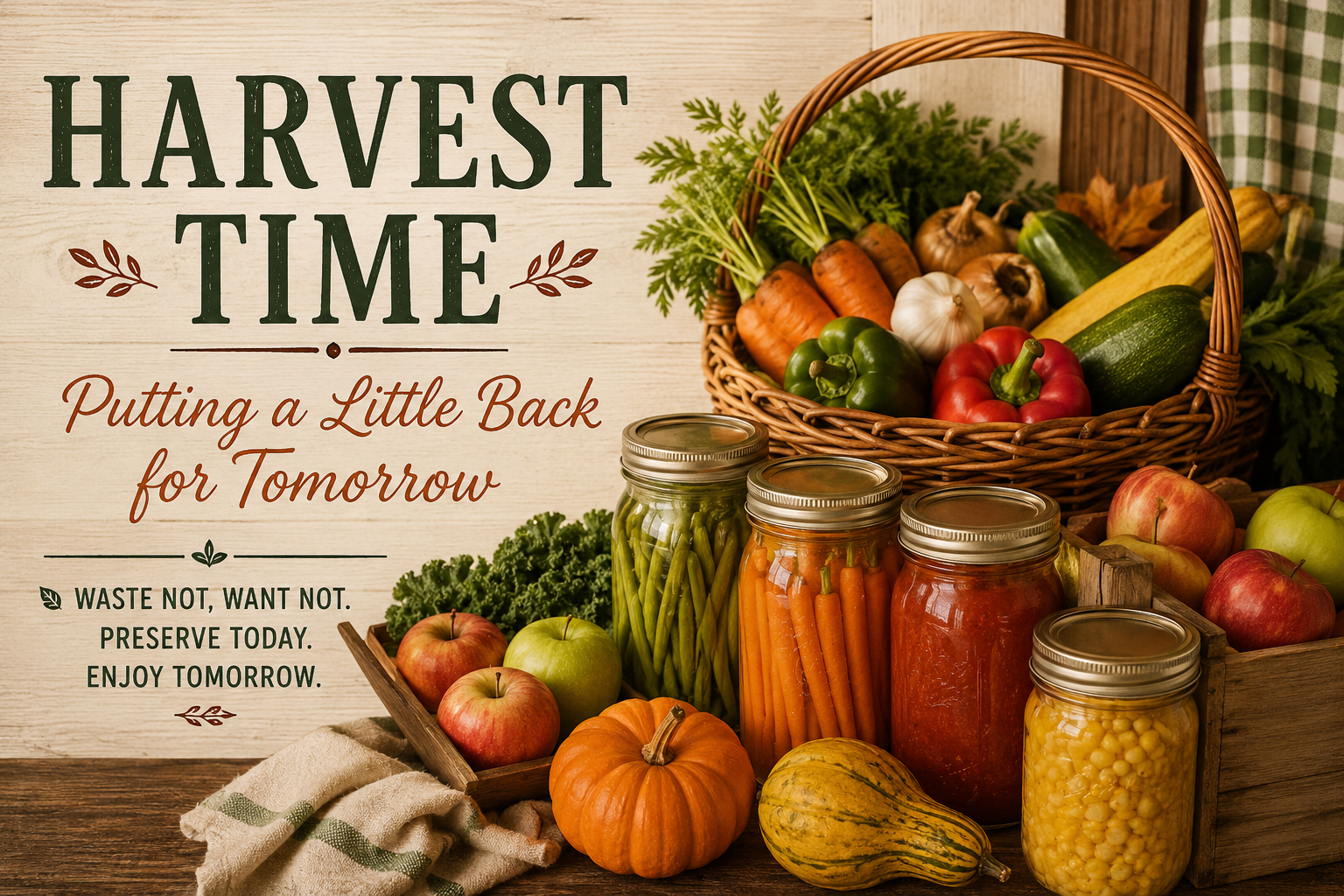
The gardens are still giving us tomatoes, peppers, green beans, zucchini, and corn. Apples are beginning to show up at roadside stands. Farmers markets are overflowing with the last big harvests of summer while the first signs of autumn are starting to appear.

When I was growing up, this was the time of year when people started thinking about putting a little something back.

Saturday mornings might mean a trip to the farmers market. A roadside stand might have a bushel of peaches or tomatoes for a good price. A neighbor might have more green beans or zucchini than their family could possibly eat.

And then came the family canning days.

There would be jars lined up on the counter, vegetables being prepared, pots simmering, and shelves slowly filling with food that had been gathered while it was plentiful.

It wasn’t about filling every shelf to overflowing.

It was about being practical.

Put a little back while it’s available.

That idea still makes sense today, even if our kitchens—and our lives—look very different.

Maybe you don’t have a garden.

Maybe your harvest comes from a farmers market, a roadside stand, a grocery-store sale, or a surprisingly good deal at Costco.

Maybe putting food back means freezing a few portions instead of canning dozens of jars. Maybe it means dehydrating vegetables, making a soup starter, or simply buying extra of something you know you’ll use later.

The method isn’t really the point.

The principle is.

When something is plentiful and affordable, we can make today’s abundance work a little harder for us tomorrow.

And that’s what September will be about here at Good Food Good Meat.

We’ll talk about preserving the season, stretching a grocery bargain, using what we already have, and building a practical pantry one small step at a time.

We’ll also keep things sensible. Safe food preservation matters, so when we’re talking about canning, we’ll point you toward tested recipes and guidance from the USDA and National Center for Home Food Preservation rather than asking you to guess at a method.

Because putting food back shouldn’t feel overwhelming.

It doesn’t have to mean buying a pressure canner and spending an entire weekend filling jars.

Sometimes it can be as simple as freezing those extra peppers before they go bad.

Or drying a few carrots.

Or making one extra batch of soup.

Or putting one useful jar on the pantry shelf.

🫙 One Thing at a Time

That’s why we’re adding a new September feature: Pantry Builder.

Each week, we’ll choose one practical thing to put back.

Not twenty things.

Just one.

By the end of the month, you may not have a perfectly stocked pantry—and that’s not the goal.

You’ll simply have a few more useful things waiting for you when you need them.

Because there’s something comforting about knowing that tomorrow’s dinner doesn’t always have to start with tomorrow’s grocery trip.

September is a reminder that abundance is temporary.

But with a little planning, some of today’s abundance can become tomorrow’s comfort.

So let’s enjoy the harvest while it’s here—and put a little back for later. 🌾

Today’s plenty can become tomorrow’s peace of mind.

Posted in Monthly Introductions

Welcome to August: What My Mom’s Kitchen Taught Me About Good Cooking

If you had asked me years ago what some of my most treasured childhood memories would be, I probably wouldn’t have said they happened in the kitchen.

But looking back now, that’s exactly where they were.

Growing up in Pennsylvania, we weren’t wealthy, but we always had enough. My parents believed in making the most of what they had, and one of the greatest lessons I ever learned came from watching my mom prepare everyday meals.

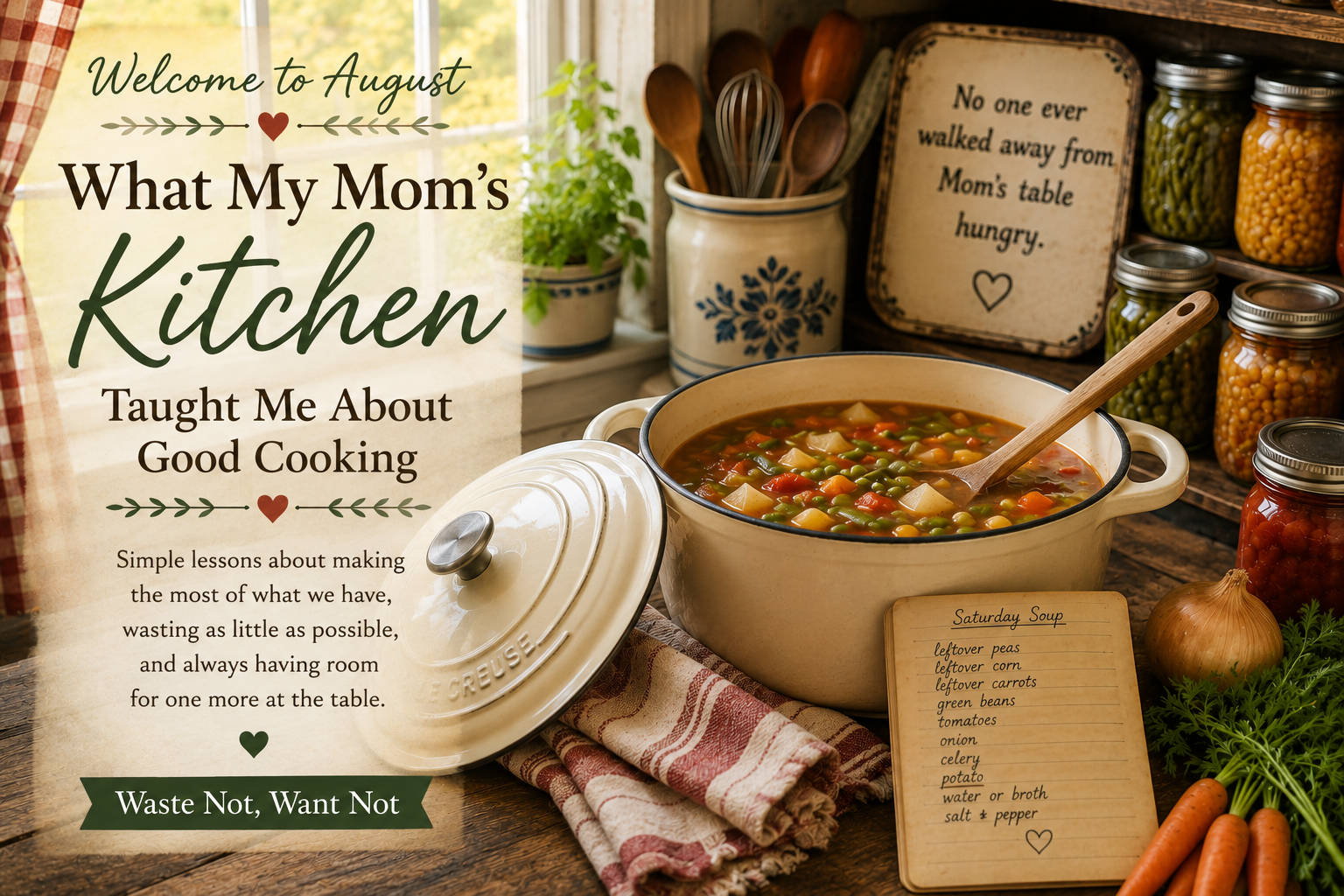
There was always a container in the freezer waiting for leftover vegetables. Every night after supper, if there were a spoonful of peas, a few carrots, some corn, or green beans left, they didn’t go into the trash. They went into that container.

By Saturday, the container was full.

Mom would pour everything into a soup pot, add broth, tomatoes, whatever else was on hand, and before long we had a hearty vegetable soup for supper. No recipe. No fancy ingredients. Just good food made from what we already had.

We didn’t call it meal prep.

We didn’t call it reducing food waste.

We didn’t call it sustainability.

It was simply the way we lived.

I also remember Saturdays spent in the kitchen canning vegetables from my Aunt Edna’s garden. Tomatoes, green beans, and whatever produce was in season filled the counters. Some came from the garden, while other vegetables came from local farmers’ markets and roadside stands. We worked together, filled jar after jar, and listened for the satisfying “pop” of lids sealing.

Those jars represented much more than food.

They meant winter meals.

They meant stretching the grocery budget.

They meant being prepared for busy days.

They meant there was always something to put on the table.

One lesson from my mom has stayed with me all these years.

No one ever walked away from her table hungry if she could help it.

If unexpected company arrived around supper time, she didn’t panic. She simply opened another jar of vegetables, added another side dish, and somehow there was always enough for one more person.

Looking back, I realize those pantry shelves weren’t just filled with food.

They were filled with hospitality.

As I planned this month’s recipes, I found myself thinking about those lessons more and more.

Today’s grocery prices encourage us to make every purchase count. Many of us are cooking for one or two instead of large families. Others are feeding grandchildren, camping, traveling in an RV, or simply trying to prepare meals without wasting food or money.

The principles haven’t changed.

Cook what you have.

Waste as little as possible.

Buy wisely.

Save a little for tomorrow.

Welcome others when you can.

Throughout August, we’ll be exploring simple, practical meals that help stretch the grocery budget without sacrificing good food. You’ll find recipes that build on leftovers, budget-friendly rice bowls, meal prep ideas that become several different dinners, and little tips for making your ingredients work harder for you.

My hope is that these recipes do more than fill your stomach.

I hope they make your kitchen a little less stressful, your grocery budget go a little farther, and your table a place where there’s always room for one more.

Welcome to August.

Let’s make the most of what we have—one simple, practical meal at a time.

Posted in Recipe Roundup, Weekend Suppers

Weekend Suppers: Cozy Comfort Food for Relaxed Evenings

There’s something special about weekend meals. The pace slows down, everyone lingers a little longer around the table, and comfort food just feels right. That’s exactly what inspired this Weekend Suppers collection — easy, satisfying recipes made for cozy Saturday nights and laid-back Sunday dinners.

Inside this roundup you’ll find hearty casseroles, warming soups and stews, skillet meals, meatless comfort food favorites, and family-style dinners perfect for sharing. Whether you’re feeding a crowd, planning a quiet weekend at home, or looking for simple comfort meals after a busy week, these recipes are designed to make weekends feel a little more comforting and a lot more delicious.

Grab your favorite blanket, pour something warm to drink, and browse through the collection to find your next weekend supper favorite.

Lentil Shepherd’s Pie
This Lentil Shepherd’s Pie is hearty, comforting, and perfect for a meatless Sunday supper.
Check out this recipe
Tuna Noodle Casserole
This lighter version of Tuna Noodle Casserole is comfort food without being too heavy. It’s perfect for a cozy weekend supper and makes great leftovers too.
Check out this recipe
Baked Lemon Chicken
Comfort food made easy!
Check out this recipe
Baked Spinach and Mushroom Ziti
Cheesy Comfort Food
Check out this recipe
Chicken & Mushroom Brown Rice Bake
This is a simple meal that comes together easily and is perfect for a Saturday evening dinner.
Check out this recipe
White Bean & Spinach Tomato Stew
This is a warm, comforting meal that is great for a Sunday evening supper.
Check out this recipe
Turkey & Vegetable Shepherd’s Pie
This weekend’s heart-healthy comfort food dinner is Turkey and Vegetable Shepherd’s Pie. This is a simple meal that comes together easily and is perfect for a Saturday evening dinner.
Check out this recipe
Creamy White Bean & Vegetable Soup
This weekend’s meatless comfort food dinner is Creamy White Bean & Vegetable Soup. This is a warm, comforting meal that is great for a Sunday evening supper.
Check out this recipe
Chicken & Rice Vegetable Bake
This Chicken & Rice Vegetable Bake is an easy comfort food casserole that’s warm, filling, and great for a weekend supper. It’s also a good way to use leftover chicken.
Check out this recipe
Vegetable Pot Pie
This Vegetable Pot Pie is a cozy meatless comfort food filled with vegetables in a creamy sauce and topped with mashed potatoes. Perfect for a Sunday supper.
Check out this recipe
Stuffed Bell Pepper Casserole
This Stuffed Bell Pepper Casserole has all the flavors of stuffed peppers in an easy one-dish meal. It’s hearty, comforting, and perfect for a weekend supper.
Check out this recipe
Baked Ziti with Spinach
This Baked Ziti with Spinach is a cozy meatless pasta bake that’s perfect for Sunday supper and makes great leftovers.
Check out this recipe
Rigatoni pasta with tomato sauce, melted cheese, and spinach leaves
Herb Roasted Chicken
This Herb Roasted Chicken is simple, comforting, and perfect for a weekend supper. Roasting the chicken with vegetables makes a complete meal in one dish.
Check out this recipe
Whole roasted chicken with potatoes and carrots in baking dish topped with fresh herbs
Spinach & Cheese Stuffed Shells
These Spinach & Cheese Stuffed Shells are a cozy meatless comfort food that’s perfect for Sunday supper or a special weekend meal.
Check out this recipe
Baked pasta shells filled with spinach and cheese in tomato sauce with melted cheese on top.
Salisbury Steak Meatballs
These Salisbury Steak Meatballs are a lighter version of a classic comfort food, served in a savory mushroom gravy. Perfect for a cozy Saturday supper.
Check out this recipe
Salisbury steak patties simmering in mushroom and onion gravy in cast iron skillet
Mushroom Stroganoff
This Mushroom Stroganoff is a creamy, comforting meatless meal served over noodles or rice. It’s perfect for a Sunday supper.
Check out this recipe
Bowl of mushroom stroganoff with wide noodles, creamy sauce, herbs, and sour cream
Oven “Fried” Chicken
This Oven “Fried” Chicken gives you the crispy comfort food feel of fried chicken without actually frying. Perfect for a comfort food weekend supper.
Check out this recipe
Crispy golden chicken tenders coated with sesame seeds on baking tray with dipping sauces
Black Bean & Sweet Potato Enchilada Bake
This Black Bean & Sweet Potato Enchilada Bake is a hearty meatless comfort food that’s perfect for a Sunday supper or holiday weekend meal.
Check out this recipe
Baked enchilada casserole with black beans, corn, cheese, sour cream, and cilantro

#WeekendSuppers, #ComfortFood, #CozyMeals, #FamilyDinnerIdeas, #EasyDinnerRecipes

#ComfortFoodRecipes, #WeekendCooking, #CozyDinnerIdeas, #HomestyleCooking

#DinnerInspiration, #HeartyMeals, #EasyComfortFood, #CasseroleRecipes

#SkilletMeals, #SoupSeason, #SundaySupper, #OnePanMeals, #CozyKitchen

#MealPlanning, #FoodBlogger, #RecipeRoundup, #DinnerRecipes, #FamilyMeals

#EasySuppers, #HomeCookedMeals,